Adding with Busy Bugs Worksheets for Ages 3-9 - Page 4
77 filtered results
-
From - To
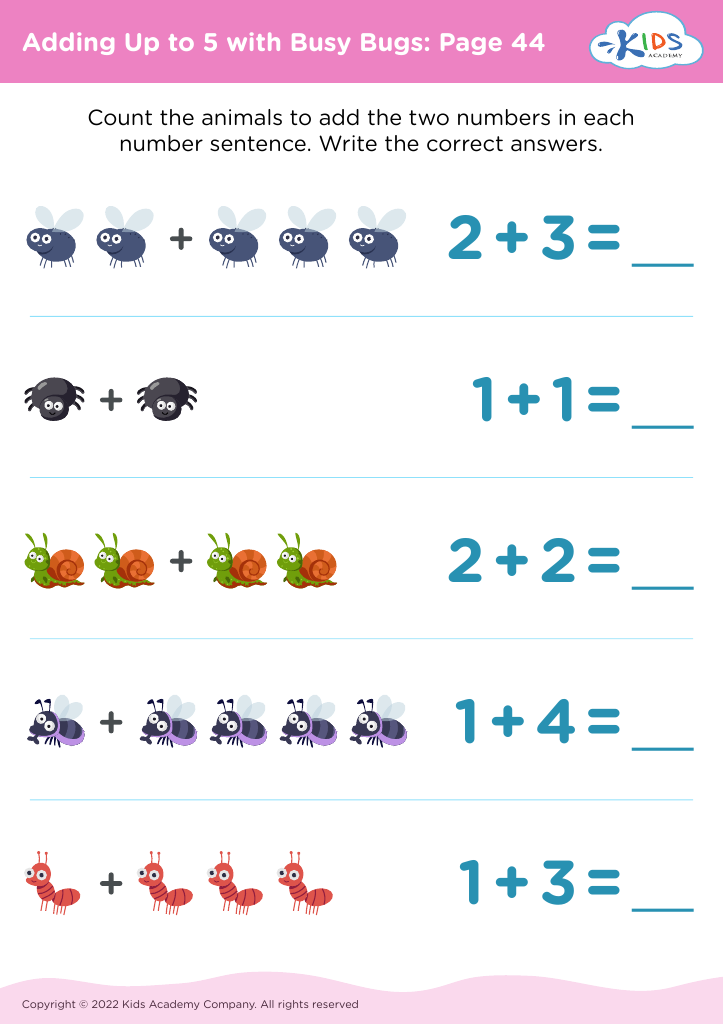
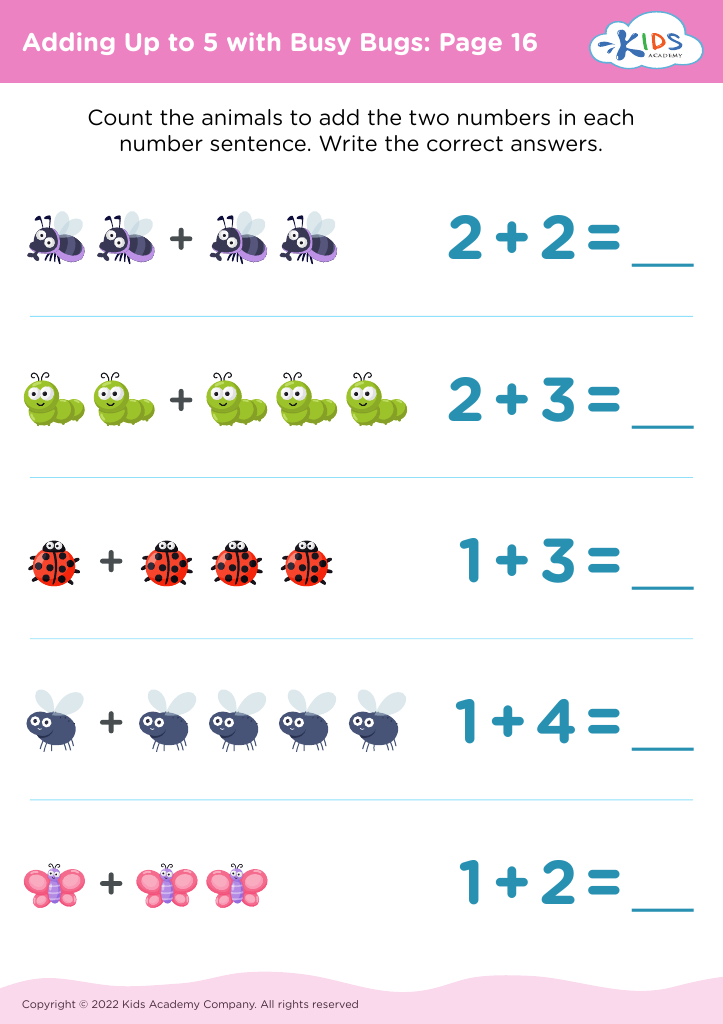
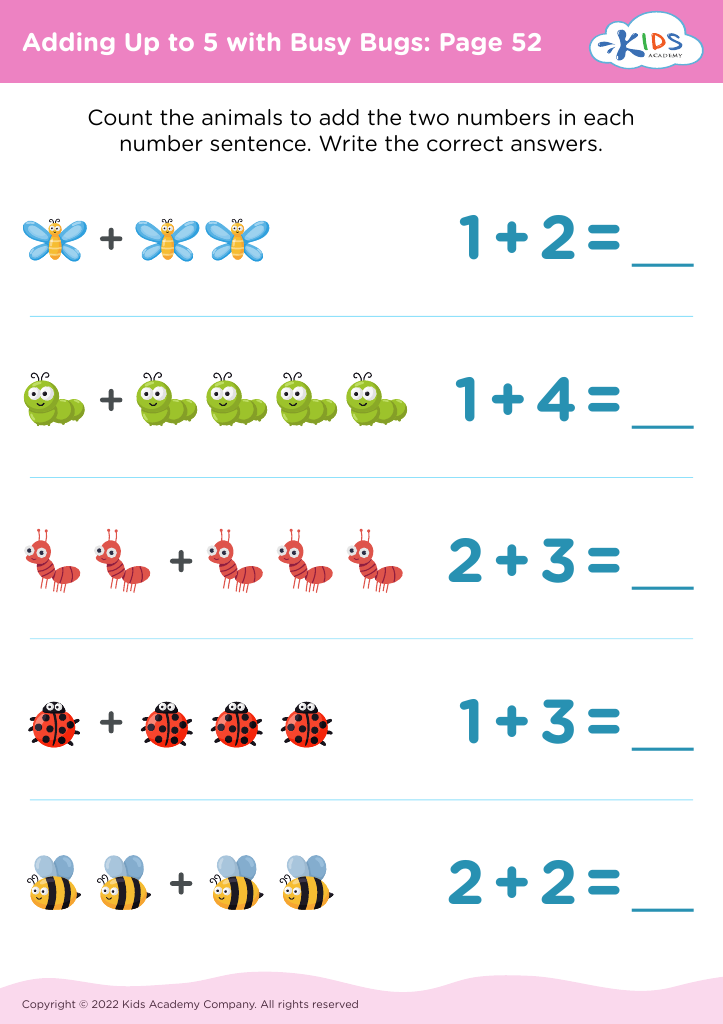
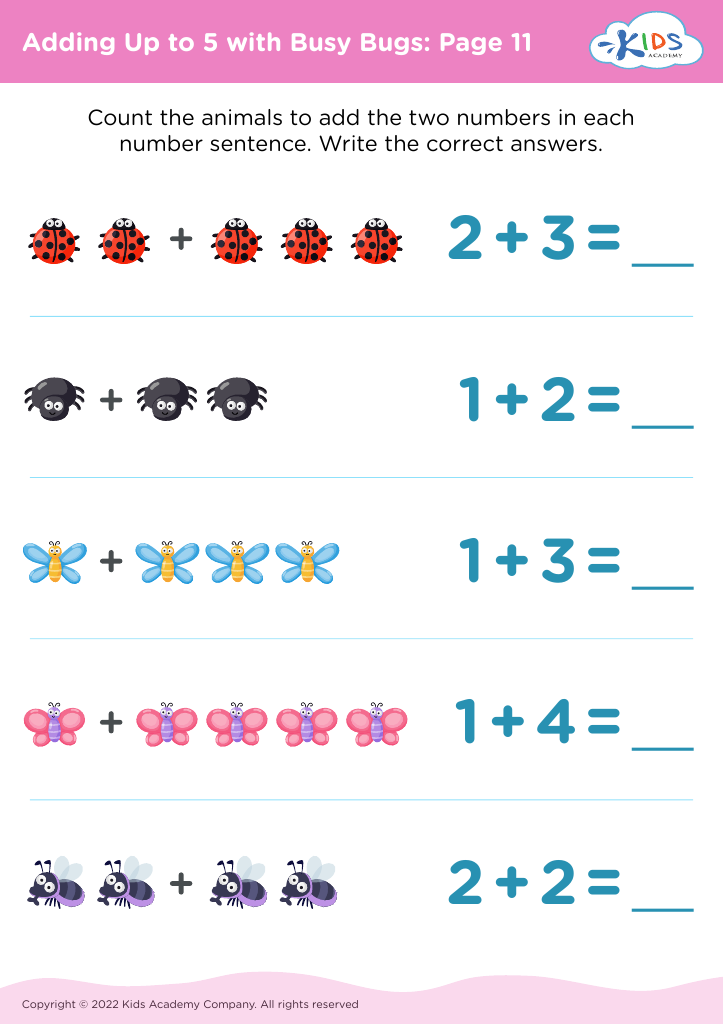
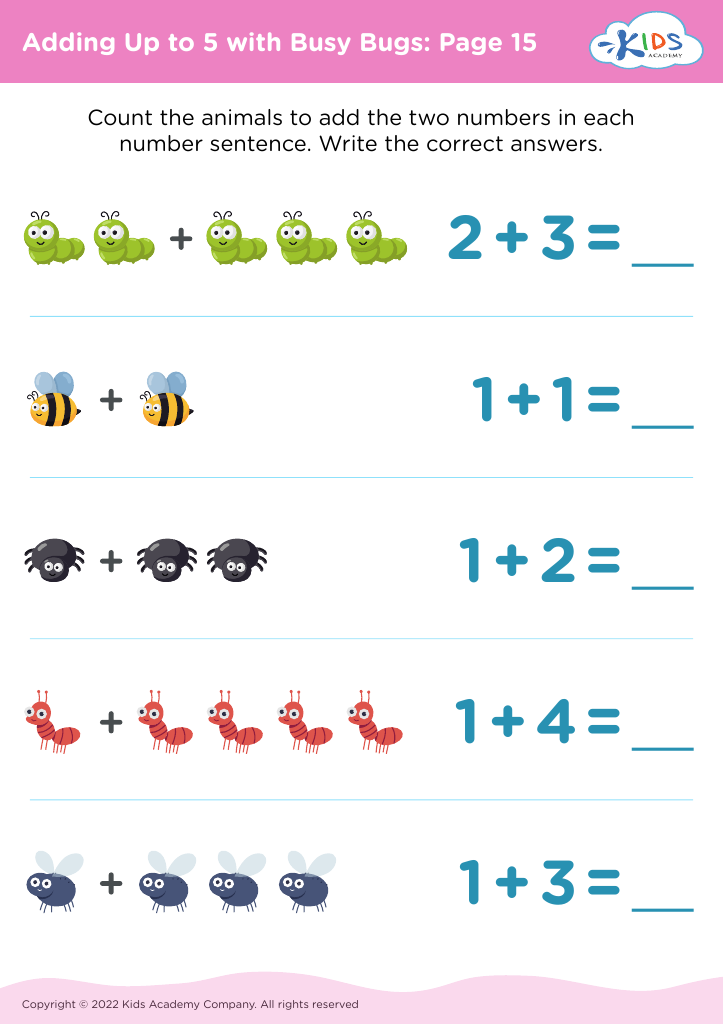



Parents and teachers should care about "Adding with Busy Bugs" for Ages 3-9 because it serves as an engaging, interactive tool to introduce essential math concepts in an enjoyable way. Young children are naturally curious and respond positively to visual and tactile learning methods. The vibrant, colorful bug characters help capture their attention, making learning feel like play rather than a chore.
Moreover, the program aligns with developmental milestones for this age group, catering to various learning styles and abilities. By integrating games and hands-on activities, "Adding with Busy Bugs" can enhance foundational skills such as counting, number recognition, and basic addition, all crucial for later mathematical comprehension.
In addition, the inclusive design encourages cooperative play and collaboration, promoting social skills as children engage with peers or parents during activities. This not only strengthens their understanding of math but also fosters a love for learning from an early age.
Finally, investing in these types of educational resources can set the groundwork for future academic success. By introducing math in a fun and supportive environment, parents and teachers can build children's confidence and interest in mathematics, thereby cultivating lifelong learners.