Filters

1537 filtered results

Clear all filters
Favorites
With answer key
Interactive

1537 filtered results

Difficulty Level

Grade


Subject

    Check out this FREE Trial Lesson on Addition & Subtraction for age 3-9!

    My Family

    Favorites
    With answer key
    Interactive
    • 3-9
    • Addition & Subtraction
    Adding Up to 5 on the Farm: Page 60
    Adding Up to 5 on the Farm: Page 60
    Adding Up to 5 on the Farm: Page 60
    Worksheet
    Adding up to 1000: Page 63
    Adding up to 1000: Page 63

    Adding up to 1000: Page 63

    Adding up to 1000: Page 63
    Worksheet
    Adding up to 50 with Regrouping: Page 13
    Adding up to 50 with Regrouping: Page 13
    Adding up to 50 with Regrouping: Page 13
    Worksheet
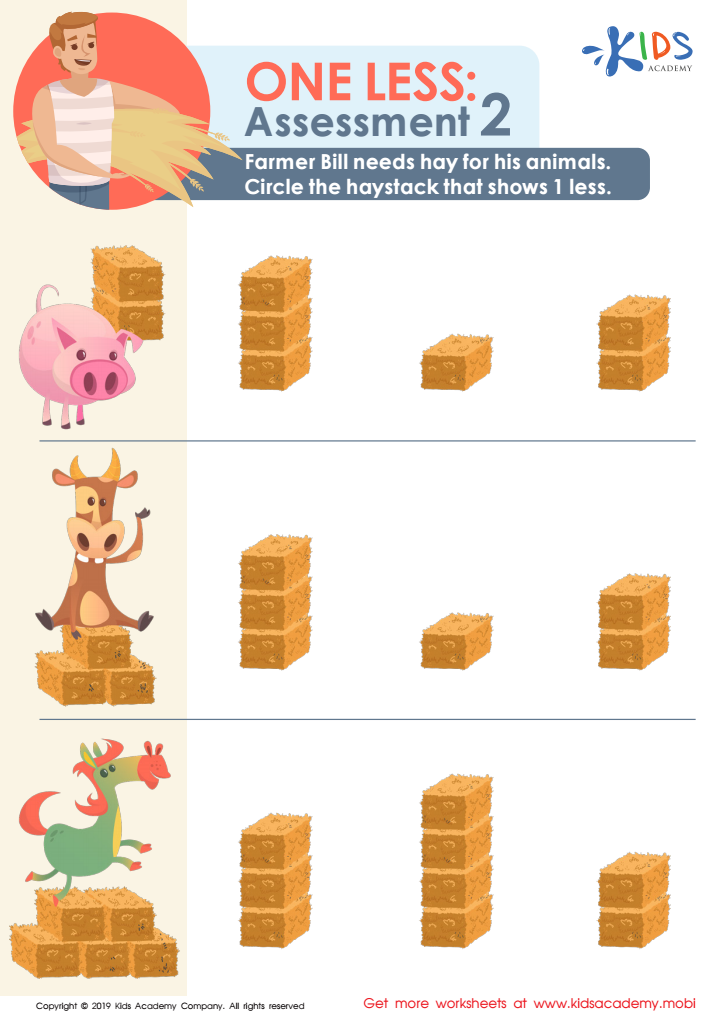
    One Less: Assessment 2 Worksheet
    One Less: Assessment 2 Worksheet
    One Less: Assessment 2 Worksheet
    Farmers are vital to our community. They raise animals and crops which provide us with food. Kids can learn a lot by visiting a farm—ask them to name the animals and crops they saw! Farmer Bill in this worksheet needs hay. Point to the haystacks, and ask your child to circle the one with 1 less.
    One Less: Assessment 2 Worksheet
    Worksheet
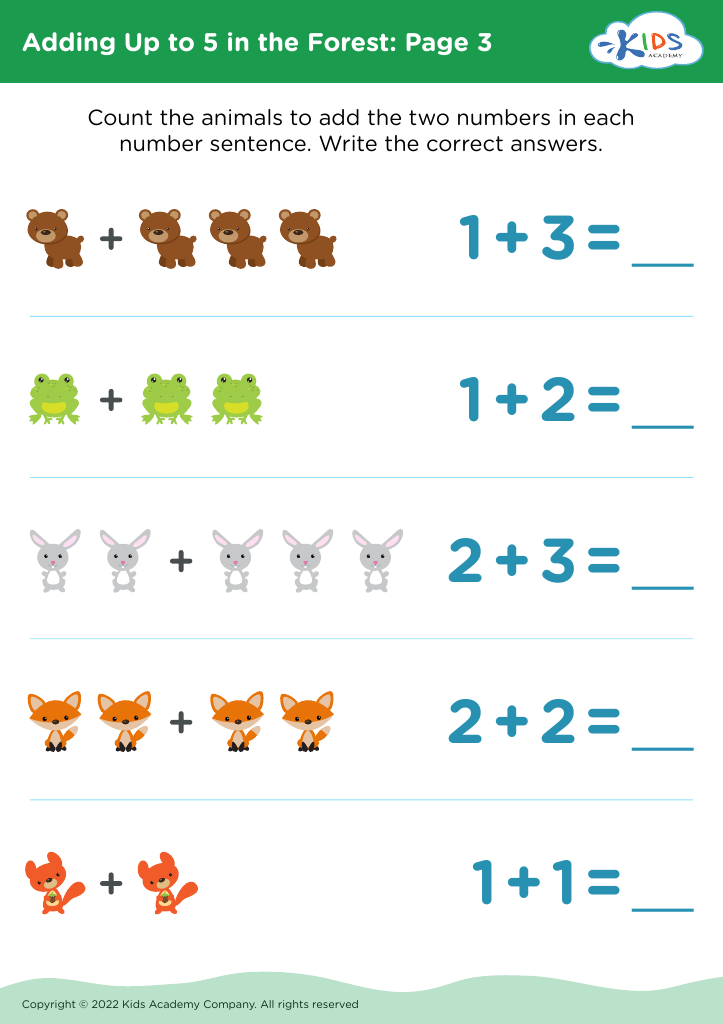
    Adding Up to 5 in the Forest: Page 3
    Adding Up to 5 in the Forest: Page 3
    Adding Up to 5 in the Forest: Page 3
    Worksheet
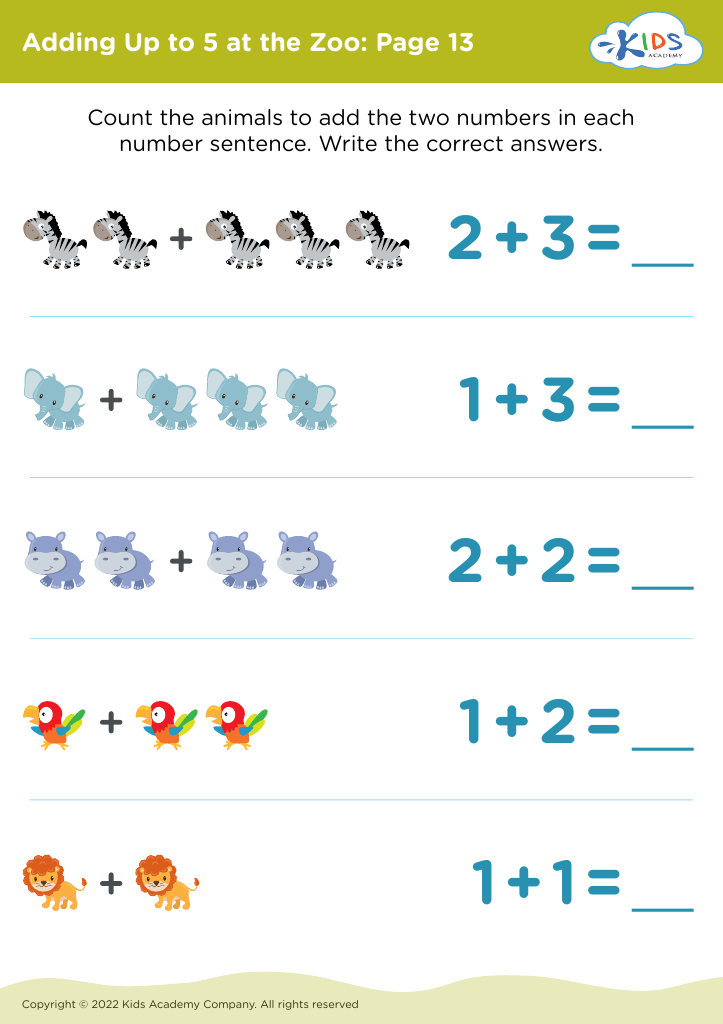
    Adding Up to 5 at the Zoo: Page 13
    Adding Up to 5 at the Zoo: Page 13
    Adding Up to 5 at the Zoo: Page 13
    Worksheet
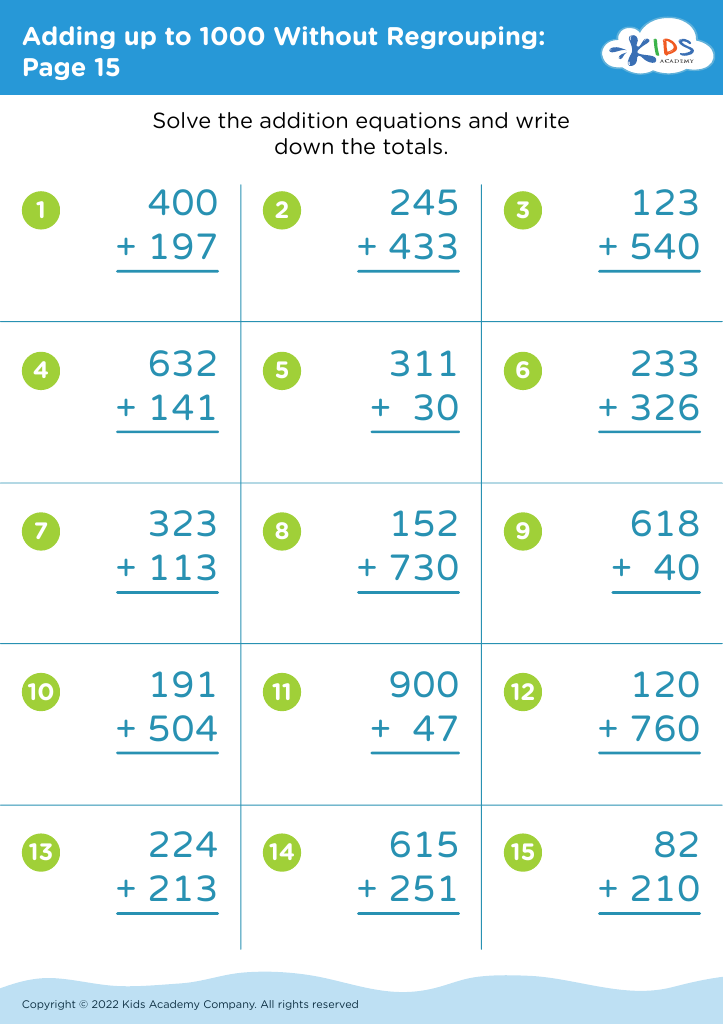
    Adding up to 1000 Without Regrouping: Page 15
    Adding up to 1000 Without Regrouping: Page 15
    Adding up to 1000 Without Regrouping: Page 15
    Worksheet
    Adding 2-digit Numbers: Page 42
    Adding 2-digit Numbers: Page 42

    Adding 2-digit Numbers: Page 42

    Adding 2-digit Numbers: Page 42
    Worksheet
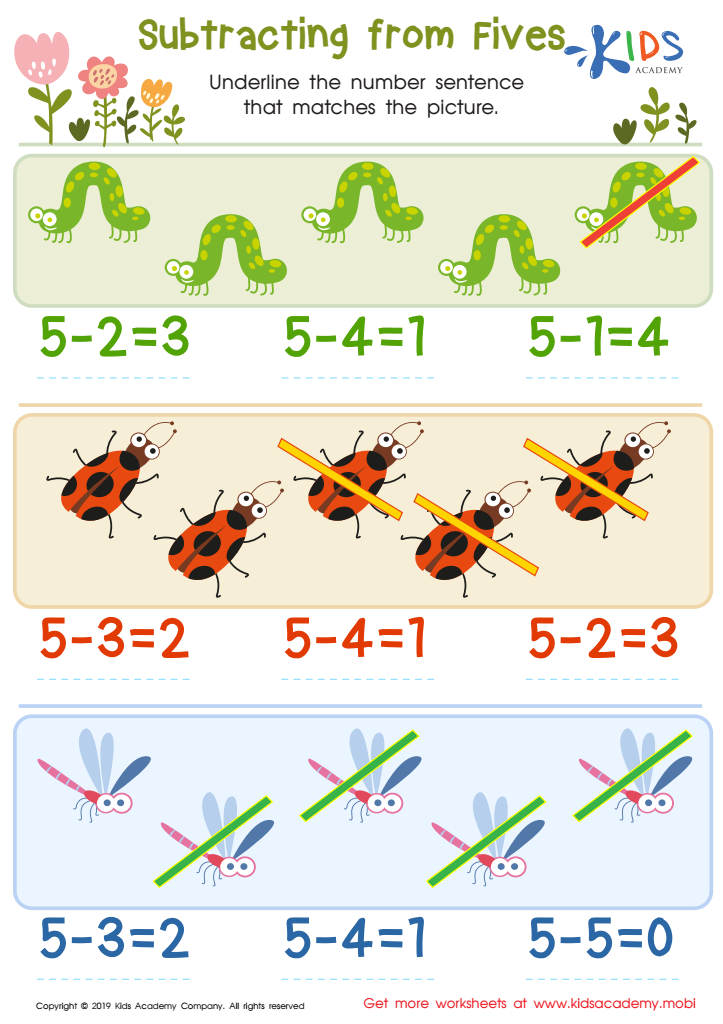
    Subtracting From Fives Worksheet
    Subtracting From Fives Worksheet

    Subtracting From Fives Worksheet

    Help your kids practice subtraction with this fun worksheet! Have them identify the insects, then solve the equations and find the matching number sentence. It's a great way to give them an edge in math and enjoy doing it!
    Subtracting From Fives Worksheet
    Worksheet
    Animal Sanctuary Worksheet
    Animal Sanctuary Worksheet

    Animal Sanctuary Worksheet

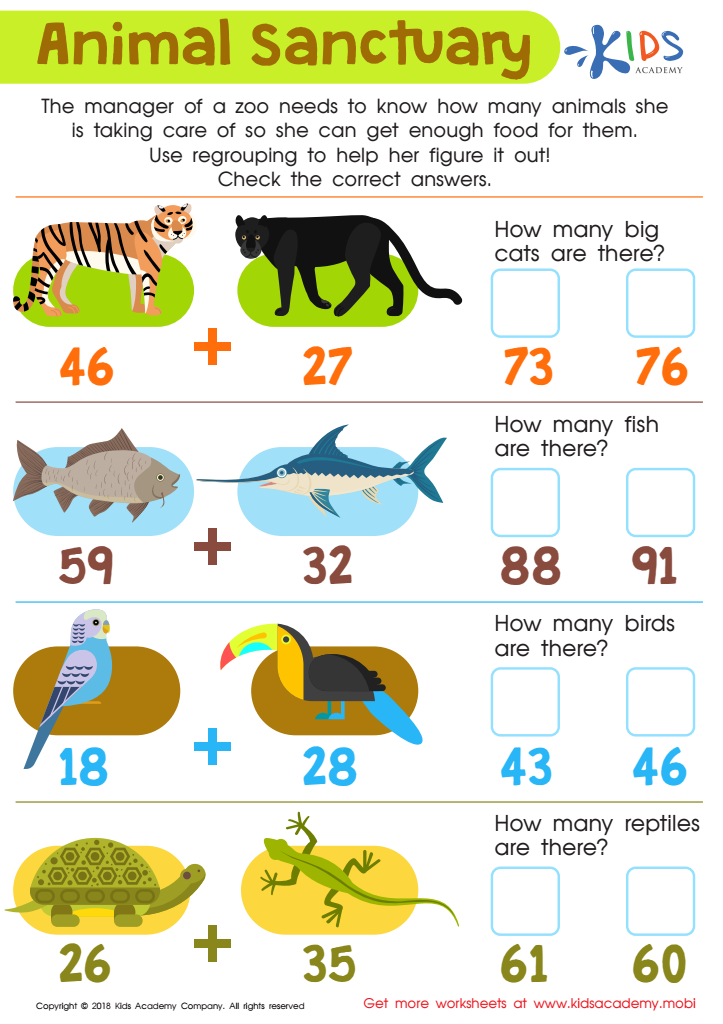
    Do your kids love visiting the zoo? Ask which animals they remember & which ones they liked the most. The manager needs help to get enough food for all the animals. Help your child use regrouping to figure out how many animals there are. And ask them to check the answers.
    Animal Sanctuary Worksheet
    Worksheet
    Adding Up to 5 in the Forest: Page 57
    Adding Up to 5 in the Forest: Page 57
    Adding Up to 5 in the Forest: Page 57
    Worksheet
    Adding up to 1000 with Regrouping: Page 44
    Adding up to 1000 with Regrouping: Page 44
    Adding up to 1000 with Regrouping: Page 44
    Worksheet
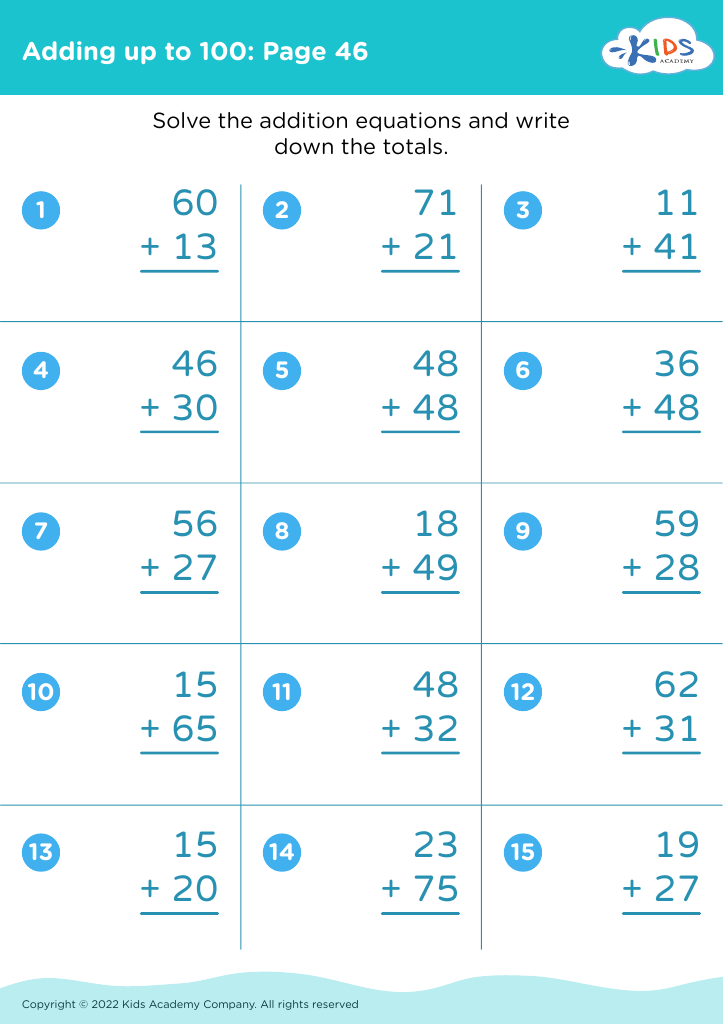
    Adding up to 100: Page 46
    Adding up to 100: Page 46

    Adding up to 100: Page 46

    Adding up to 100: Page 46
    Worksheet
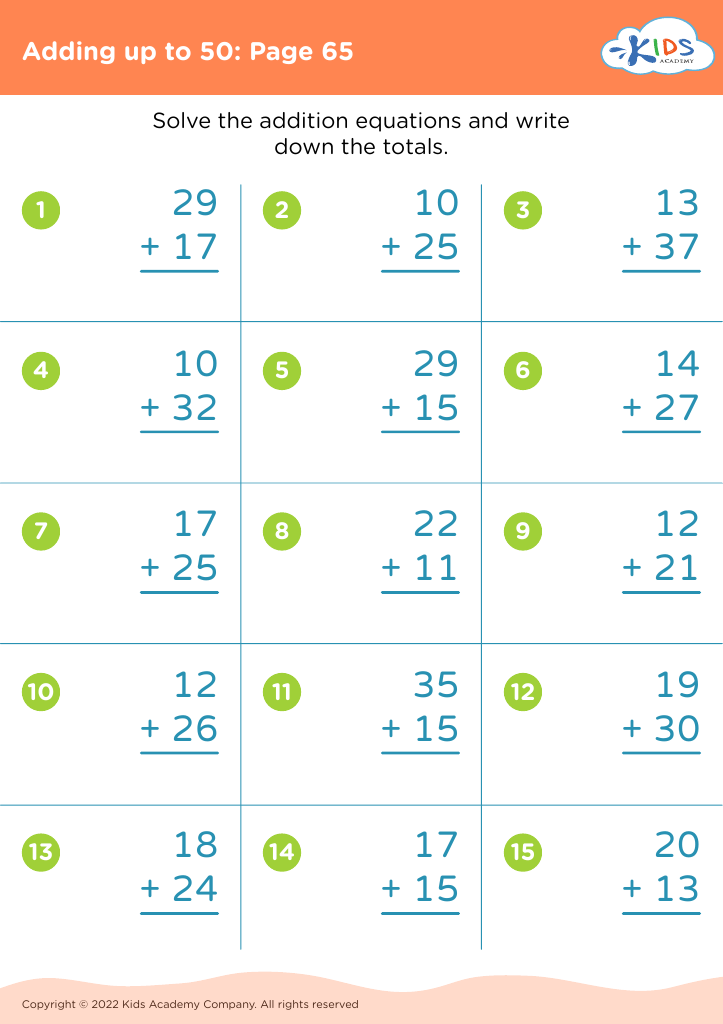
    Adding up to 50: Page 65
    Adding up to 50: Page 65

    Adding up to 50: Page 65

    Adding up to 50: Page 65
    Worksheet
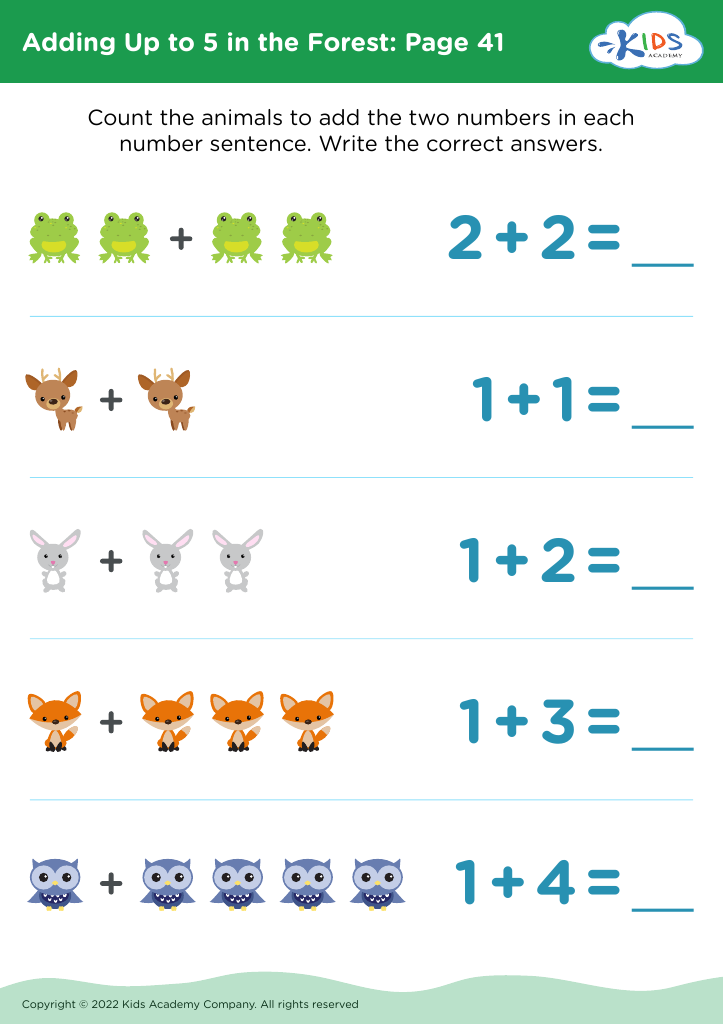
    Adding Up to 5 in the Forest: Page 41
    Adding Up to 5 in the Forest: Page 41
    Adding Up to 5 in the Forest: Page 41
    Worksheet
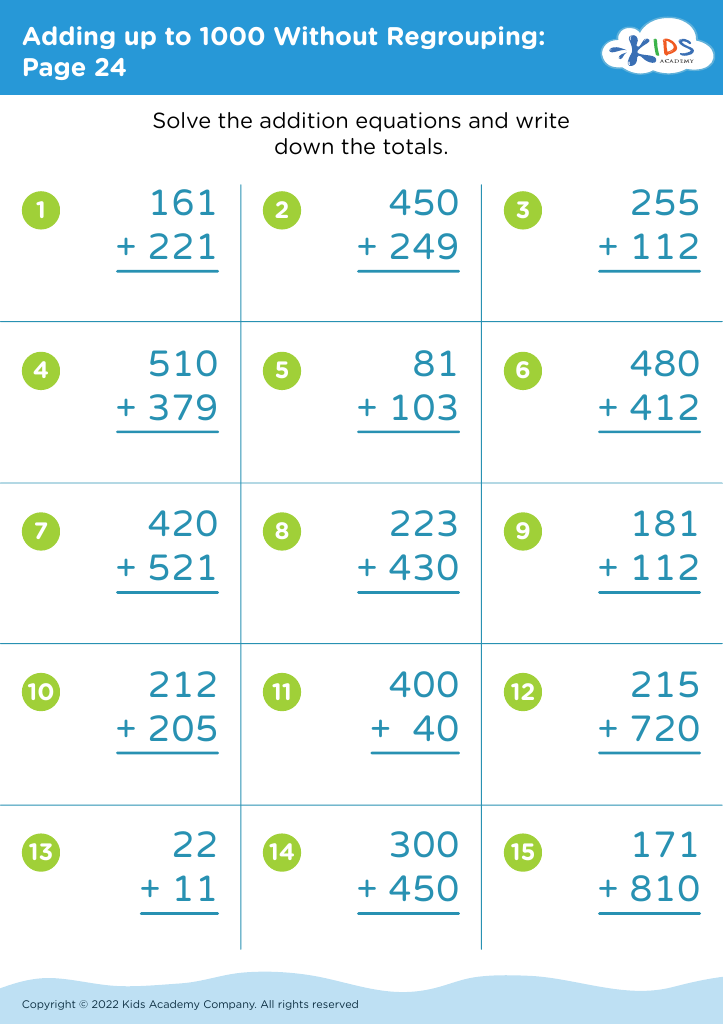
    Adding up to 1000 Without Regrouping: Page 24
    Adding up to 1000 Without Regrouping: Page 24
    Adding up to 1000 Without Regrouping: Page 24
    Worksheet
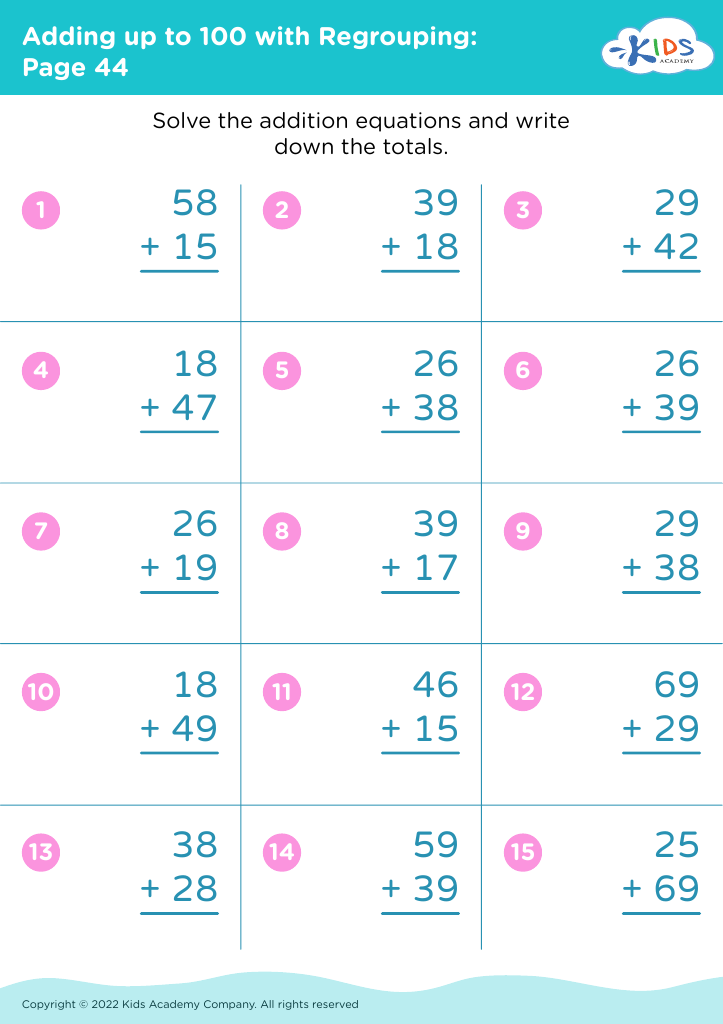
    Adding up to 100 with Regrouping: Page 44
    Adding up to 100 with Regrouping: Page 44
    Adding up to 100 with Regrouping: Page 44
    Worksheet
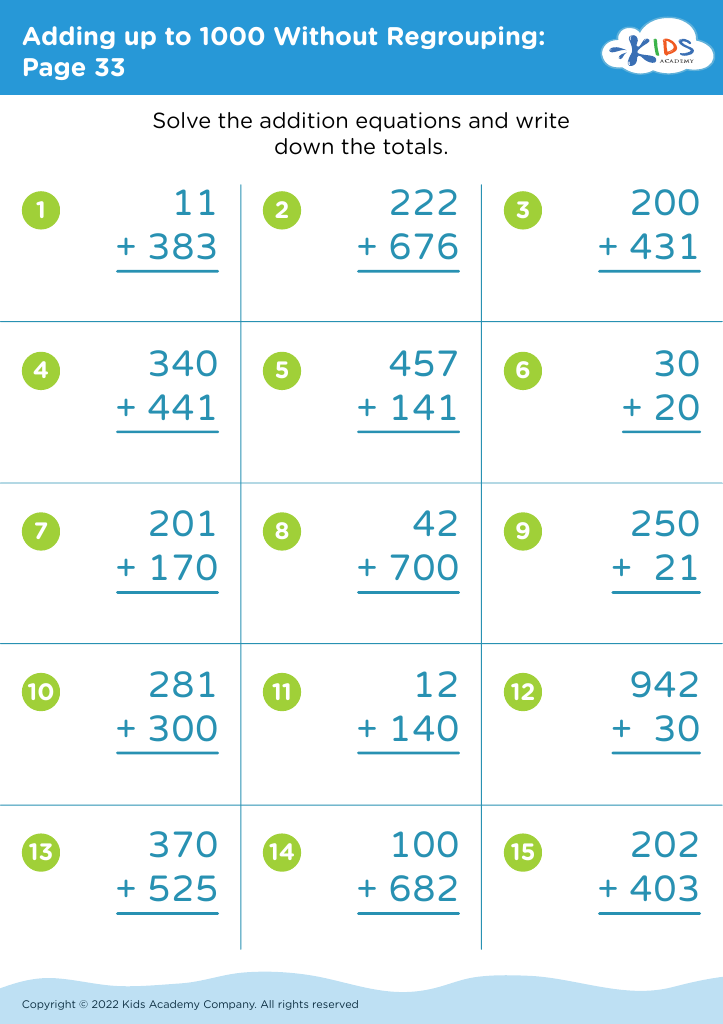
    Adding up to 1000 Without Regrouping: Page 33
    Adding up to 1000 Without Regrouping: Page 33
    Adding up to 1000 Without Regrouping: Page 33
    Worksheet
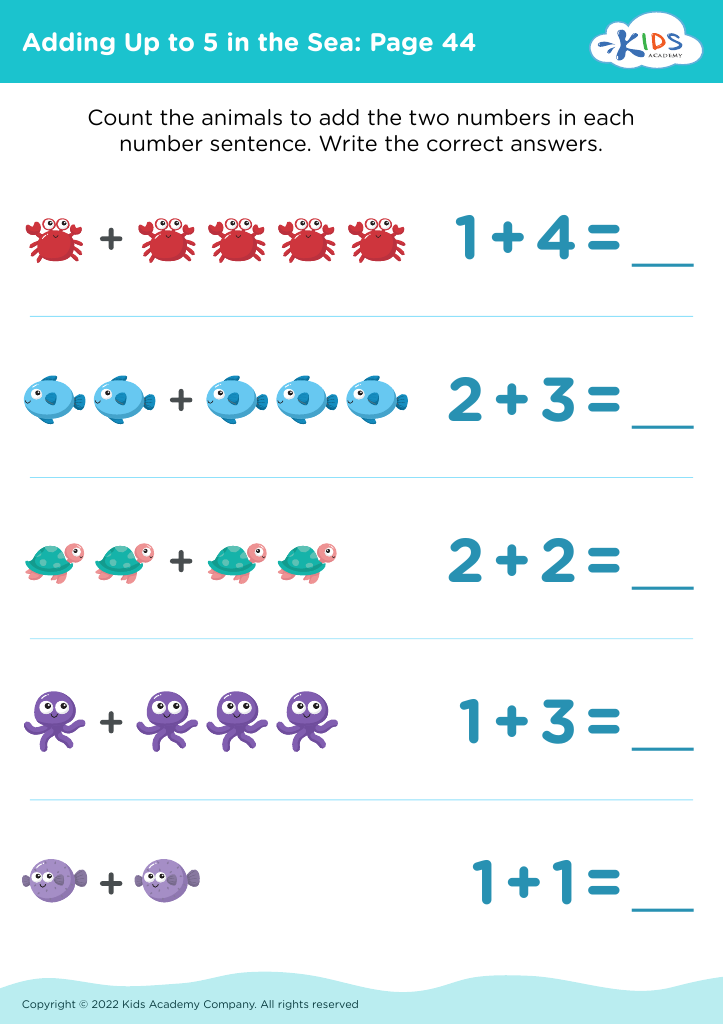
    Adding Up to 5 in the Sea: Page 44
    Adding Up to 5 in the Sea: Page 44
    Adding Up to 5 in the Sea: Page 44
    Worksheet
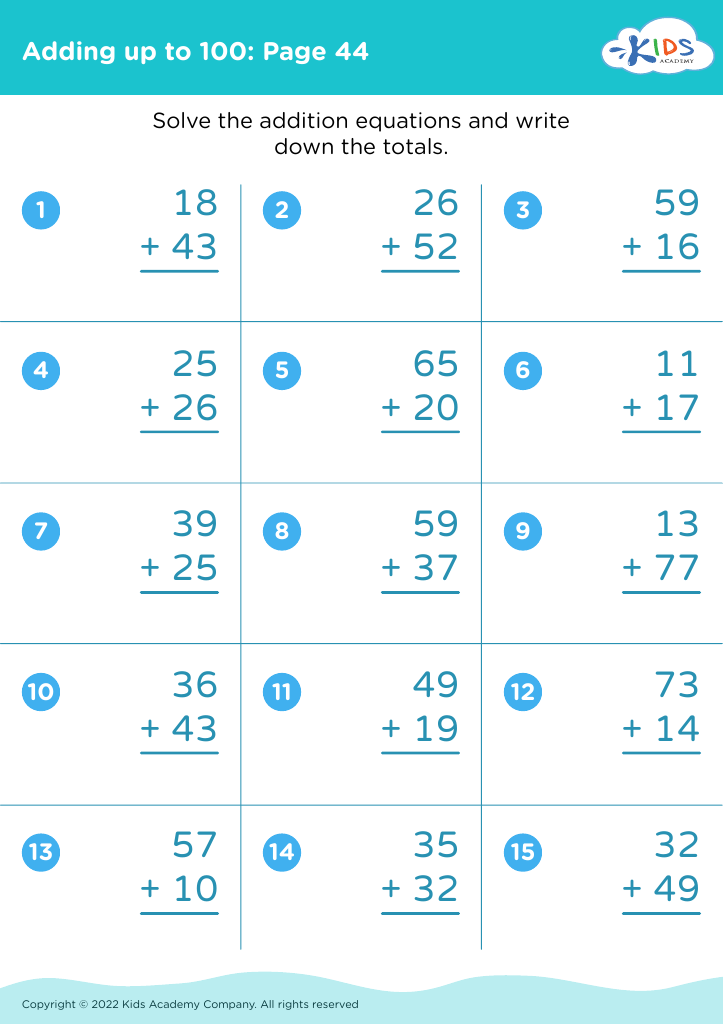
    Adding up to 100: Page 44
    Adding up to 100: Page 44

    Adding up to 100: Page 44

    Adding up to 100: Page 44
    Worksheet
    Adding up to 50: Page 32
    Adding up to 50: Page 32

    Adding up to 50: Page 32

    Adding up to 50: Page 32
    Worksheet
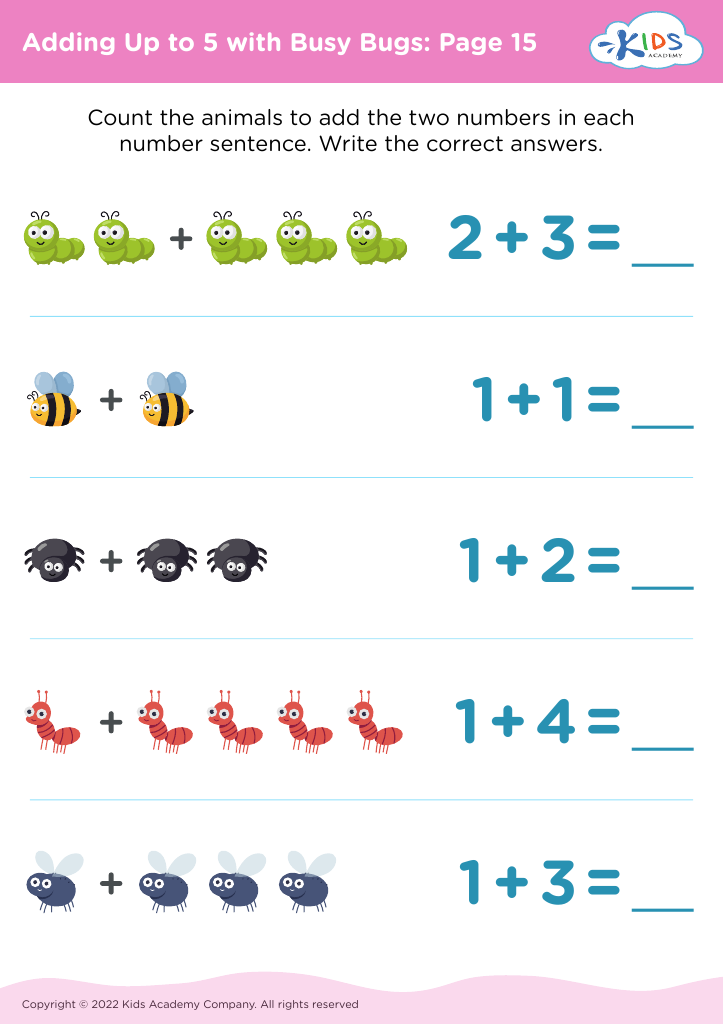
    Adding Up to 5 with Busy Bugs: Page 15
    Adding Up to 5 with Busy Bugs: Page 15
    Adding Up to 5 with Busy Bugs: Page 15
    Worksheet
    Exploring Outer Space Worksheet
    Exploring Outer Space Worksheet
    Exploring Outer Space Worksheet
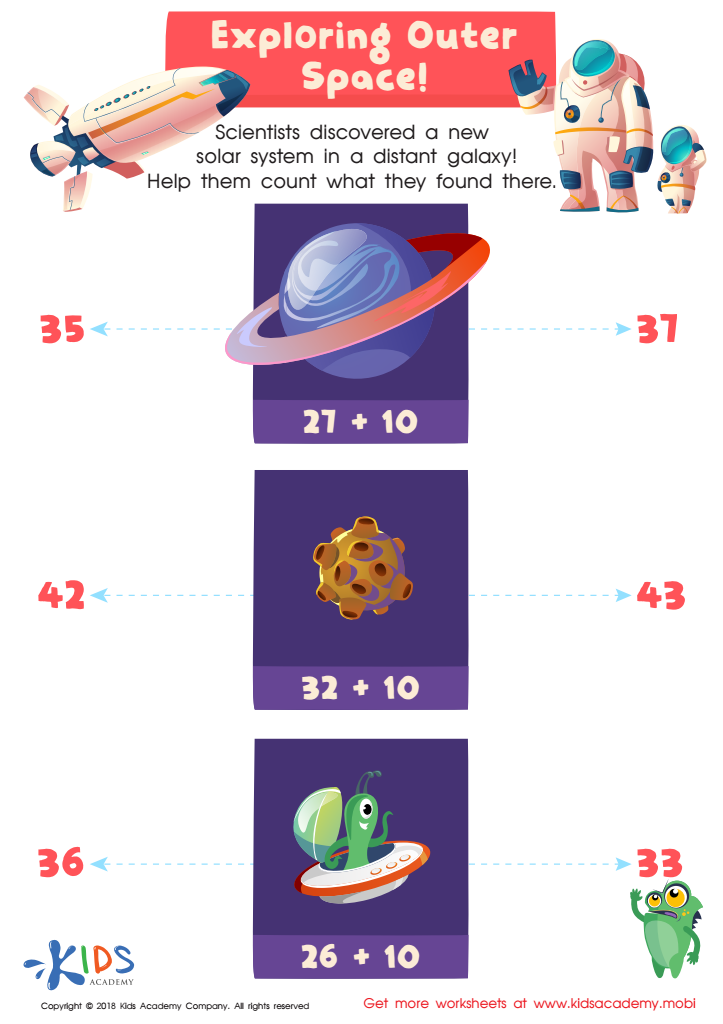
    Outer space is an intriguing world. Physics behave differently than on Earth, and much remains to be uncovered. In this worksheet, scientists have located a new solar system in a distant galaxy. Explain to your kids what these two things are, then have them help count the findings. Solve the math problems, then link the lines to the right answer.
    Exploring Outer Space Worksheet

    Worksheet
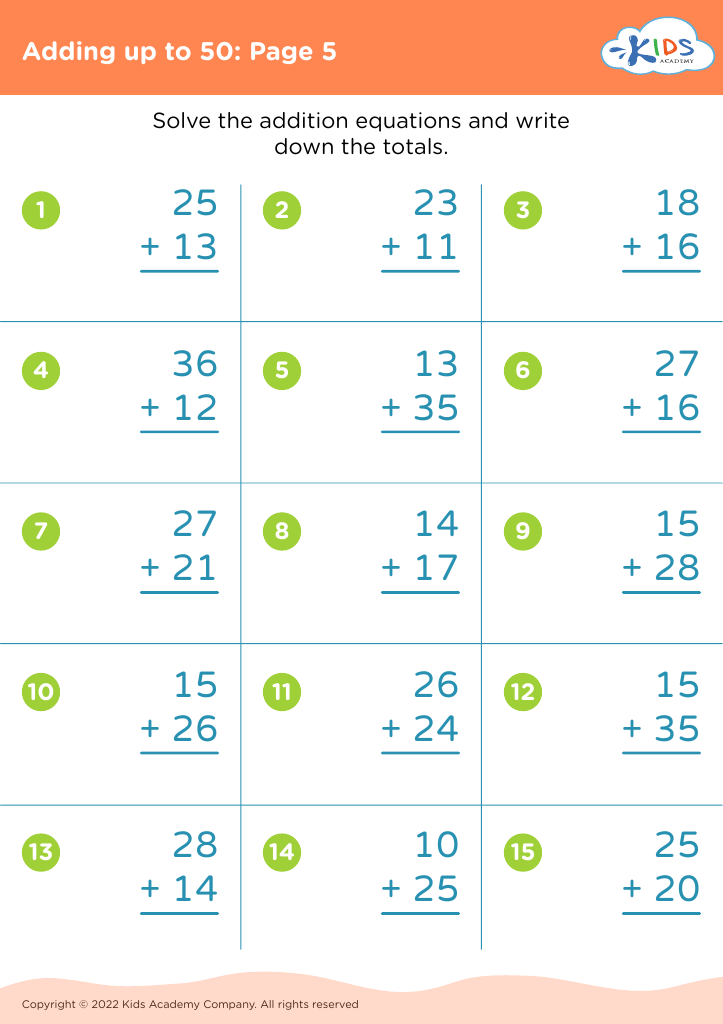
    Adding up to 50: Page 5
    Adding up to 50: Page 5

    Adding up to 50: Page 5

    Adding up to 50: Page 5
    Worksheet


    Parents and teachers should care deeply about teaching addition and subtraction to children aged 3-9 because these foundational skills are crucial for their overall mathematical development and daily problem-solving capabilities. At this early age, children’s brains are highly receptive, making it an ideal time to introduce fundamental math concepts. Mastering addition and subtraction helps build a solid mathematical foundation, which is essential for understanding more complex math topics later in life, such as multiplication, division, fractions, and algebra.

    Moreover, these early arithmetic skills promote critical thinking and logical reasoning. When children learn to add and subtract, they engage in problem-solving, learn to make decisions, and recognize patterns, all of which are important cognitive skills.

    Basic adding and subtracting also demonstrate immediate practical value, enabling children to handle real-life situations, such as sharing toys, understanding time, and managing simple financial transactions like counting money.

    Finally, early success in mastering these skills can instill a sense of confidence and a positive attitude towards learning mathematics. Positive early math experiences lay the foundation for academic success and a lifelong appreciation for numbers. This, in turn, can foster improved performance in various subjects, emphasizing the importance of early math education for young learners.