Filters

1258 filtered results

Clear all filters
Favorites
With answer key
Interactive

1258 filtered results

Difficulty Level

Grade


Subject

    Check out this FREE Trial Lesson on Addition for age 3-9!

    Find the Area with Multiplication

    Favorites
    With answer key
    Interactive
    • 3-9
    • Addition
    Adding up to 1000 with Regrouping: Page 42
    Adding up to 1000 with Regrouping: Page 42
    Adding up to 1000 with Regrouping: Page 42
    Worksheet
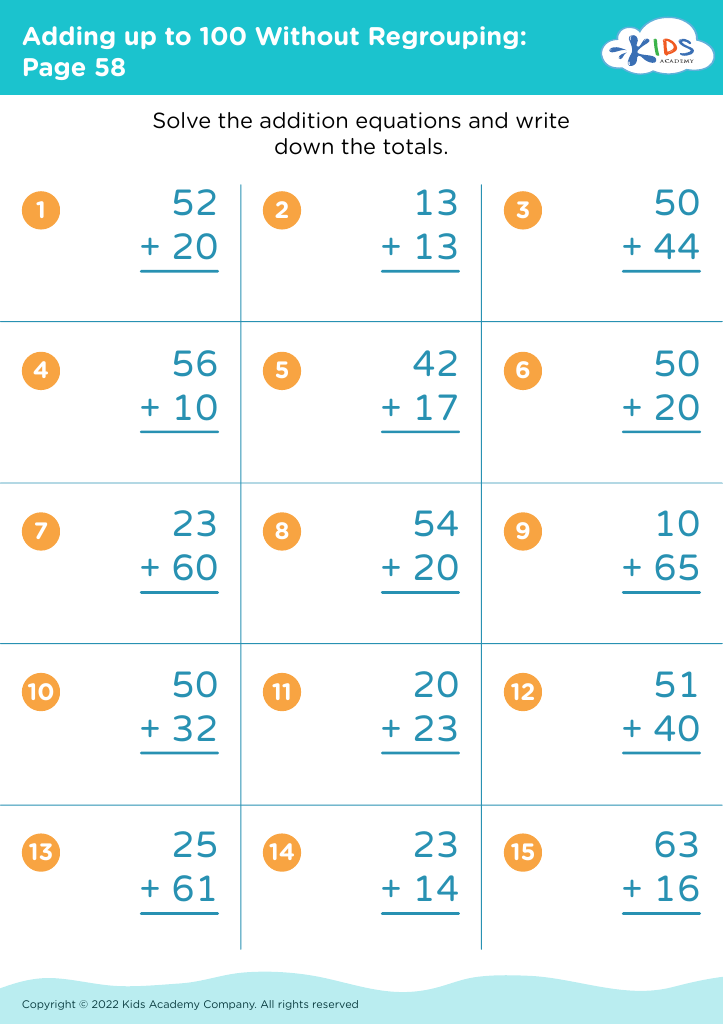
    Adding up to 100 Without Regrouping: Page 58
    Adding up to 100 Without Regrouping: Page 58
    Adding up to 100 Without Regrouping: Page 58
    Worksheet
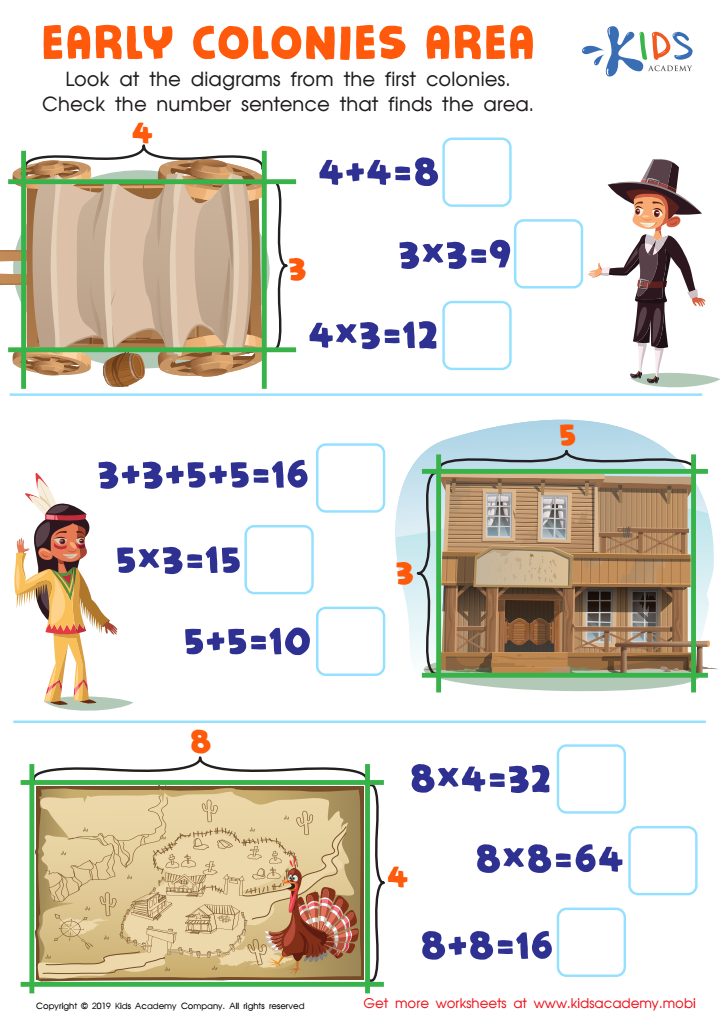
    Early Colonies Area Worksheet
    Early Colonies Area Worksheet

    Early Colonies Area Worksheet

    Before starting this worksheet, check if your kids know who the early colonizers were. Exercise their addition and subtraction skills by having them solve the equations, then look at the diagrams from the colonies. Guide them to check the number sentence to find the area.
    Early Colonies Area Worksheet
    Worksheet
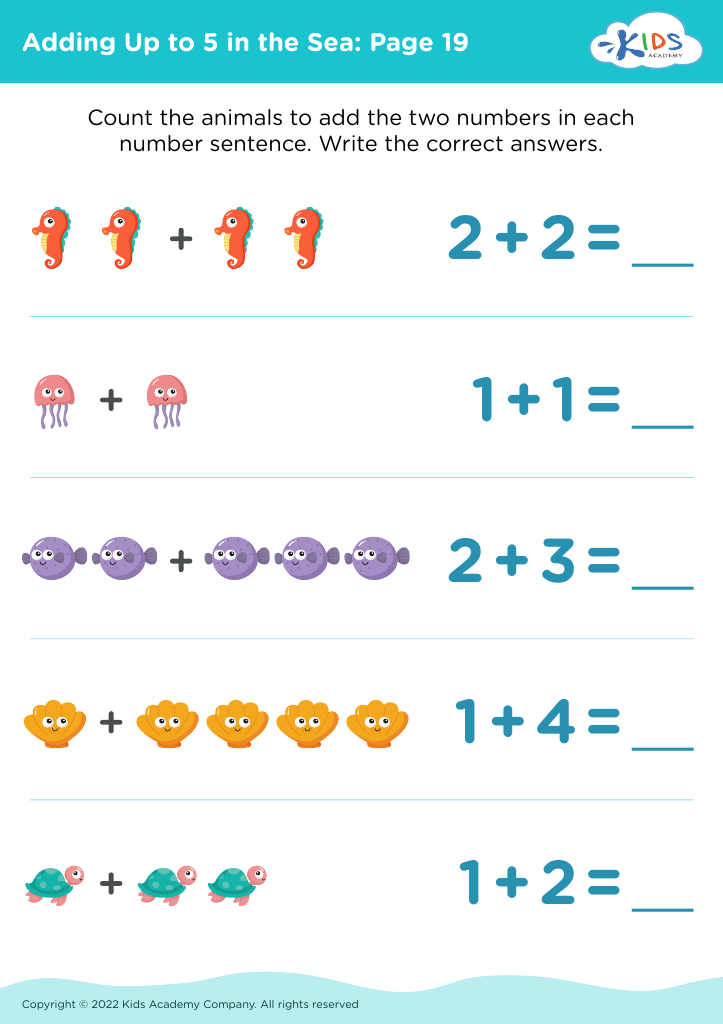
    Adding Up to 5 in the Sea: Page 19
    Adding Up to 5 in the Sea: Page 19
    Adding Up to 5 in the Sea: Page 19
    Worksheet
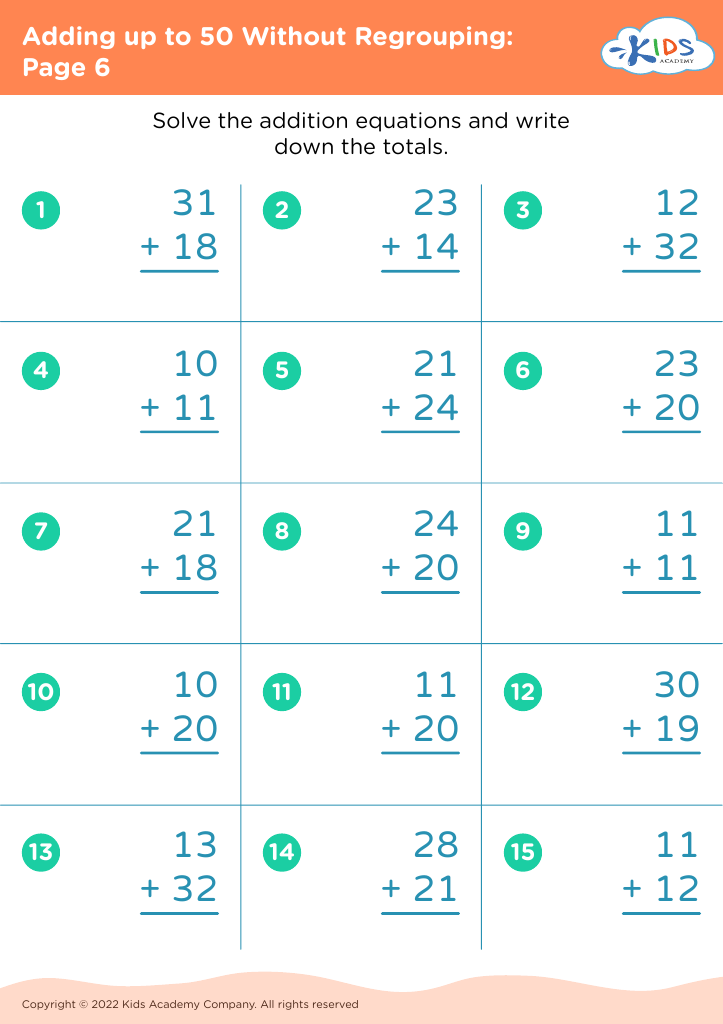
    Adding up to 50 Without Regrouping: Page 6
    Adding up to 50 Without Regrouping: Page 6
    Adding up to 50 Without Regrouping: Page 6
    Worksheet
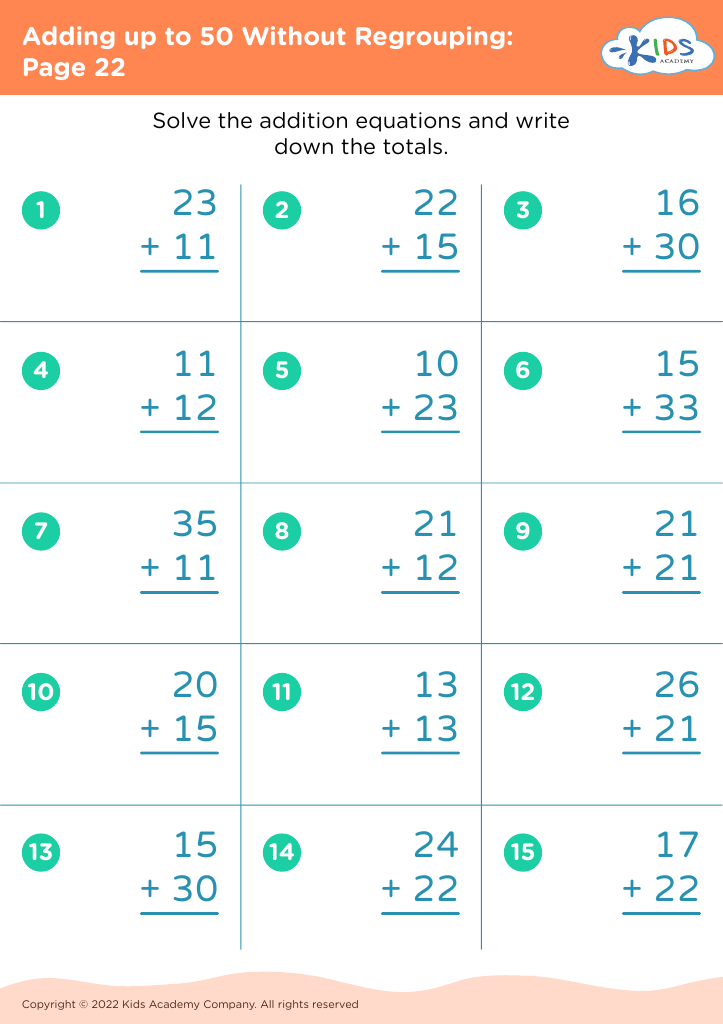
    Adding up to 50 Without Regrouping: Page 22
    Adding up to 50 Without Regrouping: Page 22
    Adding up to 50 Without Regrouping: Page 22
    Worksheet
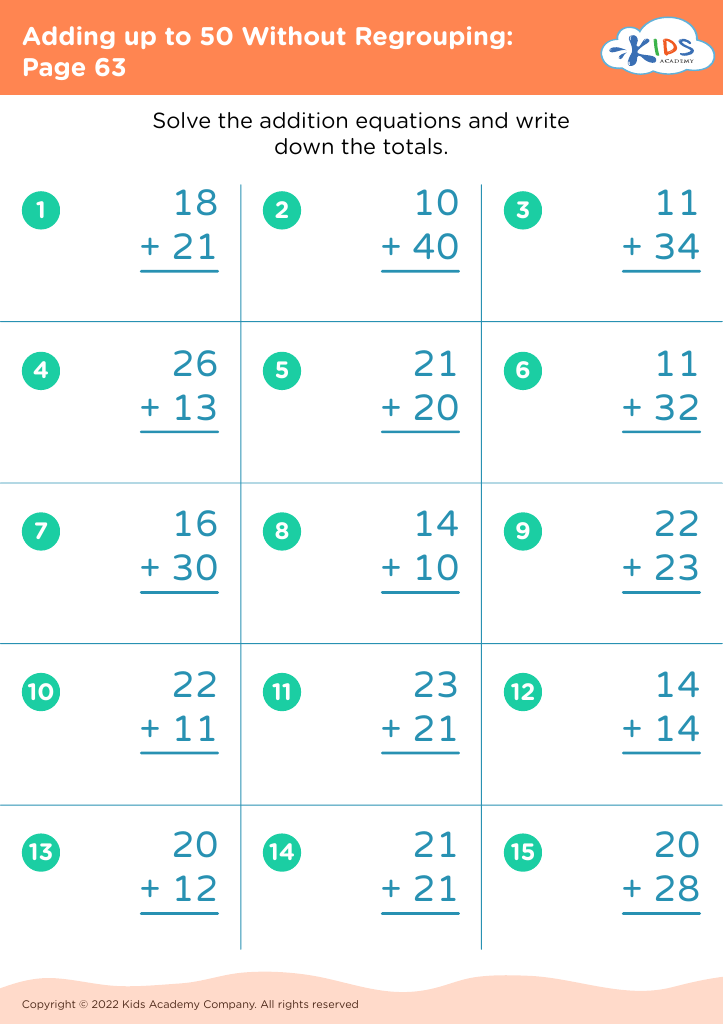
    Adding up to 50 Without Regrouping: Page 63
    Adding up to 50 Without Regrouping: Page 63
    Adding up to 50 Without Regrouping: Page 63
    Worksheet
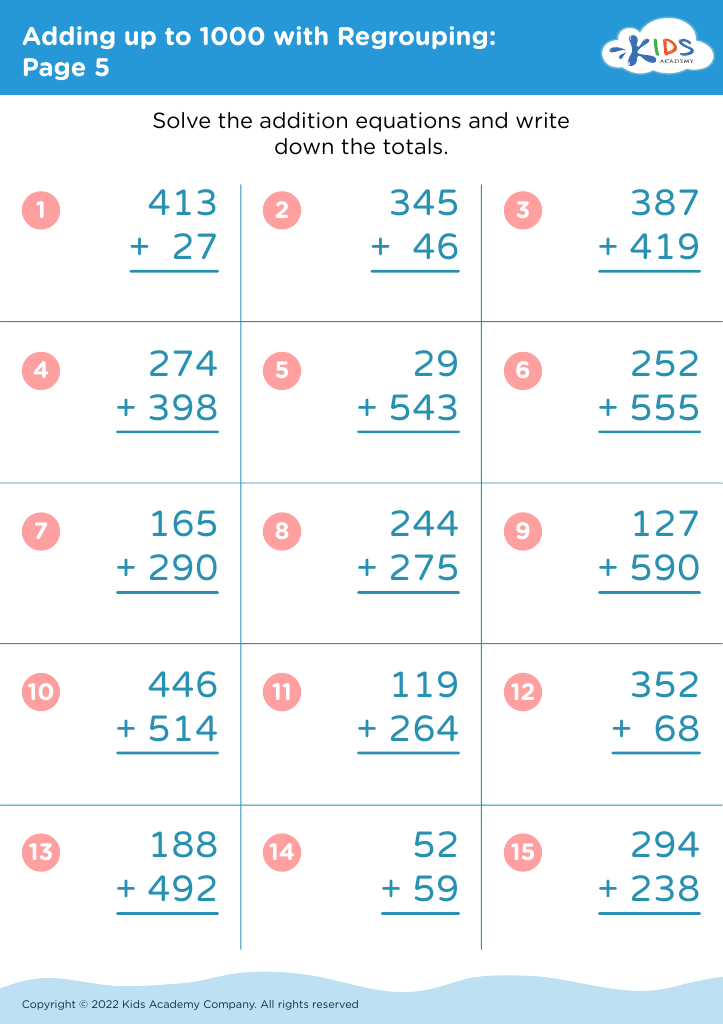
    Adding up to 1000 with Regrouping: Page 5
    Adding up to 1000 with Regrouping: Page 5
    Adding up to 1000 with Regrouping: Page 5
    Worksheet
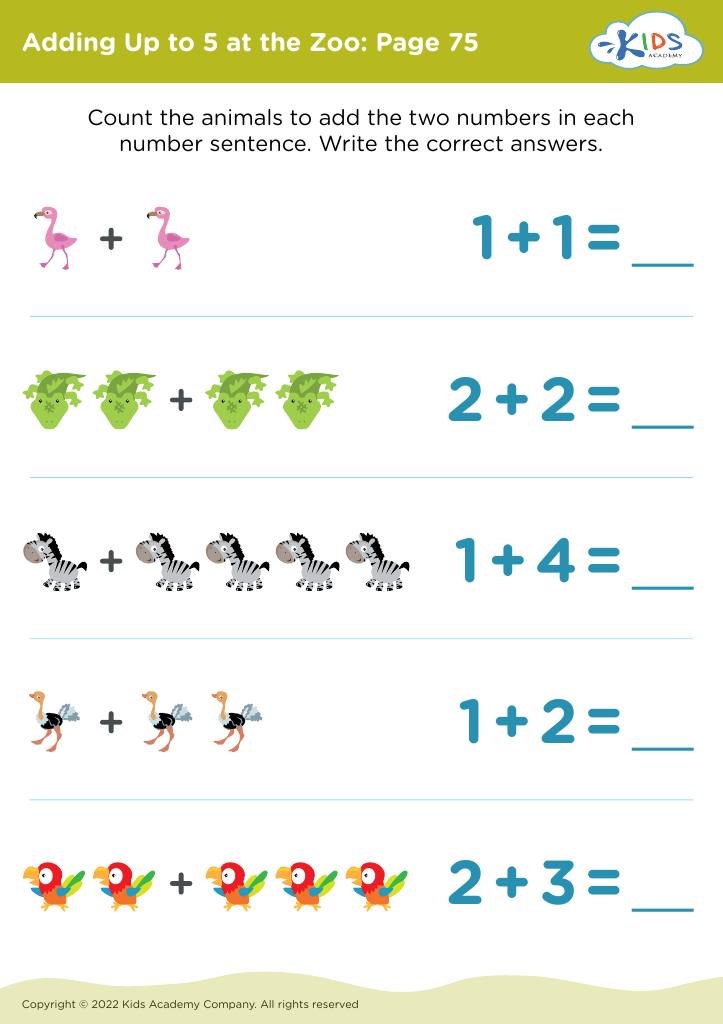
    Adding Up to 5 at the Zoo: Page 75
    Adding Up to 5 at the Zoo: Page 75
    Adding Up to 5 at the Zoo: Page 75
    Worksheet
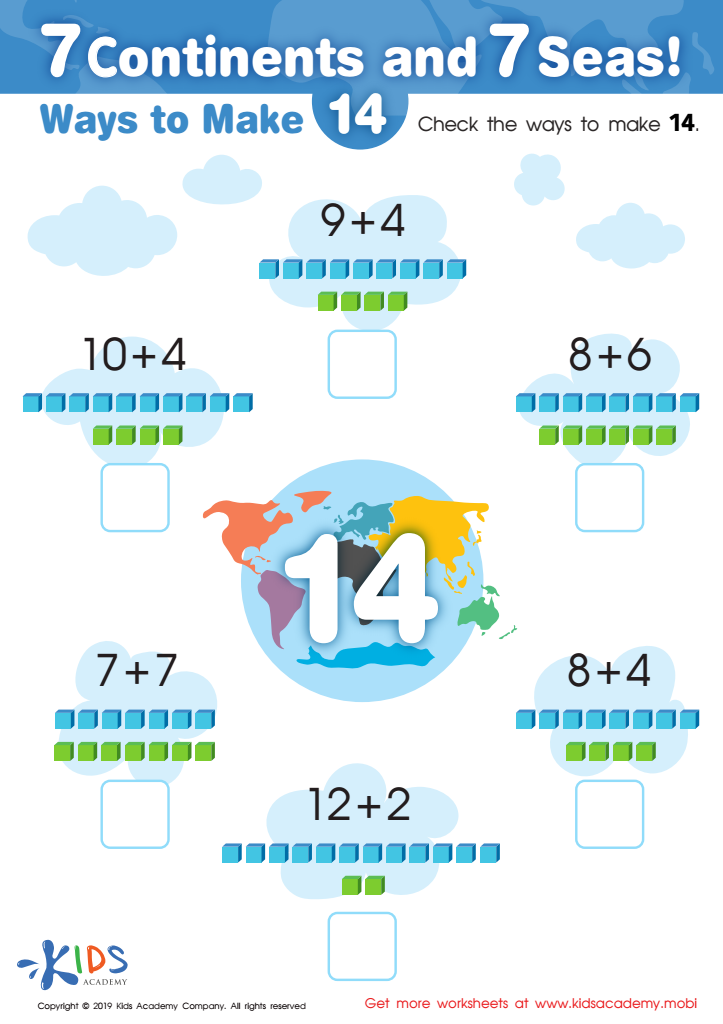
    7 Continents and 7 Seas Worksheet
    7 Continents and 7 Seas Worksheet
    7 Continents and 7 Seas Worksheet
    Remind kids of the continents and show them how different numbers can add up to the same figure. Give examples, like 2+2 =4, and 3+1 =4. Ask if they can provide other examples, then work through the simple additions in this worksheet with them. Ask them to circle all equations that make 14.
    7 Continents and 7 Seas Worksheet
    Worksheet
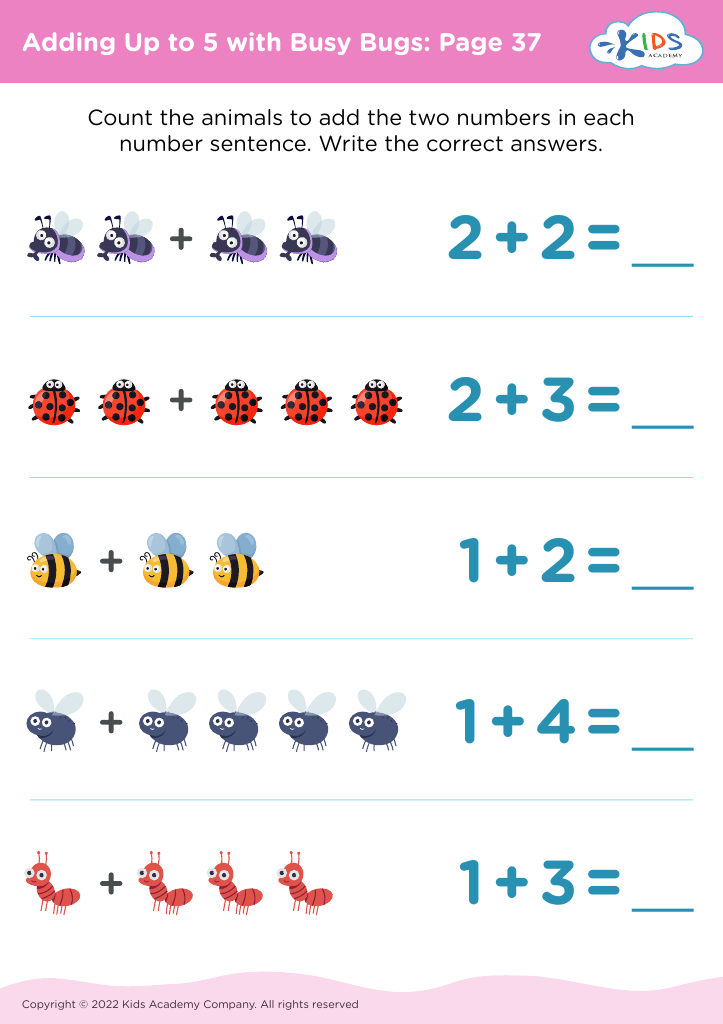
    Adding Up to 5 with Busy Bugs: Page 37
    Adding Up to 5 with Busy Bugs: Page 37
    Adding Up to 5 with Busy Bugs: Page 37
    Worksheet
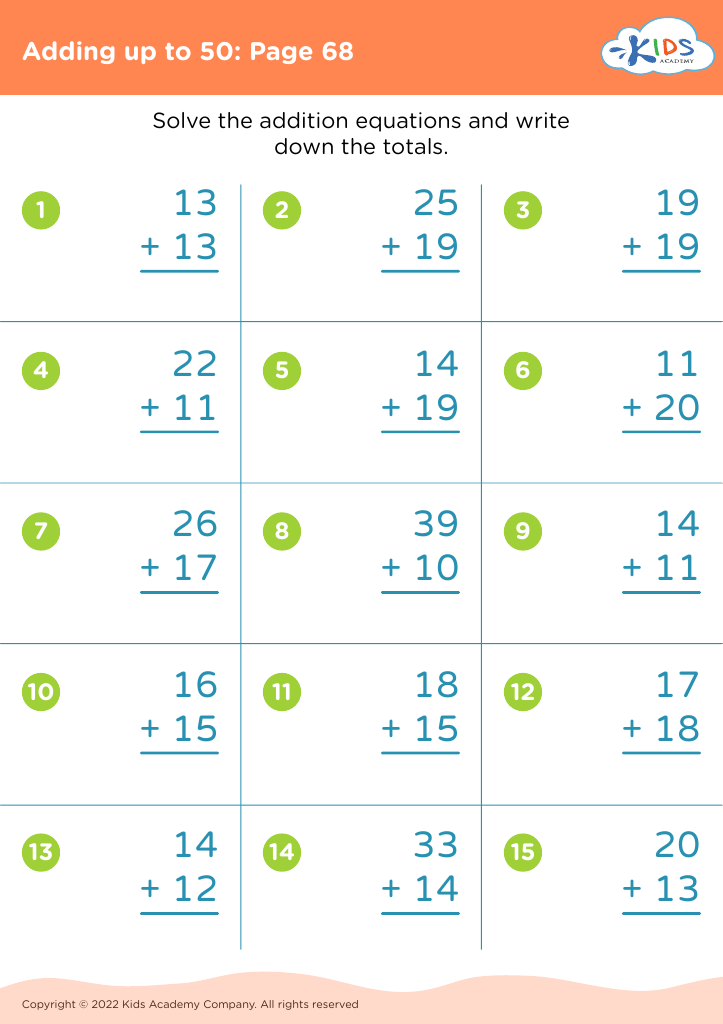
    Adding up to 50: Page 68
    Adding up to 50: Page 68

    Adding up to 50: Page 68

    Adding up to 50: Page 68
    Worksheet
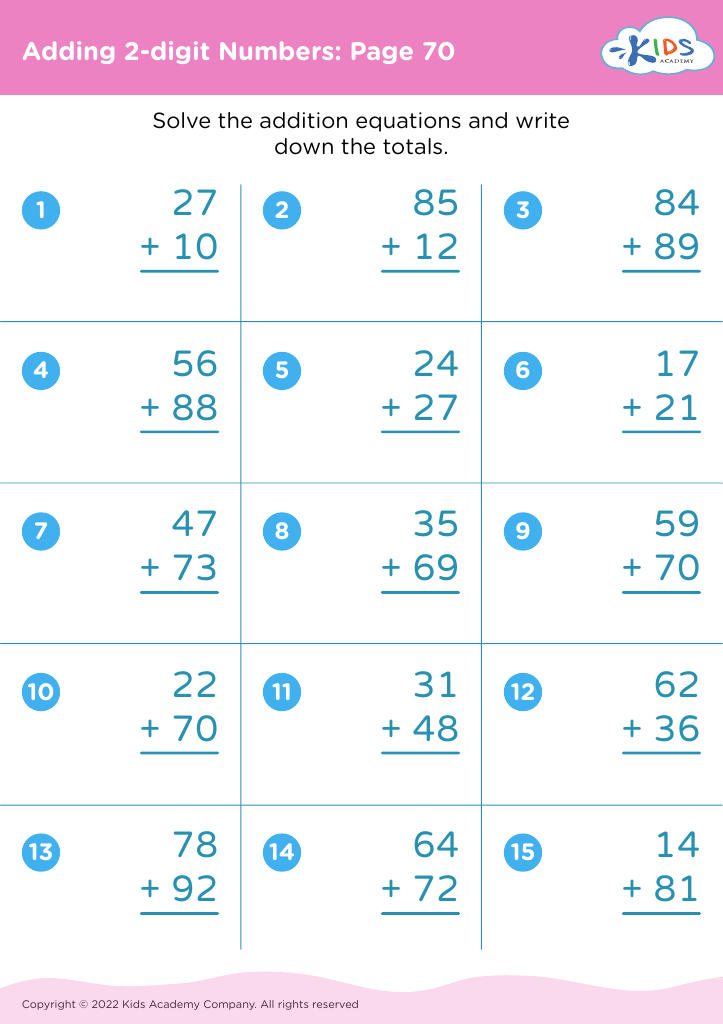
    Adding 2-digit Numbers: Page 70
    Adding 2-digit Numbers: Page 70

    Adding 2-digit Numbers: Page 70

    Adding 2-digit Numbers: Page 70
    Worksheet
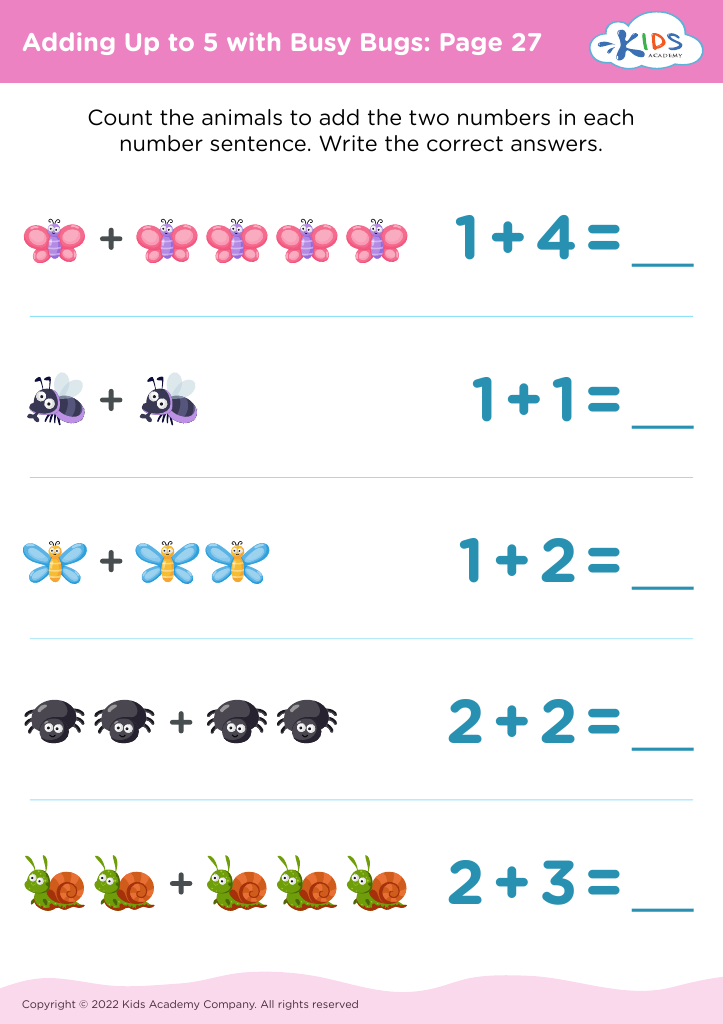
    Adding Up to 5 with Busy Bugs: Page 27
    Adding Up to 5 with Busy Bugs: Page 27
    Adding Up to 5 with Busy Bugs: Page 27
    Worksheet
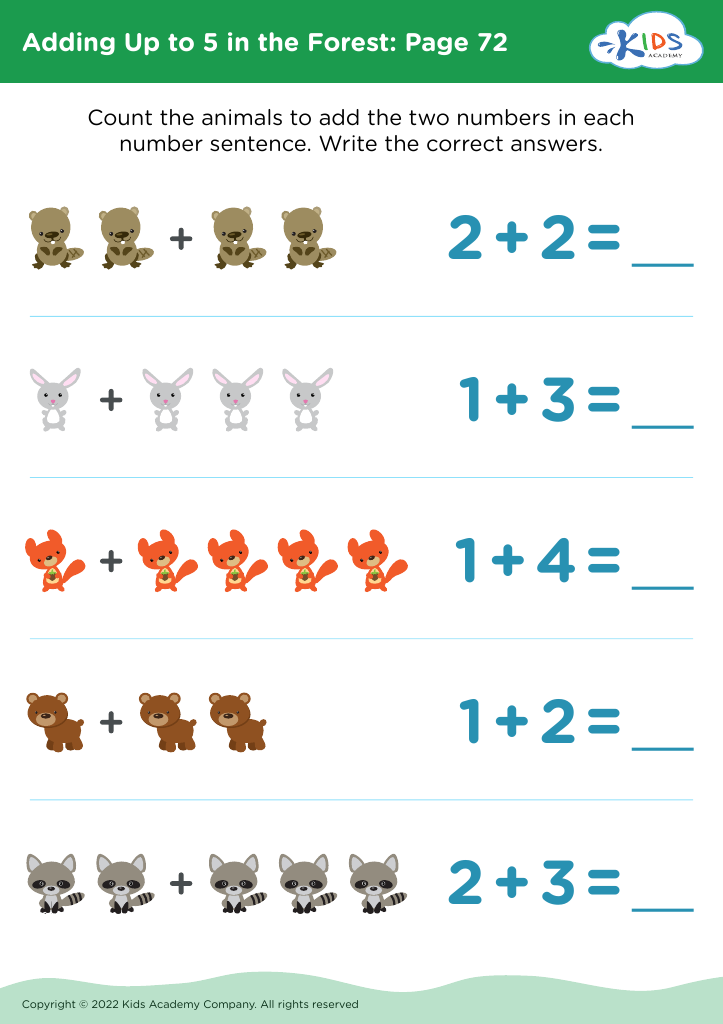
    Adding Up to 5 in the Forest: Page 72
    Adding Up to 5 in the Forest: Page 72
    Adding Up to 5 in the Forest: Page 72
    Worksheet
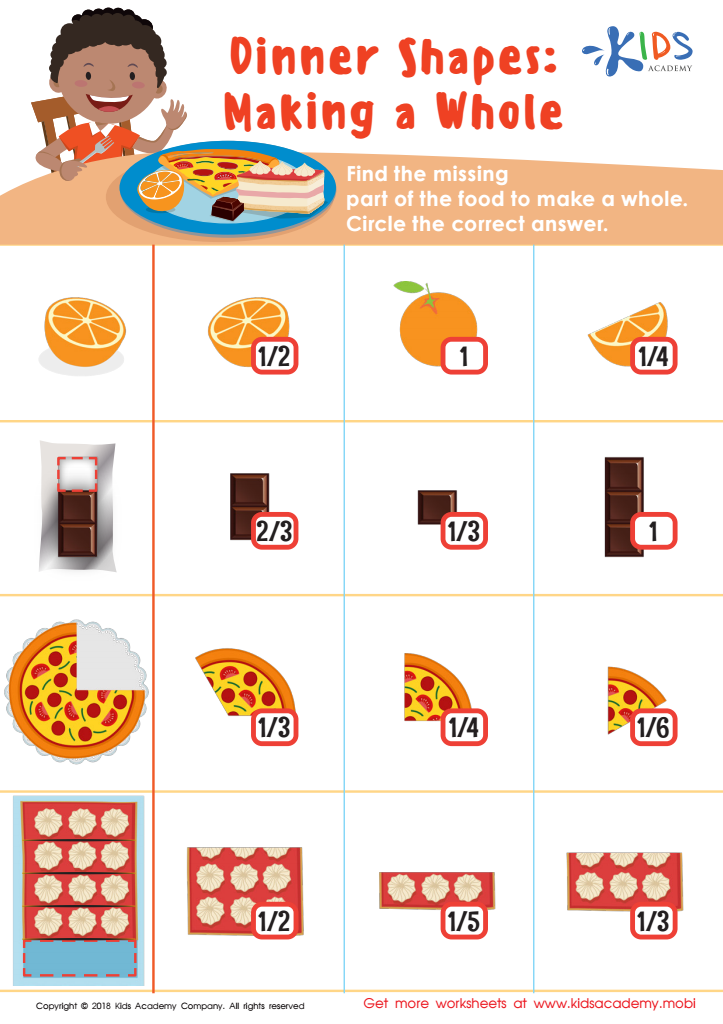
    Dinner Shapes: Making a Whole Worksheet
    Dinner Shapes: Making a Whole Worksheet

    Dinner Shapes: Making a Whole Worksheet

    Using food and snacks to stimulate learning and interest in topics is a great strategy. Fractions can prove tricky, but this worksheet can help your child become an expert. Have them look for the missing parts of the food to make a whole, then circle the answer.
    Dinner Shapes: Making a Whole Worksheet
    Worksheet
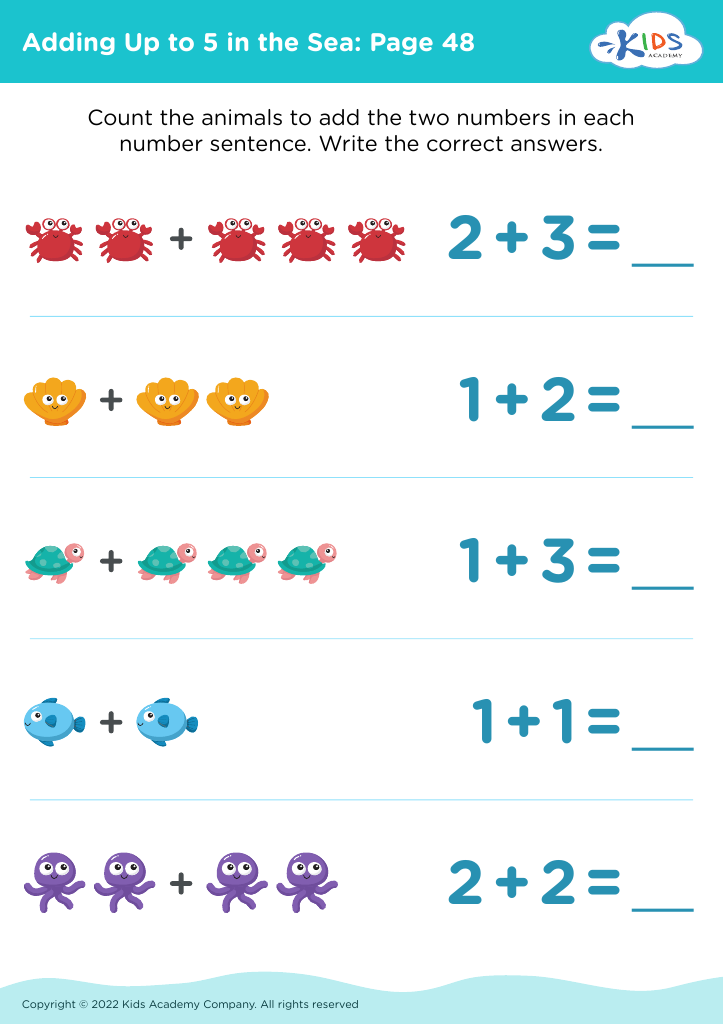
    Adding Up to 5 in the Sea: Page 48
    Adding Up to 5 in the Sea: Page 48
    Adding Up to 5 in the Sea: Page 48
    Worksheet
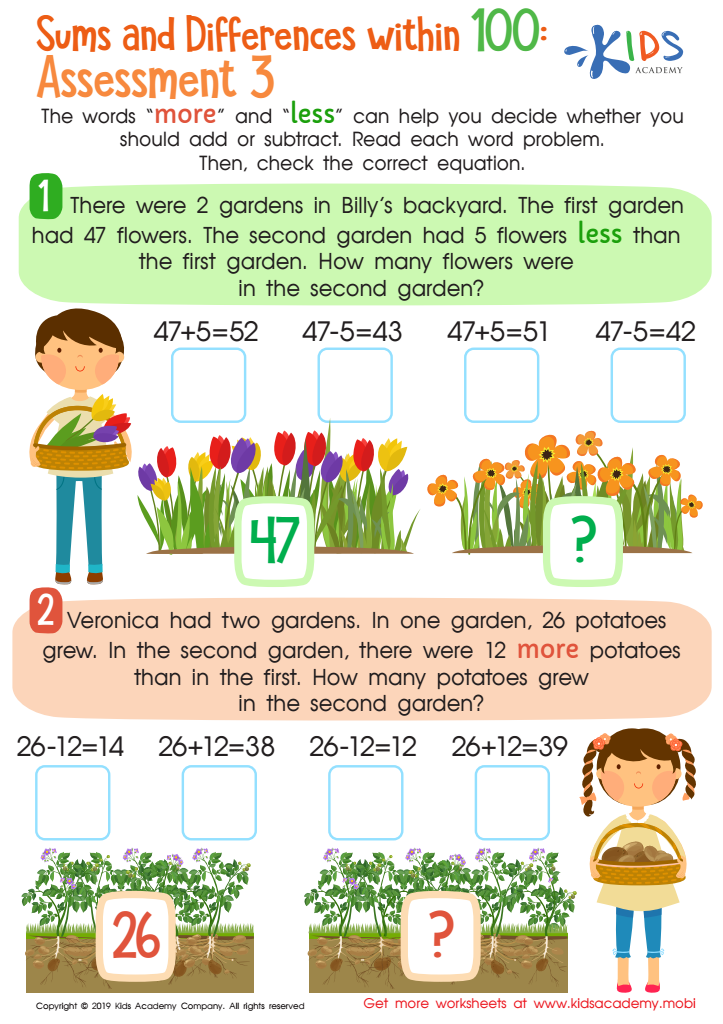
    Sums and Differences Within 1 - Assessment 1 Worksheet
    Sums and Differences Within 1 - Assessment 1 Worksheet
    Sums and Differences Within 1 - Assessment 1 Worksheet
    Help your child understand school topics better with your assistance. For math, go over their worksheet together and discuss the instructions and text. Solve the questions and check the right equation. This will take their learning to the next level.
    Sums and Differences Within 1 - Assessment 1 Worksheet
    Worksheet
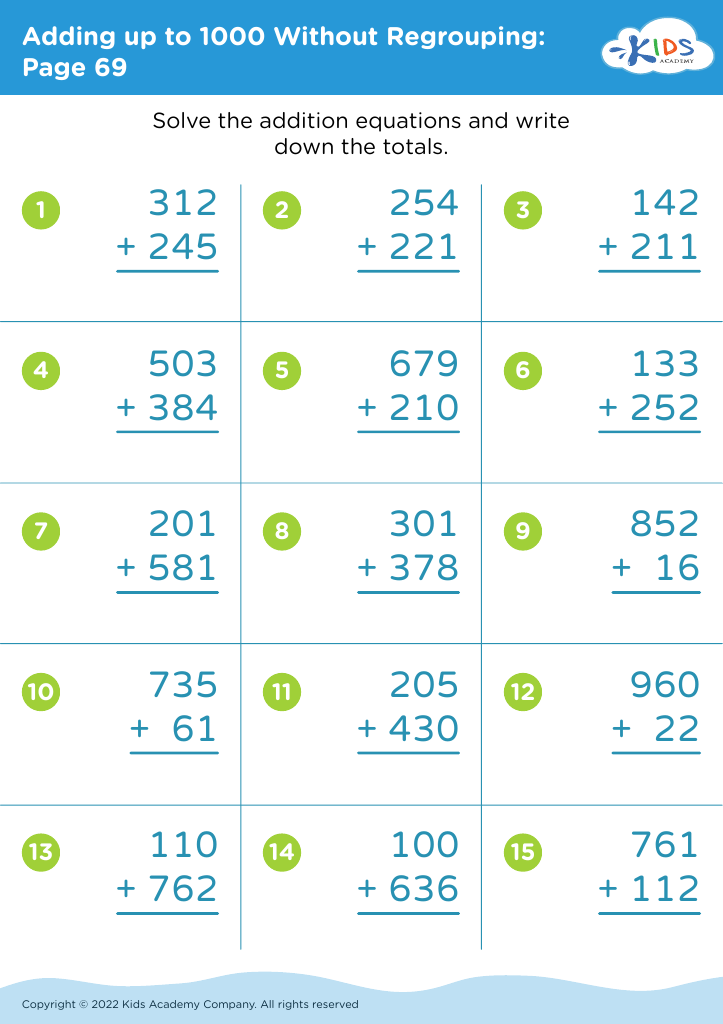
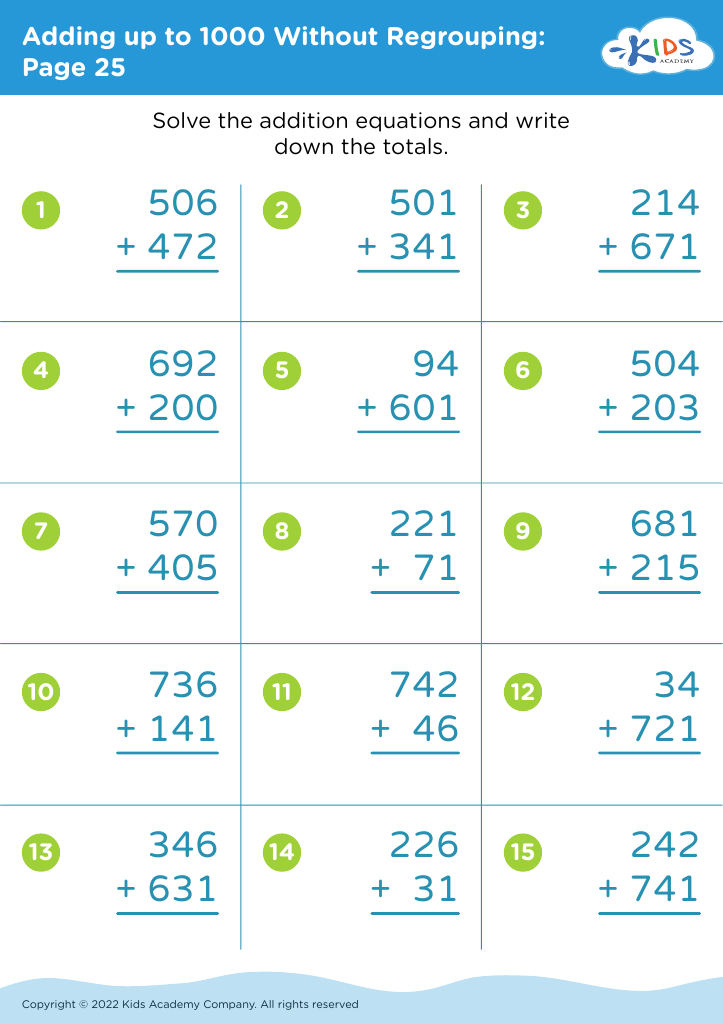
    Adding up to 1000 Without Regrouping: Page 25
    Adding up to 1000 Without Regrouping: Page 25
    Adding up to 1000 Without Regrouping: Page 25
    Worksheet
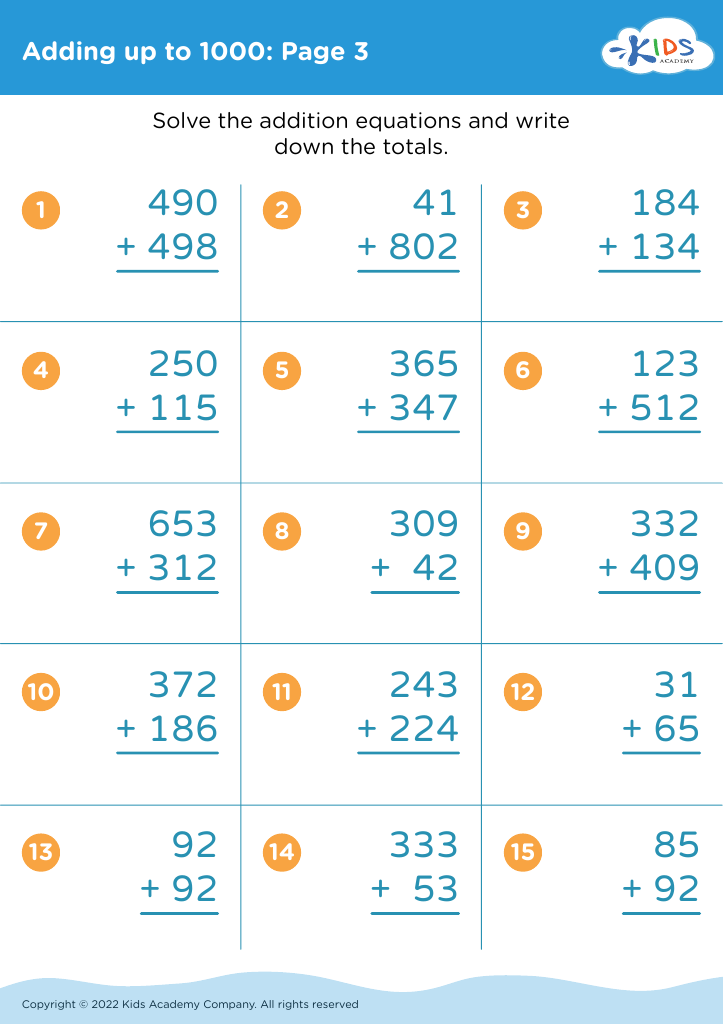
    Adding up to 1000: Page 3
    Adding up to 1000: Page 3

    Adding up to 1000: Page 3

    Adding up to 1000: Page 3
    Worksheet
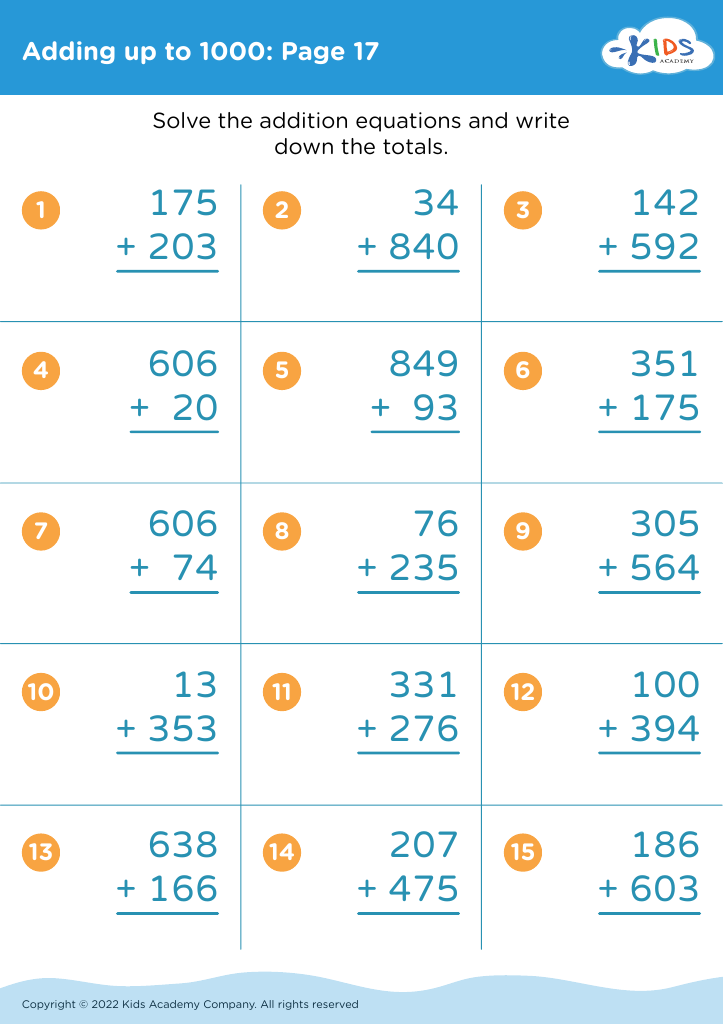
    Adding up to 1000: Page 17
    Adding up to 1000: Page 17

    Adding up to 1000: Page 17

    Adding up to 1000: Page 17
    Worksheet
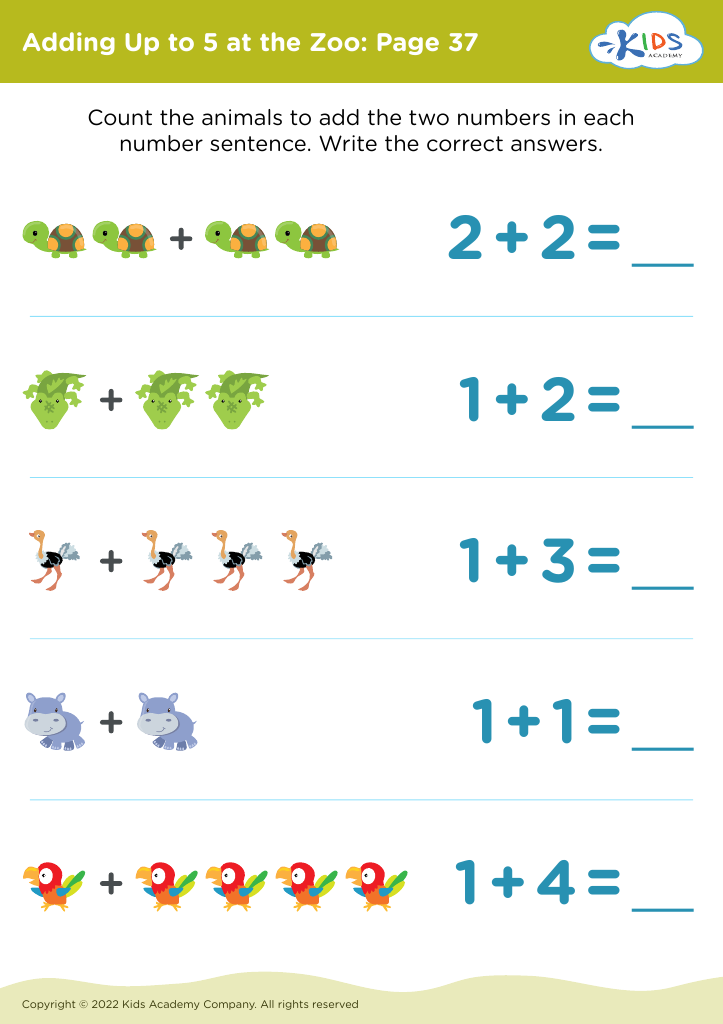
    Adding Up to 5 at the Zoo: Page 37
    Adding Up to 5 at the Zoo: Page 37
    Adding Up to 5 at the Zoo: Page 37
    Worksheet
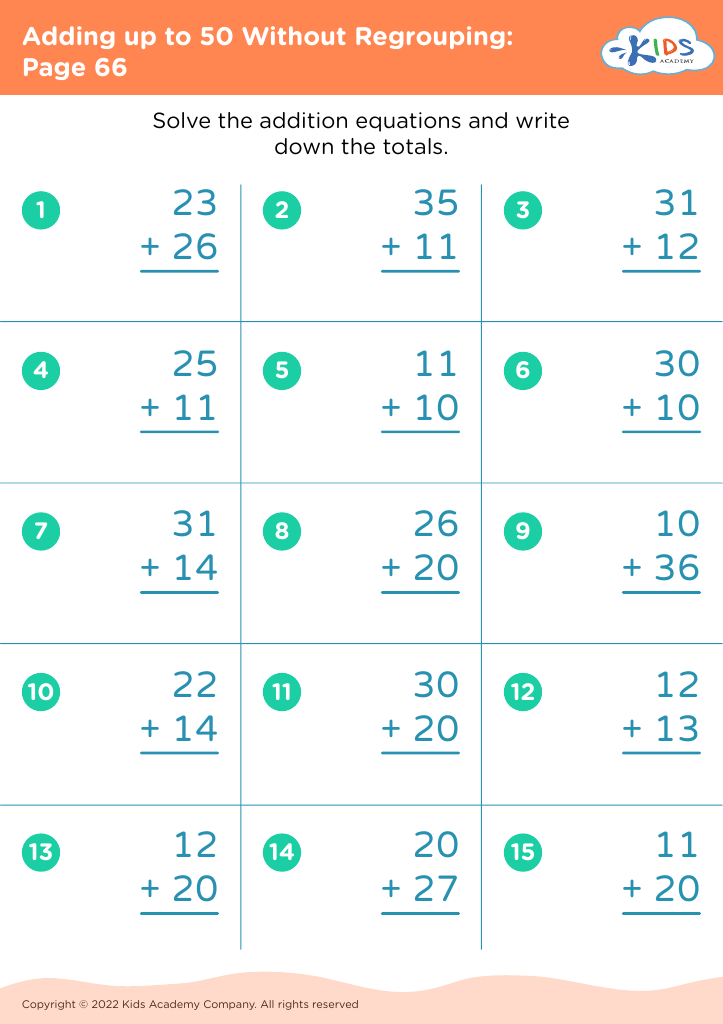
    Adding up to 50 Without Regrouping: Page 66
    Adding up to 50 Without Regrouping: Page 66
    Adding up to 50 Without Regrouping: Page 66
    Worksheet
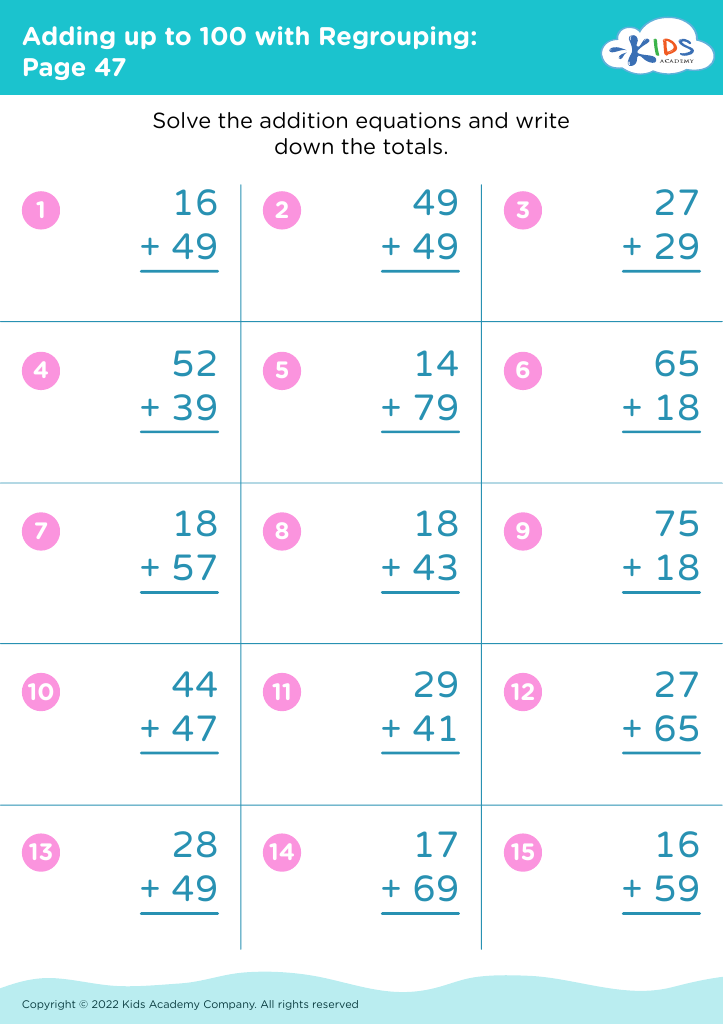
    Adding up to 100 with Regrouping: Page 47
    Adding up to 100 with Regrouping: Page 47
    Adding up to 100 with Regrouping: Page 47
    Worksheet


    Addition is a foundational mathematical concept critical for cognitive development in children aged 3 to 9. Understanding this early arithmetic skill lays the groundwork for more complex mathematical concepts later in life. When children learn to add, they develop problem-solving abilities, logical reasoning, and critical thinking skills, which are essential not just in math but across all subjects.

    For parents and teachers, nurturing a child's ability to add ensures they can confidently engage with everyday situations, from simple tasks like counting items in a grocery cart to tackling more advanced math problems as they grow. Early exposure to addition fosters a positive attitude towards math that can last a lifetime, helping to reduce anxiety and build confidence in their abilities.

    Furthermore, mastering addition enhances a child's communication skills as they learn to articulate mathematical ideas. Incorporating fun, engaging activities around addition encourages a love for learning, making it a rewarding experience for both children and educators alike. By prioritizing the development of addition skills in early childhood, parents and teachers help prepare children for academic success and ensure they possess the essential life skills needed for their future.