Filters

20 filtered results

Clear all filters
Favorites
With answer key
Interactive

20 filtered results

Difficulty Level

Grade


Discover our engaging "Understand Fractions Addition Worksheets" designed for young learners aged 3-9! These worksheets provide an interactive way to introduce the concept of fractions alongside addition, making math both fun and accessible. Through colorful visuals and age-appropriate exercises, children will explore the fundamentals of combining fractional values, laying a strong foundation for their mathematical skills. Ideal for parents and educators alike, our worksheets cater to various learning styles, promoting critical thinking and problem-solving abilities. Enhance your child's understanding of math concepts with our easy-to-use resources and watch them thrive in their early mathematics journey!
Check out this FREE Trial Lesson on Addition for age 3-9!

Short and Long Vowel Sort

Favorites
With answer key
Interactive
  • 3-9
  • Understand fractions
  • Addition
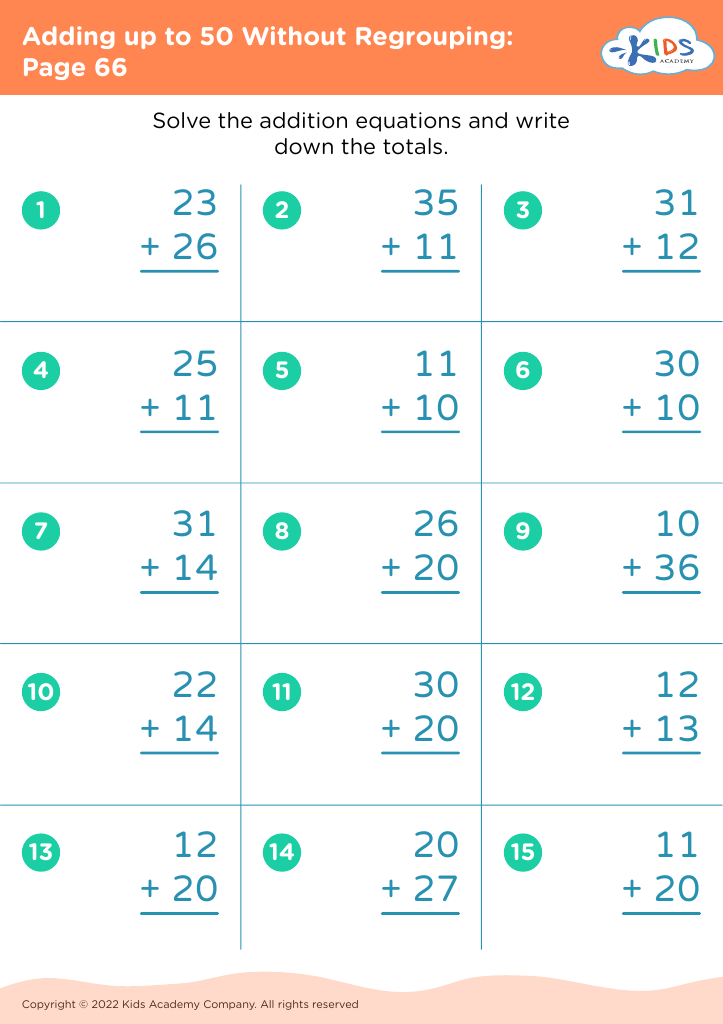
Adding up to 50 Without Regrouping: Page 66
Worksheet
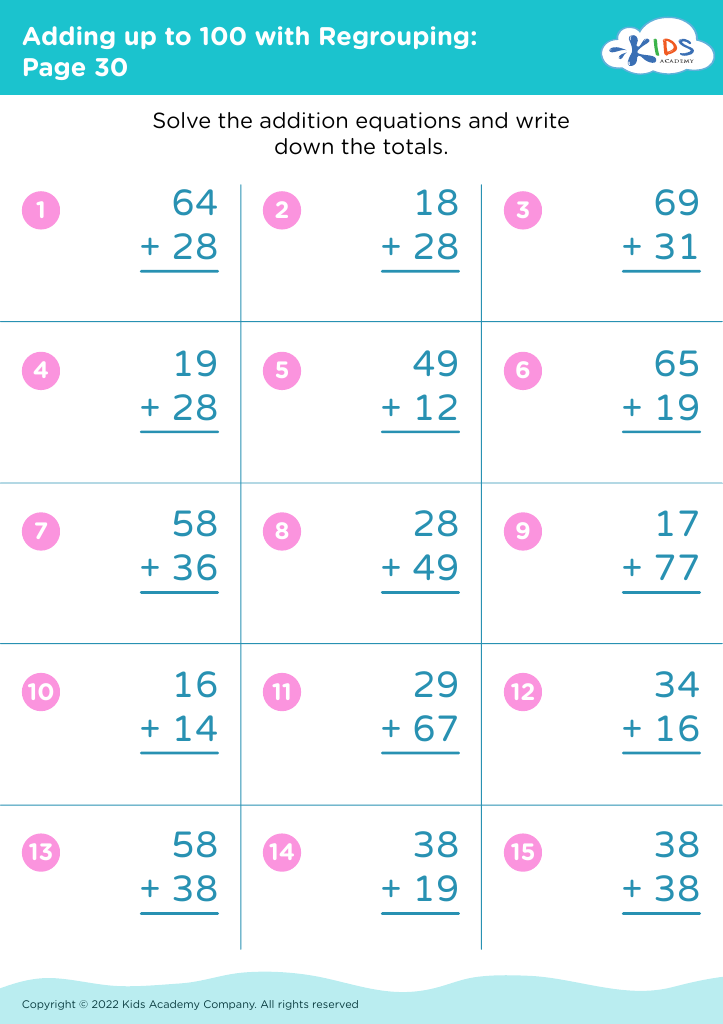
Adding up to 100 with Regrouping: Page 30
Worksheet
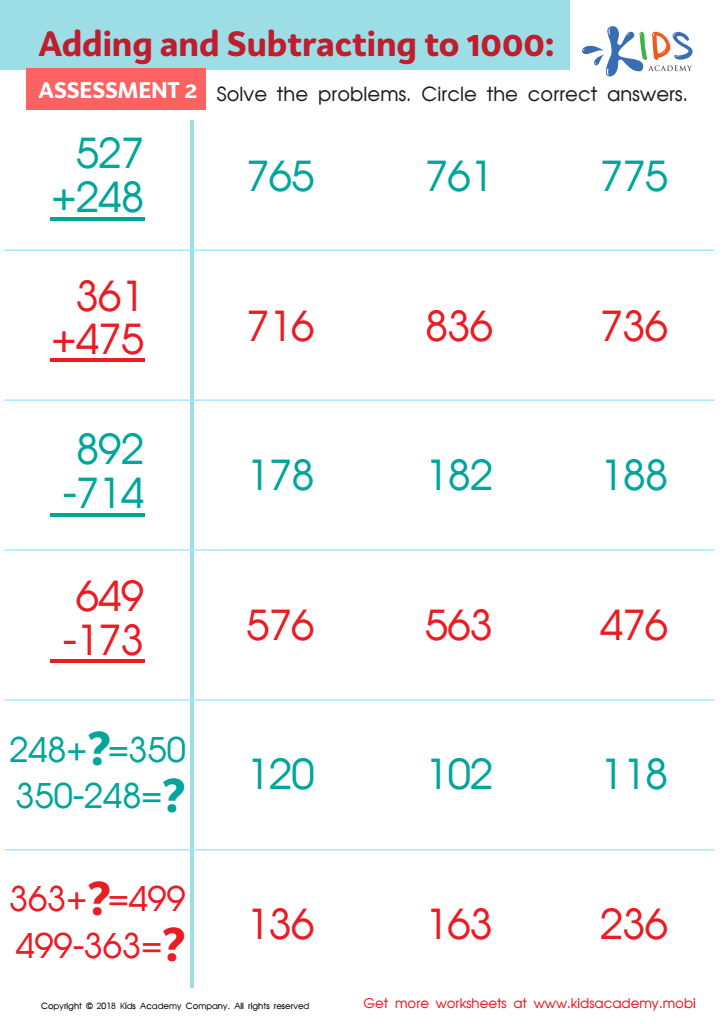
Adding and Subtracting to 1 Worksheet: Assessment 2

Adding and Subtracting to 1 Worksheet: Assessment 2

Test your child's addition and subtraction of 3-digit numbers with this assessment worksheet! They'll practice regrouping and pre-algebra skills to show their expertise. Have them work through the page and circle their answers, then see how many they got right to check their understanding and progress.
Adding and Subtracting to 1 Worksheet: Assessment 2
Worksheet
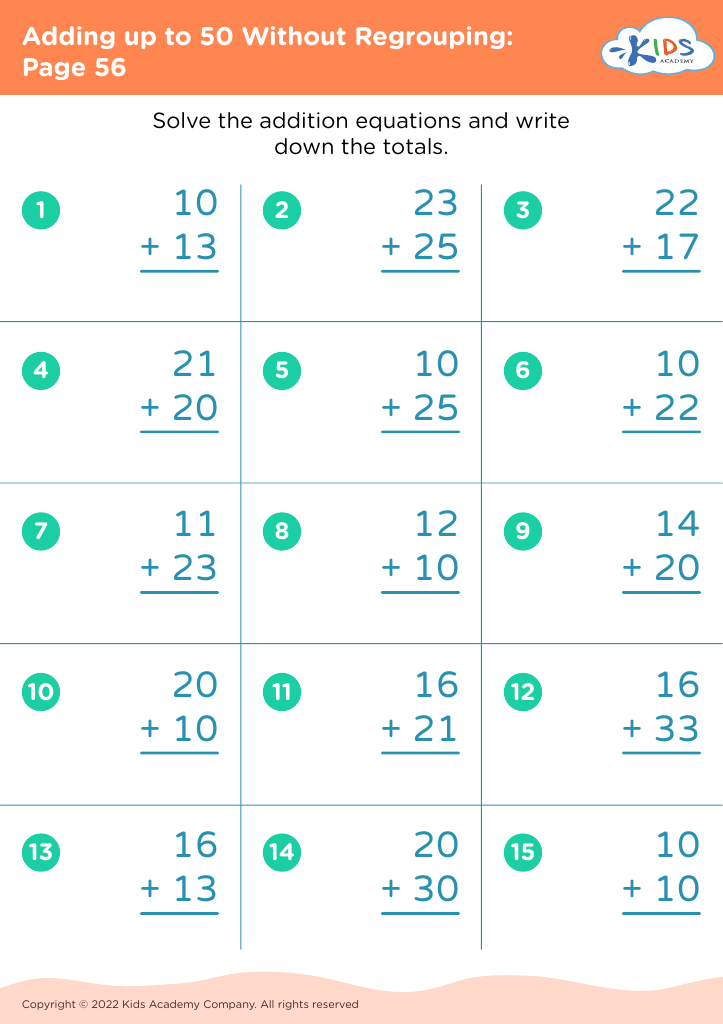
Adding up to 50 Without Regrouping: Page 56
Worksheet
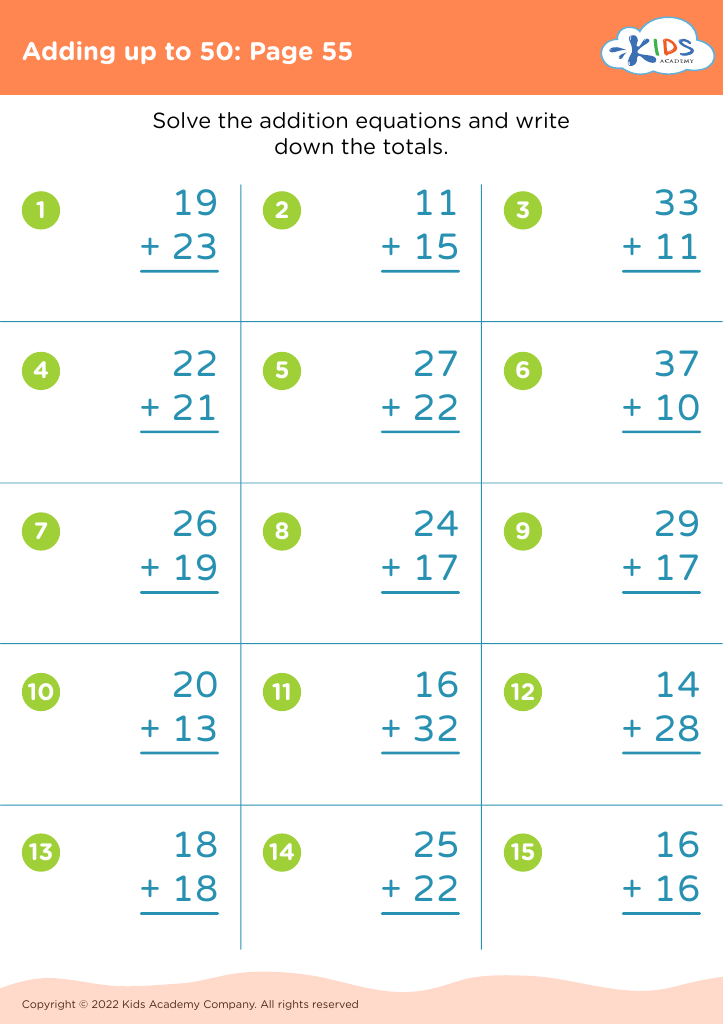
Adding up to 50: Page 55

Adding up to 50: Page 55

Adding up to 50: Page 55
Worksheet
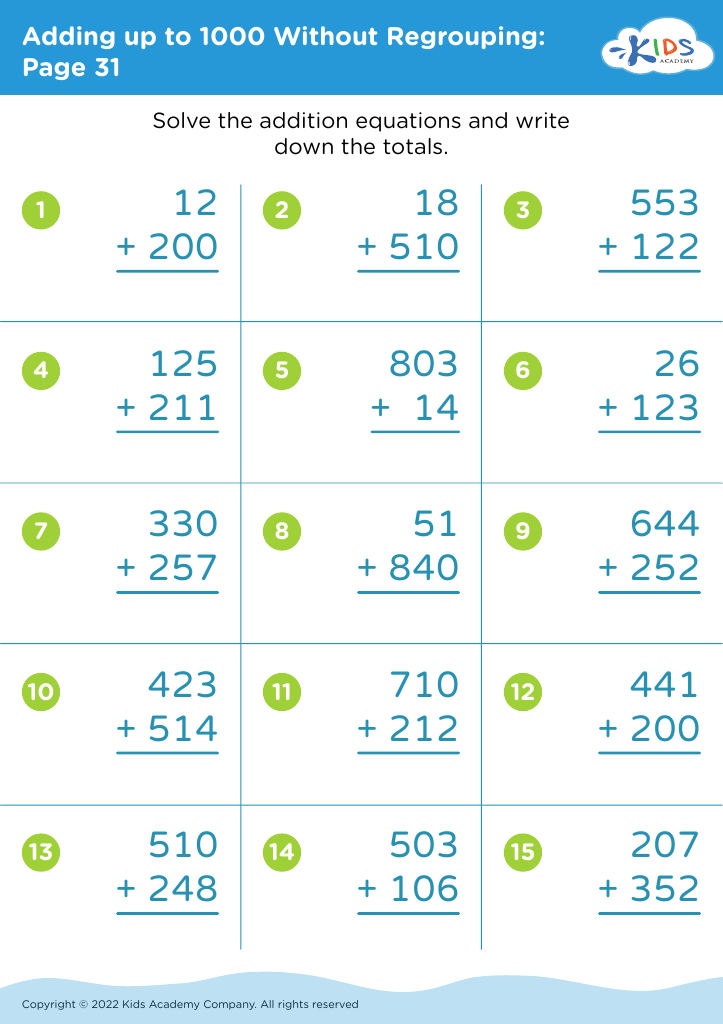
Adding up to 1000 Without Regrouping: Page 31
Worksheet
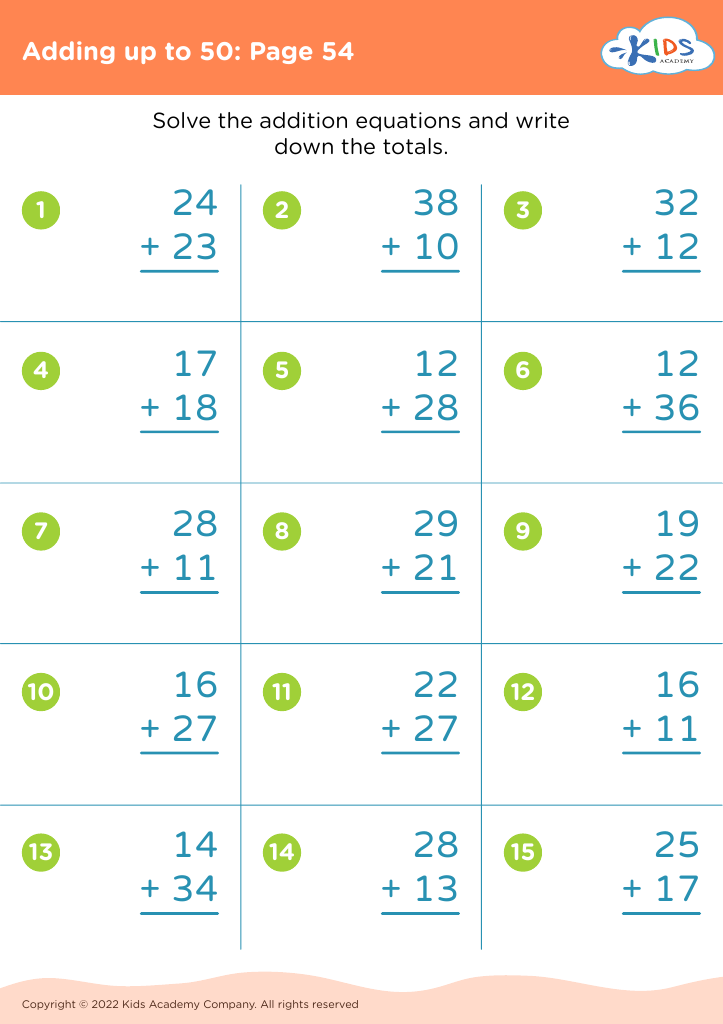
Adding up to 50: Page 54

Adding up to 50: Page 54

Adding up to 50: Page 54
Worksheet
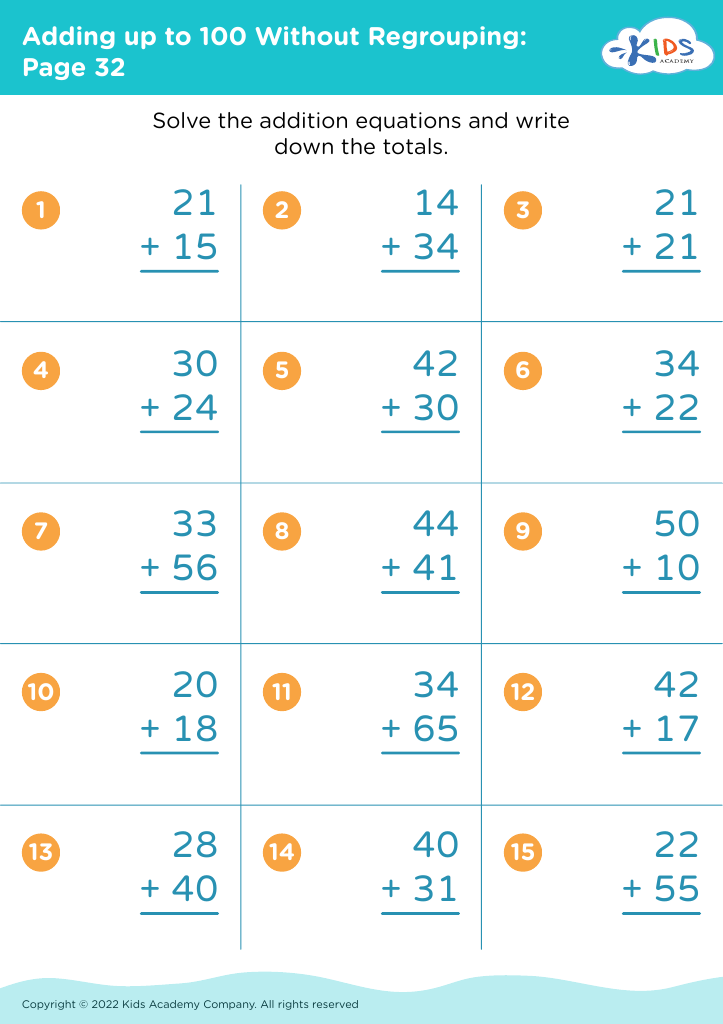
Adding up to 100 Without Regrouping: Page 32
Worksheet
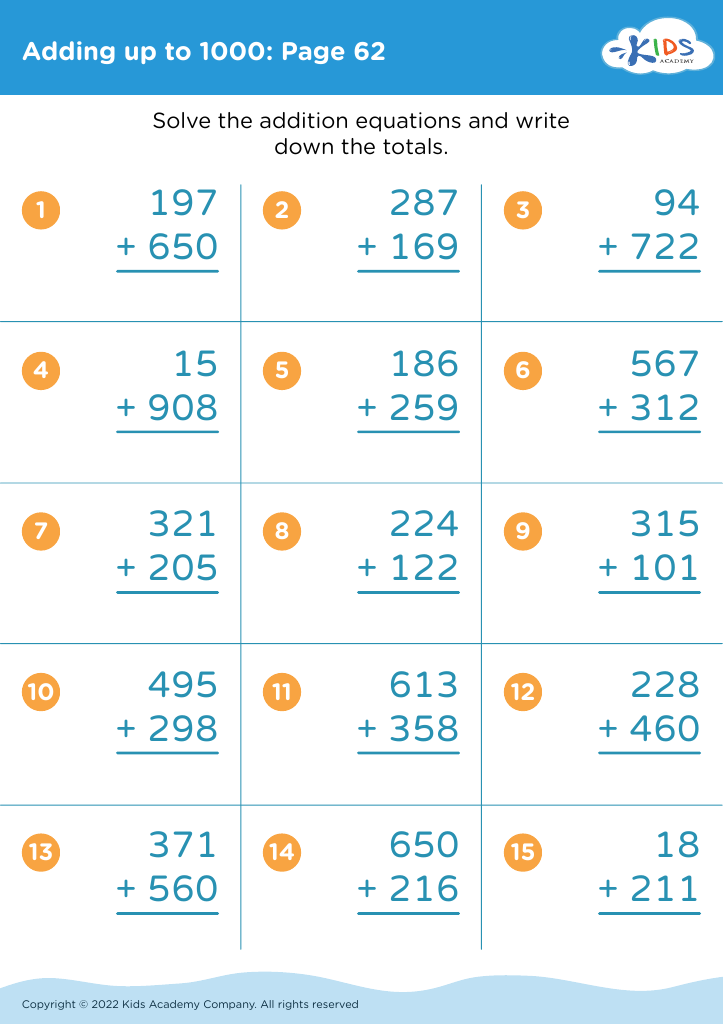
Adding up to 1000: Page 62

Adding up to 1000: Page 62

Adding up to 1000: Page 62
Worksheet
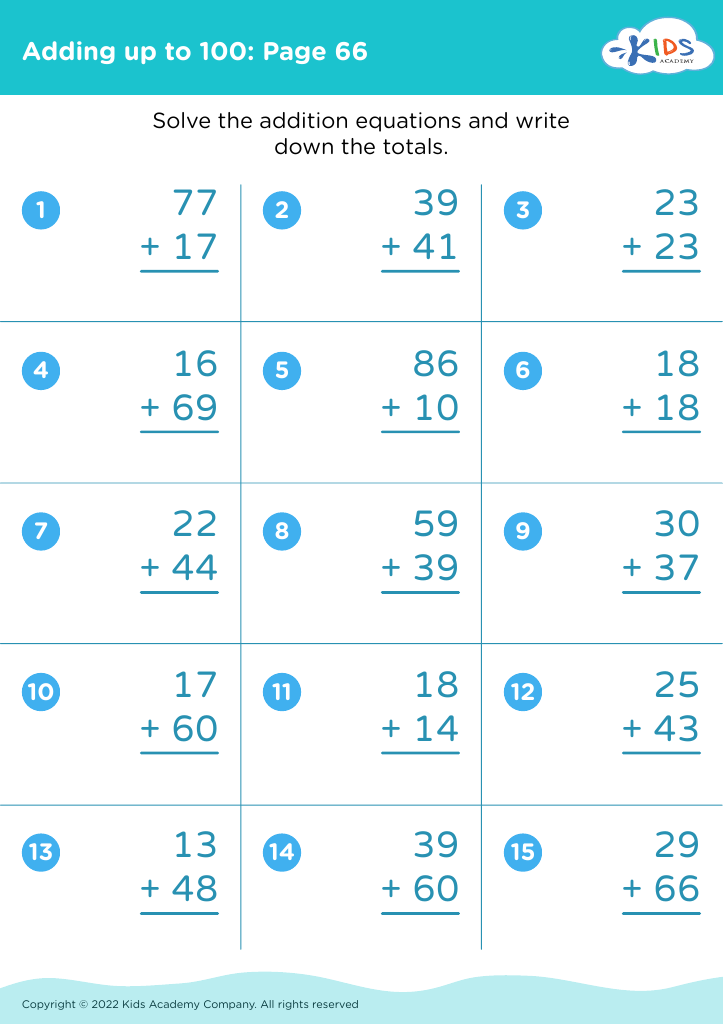
Adding up to 100: Page 66

Adding up to 100: Page 66

Adding up to 100: Page 66
Worksheet
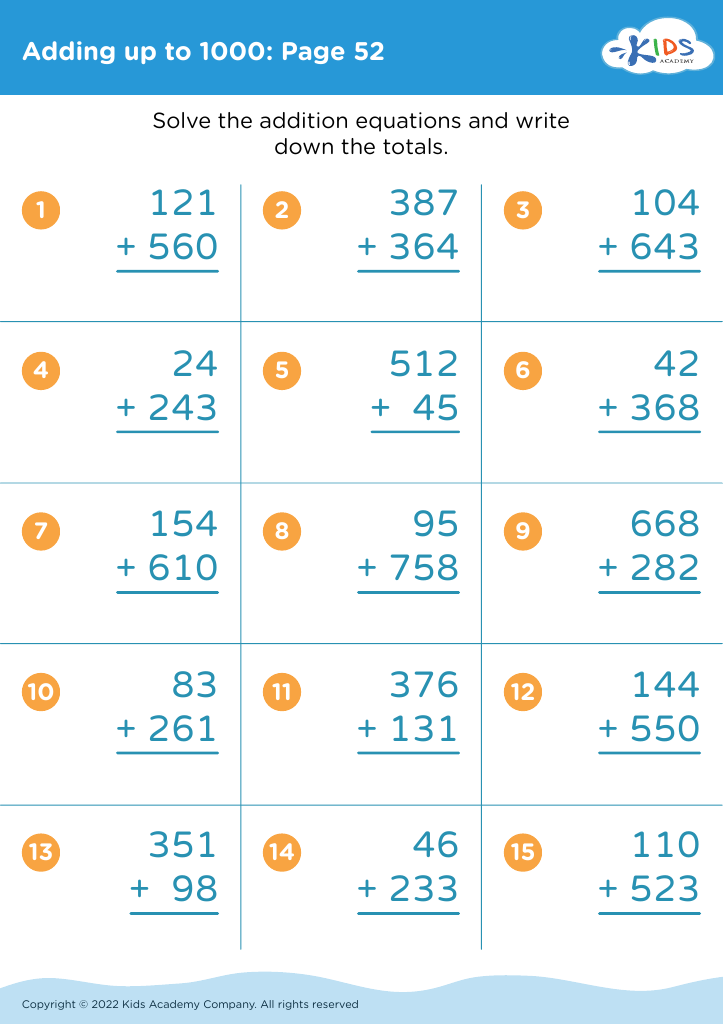
Adding up to 1000: Page 52

Adding up to 1000: Page 52

Adding up to 1000: Page 52
Worksheet
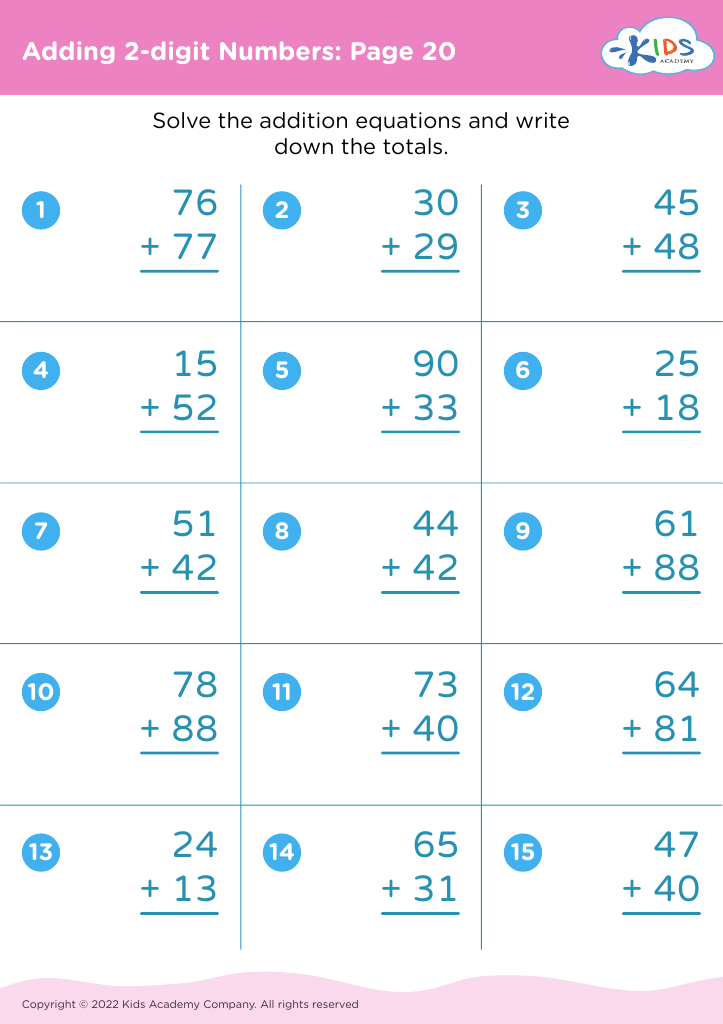
Adding 2-digit Numbers: Page 20

Adding 2-digit Numbers: Page 20

Adding 2-digit Numbers: Page 20
Worksheet
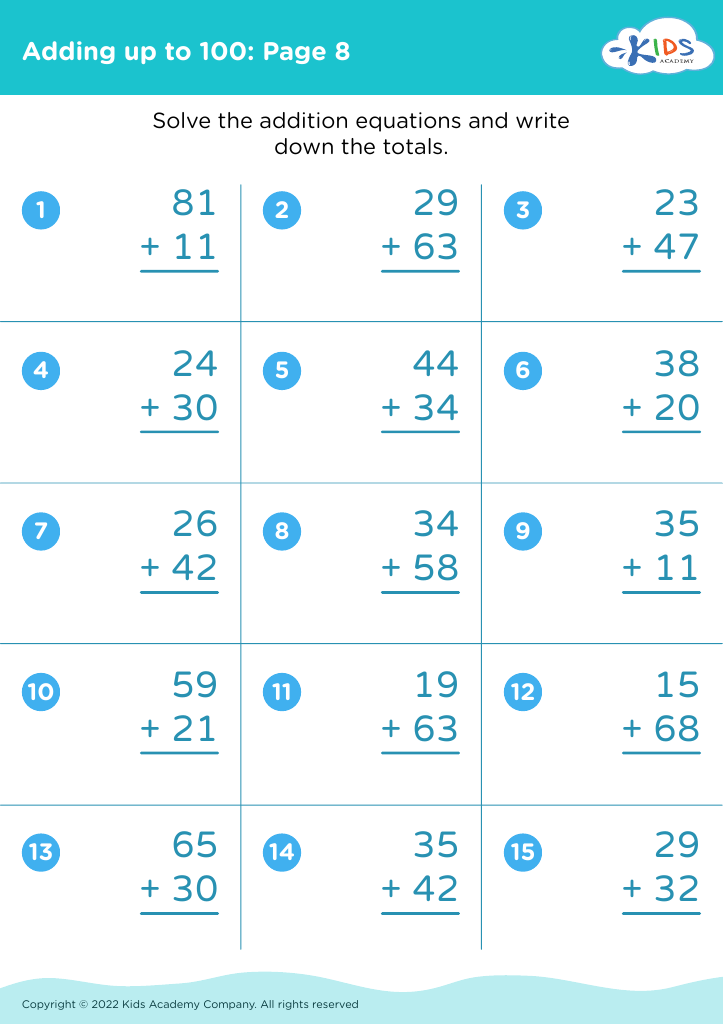
Adding up to 100: Page 8

Adding up to 100: Page 8

Adding up to 100: Page 8
Worksheet
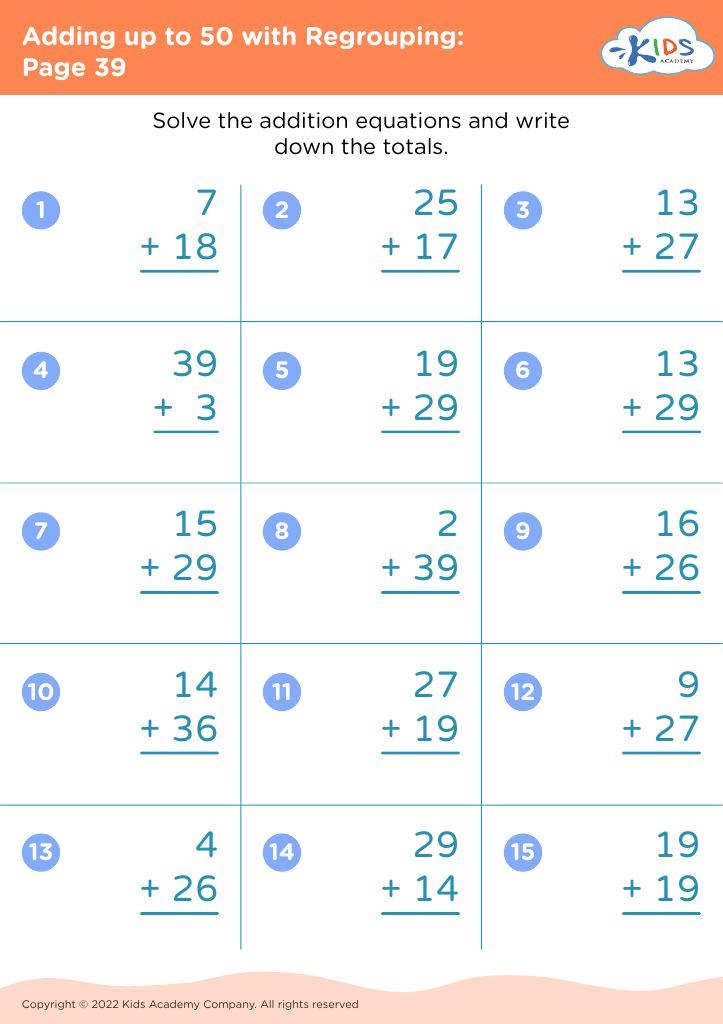
Adding up to 50 with Regrouping: Page 39
Worksheet
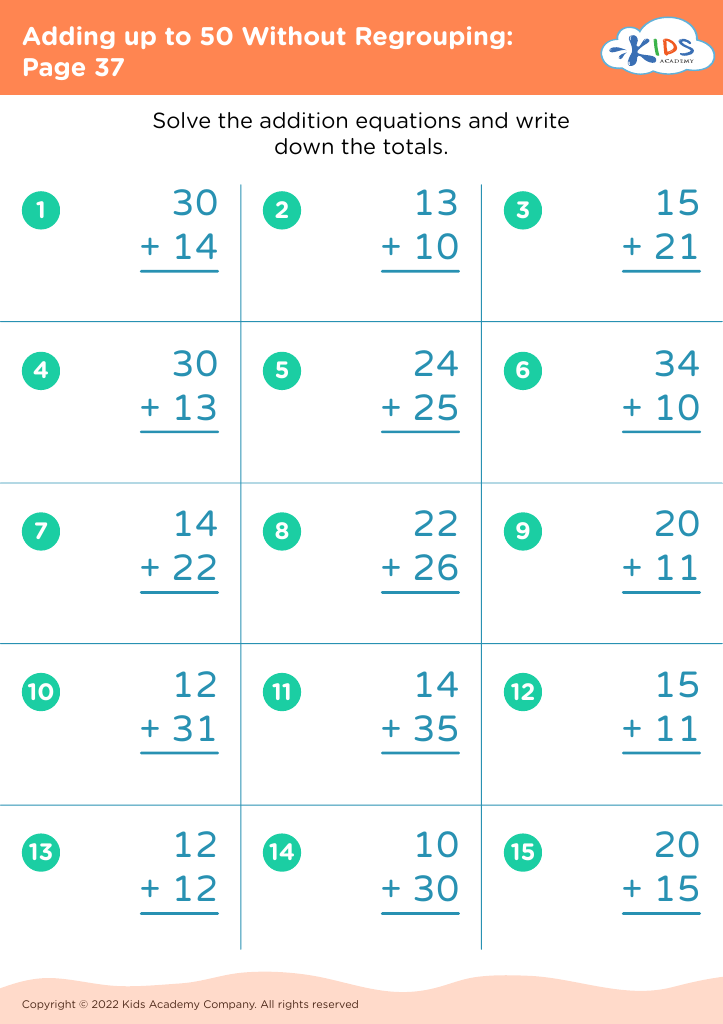
Adding up to 50 Without Regrouping: Page 37
Worksheet
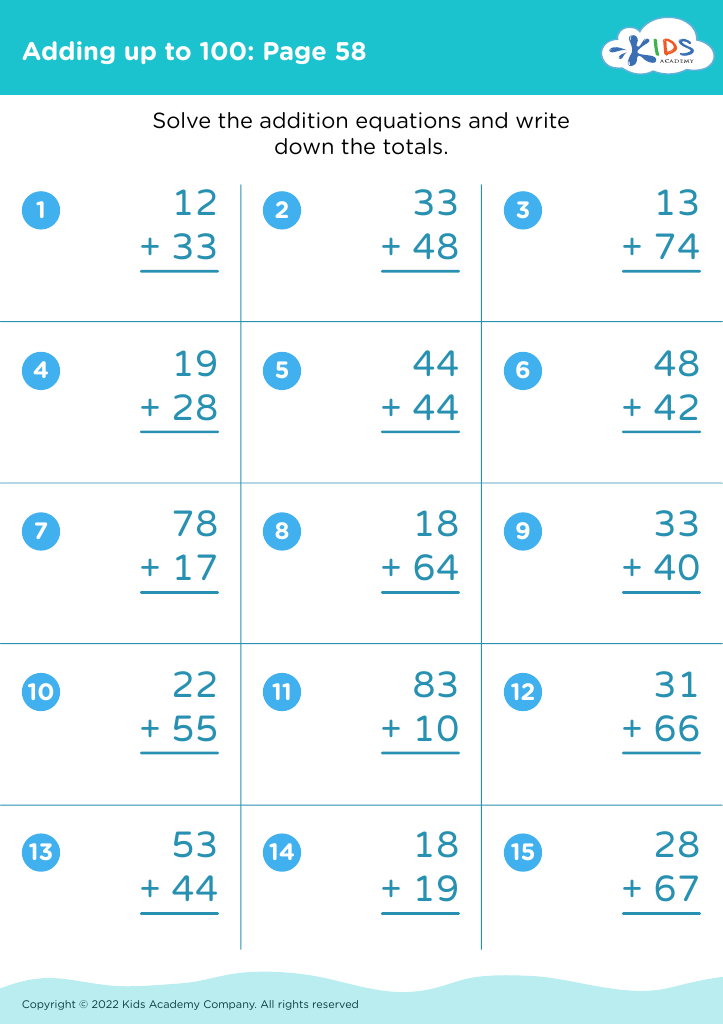
Adding up to 100: Page 58

Adding up to 100: Page 58

Adding up to 100: Page 58
Worksheet
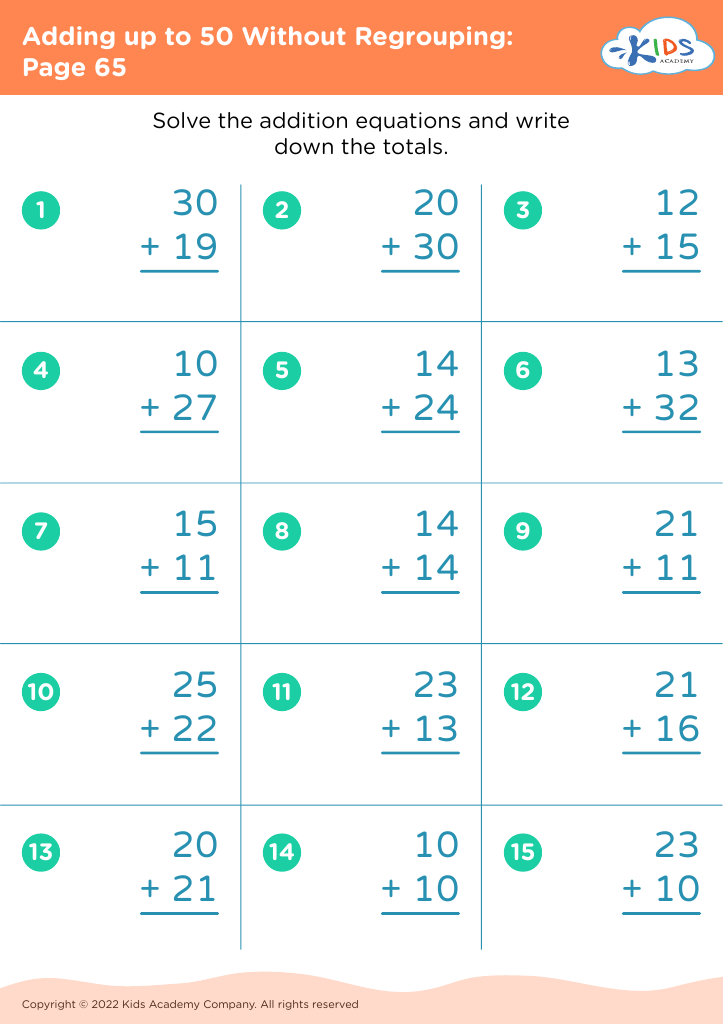
Adding up to 50 Without Regrouping: Page 65
Worksheet
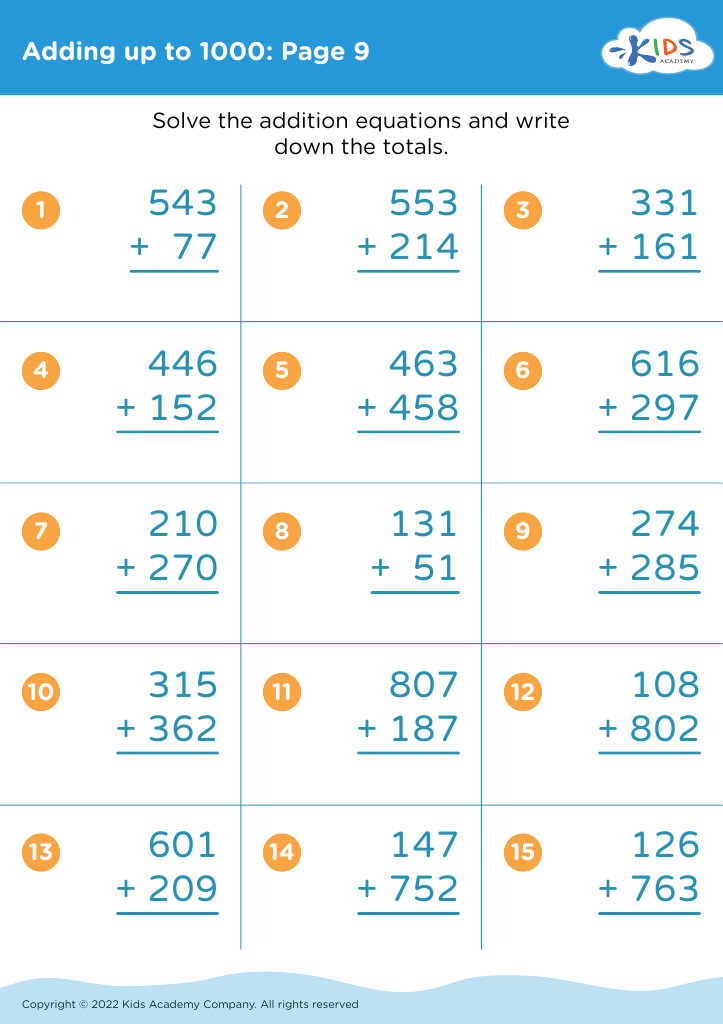
Adding up to 1000: Page 9

Adding up to 1000: Page 9

Adding up to 1000: Page 9
Worksheet
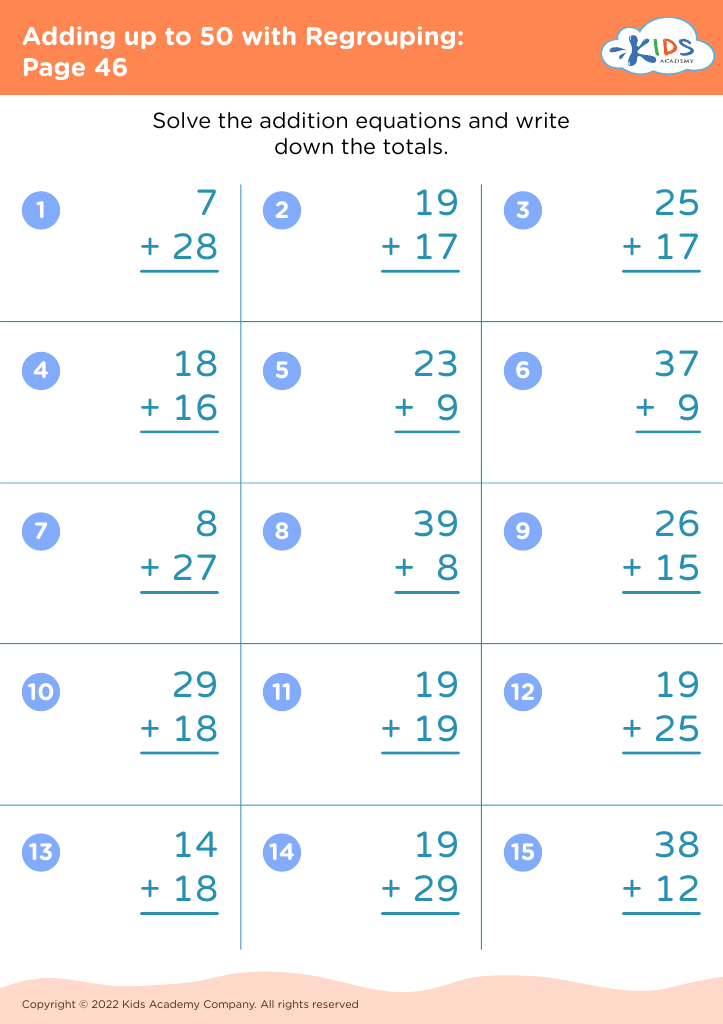
Adding up to 50 with Regrouping: Page 46
Worksheet
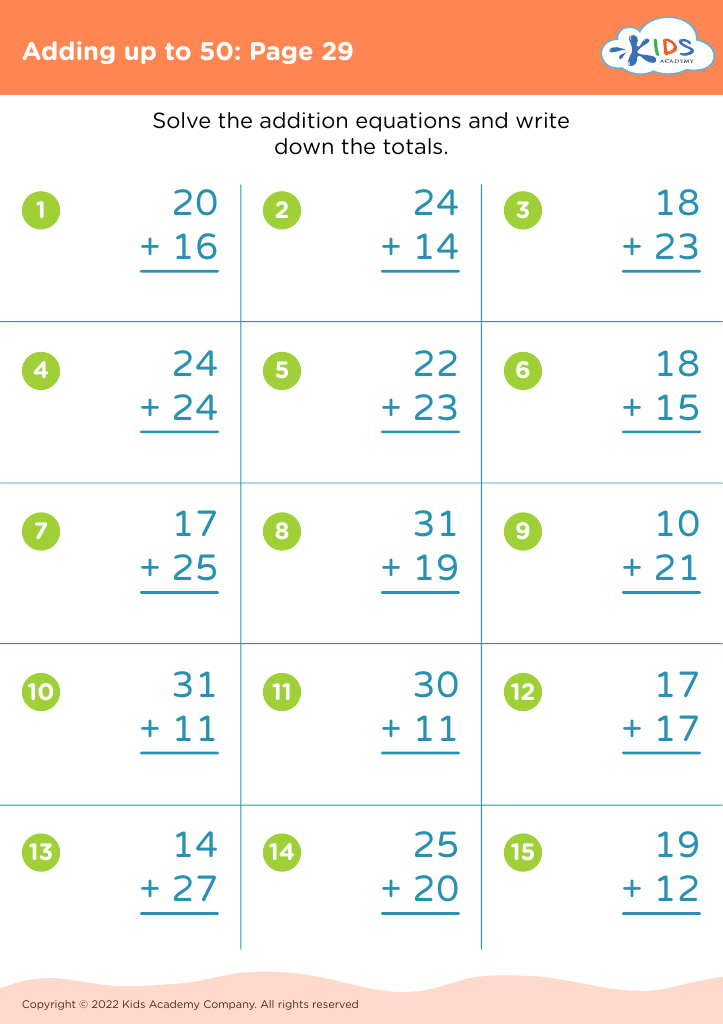
Adding up to 50: Page 29

Adding up to 50: Page 29

Adding up to 50: Page 29
Worksheet


Understanding fraction addition is crucial for children ages 3 to 9, as it lays the foundation for their mathematical skills and cognitive development. At this early stage, children are naturally curious and eager to learn about numbers and their relationships. Introducing fractions helps young learners grasp essential concepts such as part-whole relationships, equality, and division.

Parents and teachers should care because fraction addition enhances children's critical thinking and problem-solving abilities. For instance, as they work with fractions, children practice logical reasoning and develop a deeper understanding of division and sharing, which are vital life skills. Early exposure to fractions can also prevent future challenges when they encounter more complex mathematical concepts in later grades.

Moreover, making fraction addition enjoyable through games, visual aids, or hands-on activities fosters a positive attitude toward mathematics, reducing anxiety and building self-confidence. Culturally, understanding fractions has practical applications in cooking, financing, and everyday decision-making, reinforcing their relevance.

Incorporating fraction addition into learning activities helps create a well-rounded education where children not only learn math but also gain valuable social and emotional skills, ultimately preparing them for success in academics and life beyond the classroom.