Understanding quantity Addition Worksheets for Ages 3-9
26 filtered results
-
From - To
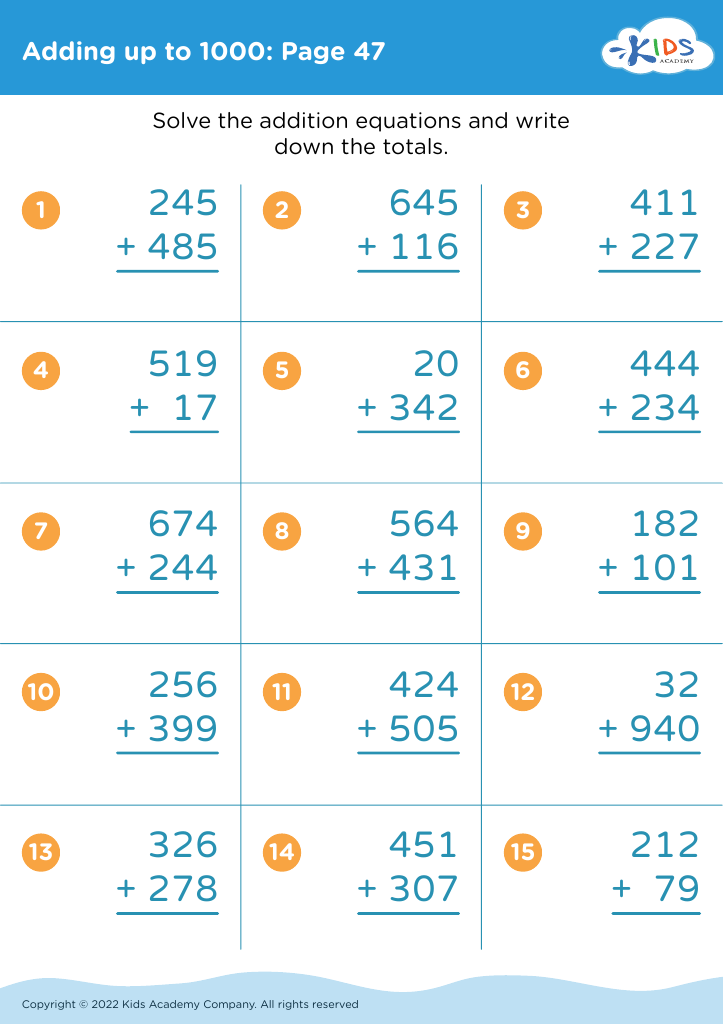
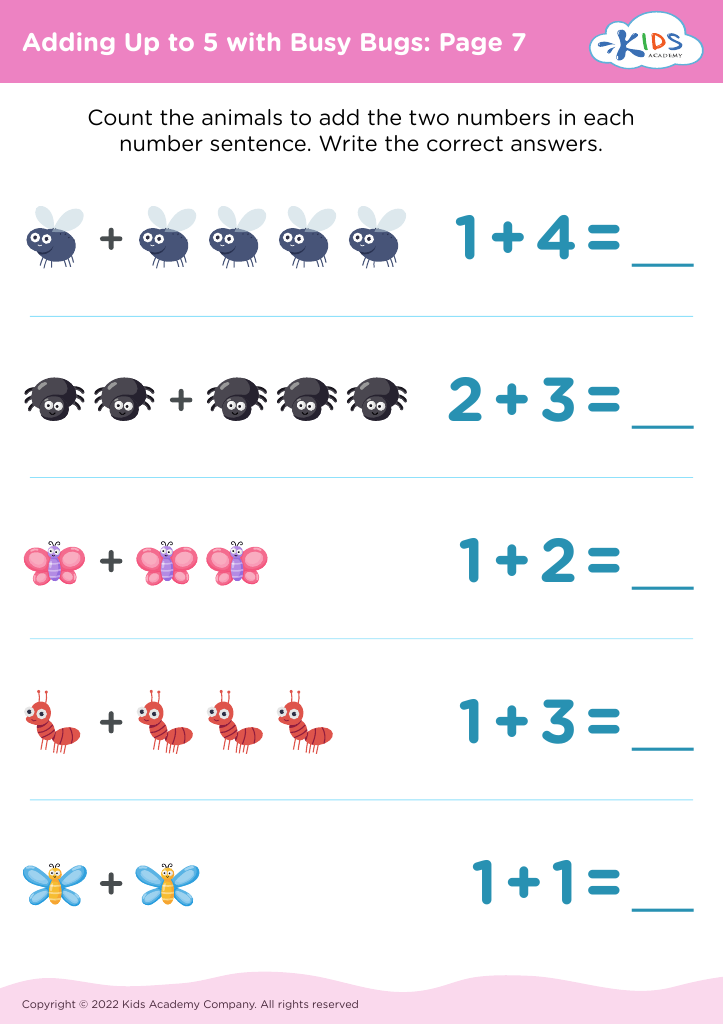
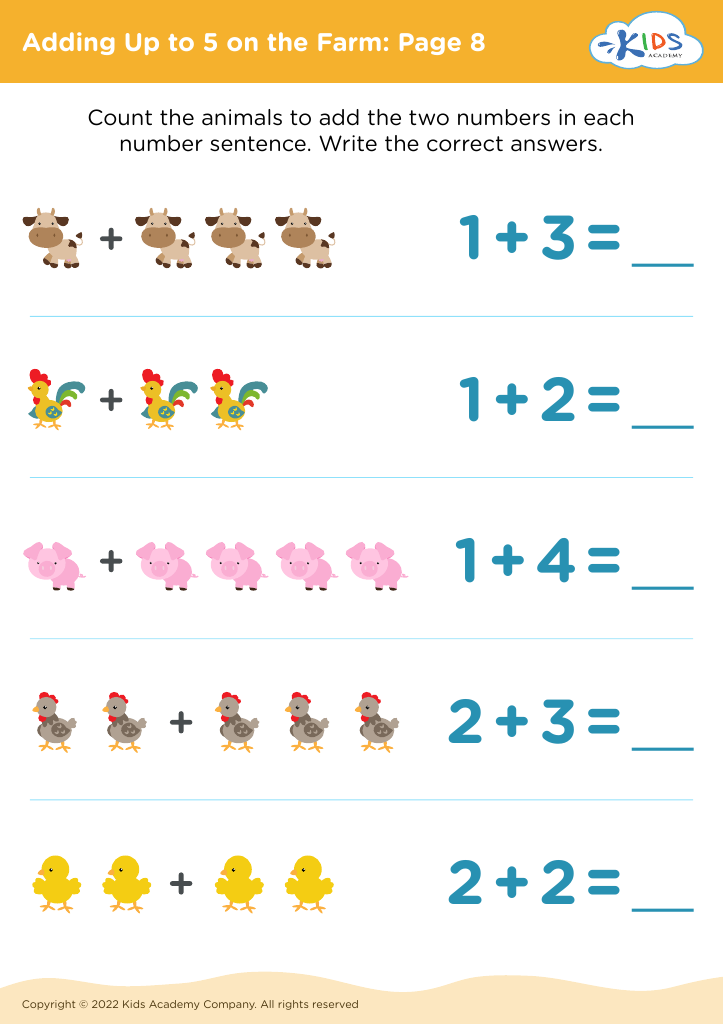
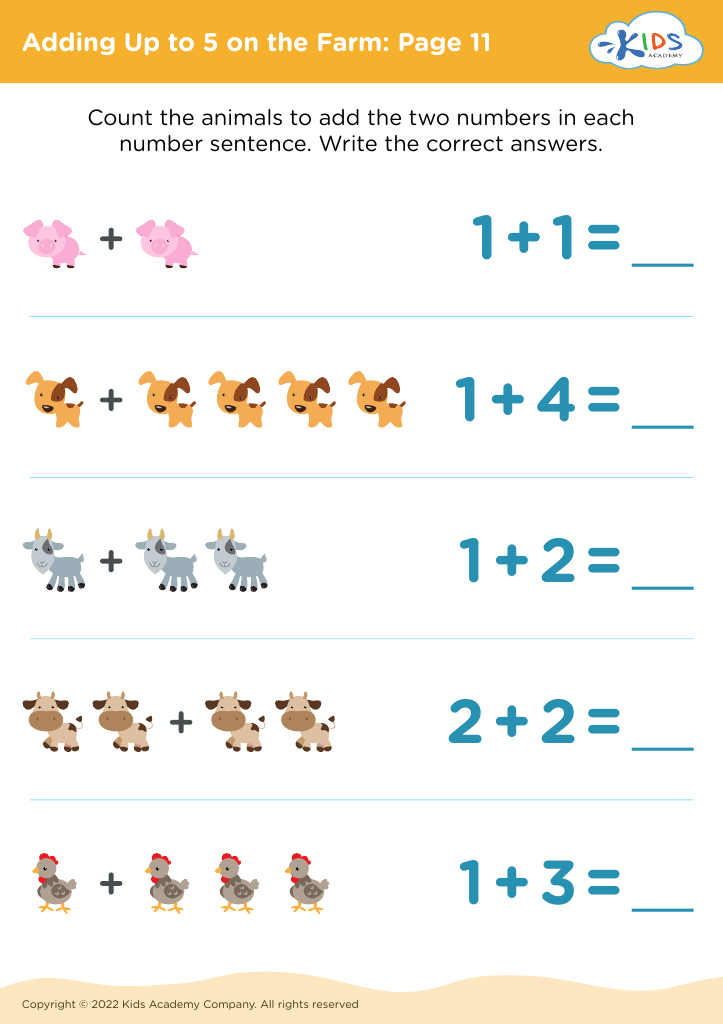
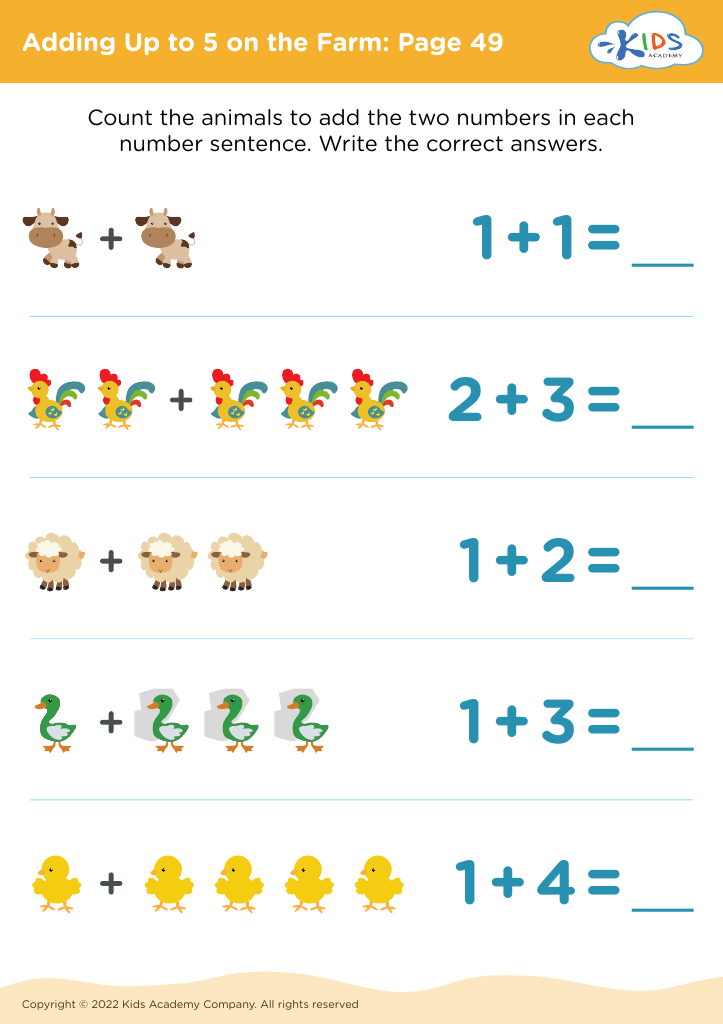
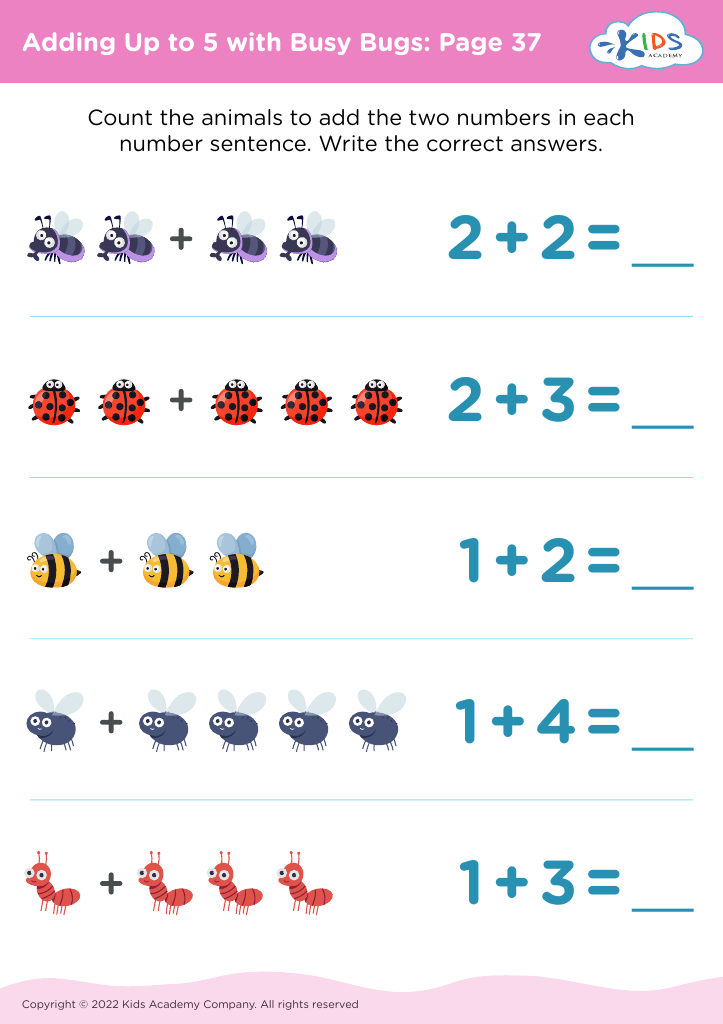
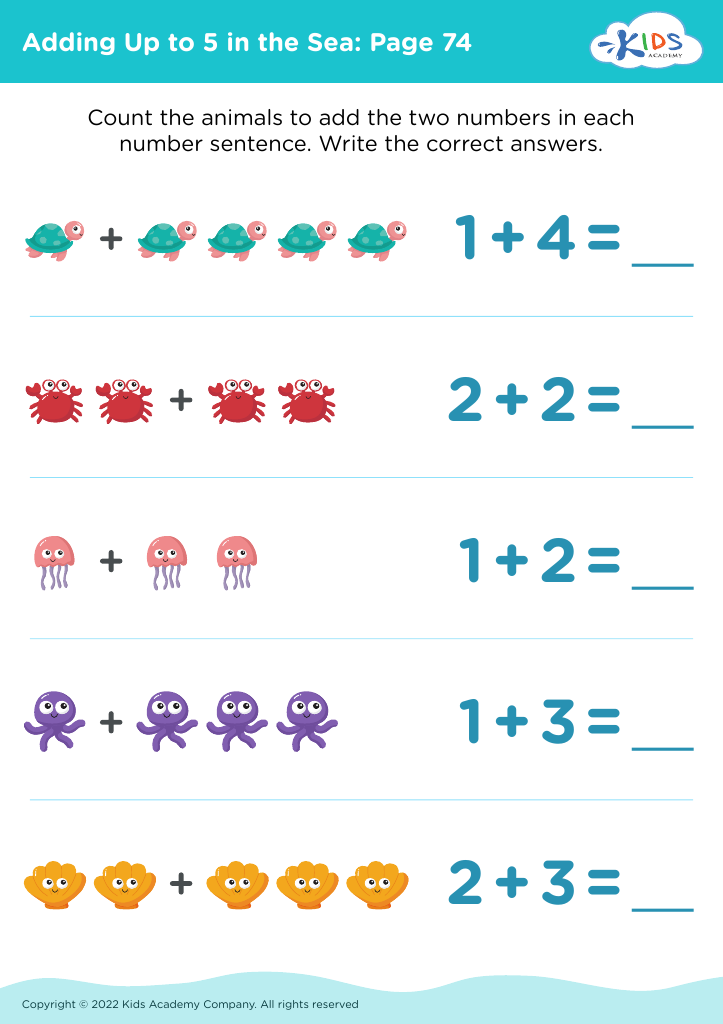
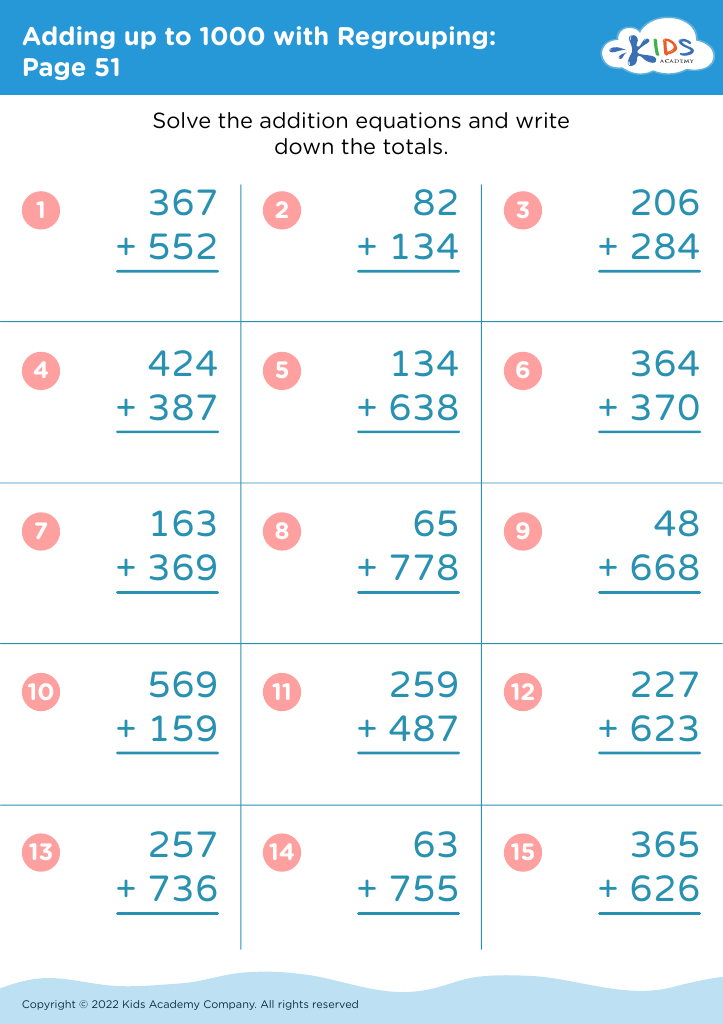
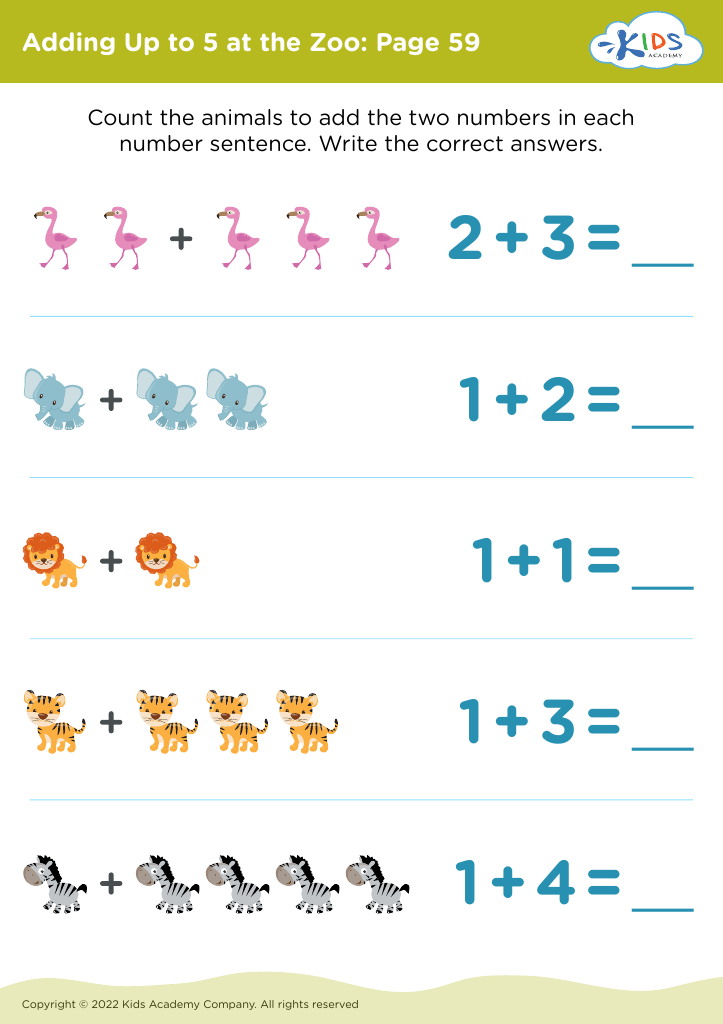
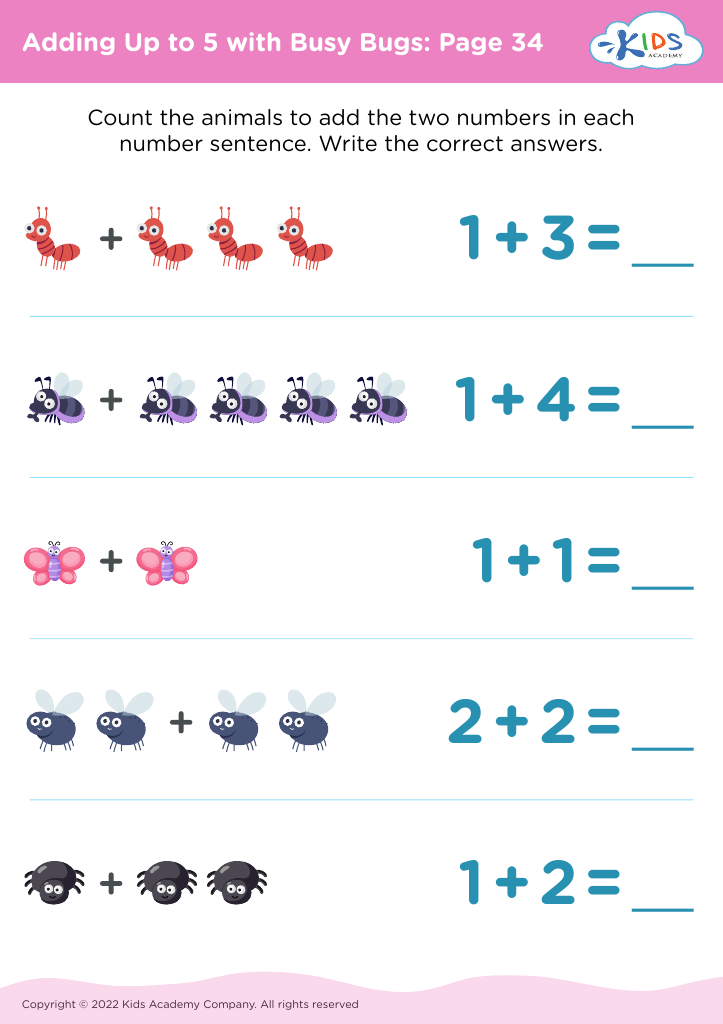
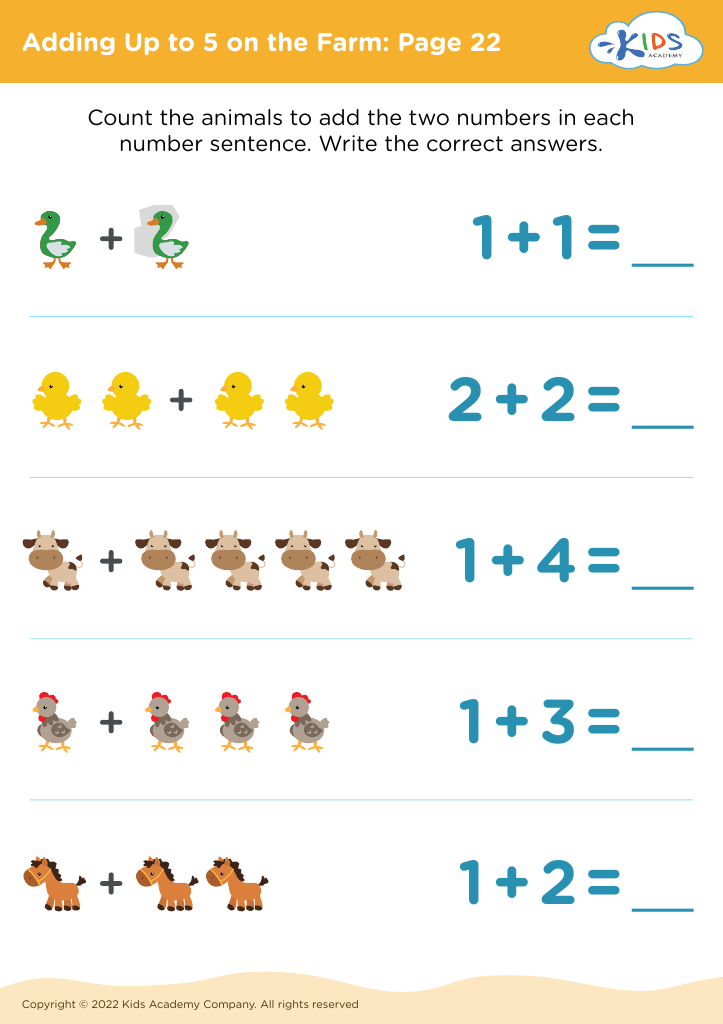
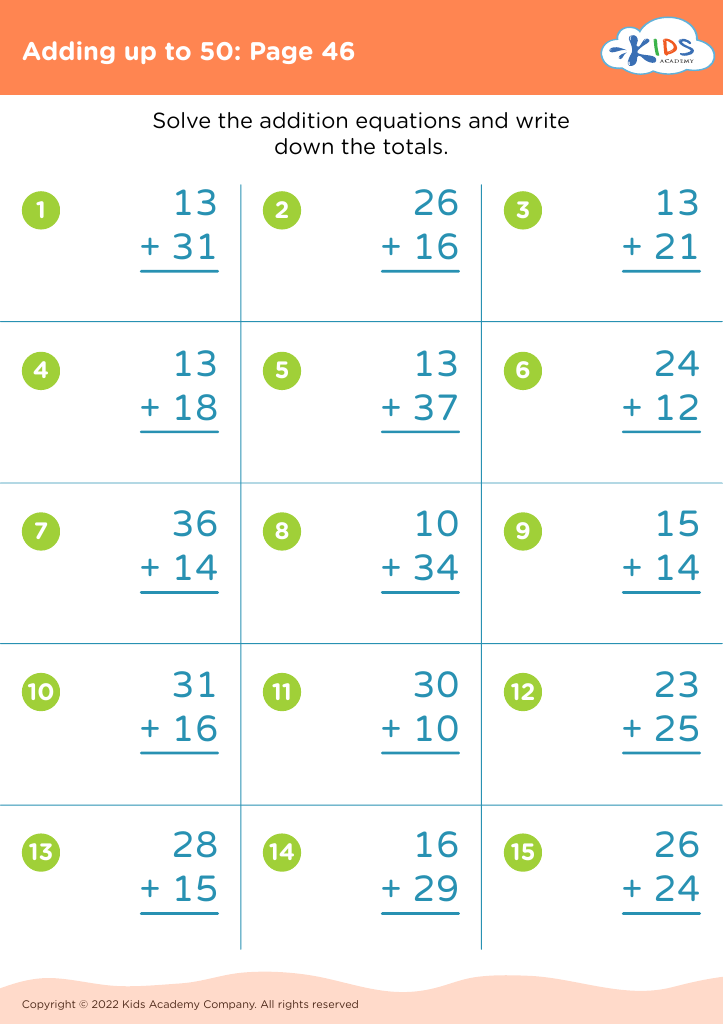
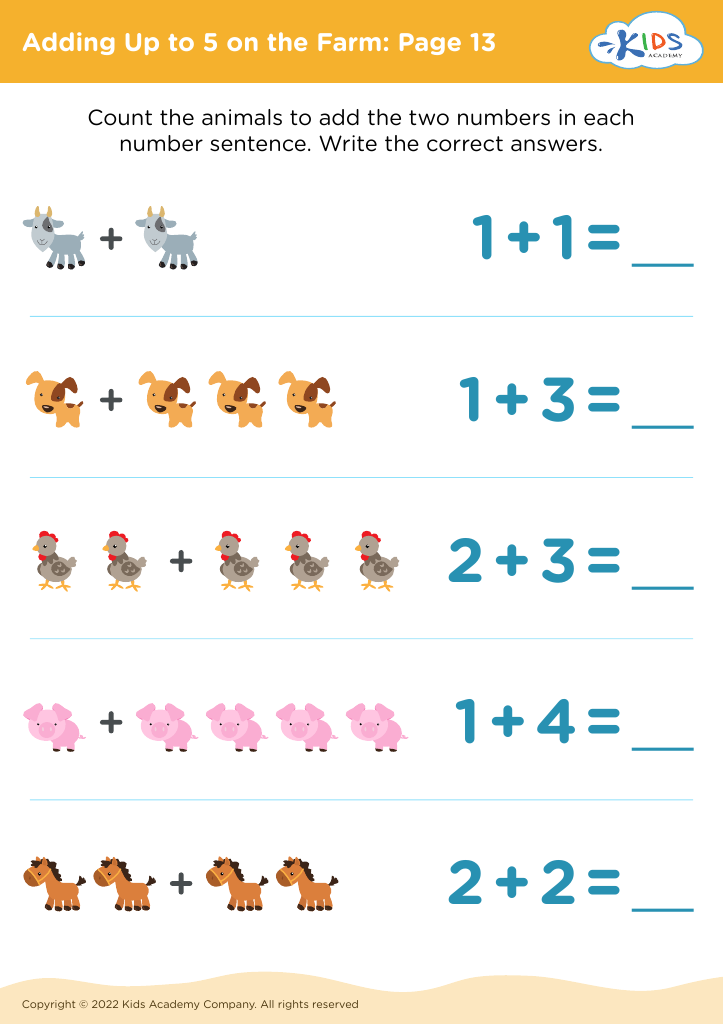
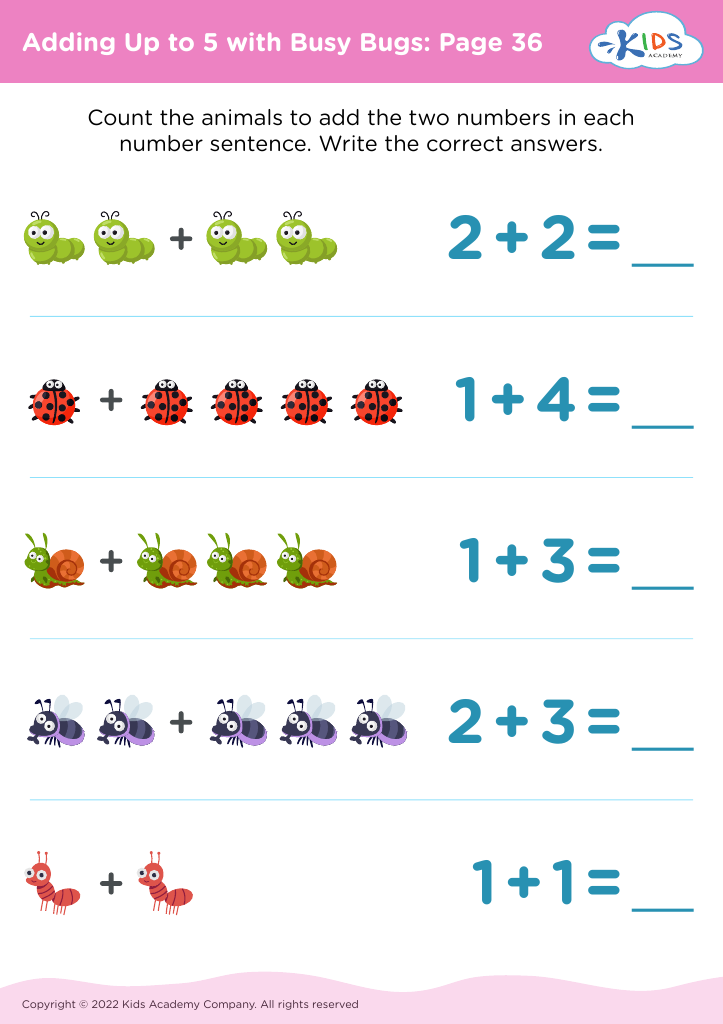
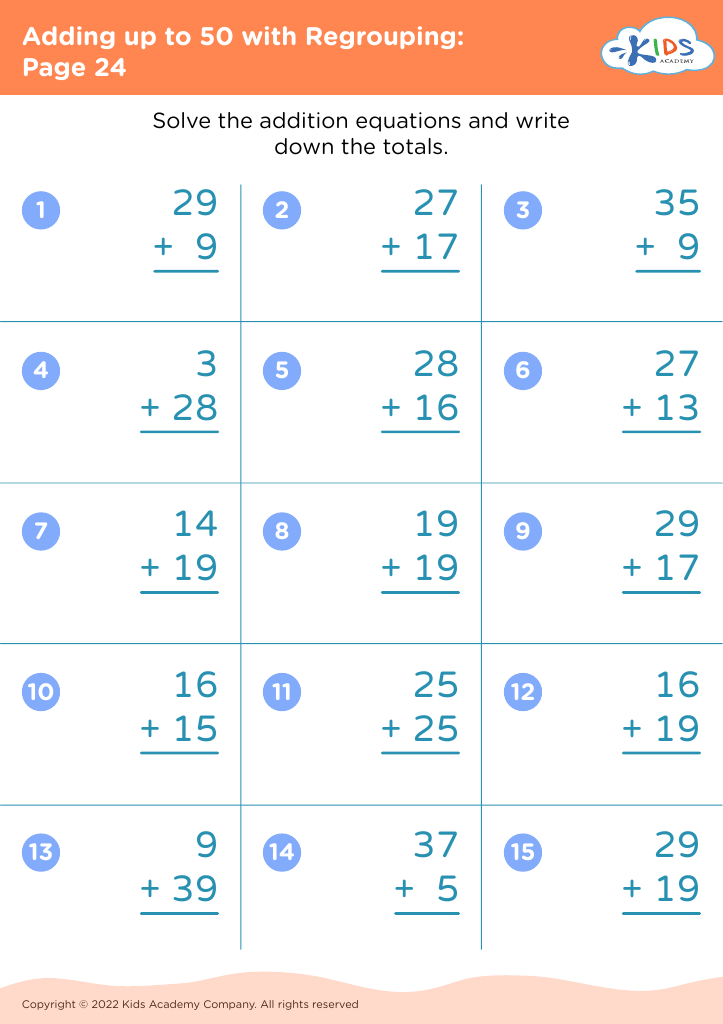
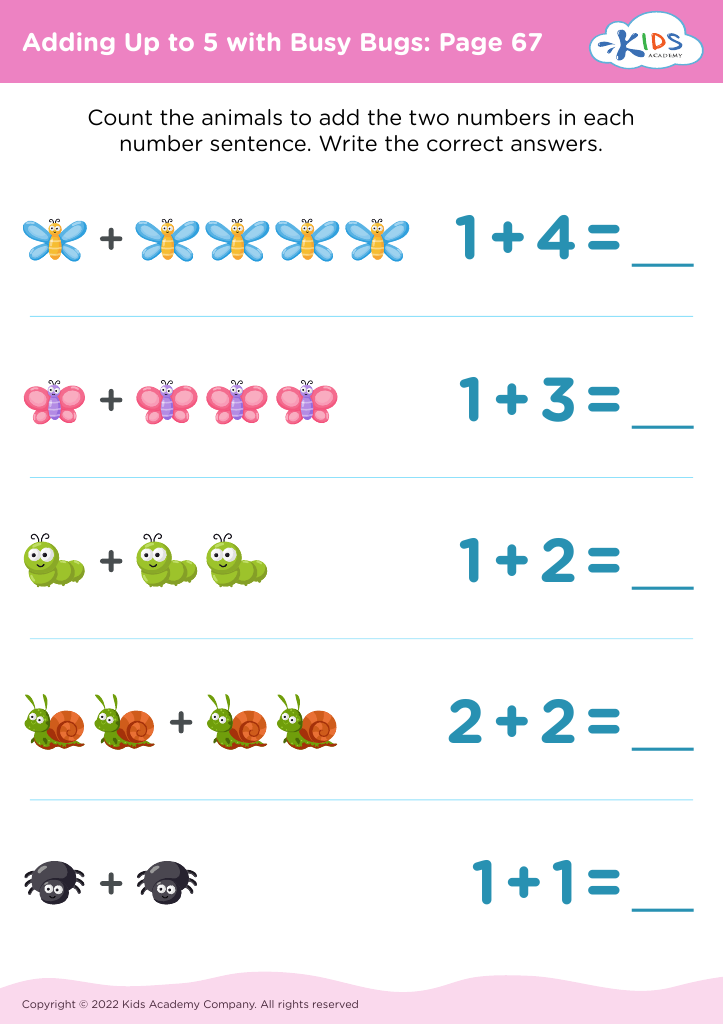
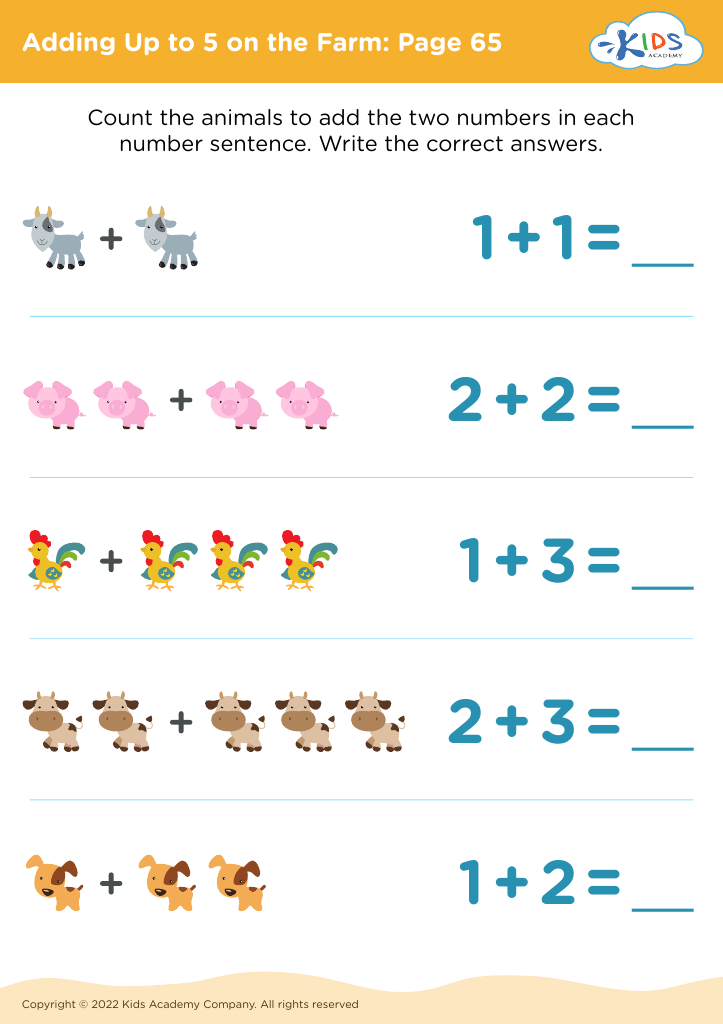
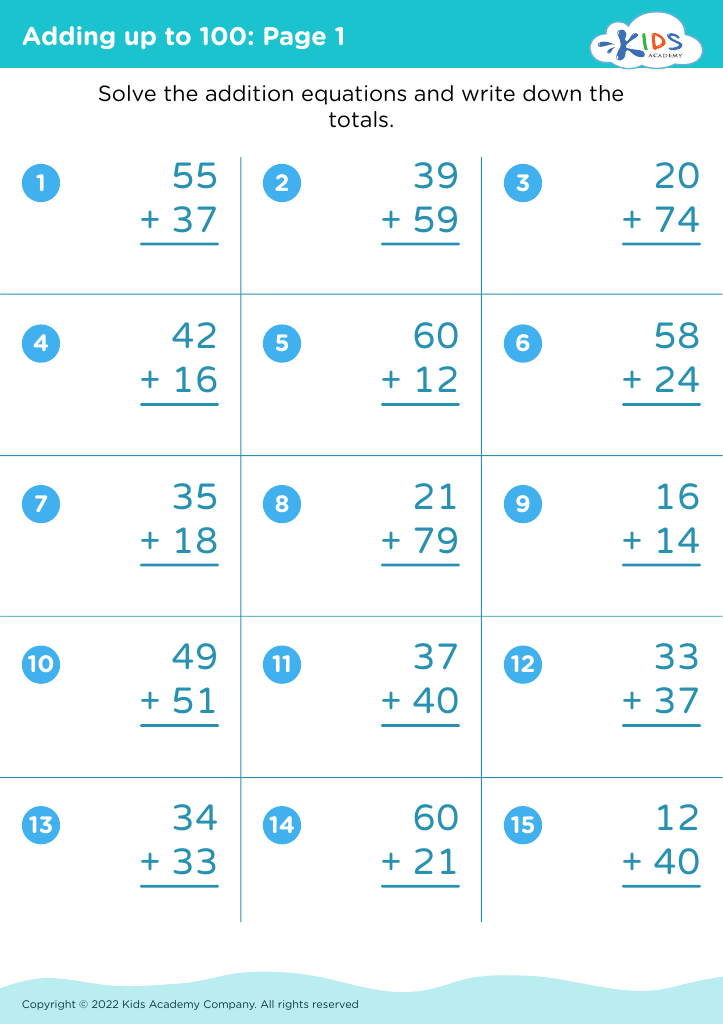
"Understanding Quantity Addition Worksheets for Ages 3-9" offer a comprehensive approach to introducing young learners to basic addition concepts. These carefully crafted, printable worksheets are designed to help children understand and visualize addition through colorful illustrations and engaging exercises. The activities gently guide kids from counting objects and adding small numbers to more complex problems. Perfect for both classroom and at-home learning, these worksheets foster a solid foundation in math, boosting confidence and ensuring early success. Dive into a world of fun and learning with these effective resources that make mastering addition enjoyable for children ages 3-9.
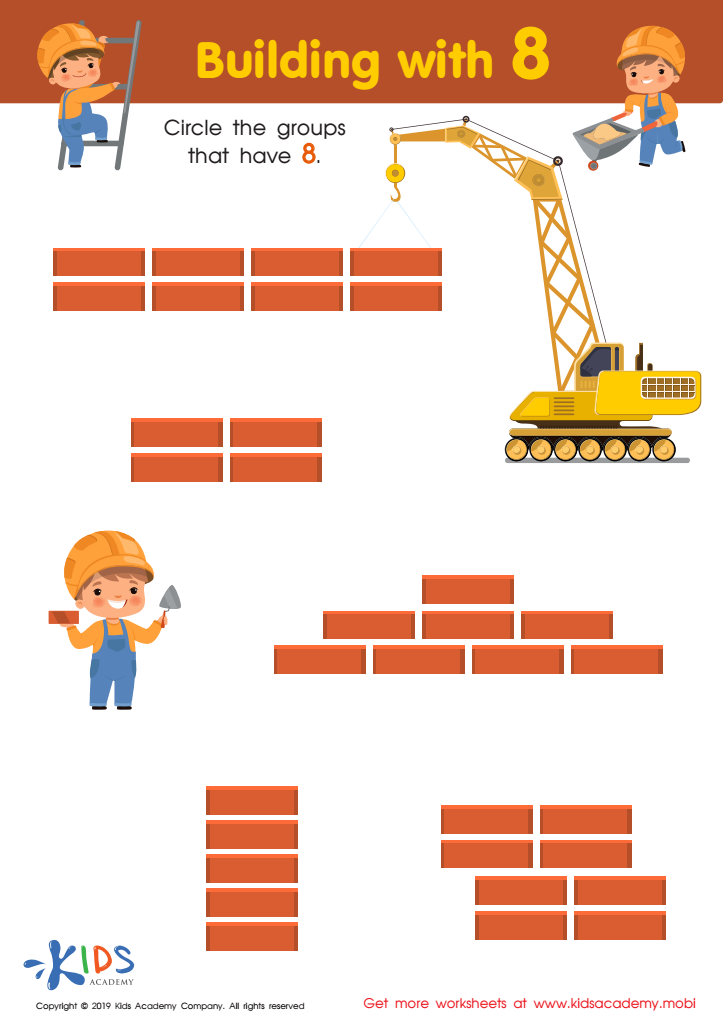
Building with 8 Worksheet
 Assign to My Students
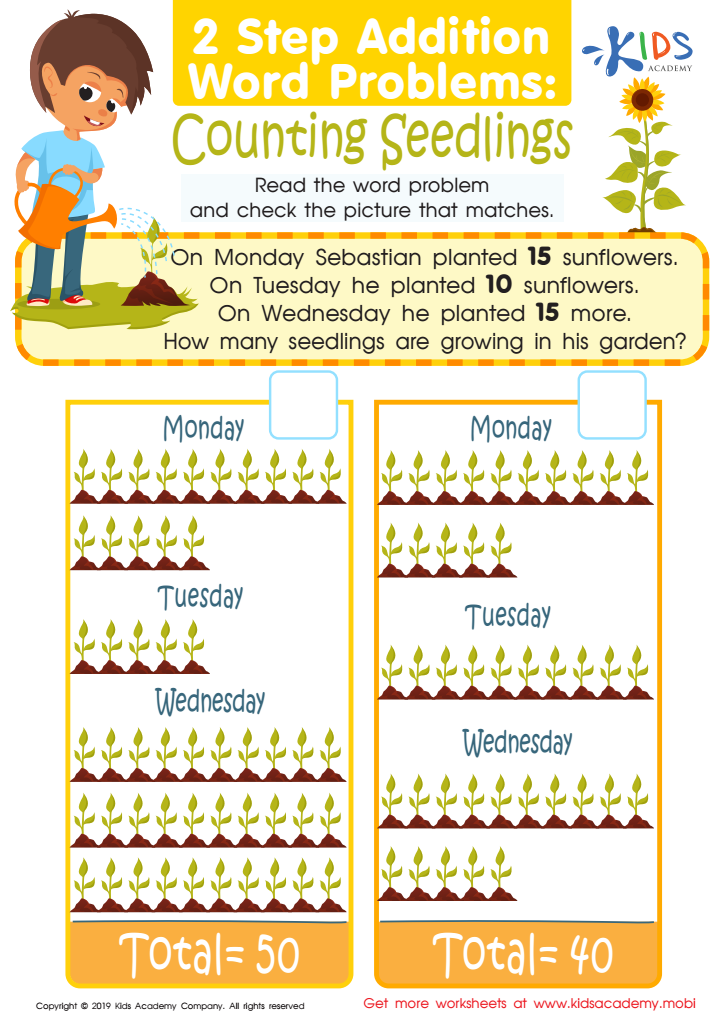
Counting Seedlings Worksheet
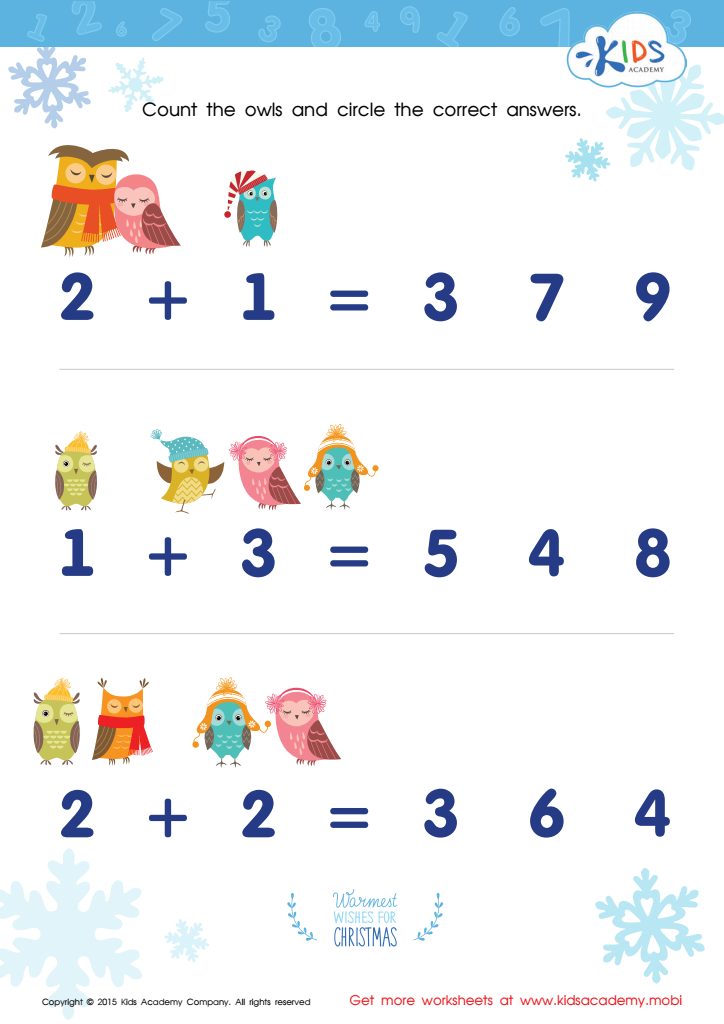
Count Little Owls Worksheet
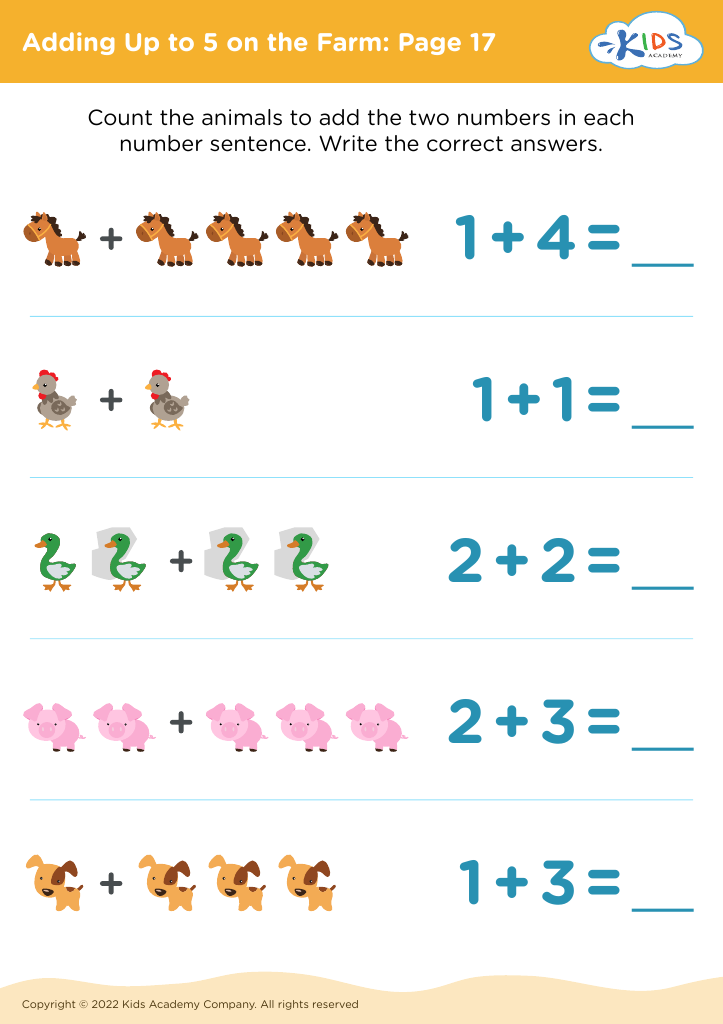
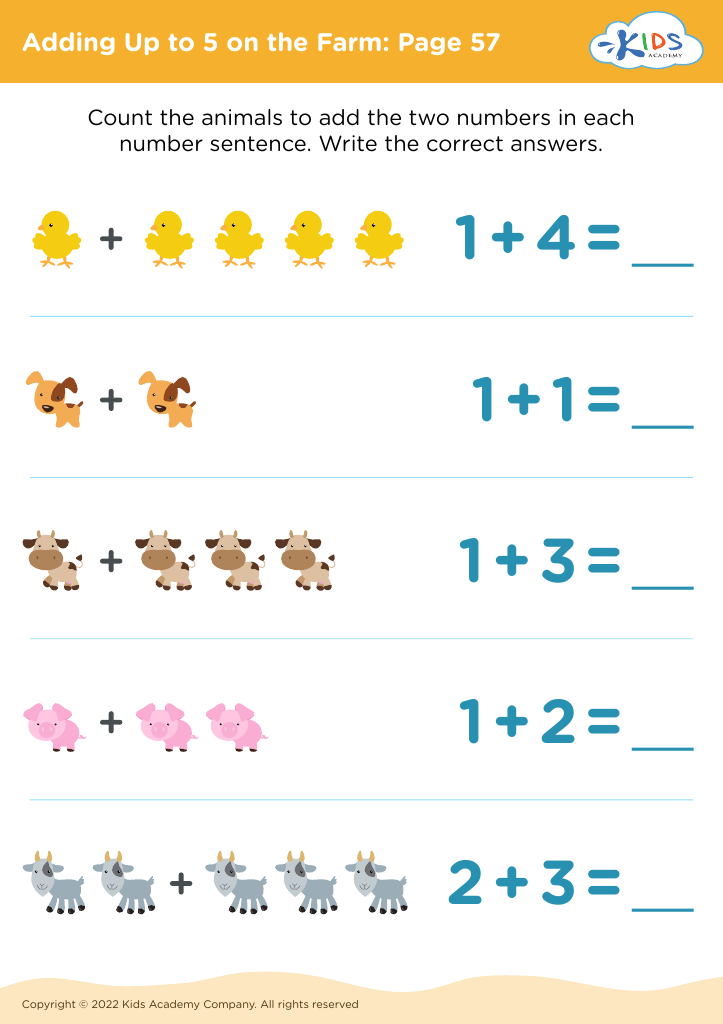
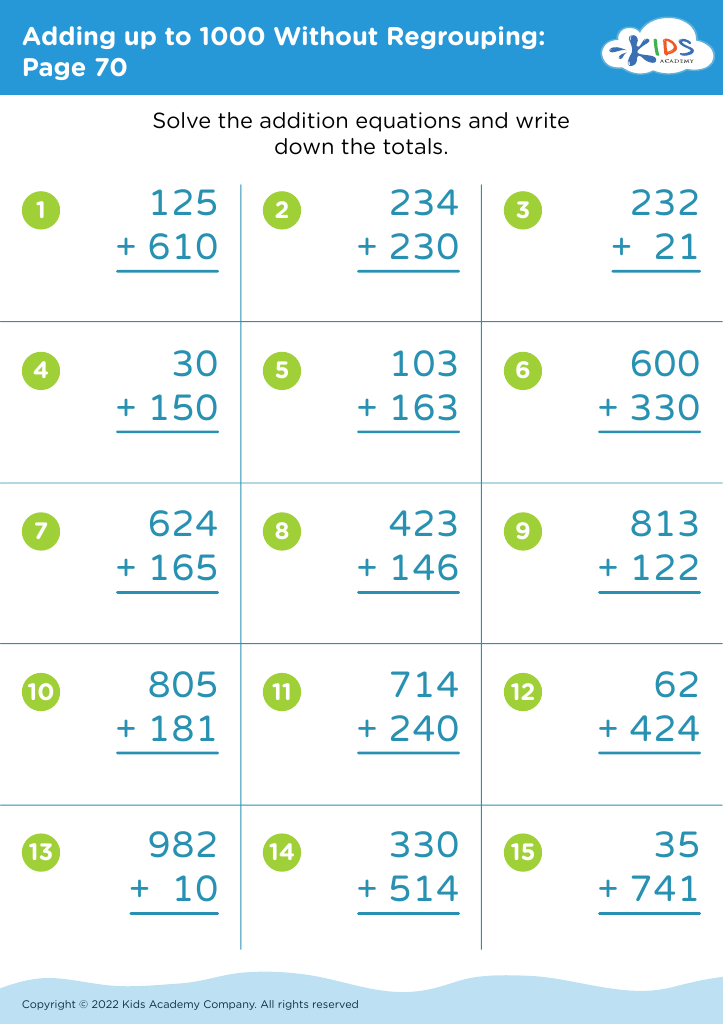








Understanding quantity and addition in early childhood, specifically for ages 3-9, is foundational for several critical reasons. Firstly, the concept of quantity helps children make sense of the world around them by identifying 'how much' or 'how many.' At this age, their cognitive development is ripe for learning these concepts through playful interactions and everyday situations, making the concepts more instinctive and engaging.
Addition further extends this understanding by introducing children to the fundamental principles of mathematics. Early competence in these skills sets the stage for more complex mathematical concepts, promoting a strong base that can ease future learning. Mastery of addition also supports cognitive development related to problem-solving and logical thinking. For instance, when children add quantities together, they not only learn to solve a problem but also develop critical skills such as attention to detail, memory, and the ability to follow sequences.
Engaging children with quantity and addition can be done through simple, everyday activities like counting toys, combining groups of objects, or playing number games, making learning a natural part of their exploration. This engagement enhances their confidence in handling numbers, ultimately fostering a positive attitude towards mathematics. For these reasons, parents and teachers play a crucial role in nurturing these skills early on, setting children on the path to lifelong mathematical success and critical thinking.








