Matching skills Geometry Worksheets for Ages 3-9
9 filtered results
-
From - To
Discover our exciting collection of Matching Skills Geometry Worksheets, specially designed for children ages 3-9. Our engaging activities will help kids develop essential matching and spatial awareness skills while enhancing their understanding of basic geometric shapes and concepts. These worksheets, featuring vibrant visuals and interactive tasks, make learning fun and effective. Perfectly suited for home or classroom use, they support early math skills, promote critical thinking, and boost confidence in young learners. Equip your child with the tools they need to achieve geometric mastery and foster a lifelong love for mathematics with our expertly crafted worksheets.
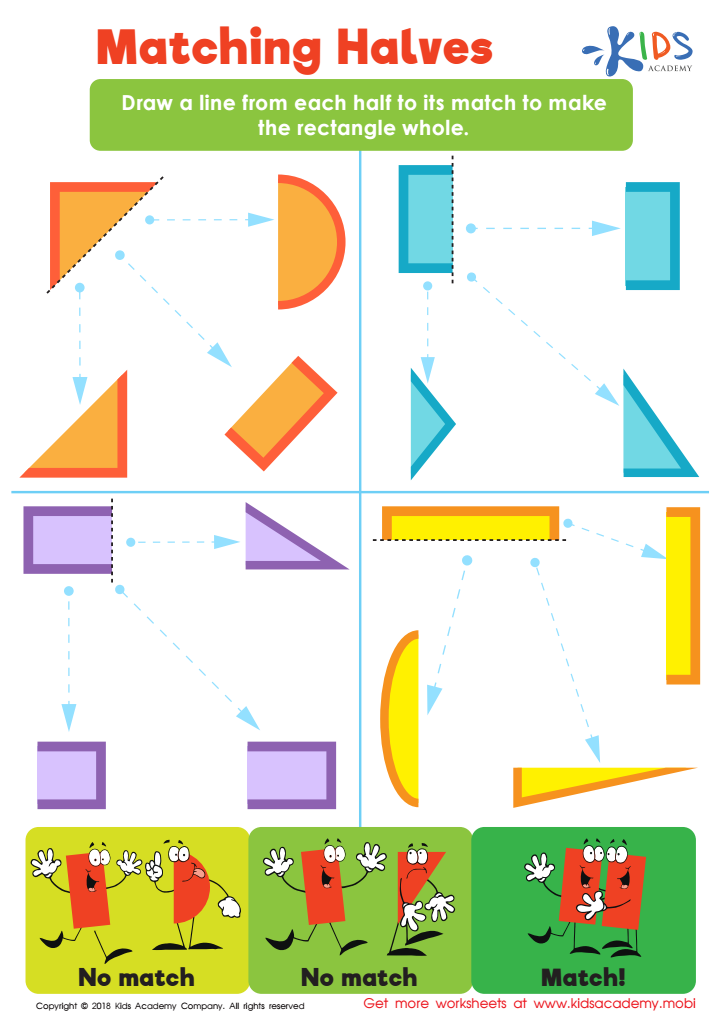
Matching Halves Worksheet
 Assign to My Students











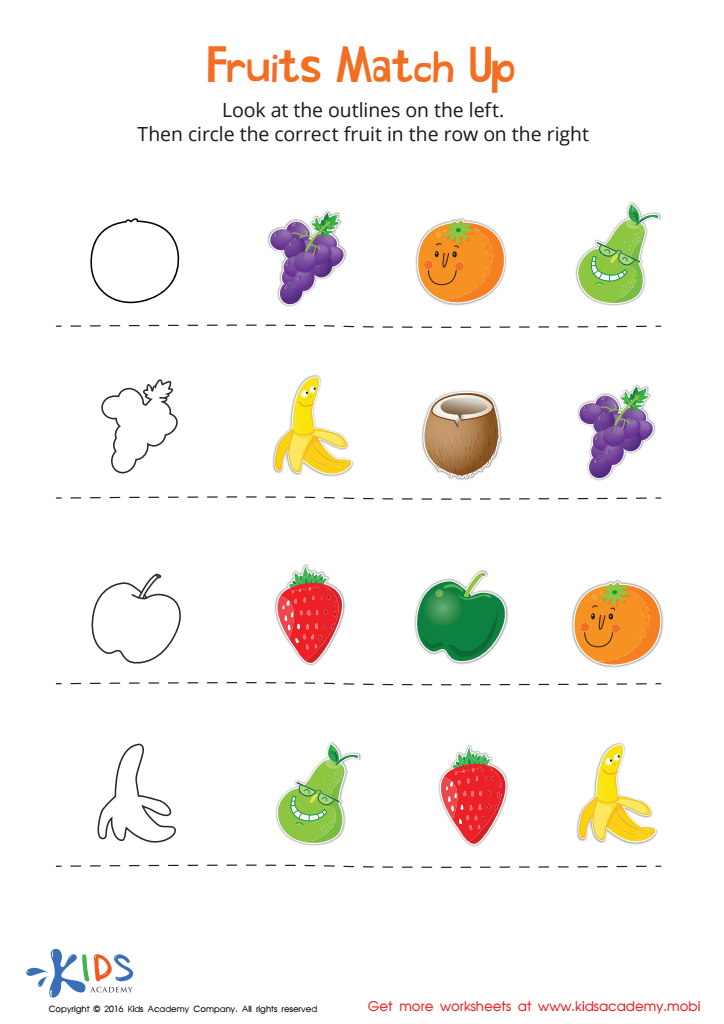
Fruits Match Up Worksheet
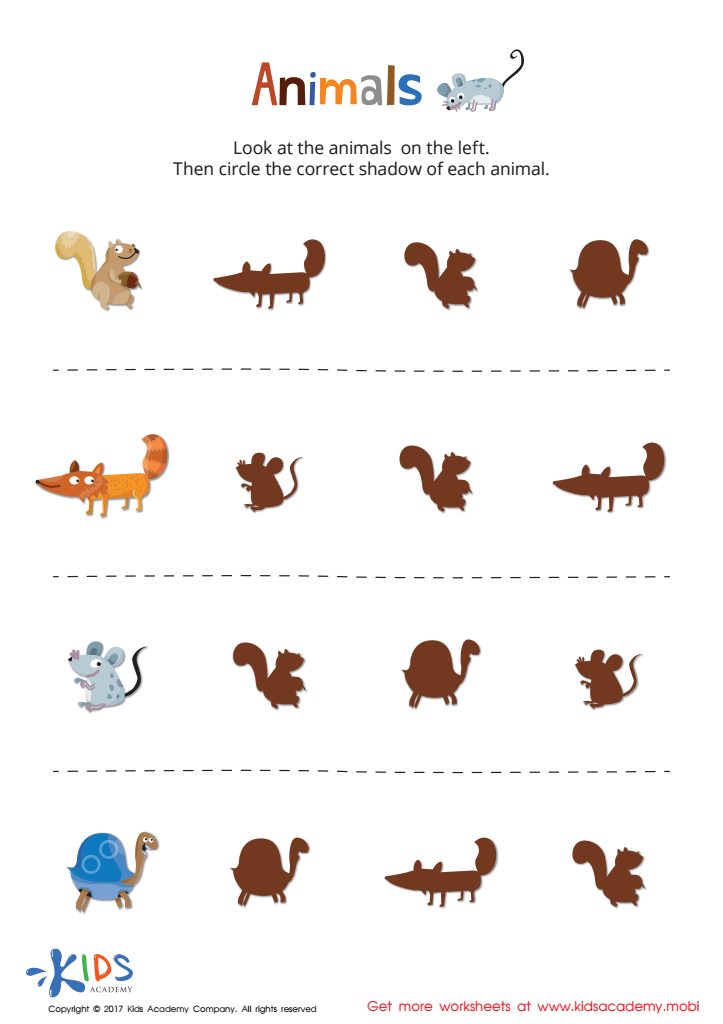
Animal Shadows Sorting Worksheet
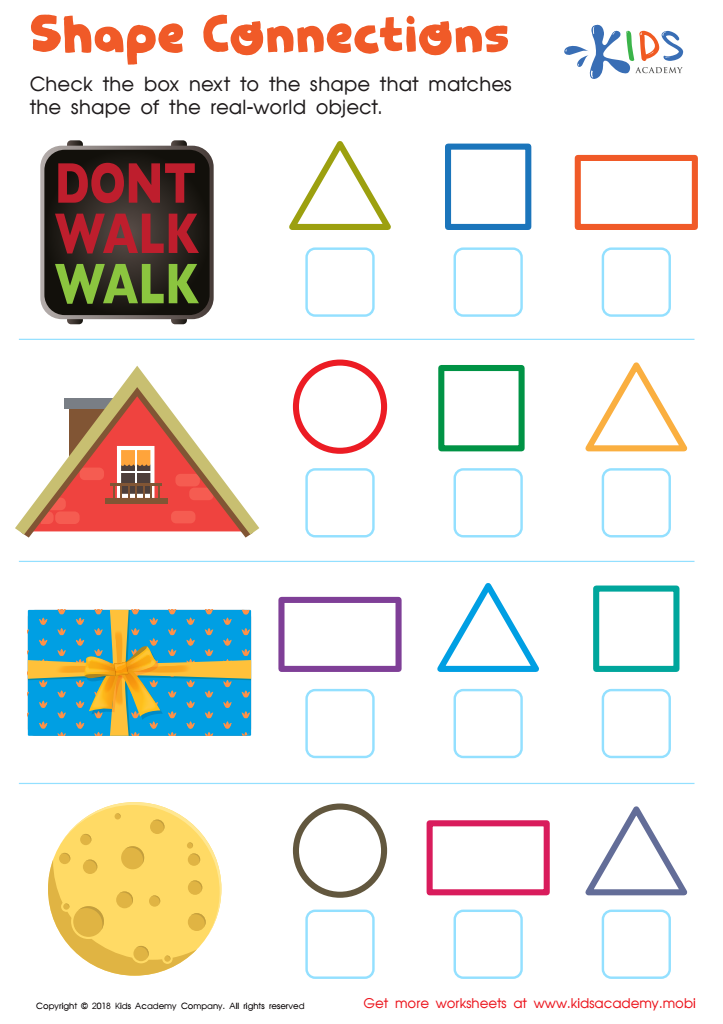
Shape Connections Worksheet
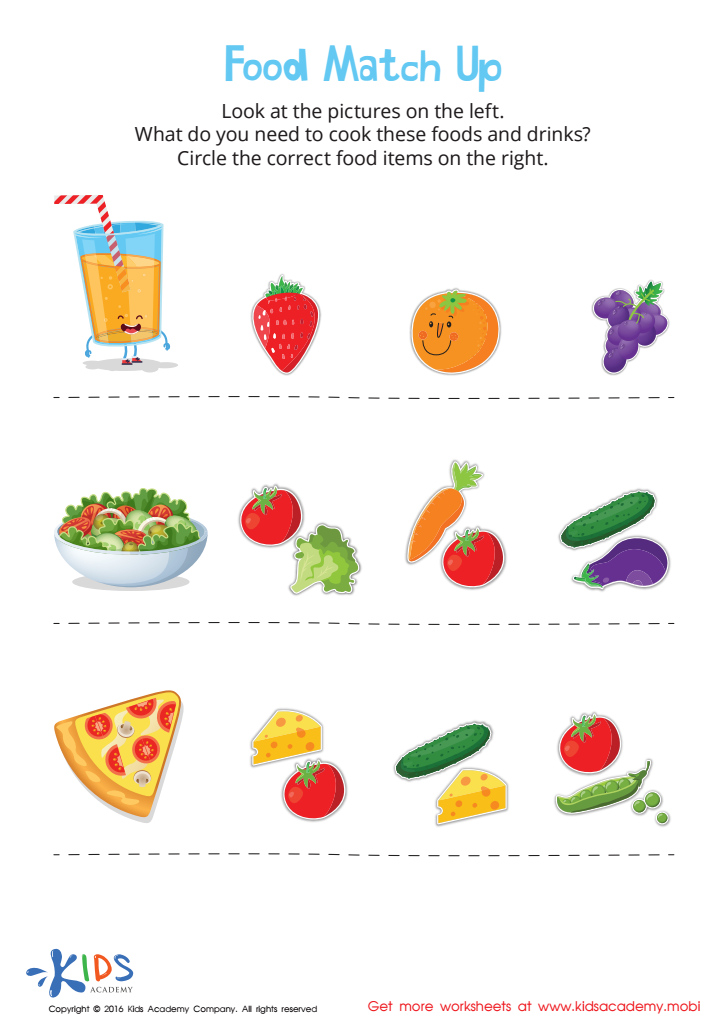
Food Match Up Worksheet
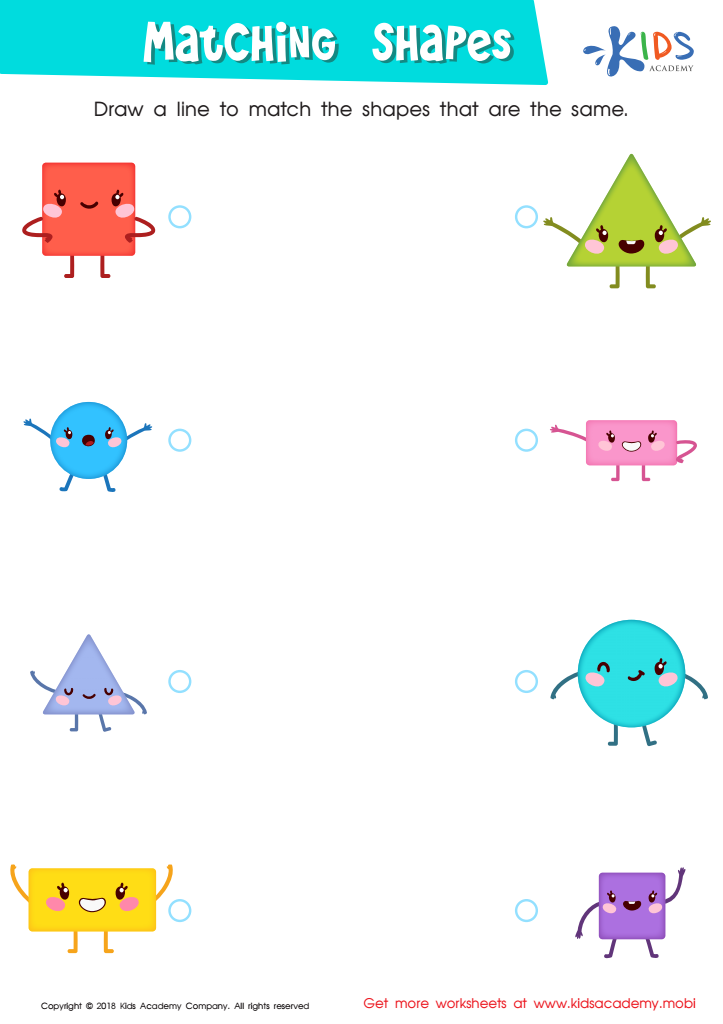
Matching Shapes Worksheet
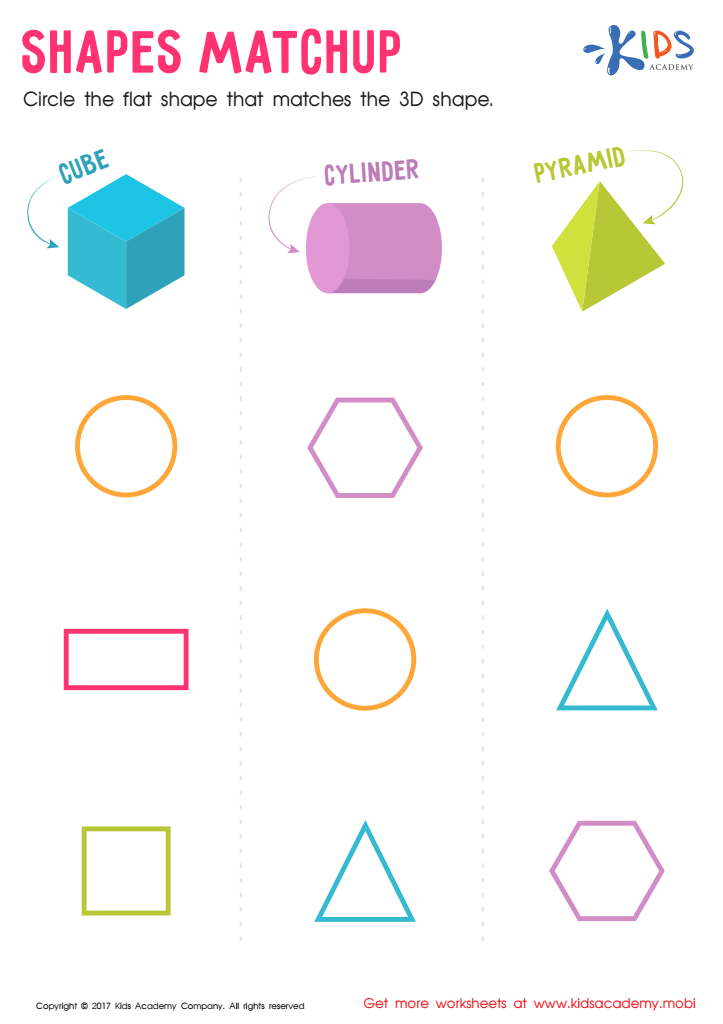
Shapes Matchup Worksheet
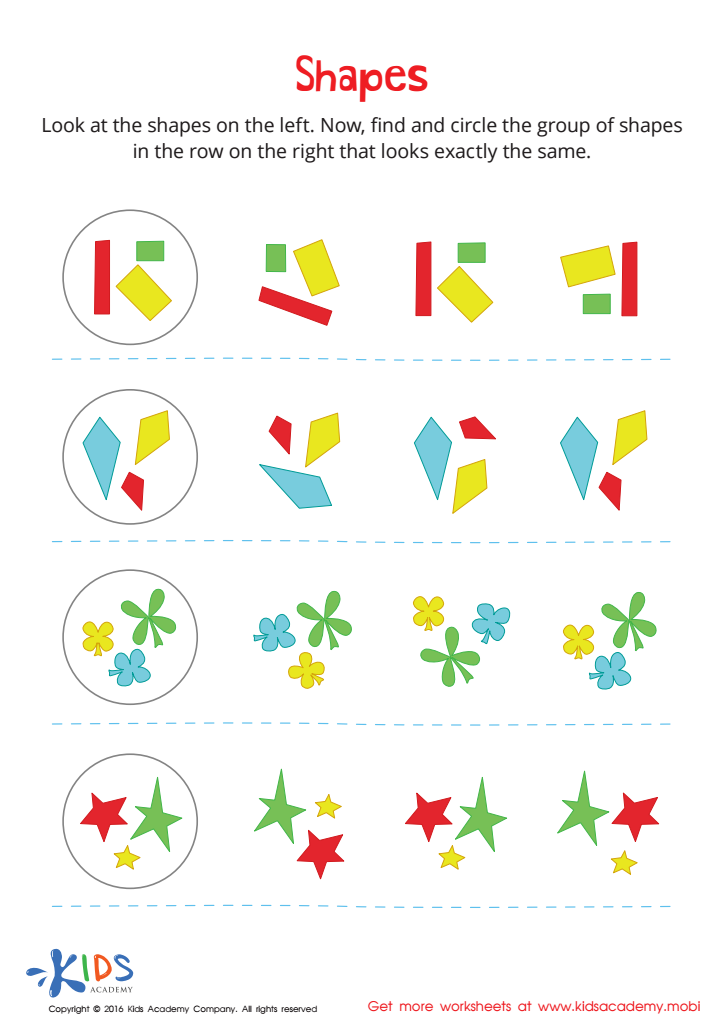
Shapes Worksheet
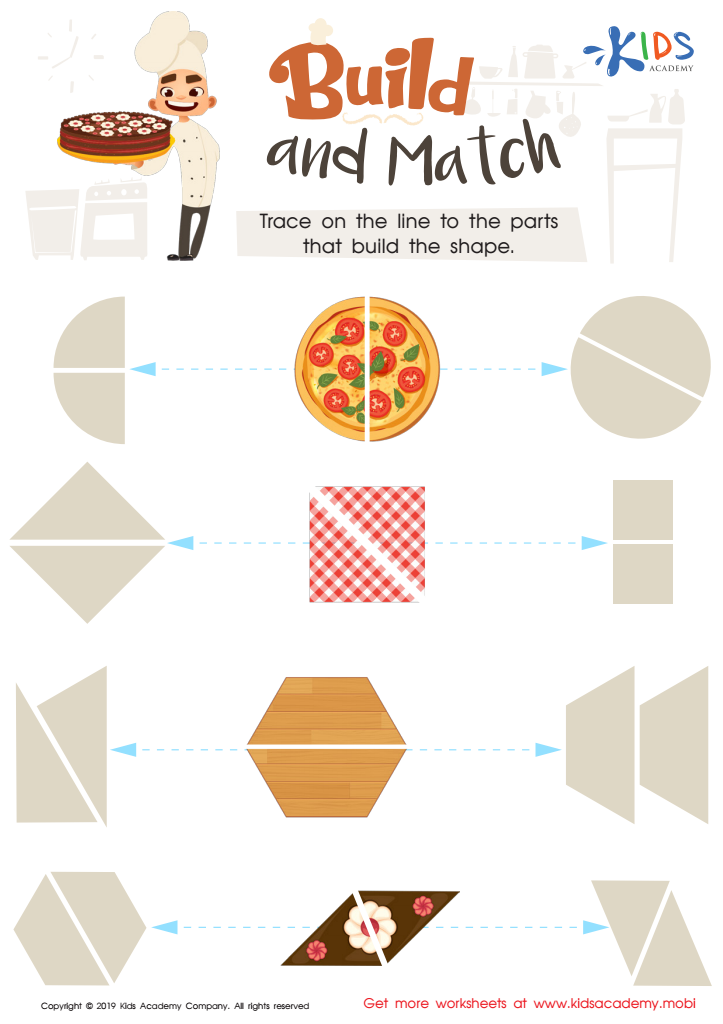
Build and Match Worksheet








Matching skills in geometry for children ages 3-9 are vital for their cognitive development, foundational math skills, and spatial awareness. During these formative years, children's brains are like sponges, absorbing information and establishing neural connections that will support future learning. Engaging them in geometry-related activities helps strengthen their ability to recognize shapes, patterns, and the relationships between objects.
Understanding geometry is crucial for developing problem-solving and critical-thinking skills. Activities that involve matching shapes, sizes, and patterns encourage logical reasoning and the ability to differentiate and categorize, which are essential skills in mathematics and everyday life. For instance, children learn to recognize that two triangles can combine to form a square or that a series of different shapes sequences can form a pattern, boosting their ability to predict and analyze.
Additionally, spatial awareness gained through geometry helps children better understand maps, follow directions, and improve their abilities in other disciplines, such as science and engineering. It also enhances fine motor skills as they manipulate objects to match geometric figures.
Ultimately, nurturing these skills builds a strong mathematical foundation, boosts confidence, and fosters a love for learning. Therefore, parents and teachers should prioritize integrating geometry matching games and activities into early childhood education to set children up for academic success and everyday problem-solving prowess.








