Animal identification Numbers Worksheets for Ages 3-9
4 filtered results
-
From - To
Discover our Animal Identification Numbers Worksheets designed for children ages 3-9. These engaging and educational activities help young learners connect numbers with cute animal images, enhancing their counting and recognition skills. Perfect for preschool to early elementary grades, each worksheet combines fun illustrations with easy-to-follow exercises that solidify foundational math concepts. By integrating adorable animals, children remain intrigued and motivated, ensuring a joyful and effective learning experience. Ideal for parents and teachers, these worksheets foster a love for math while promoting curiosity about the animal kingdom. Download now and make learning numbers an adventurous journey!
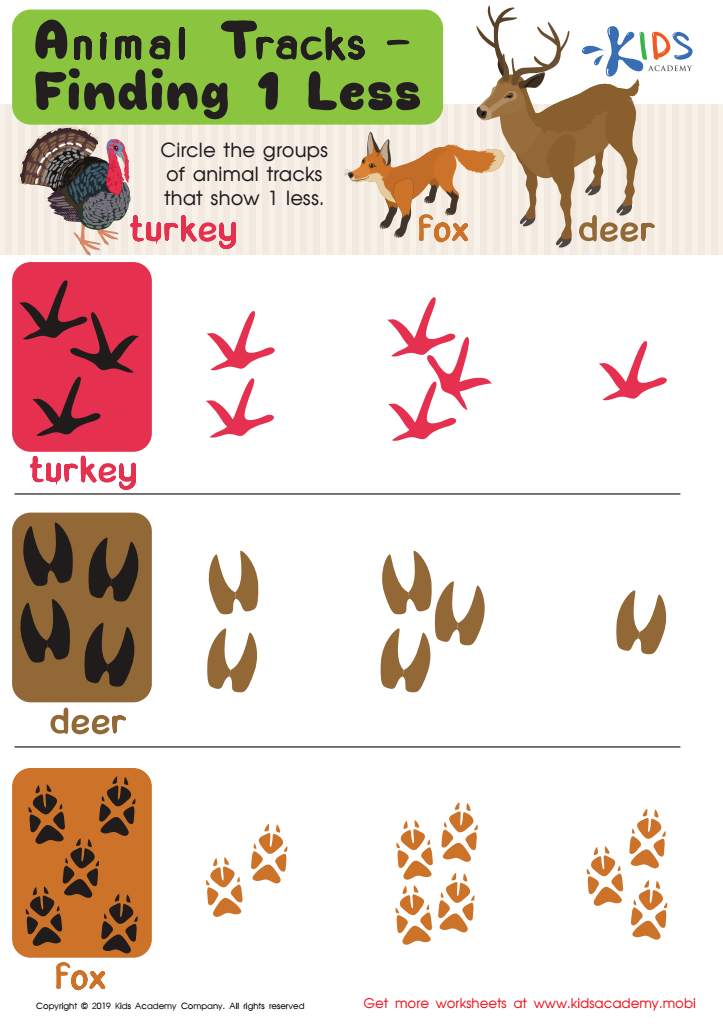
Animal Tracks: Find 1 Less Worksheet
 Assign to My Students
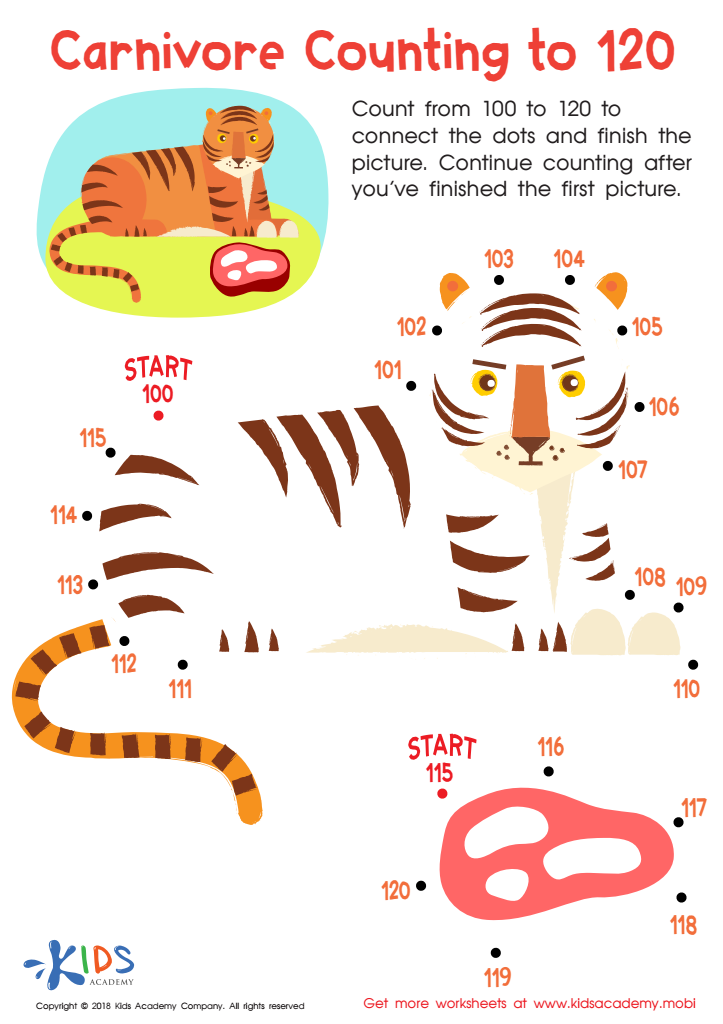
Carnivore Counting to 120 Worksheet
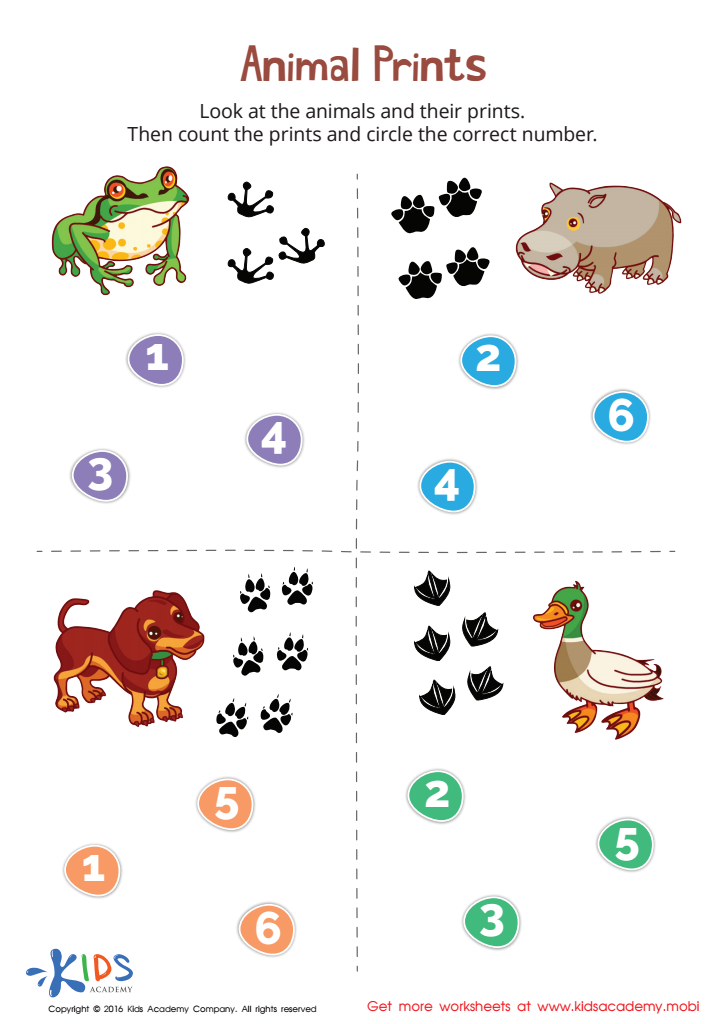
Animal Prints Match-Up Worksheet
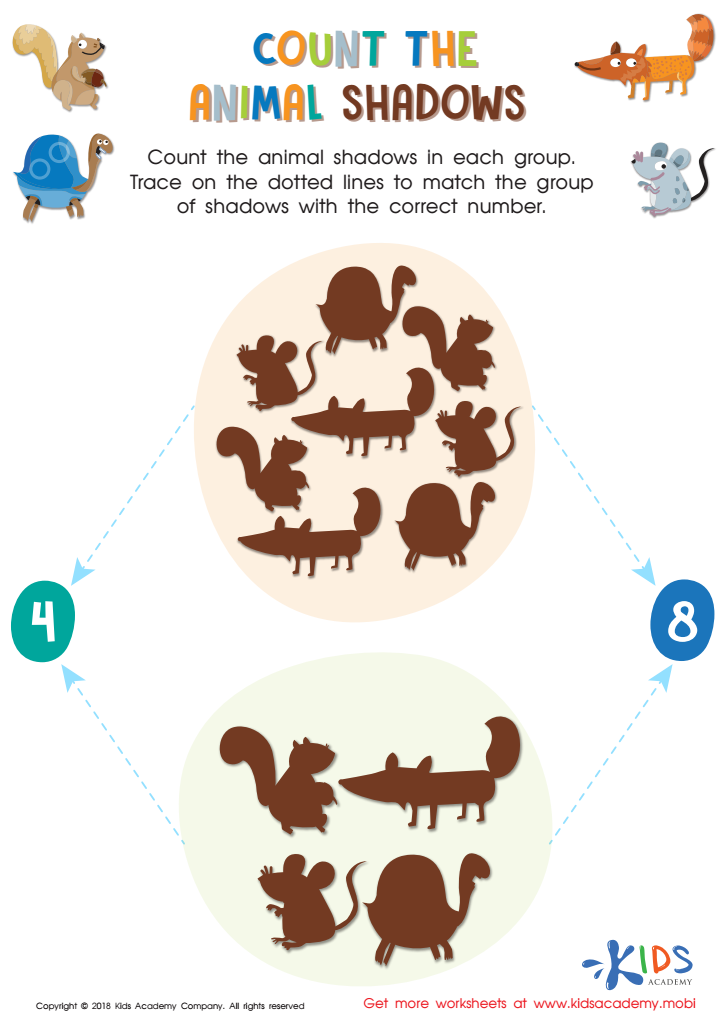
Count the Animal Shadows Worksheet






%20(1).jpg)

Parents and teachers should care about animal identification numbers for ages 3-9 because these activities are foundational elements of early education and child development. During the formative years, children are naturally curious and receptive to new information. Integrating learning activities like animal identification with numerical recognition can play a crucial role in enhancing their cognitive, language, and fine motor skills.
Firstly, identifying animals expands a child's vocabulary and deepens their understanding of the natural world, influencing both their knowledge base and curiosity. Coupling this with numbers helps children recognize numerical symbols, sequences, and foundational math concepts in a fun and engaging manner. This multi-sensory approach strengthens memory retention and critical thinking.
Secondly, these activities support developmental milestones by encouraging observational skills and categorization abilities, beneficial across various learning areas. For example, when children learn to identify and count different animals, they engage in classification exercises, fostering logical reasoning and problem-solving skills.
Lastly, early enchantment with such educational activities establishes a positive attitude towards learning and builds self-confidence. As children successfully identify animals and their corresponding numbers, they experience a sense of achievement, and this boosts their intrinsic motivation to explore more knowledge areas.
Thus, by introducing animal identification numbers, parents and teachers empower children with crucial life-long learning skills, setting a robust foundation for interdisciplinary knowledge acquisition.








