Rounding numbers Numbers Worksheets for Ages 3-9
6 filtered results
-
From - To
Discover our engaging rounding numbers worksheets designed for children ages 3-9! These fun and interactive resources help young learners grasp the concept of rounding in a playful way. With colorful visuals and step-by-step instructions, kids will easily understand how to round numbers to the nearest ten and hundred. Ideal for both classroom settings and at-home learning, our worksheets boost essential math skills while promoting critical thinking. Whether your child is a beginner or looking to strengthen their understanding, our rounding numbers worksheets will make mastering this important mathematical concept enjoyable and rewarding. Start rounding with confidence today!
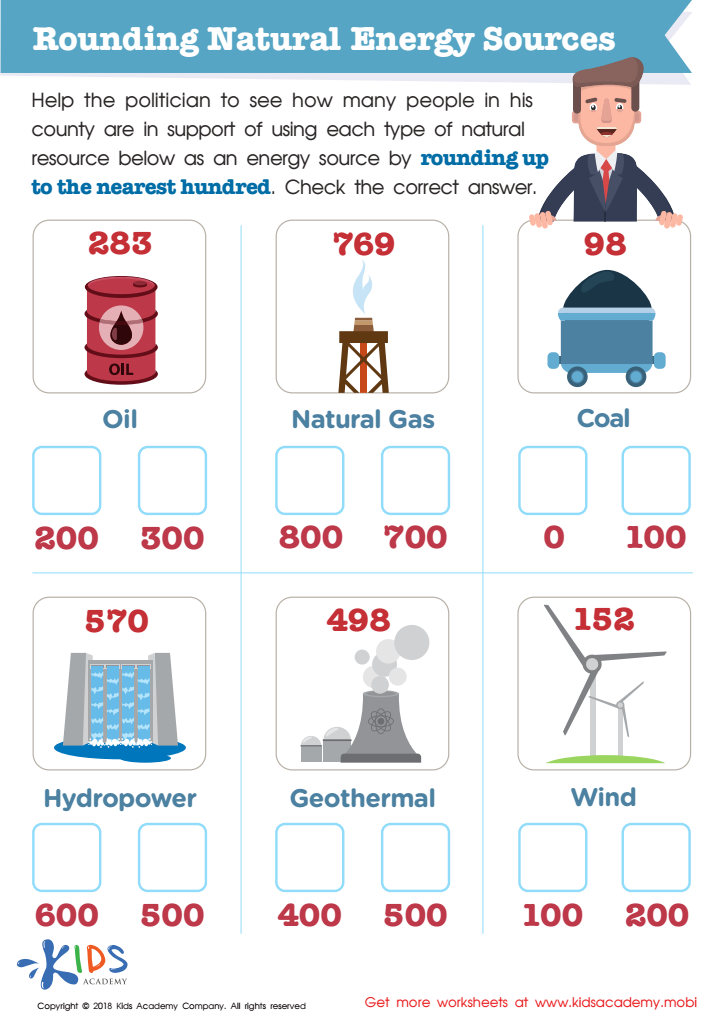
Rounding Natural Energy Sources Worksheet
 Assign to My Students
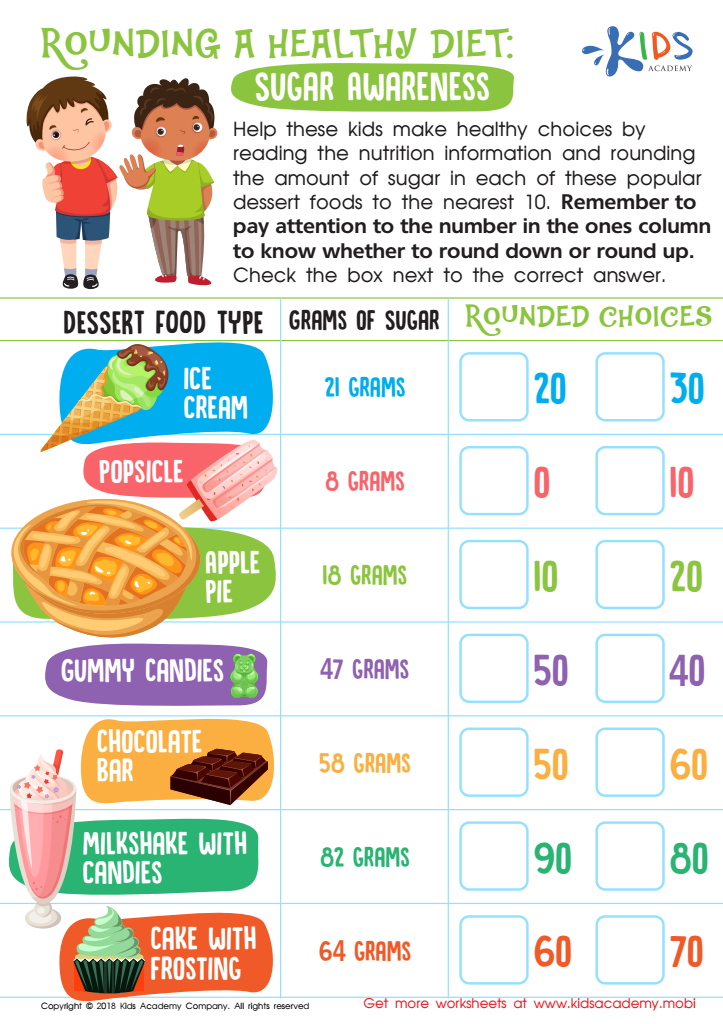
Rounding Healthy Diet Worksheet
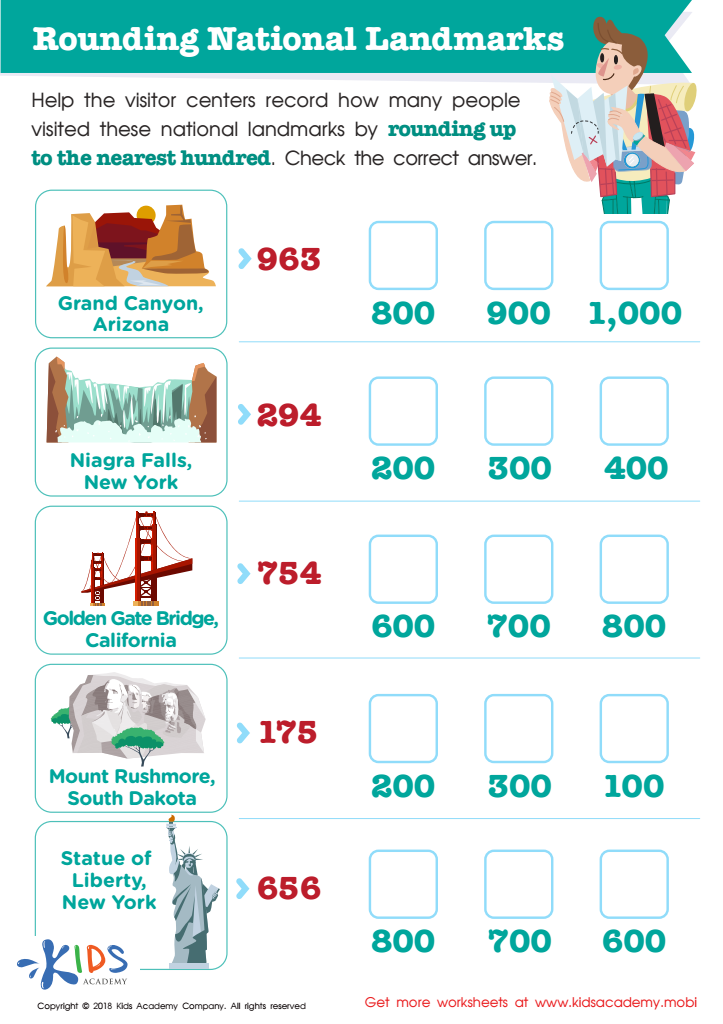
Rounding National Landmarks Worksheet
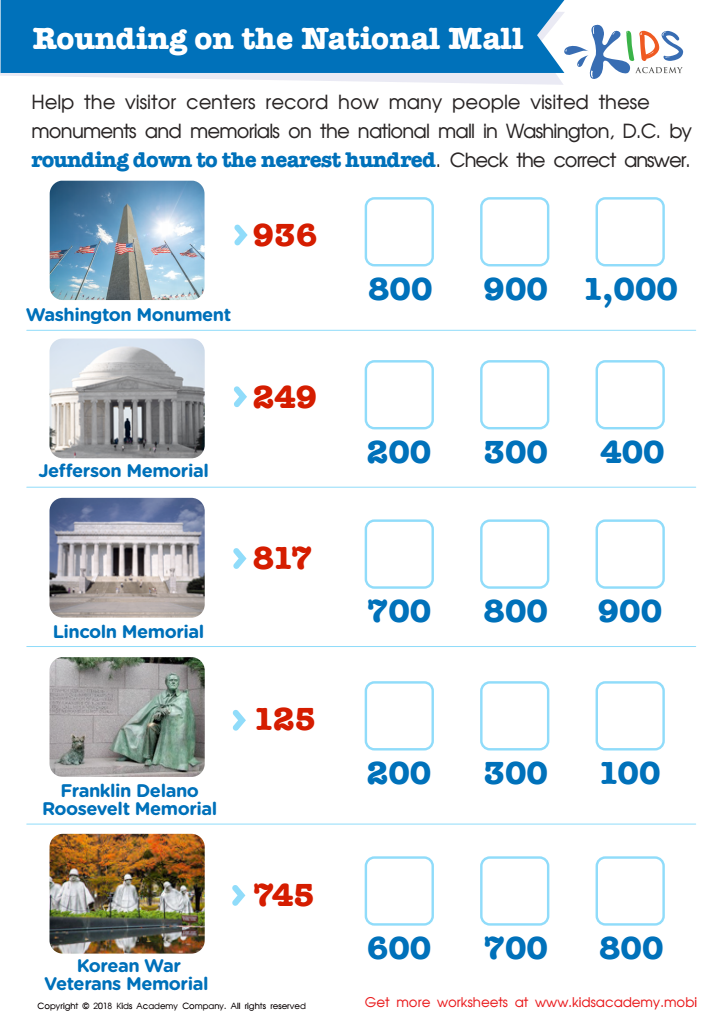
Rounding on the National Mall Worksheet
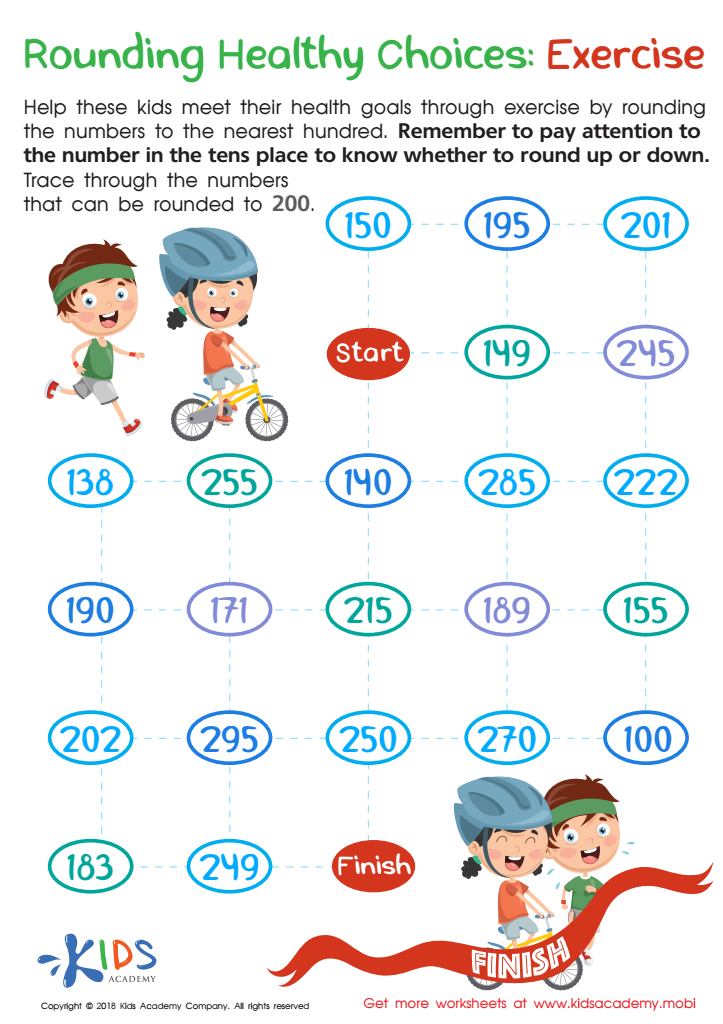
Rounding Healthy Choices Exercise Worksheet
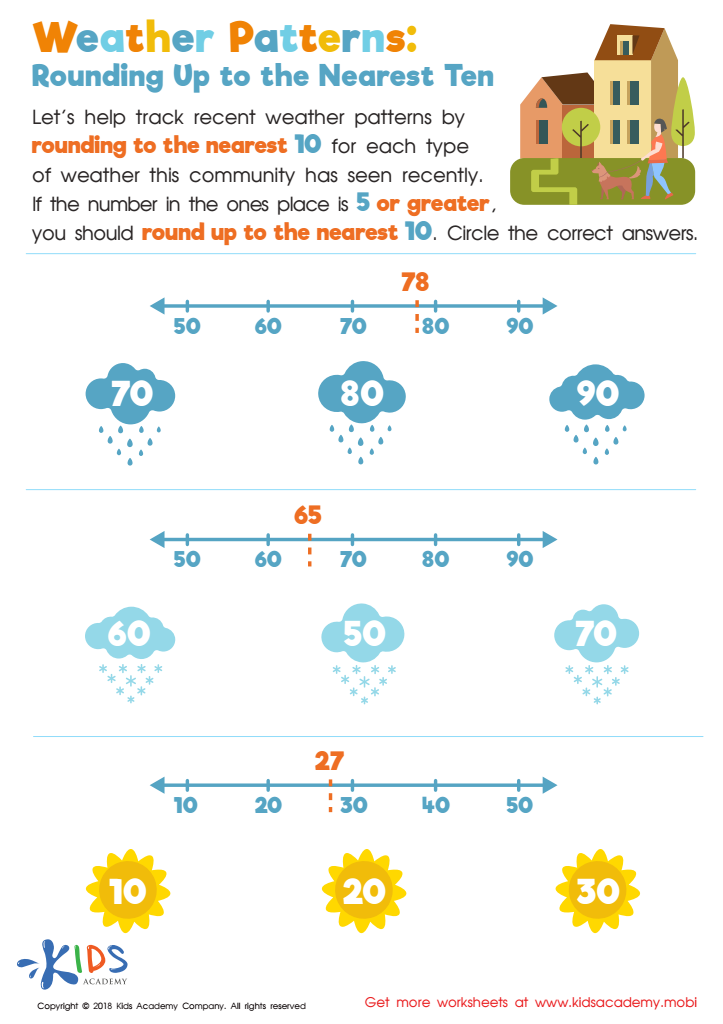
Weather Patterns Worksheet







Rounding numbers is a crucial mathematical skill for children aged 3-9, and both parents and teachers play a vital role in cultivating this understanding. Firstly, rounding simplifies numbers, making them easier to work with in everyday situations, such as shopping or measuring, which basic math concepts depend on. When children grasp rounding, they enhance their estimation skills, allowing them to make quick calculations and predictions without relying on precise figures.
Furthermore, rounding lays the groundwork for more advanced mathematical concepts, such as addition, subtraction, and even multiplication, as it encourages children to think about numbers more flexibly. Educators and parents should emphasize the importance of rounding, exposing children to fun, engaging activities—like games and storytelling—that incorporate this concept.
Also, rounding underscores the importance of accuracy and clarity in communication. Whether sharing how many cookies are left or determining the number of attendees at a party, using rounded numbers can help clarify information for others.
Ultimately, caring about rounding numbers equips young learners with essential tools for future learning and real-life applications, fostering mathematical confidence and fluency that contribute to their overall development. By nurturing these skills early, both parents and teachers set children on a path toward mathematical success.








