Discover our comprehensive collection of Enhance Comprehension Math Worksheets designed for children ages 3-9! These engaging worksheets promote critical thinking, problem-solving, and analytical skills through fun, age-appropriate math exercises. Each activity fosters a deeper understanding of mathematical concepts, encouraging kids to think critically while solving problems in exciting ways. Ideal for teachers and parents, these worksheets cater to various learning styles, ensuring every child can grasp essential math skills at their own pace. Help your little learners boost their confidence and excel in mathematics while having fun! Dive into our resources today and watch your child's comprehension soar!
Check out this FREE Trial Lesson on Math for age 3-9!

Sorting Objects into 3 Categories

Favorites
With answer key
Interactive
  • 3-9
  • Enhance comprehension
  • Math
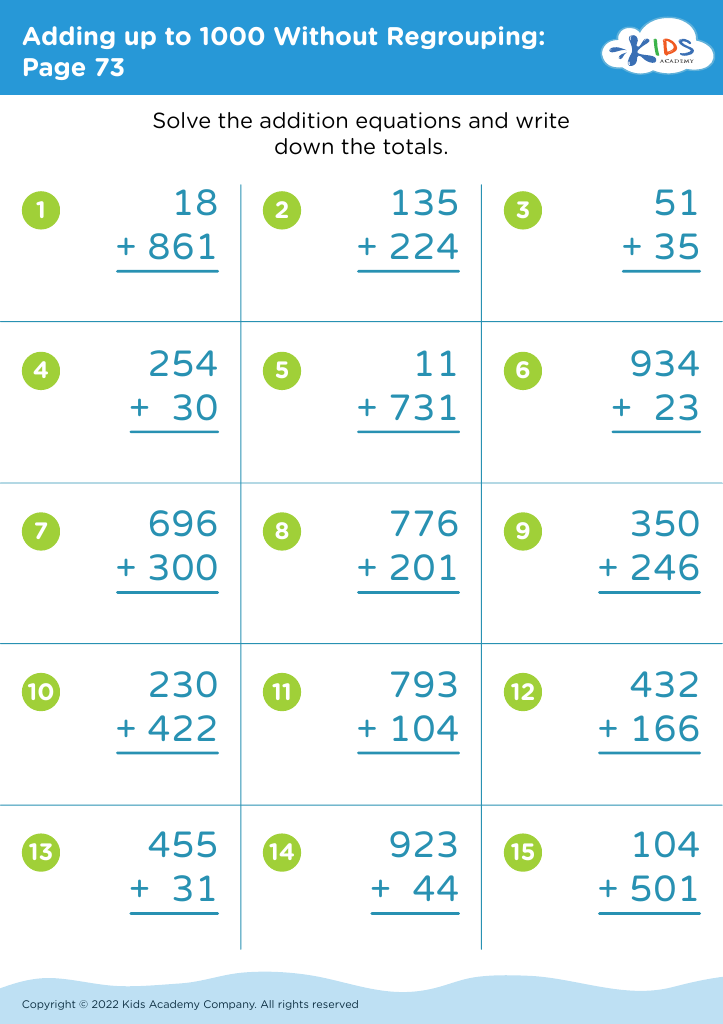
Adding up to 1000 Without Regrouping: Page 73
Worksheet
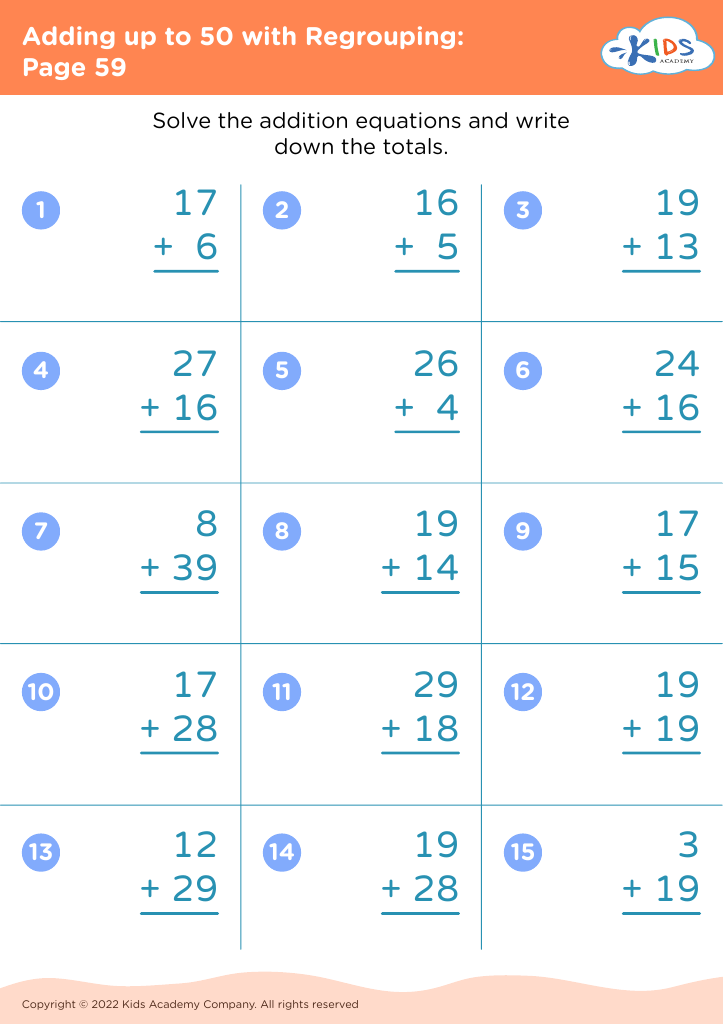
Adding up to 50 with Regrouping: Page 59
Worksheet
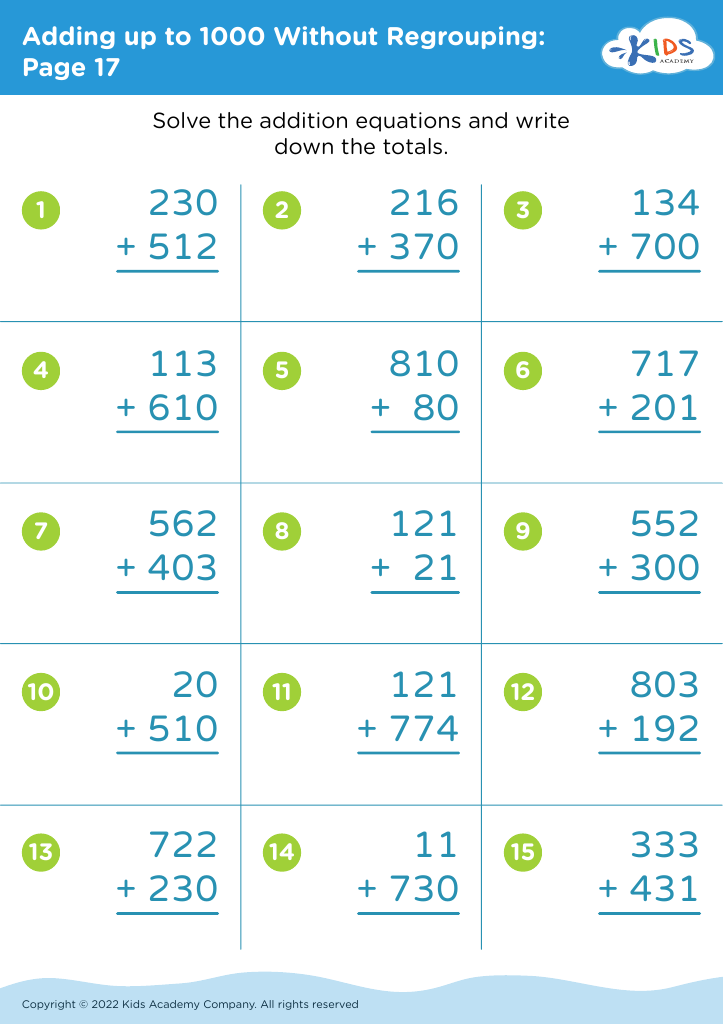
Adding up to 1000 Without Regrouping: Page 17
Worksheet
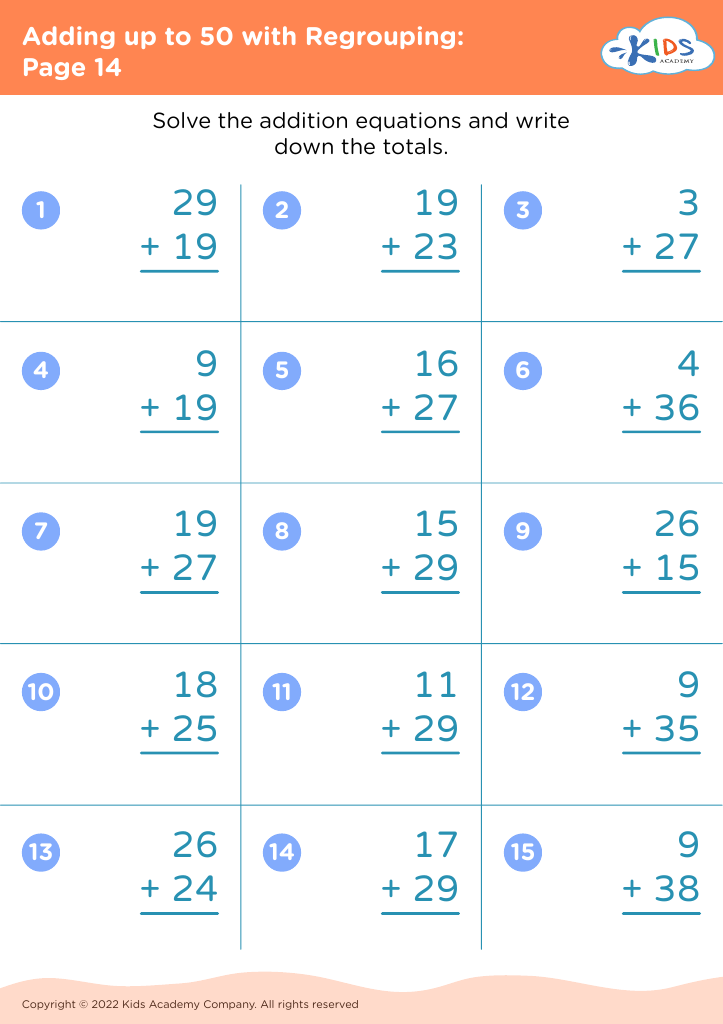
Adding up to 50 with Regrouping: Page 14
Worksheet
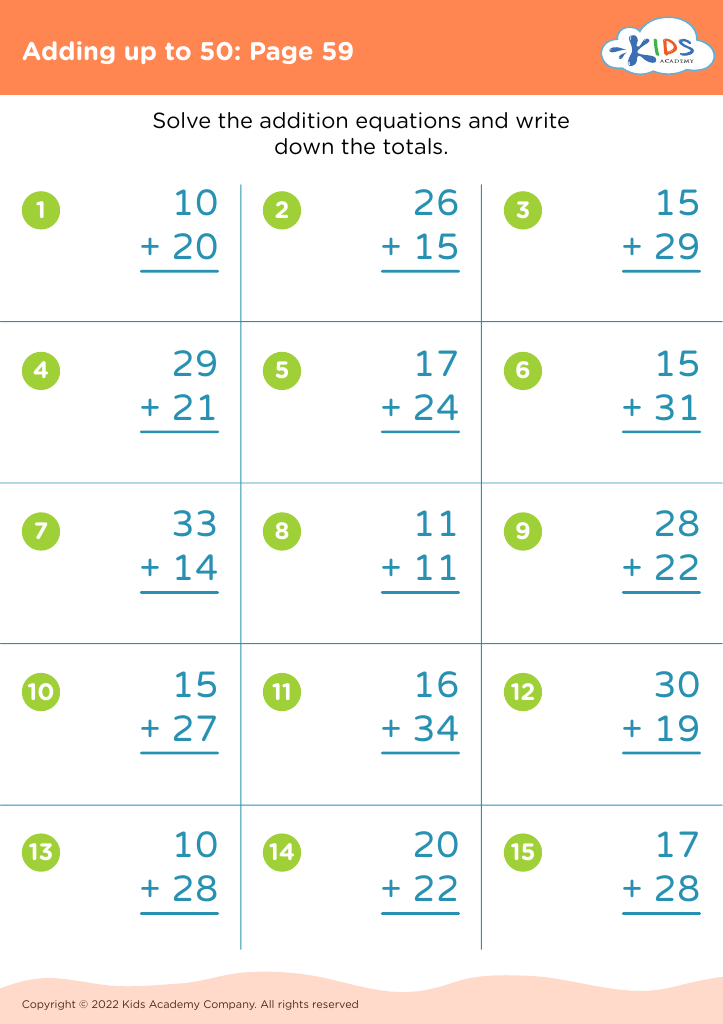
Adding up to 50: Page 59

Adding up to 50: Page 59

Adding up to 50: Page 59
Worksheet
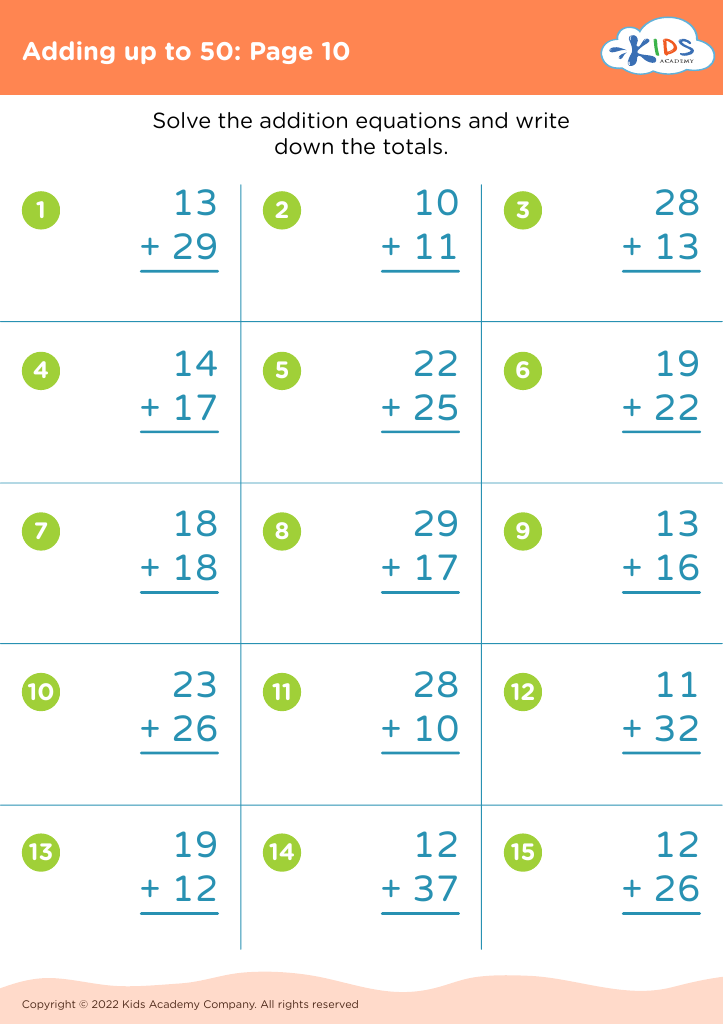
Adding up to 50: Page 10

Adding up to 50: Page 10

Adding up to 50: Page 10
Worksheet
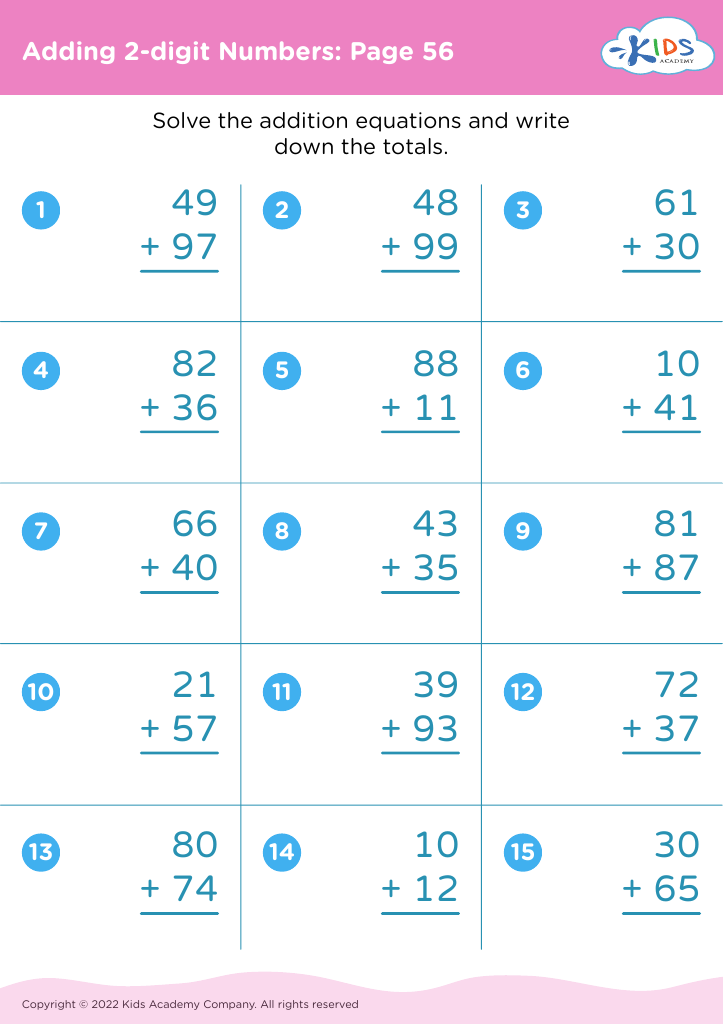
Adding 2-digit Numbers: Page 56

Adding 2-digit Numbers: Page 56

Adding 2-digit Numbers: Page 56
Worksheet
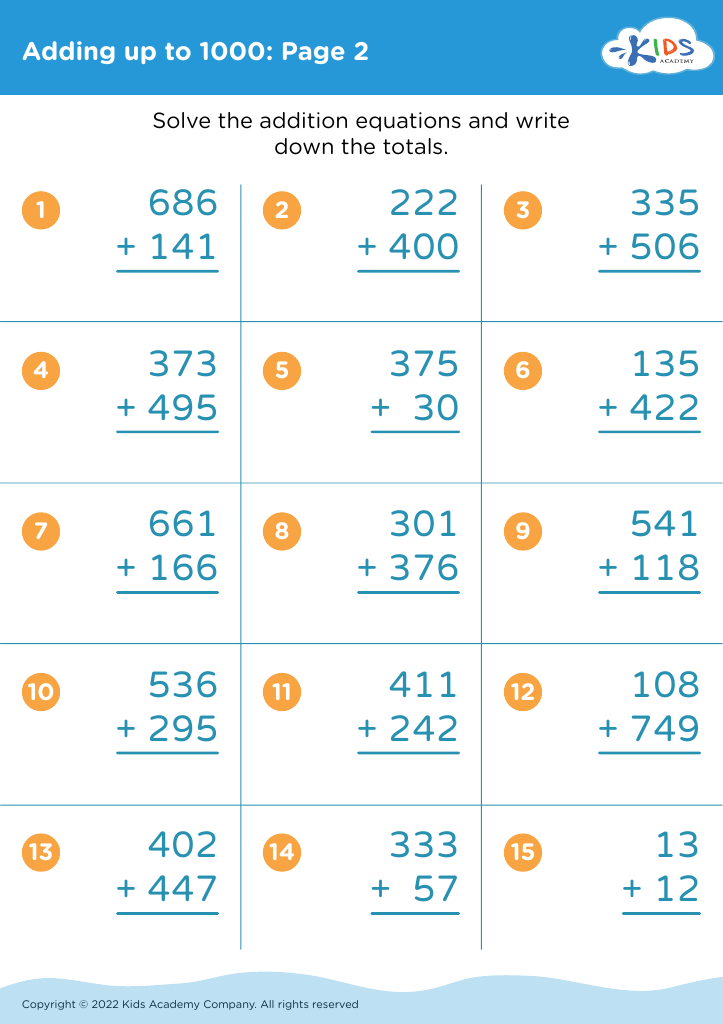
Adding up to 1000: Page 2

Adding up to 1000: Page 2

Adding up to 1000: Page 2
Worksheet
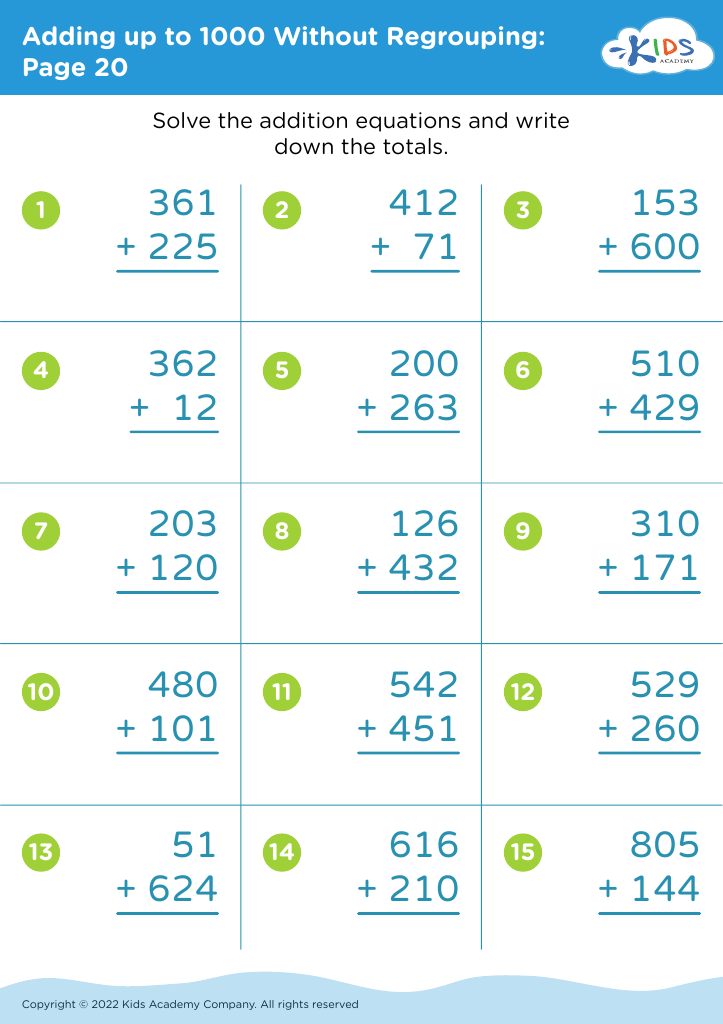
Adding up to 1000 Without Regrouping: Page 20
Worksheet
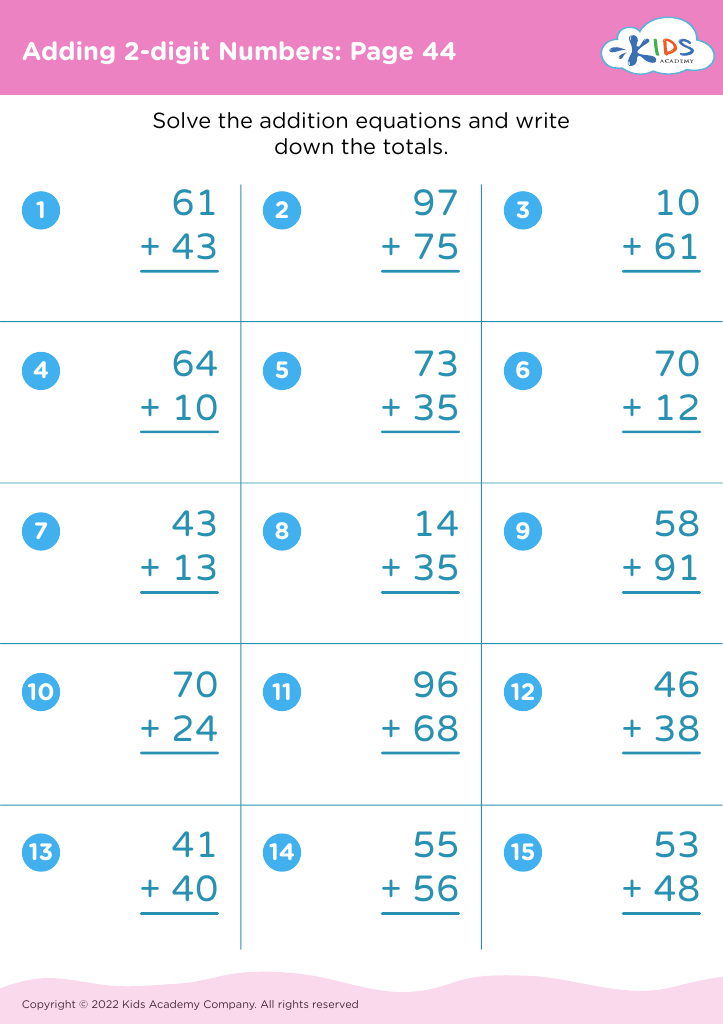
Adding 2-digit Numbers: Page 44

Adding 2-digit Numbers: Page 44

Adding 2-digit Numbers: Page 44
Worksheet
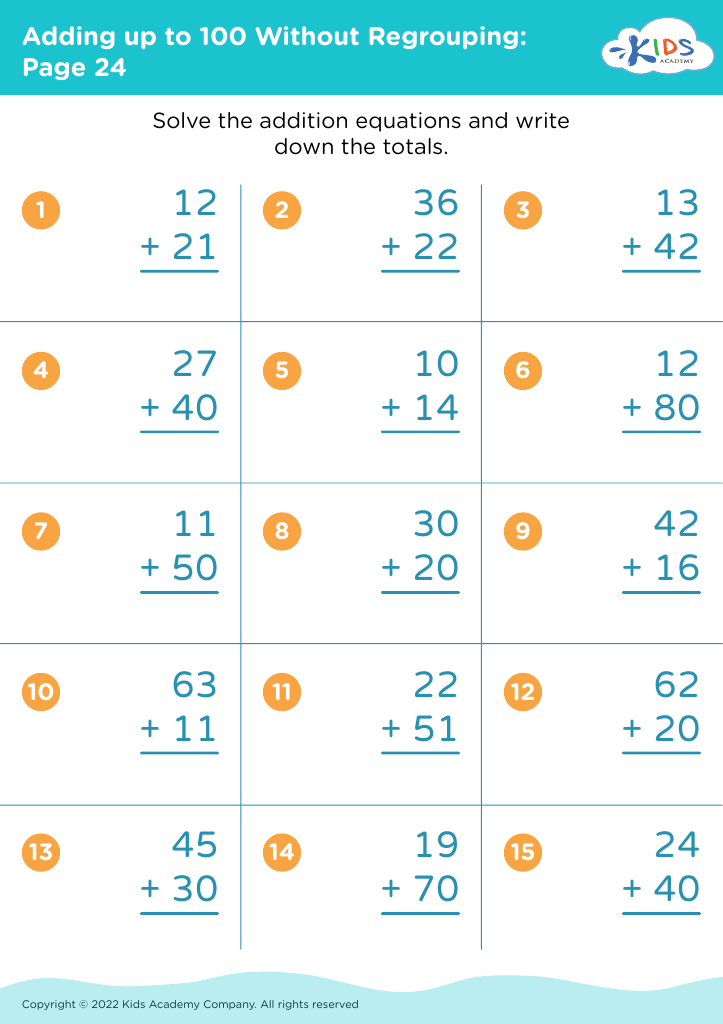
Adding up to 100 Without Regrouping: Page 24
Worksheet
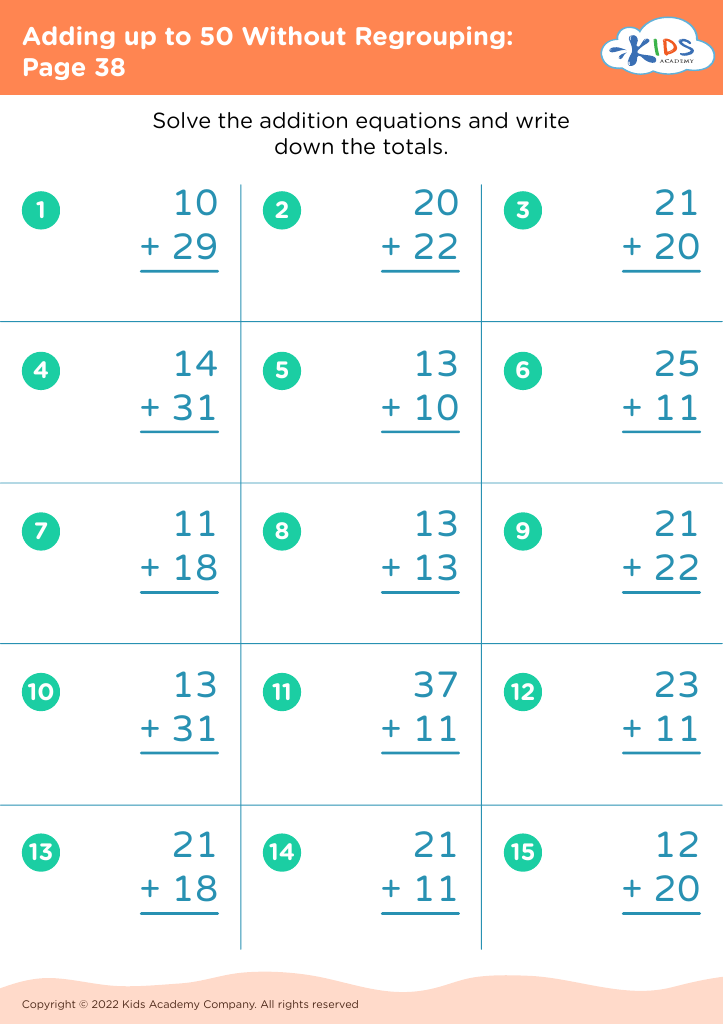
Adding up to 50 Without Regrouping: Page 38
Worksheet
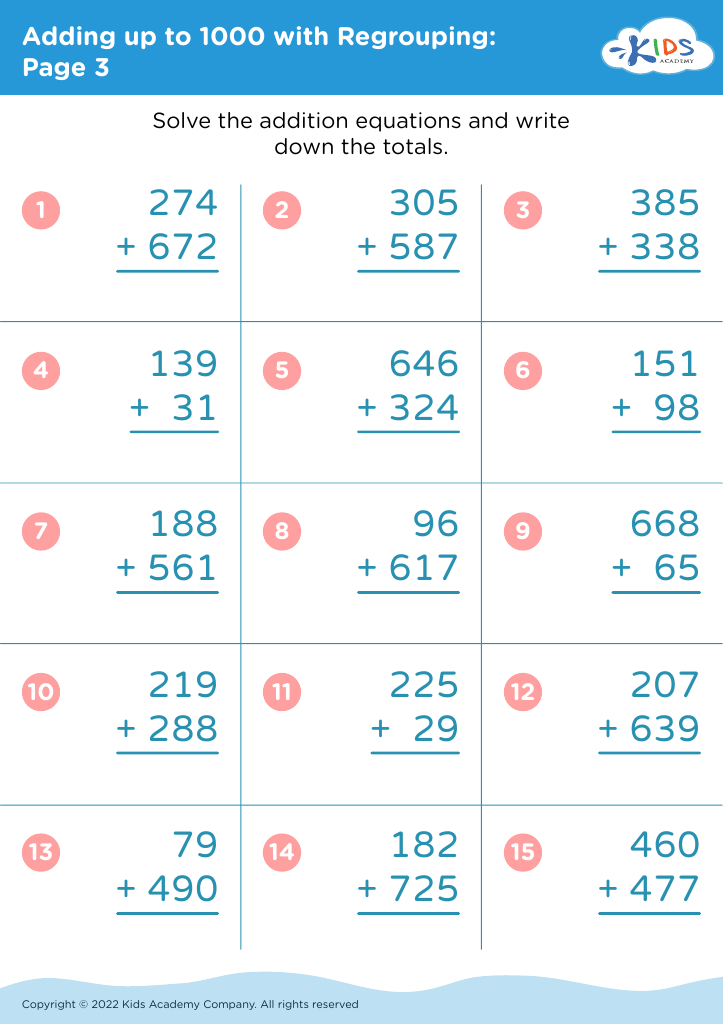
Adding up to 1000 with Regrouping: Page 3
Worksheet
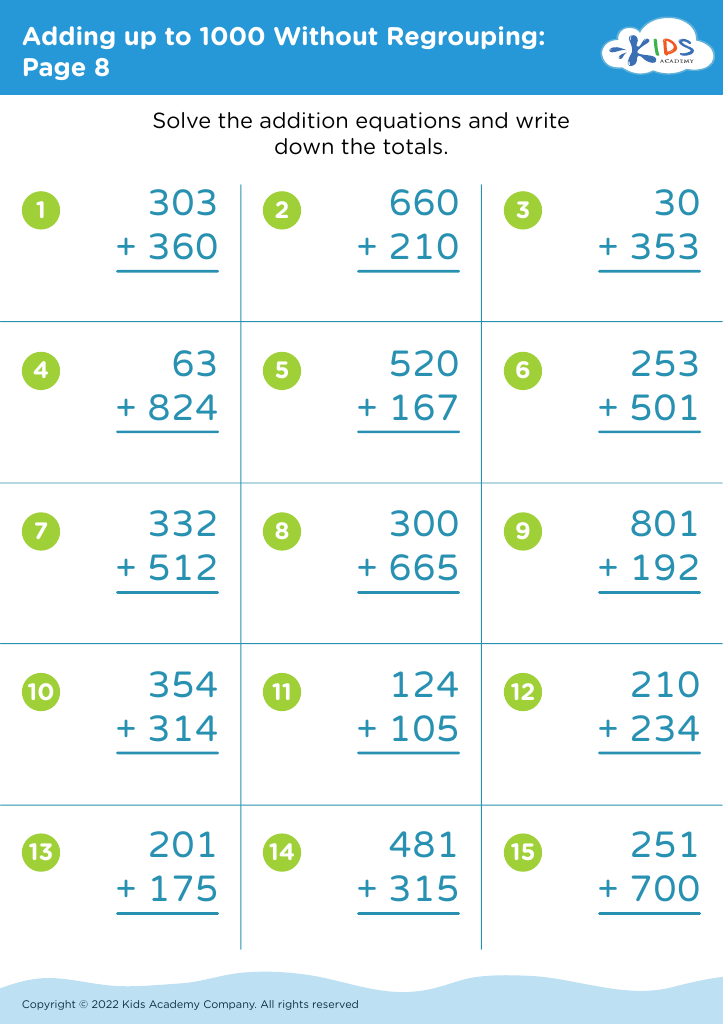
Adding up to 1000 Without Regrouping: Page 8
Worksheet
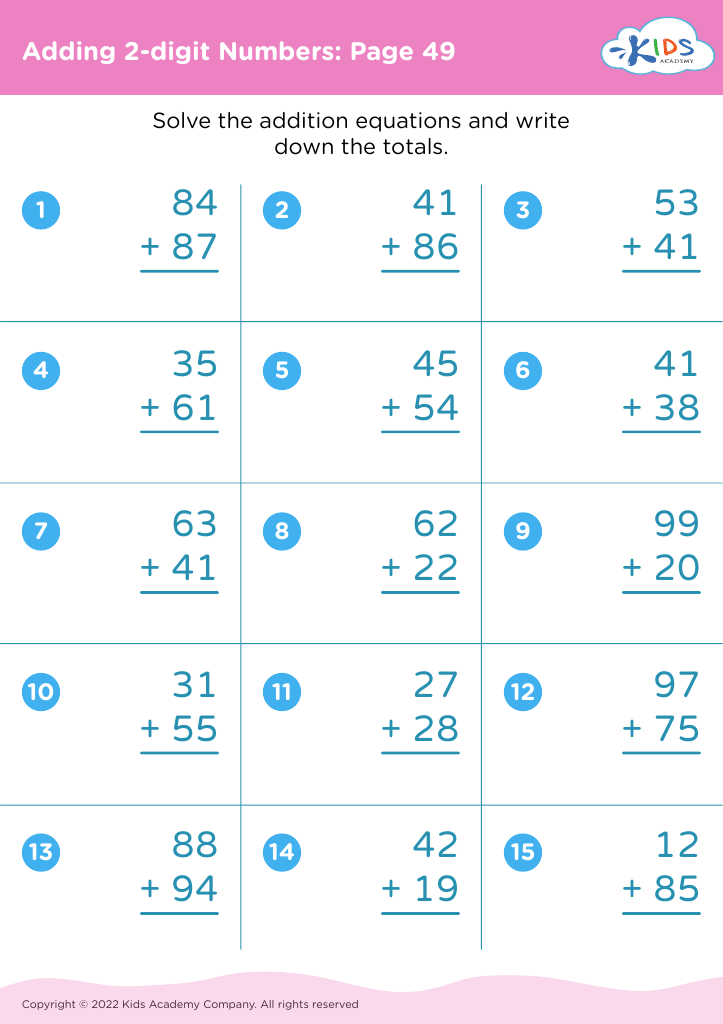
Adding 2-digit Numbers: Page 49

Adding 2-digit Numbers: Page 49

Adding 2-digit Numbers: Page 49
Worksheet
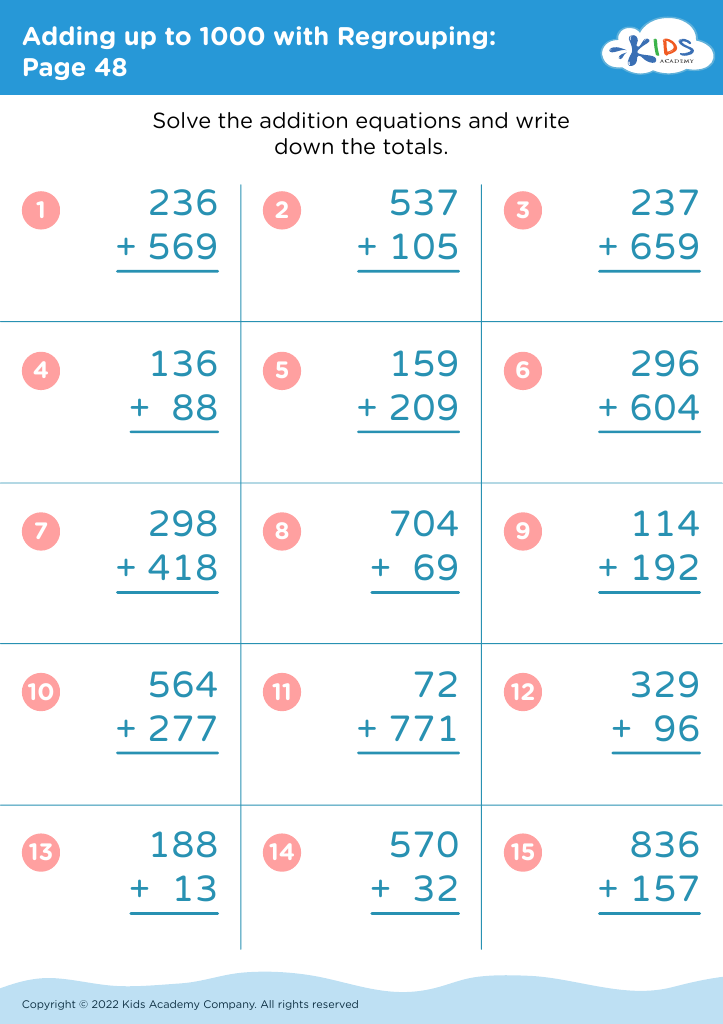
Adding up to 1000 with Regrouping: Page 48
Worksheet
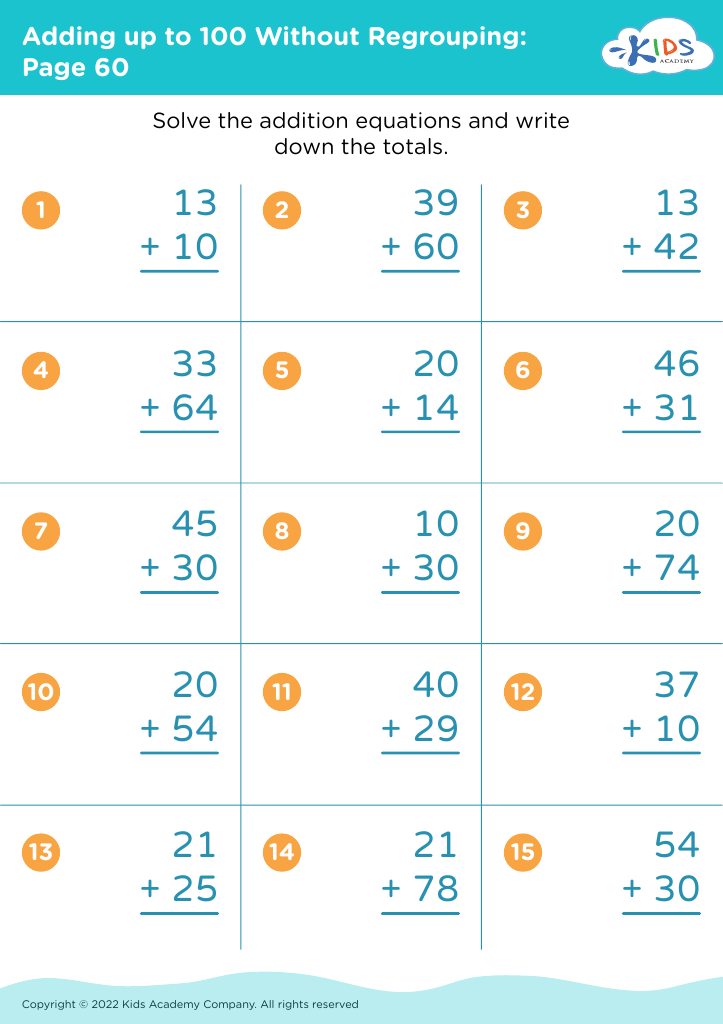
Adding up to 100 Without Regrouping: Page 60
Worksheet


Enhancing mathematical comprehension for children aged 3 to 9 is crucial for several reasons that resonate with both parents and teachers. First, early mathematical skills form the foundation for later advanced learning. Children who develop strong numeracy abilities tend to excel in academic settings as they progress, ultimately leading to improved educational outcomes.

Second, math literacy promotes problem-solving skills, critical thinking, and logical reasoning—all essential for lifelong learning. Children equipped with these skills from a young age are better prepared to tackle complex challenges throughout their schooling and future careers.

Furthermore, caring about math comprehension means engaging children in interactive and meaningful ways, which can ignite their curiosity and increase their enjoyment of learning. When parents and teachers invest in math education via games, activities, and everyday applications, they foster a positive attitude towards the subject that can combat math anxiety.

Lastly, enhancing math comprehension in this age group helps to reduce achievement gaps among diverse learners. This holistic approach ensures that all children, regardless of background, have the necessary tools to succeed in math and have equitable opportunities for future learning. Thus, prioritizing math comprehension nurtures confident, capable, and enthusiastic learners.