Number Recognition Place Value Worksheets for Ages 3-9
13 filtered results
-
From - To
Enhance your child's math skills with our Number Recognition Place Value worksheets meticulously designed for ages 3-9. Tailored to support varying learning levels, these engaging printables help young learners grasp the fundamentals of number recognition and place value. Through fun activities and colorful illustrations, children can easily understand and practice essential concepts. Ideal for both classroom settings and at-home learning, our worksheets boost confidence and foster a solid math foundation. Empower your child to excel in math with Kids Academy's expertly crafted resources—because every young mind deserves the best start. Download your set today!
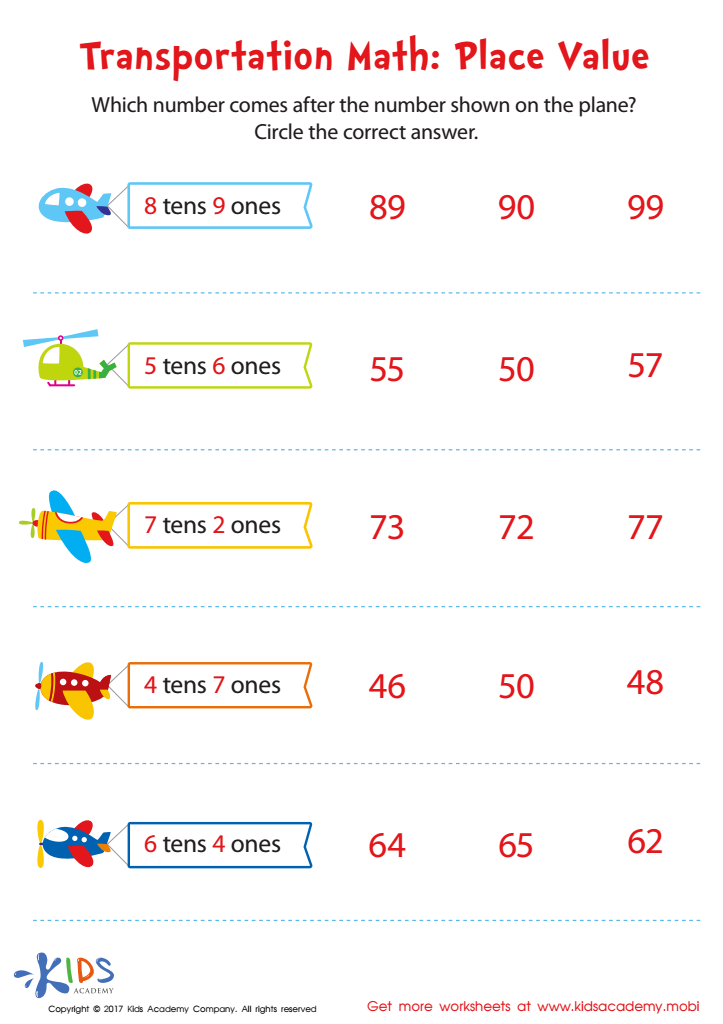
Transportation Math Printable
 Assign to My Students
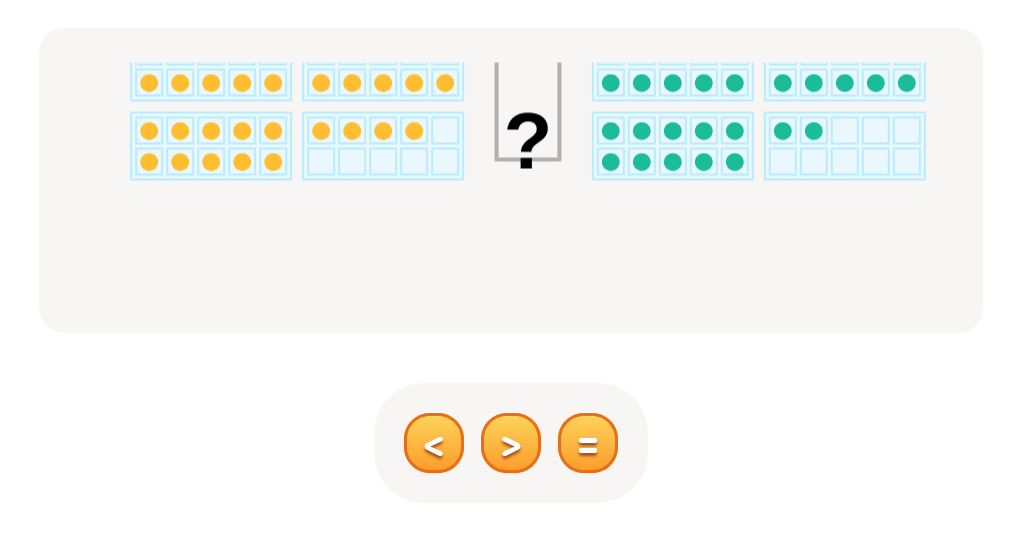

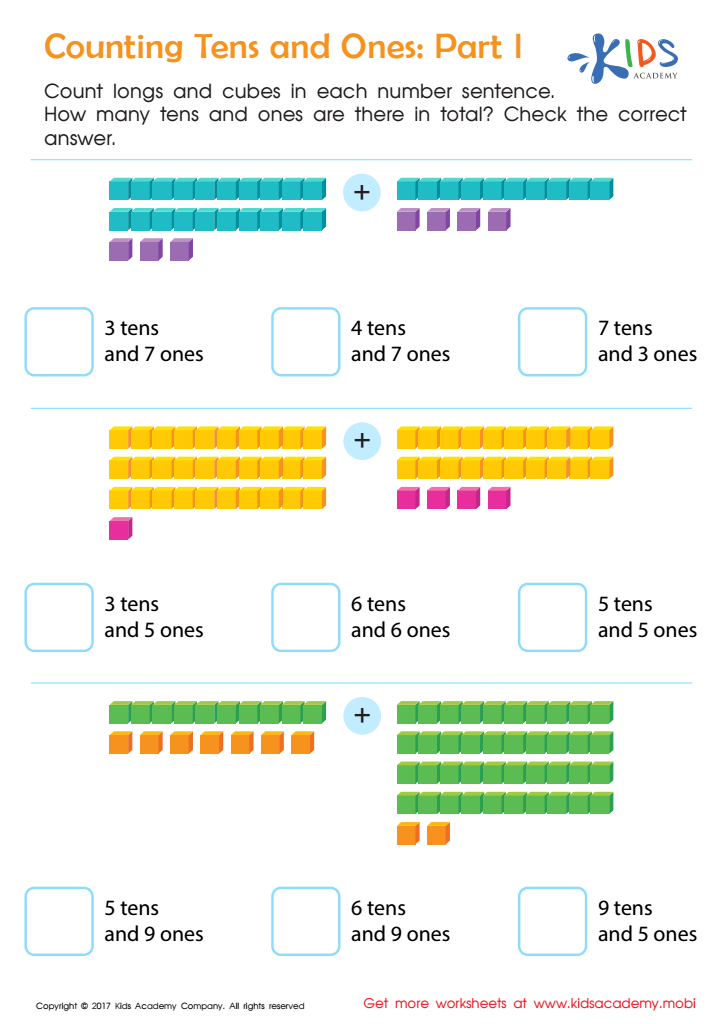
Counting Tens and Ones: Part 1 Worksheet
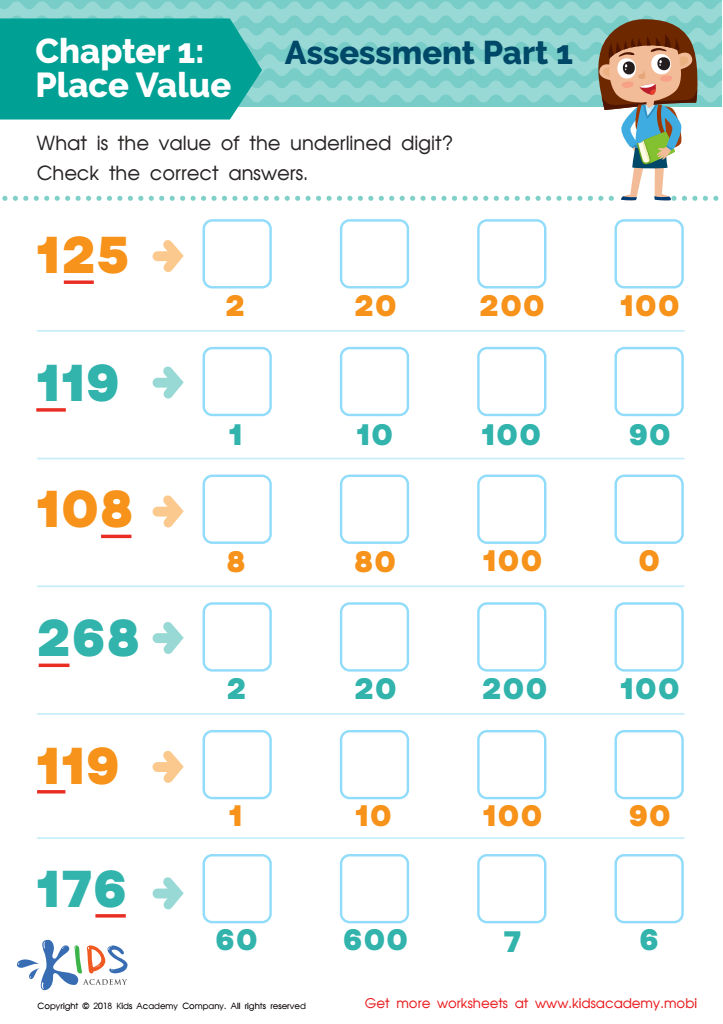
Place Value: Chapter 1 Worksheet
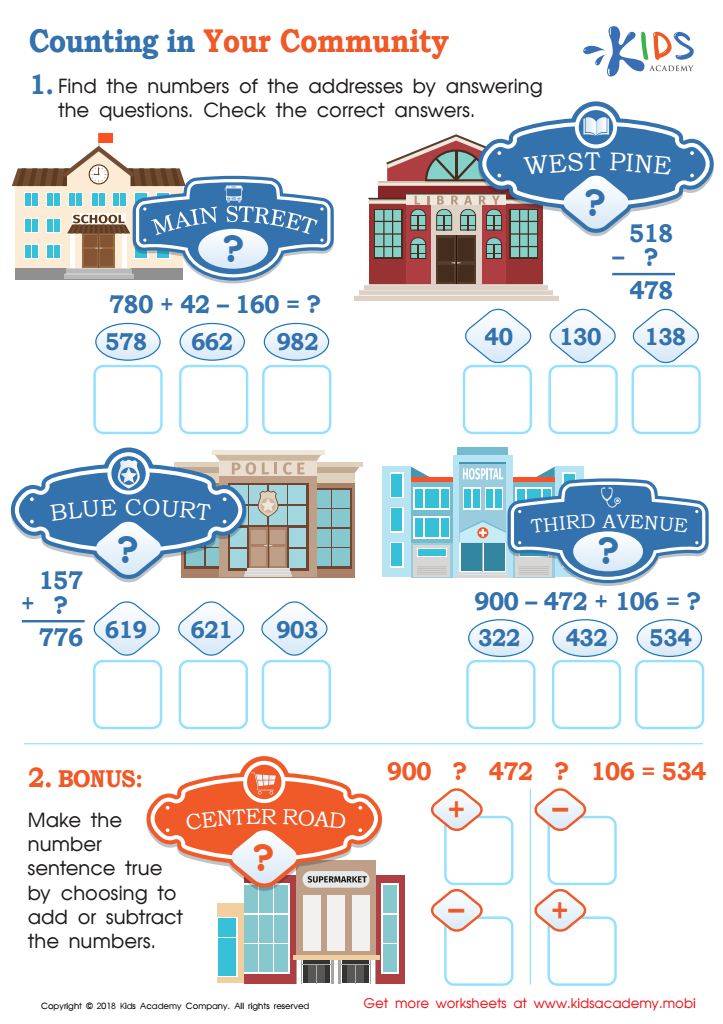
Counting in Your Community Worksheet
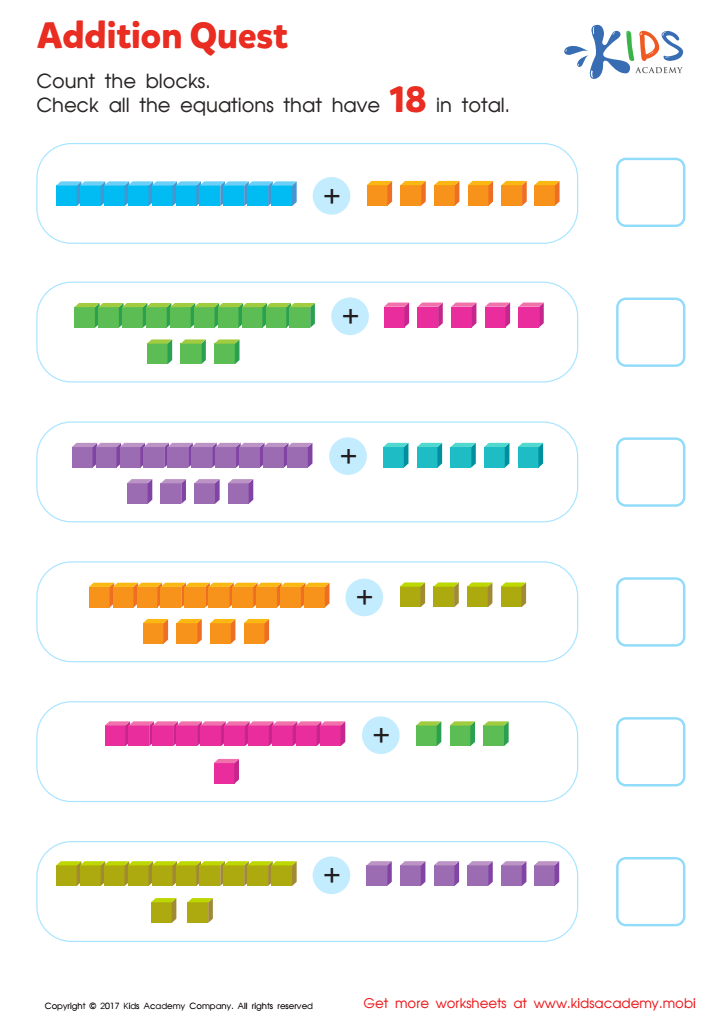
Addition Quest Worksheet: Part 2
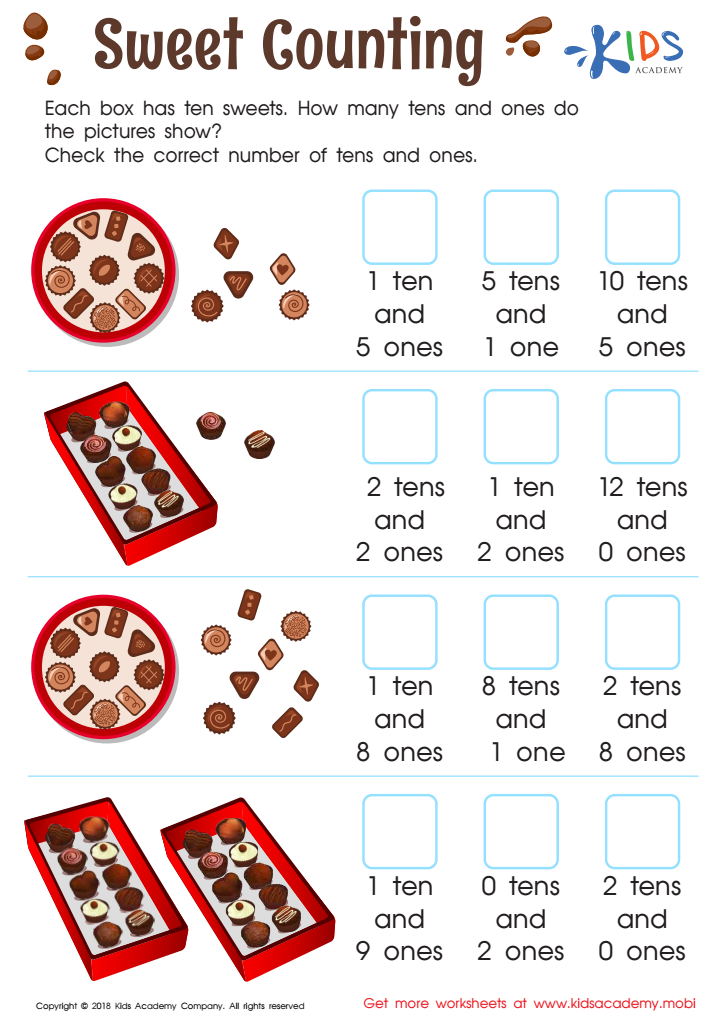
Sweet Counting - Part 2 Worksheet
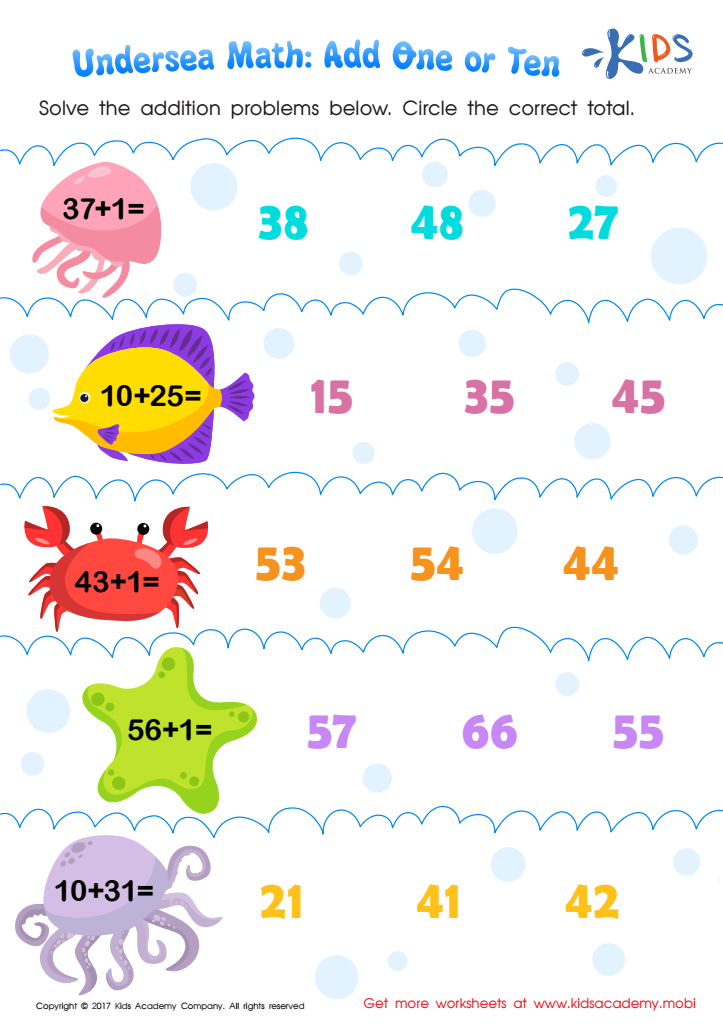
Undersea Math Worksheet
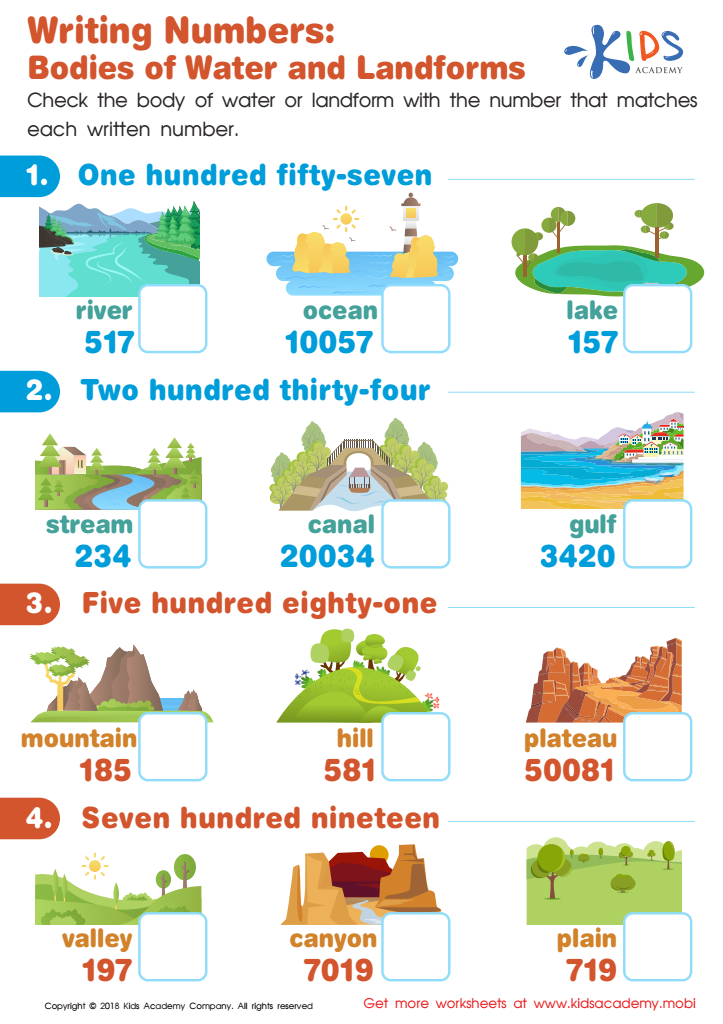
Bodies of Water and Landforms Writing Numbers Worksheet
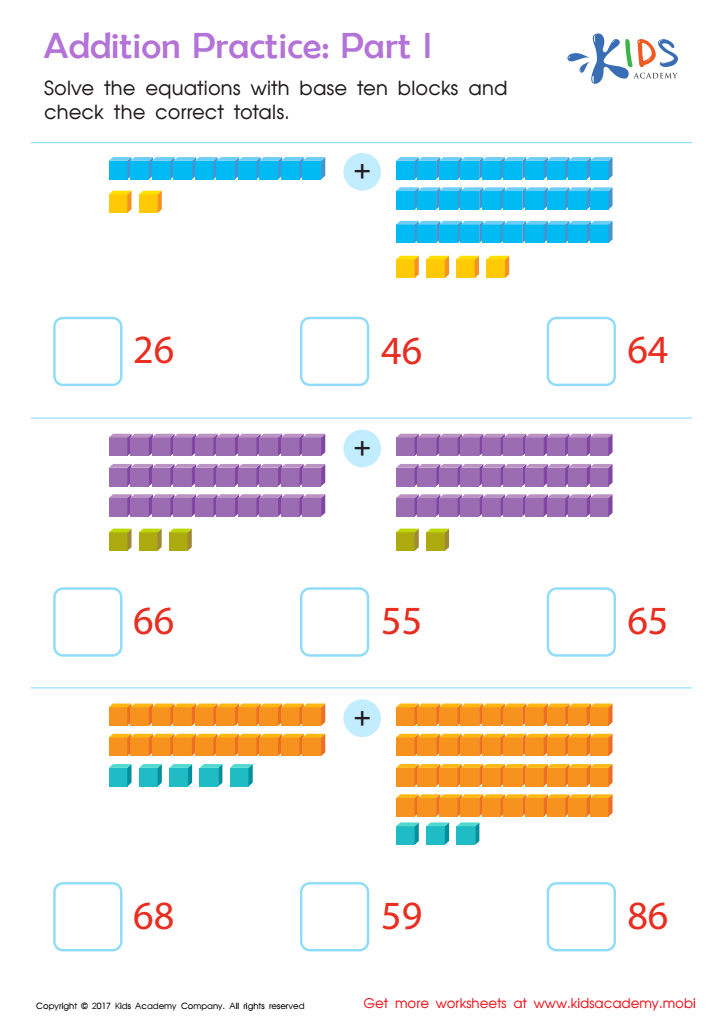
Addition Practice Sheet: Part 1
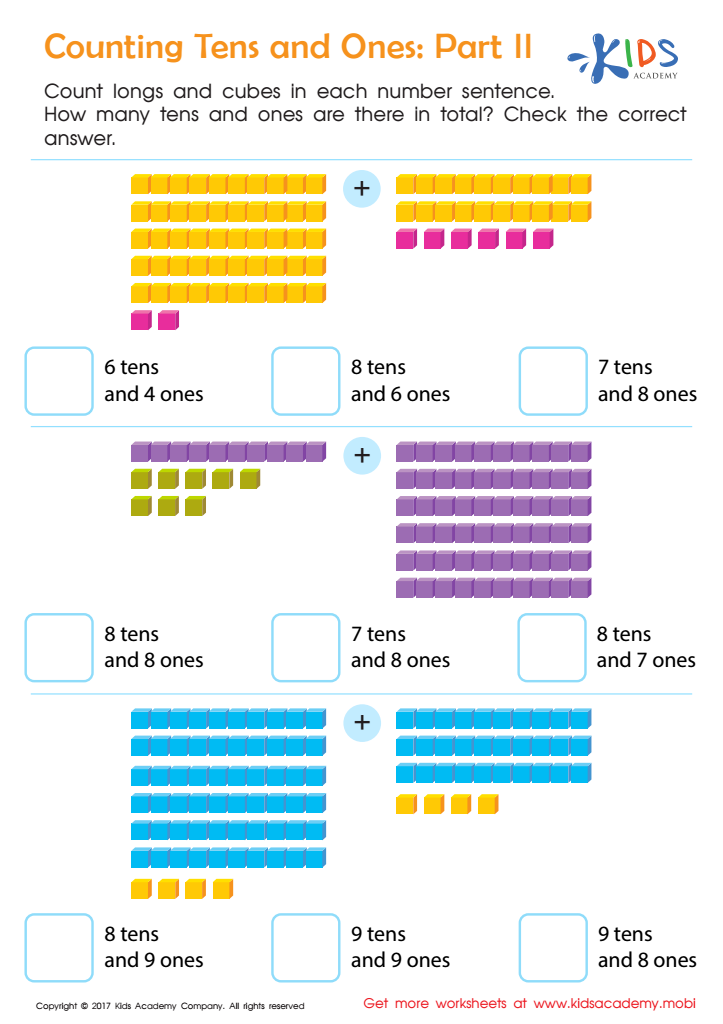
Counting Tens and Ones: Part 2 Worksheet
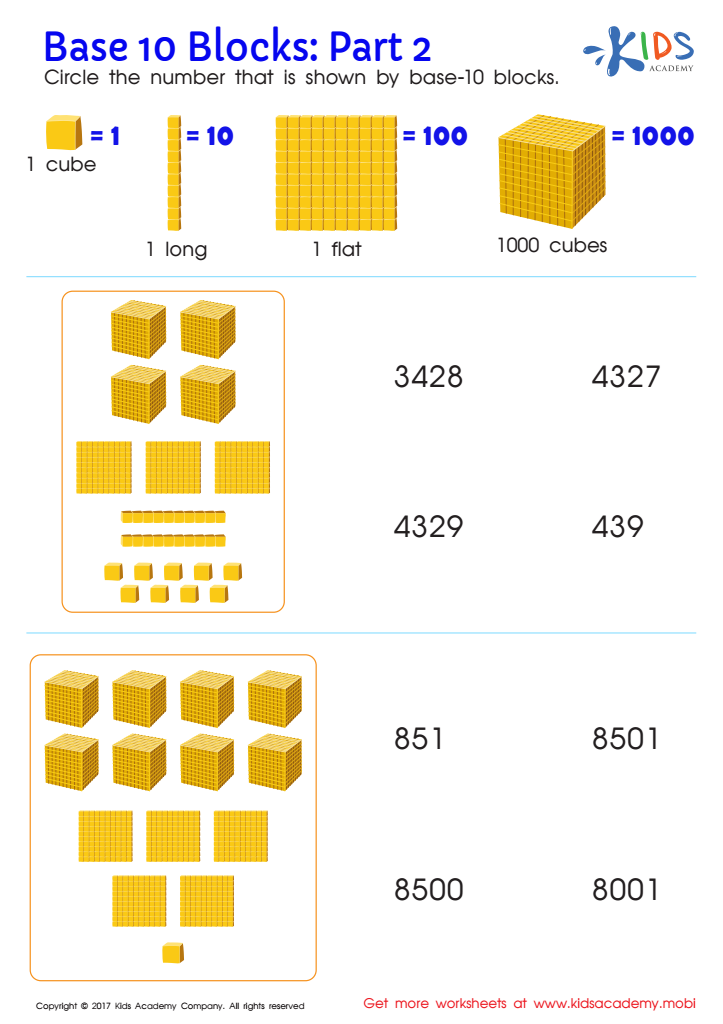
Place Value Worksheet: Thousands
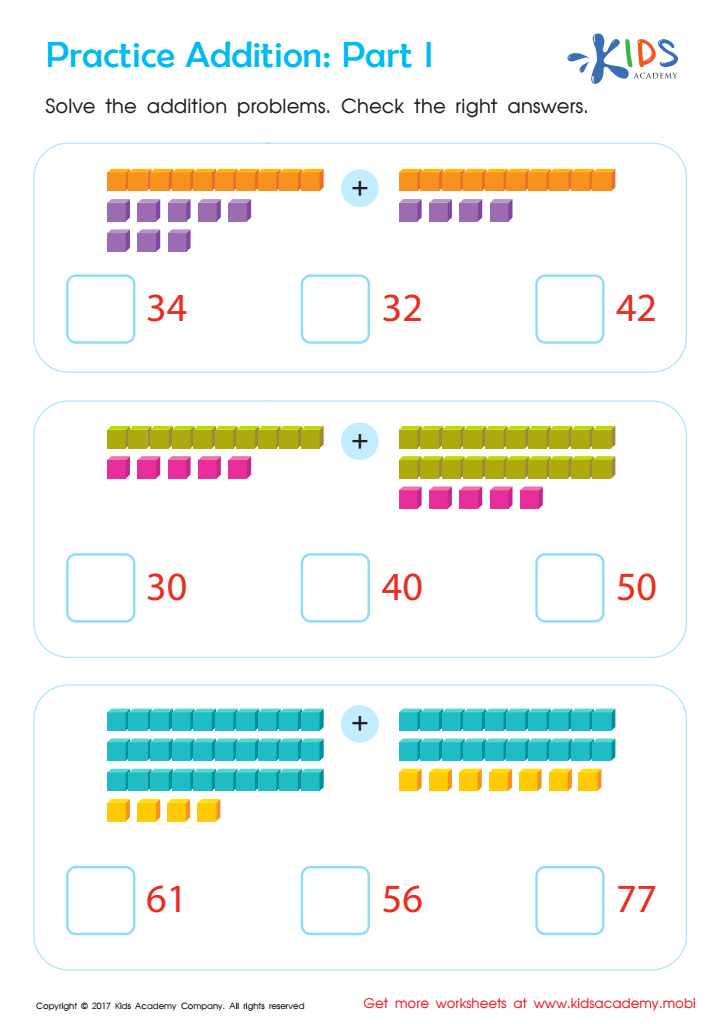
Practice Addition: Part 1 Worksheet
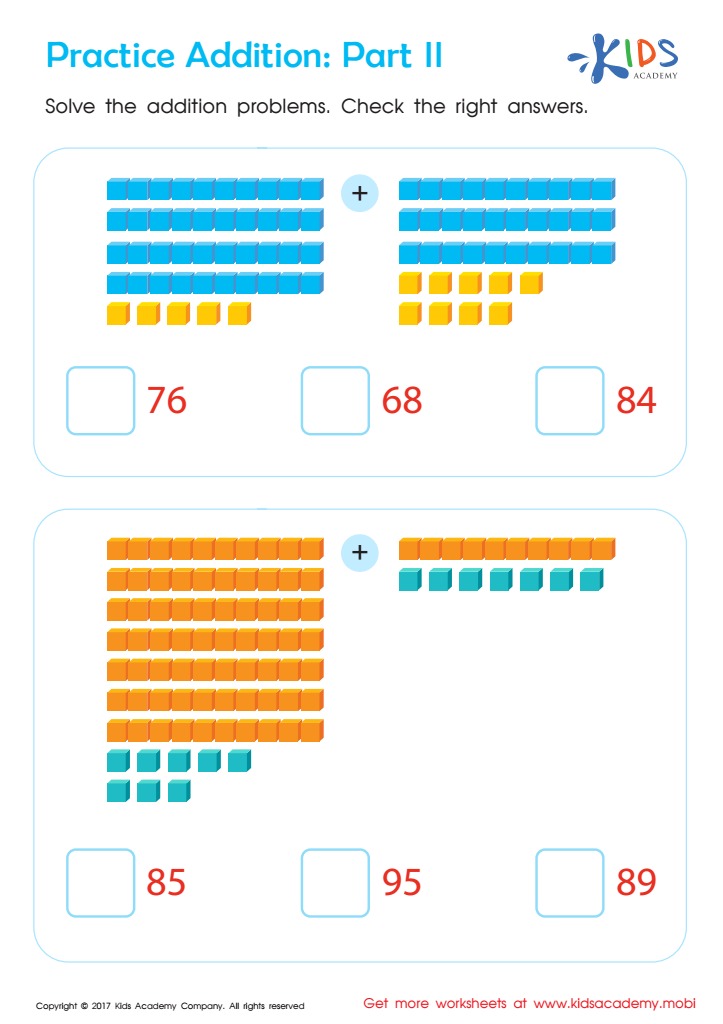
Practice Addition: Part 2 Worksheet








Number recognition and place value are foundational mathematical skills essential for children aged 3-9 for several reasons. Firstly, understanding number recognition—the ability to visually identify and name numbers—sets the stage for all future math learning. Without this basic skill, children struggle with more advanced concepts, as they cannot engage with mathematical problems accurately.
Place value, the concept of the value of a digit depending on its position within a number, is equally crucial. It helps children understand why numbers are structured the way they are, instilling concepts of units, tens, hundreds, and beyond. Mastery of place value enables children to perform arithmetic operations more effectively since they can grasp the significance of carrying over during addition or borrowing during subtraction.
These skills are not just limited to academic success but also everyday problem-solving. For instance, understanding place value and number recognition helps children manage money, tell time, and comprehend measurements, which are practical skills they will use throughout their lives. Moreover, early proficiency in these areas builds confidence and a positive attitude toward mathematics, which can dispel any anxiety and lay the groundwork for future learning. Therefore, parents and teachers must prioritize these concepts to ensure children develop robust mathematical foundations that serve them well beyond their early years.