Time Worksheets for Ages 3-9 - Page 2
25 filtered results
-
From - To
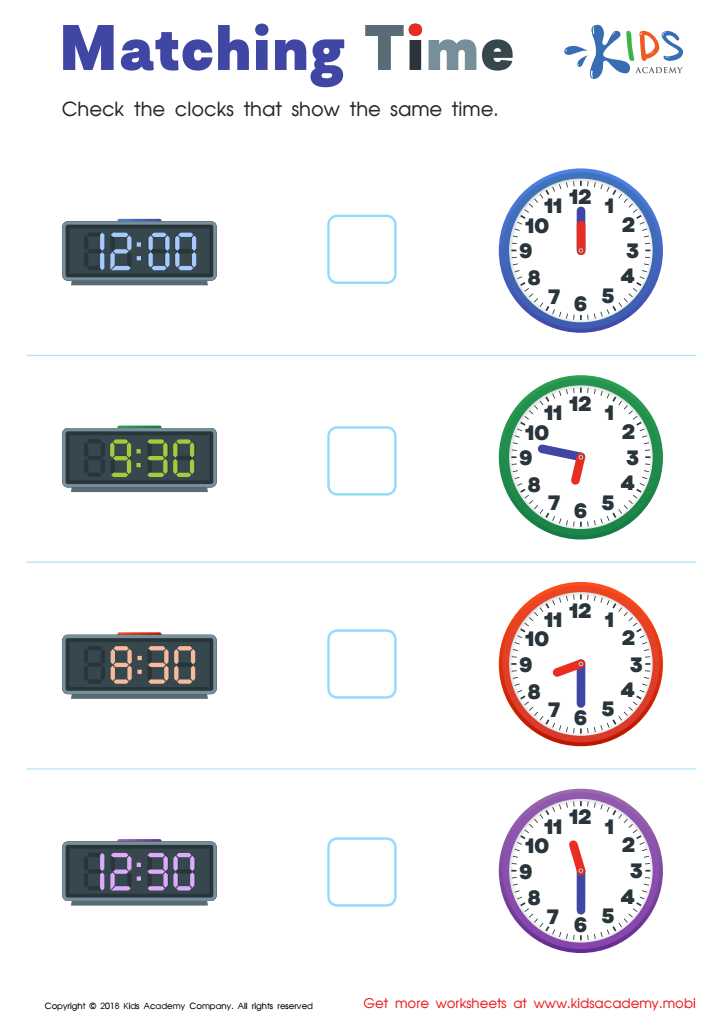
Matching Time Worksheet
 Assign to My Students








Understanding time is a crucial developmental milestone for children ages 3-9. During these formative years, children begin to grasp essential concepts such as sequencing, routines, and the idea of past, present, and future. This foundational knowledge not only enhances their cognitive skills but also helps develop their emotional intelligence as they learn to anticipate events and understand schedules.
For parents and teachers, teaching children about time fosters independence and responsibility. When children learn to read clocks and understand daily routines, they can manage their own activities, leading to increased confidence. Moreover, regular discussions about time can improve language skills as adults introduce relevant vocabulary, such as "morning," "afternoon," and "hours."
Time observation also nurtures critical thinking and problem-solving abilities. Children can engage in activities that involve planning and questioning, paving the way for a deeper understanding of cause and effect.
Incorporating time-related exercises in play or daily routines makes learning enjoyable and relevant. By caring about this aspect of education, parents and teachers equip children with important life skills that will serve them well in their future, laying the groundwork for successful, organized, and independent individuals.








