Problem-Solving Skills Tracing Shapes Worksheets for Ages 3-9
4 filtered results
-
From - To
Enhance your child's problem-solving skills with our Tracing Shapes Worksheets, designed for ages 3-9. These engaging worksheets help young learners develop critical thinking as they trace various geometric shapes. By honing their hand-eye coordination and fine motor skills, children will build a strong foundation in mathematical concepts while enjoying creative activities. Each worksheet encourages exploration and independent thinking, fostering a love for learning. Perfect for home or classroom use, our worksheets are easy to print and provide a fun way for kids to practice shape recognition. Start their journey of problem-solving today with our playful and educational resources!
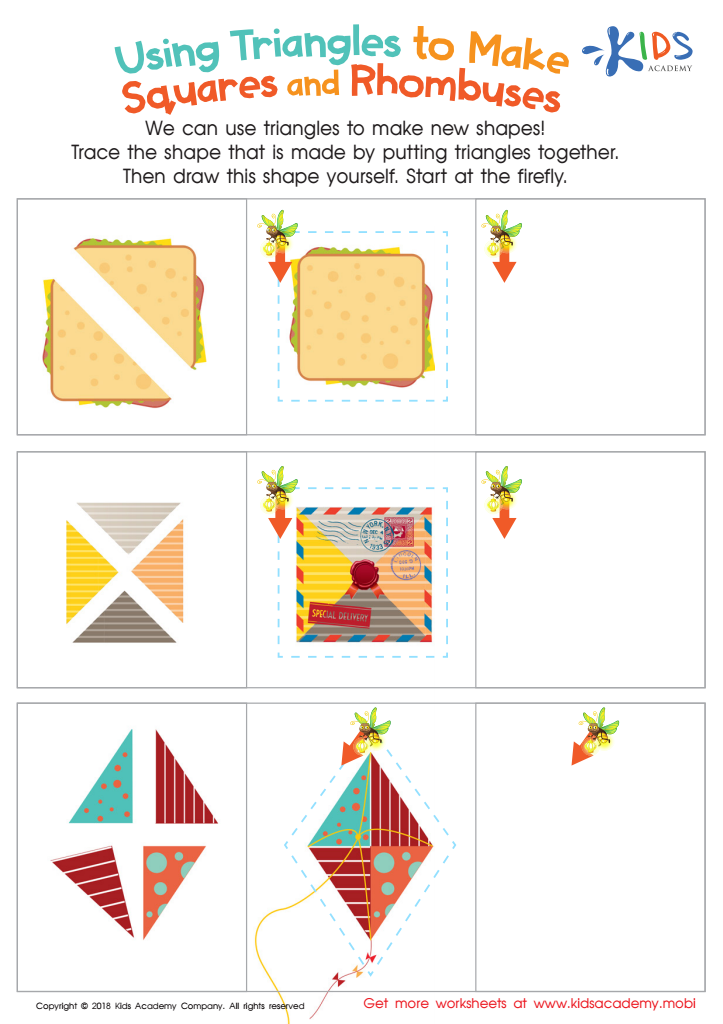
Using Triangles to Make Squares and Rhombuses Worksheet
 Assign to My Students
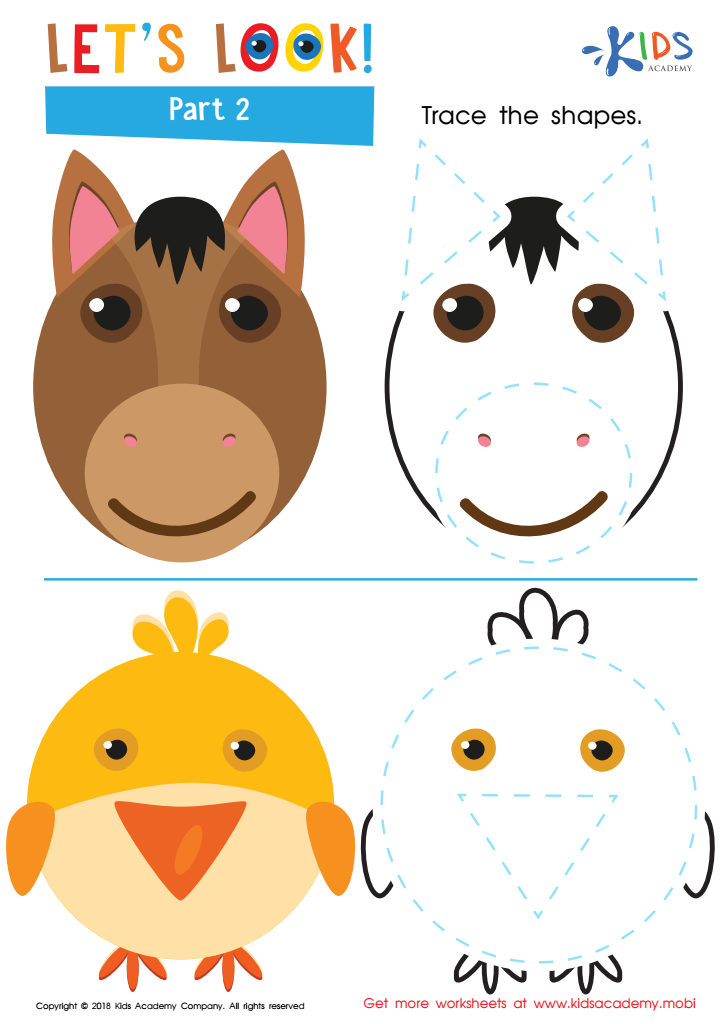
Let's Look! Part 2 Worksheet
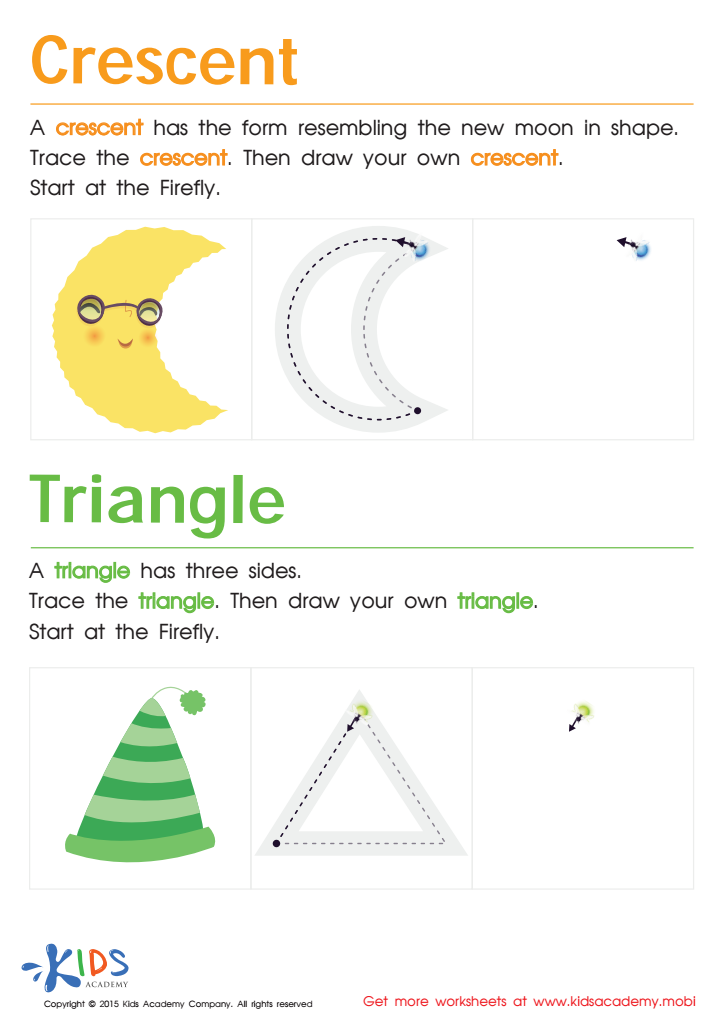
Learning to Draw Crescents And Triangles Worksheet
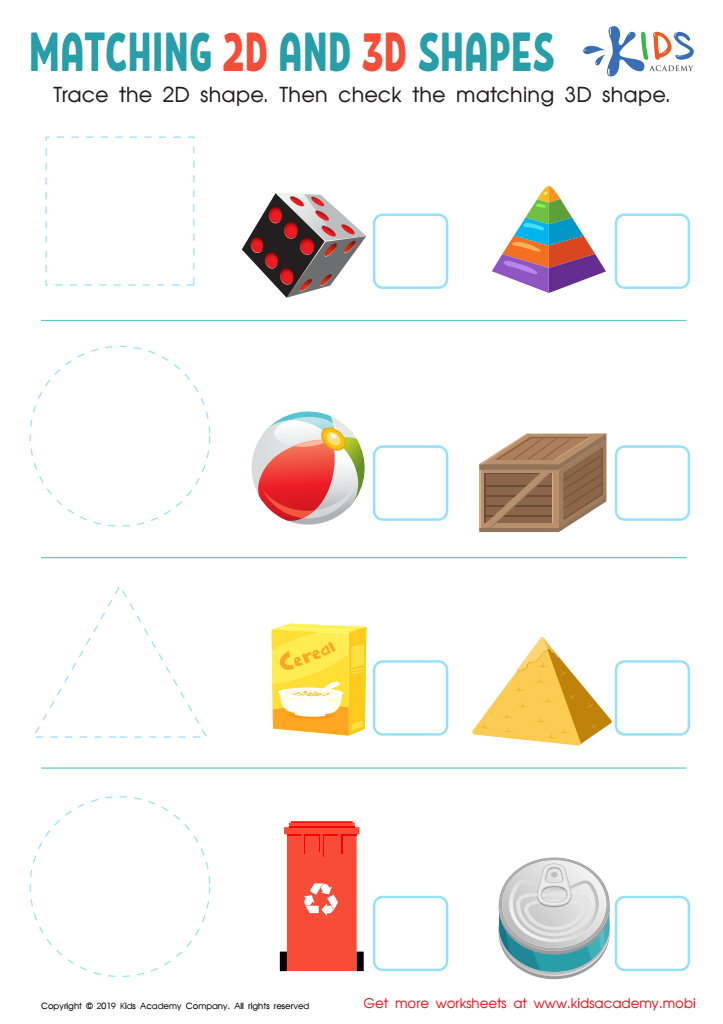
Matching 2D and 3D Shapes Worksheet








Problem-solving skills, particularly through activities like tracing shapes, are essential for children aged 3 to 9. These skills lay the foundation for critical thinking and logical reasoning, which are vital for academic success and everyday decision-making. Engaging in shape tracing enhances a child's ability to understand spatial relationships and geometric concepts, fostering their mathematical reasoning.
Parents and teachers should prioritize these activities because they promote fine motor skills and hand-eye coordination, essential for writing, drawing, and other tasks. Moreover, tracing shapes encourages concentration and perseverance, as children learn to stay focused on a task until completed. This process of overcoming challenges builds resilience and a growth mindset, vital traits for lifelong learning.
Furthermore, by incorporating problem-solving tasks like shape tracing into early education, children learn to approach challenges systematically. They develop the ability to analyze, reflect, and strategize, preparing them for more complex problem-solving scenarios in the future.
Overall, nurturing problem-solving skills through shape tracing not only equips children with essential cognitive abilities but also fosters creativity and self-confidence. Thus, parents and teachers play a crucial role in integrating these activities into early education, setting the stage for a richer learning experience.