Animal identification Reading Worksheets for Ages 3-9
6 filtered results
-
From - To
Discover a delightful range of Animal Identification Reading Worksheets for ages 3-9 at Kids Academy! These engaging worksheets are designed to spark curiosity and enhance early reading skills through fun, educational activities. Children will enjoy identifying a variety of animals, learning new vocabulary, and developing comprehension skills. Each worksheet combines vibrant images with simple texts and interactive exercises that are perfect for young learners. Strengthen your child's reading abilities, boost their animal knowledge, and make learning an exciting adventure. Explore our collection now and give your little one a head start in their educational journey!
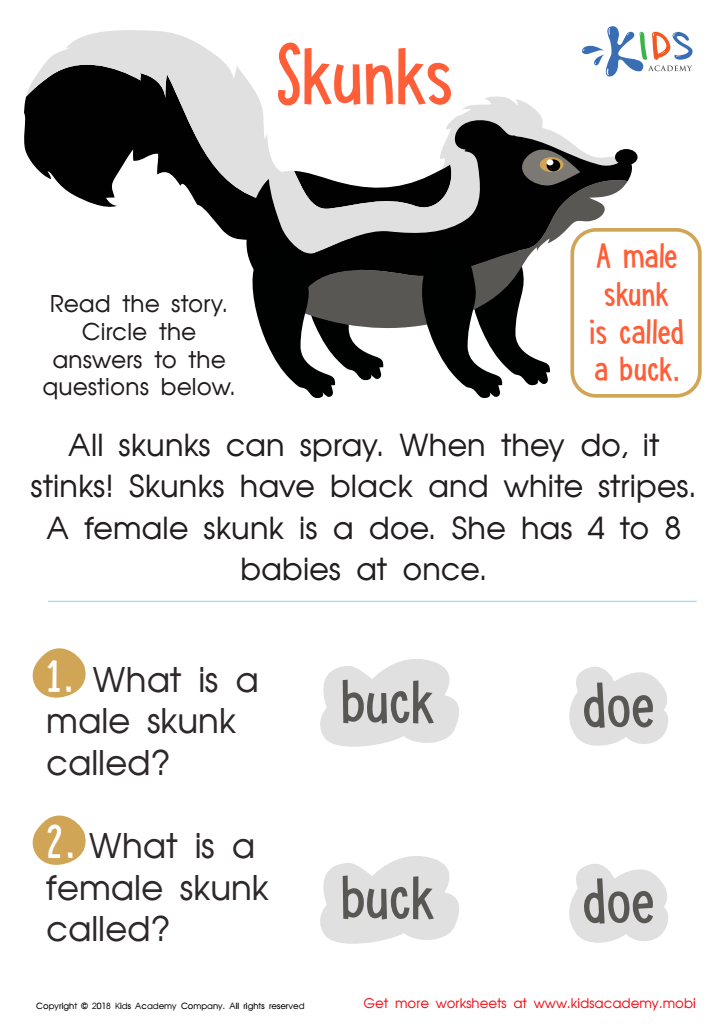
Skunks Worksheet
 Assign to My Students
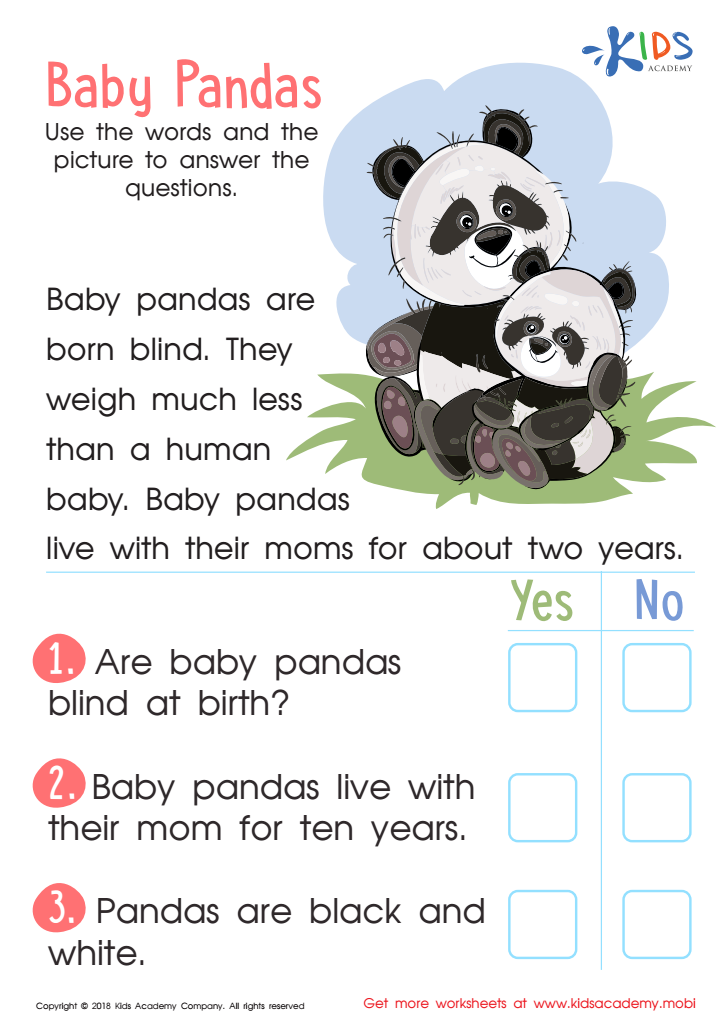
Baby Pandas Worksheet
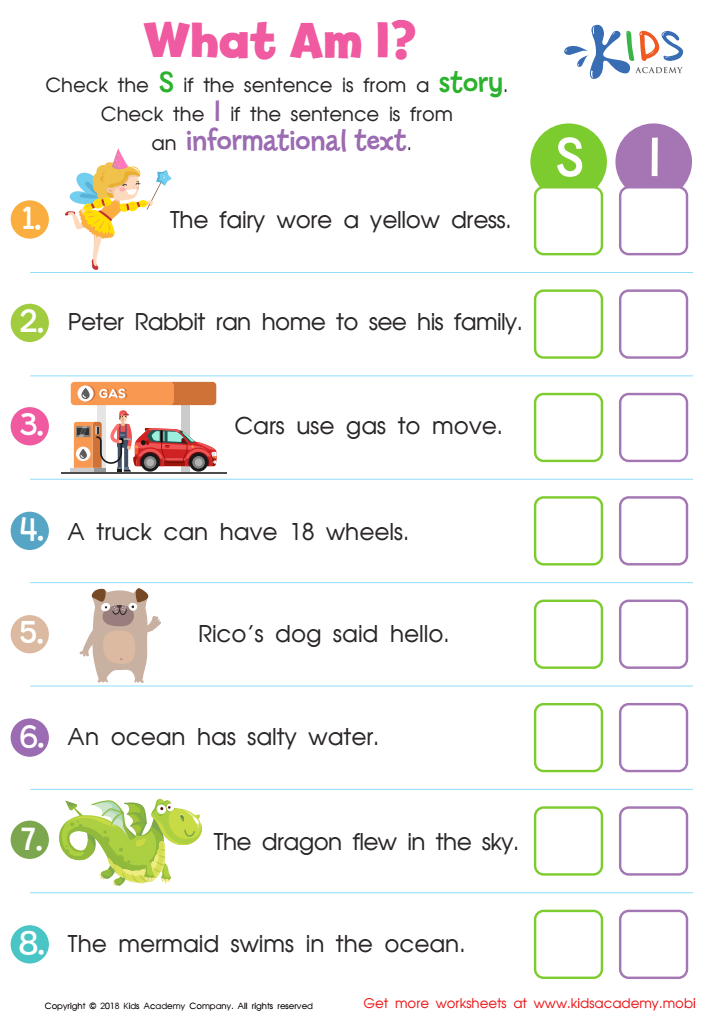
What Am I? Worksheet
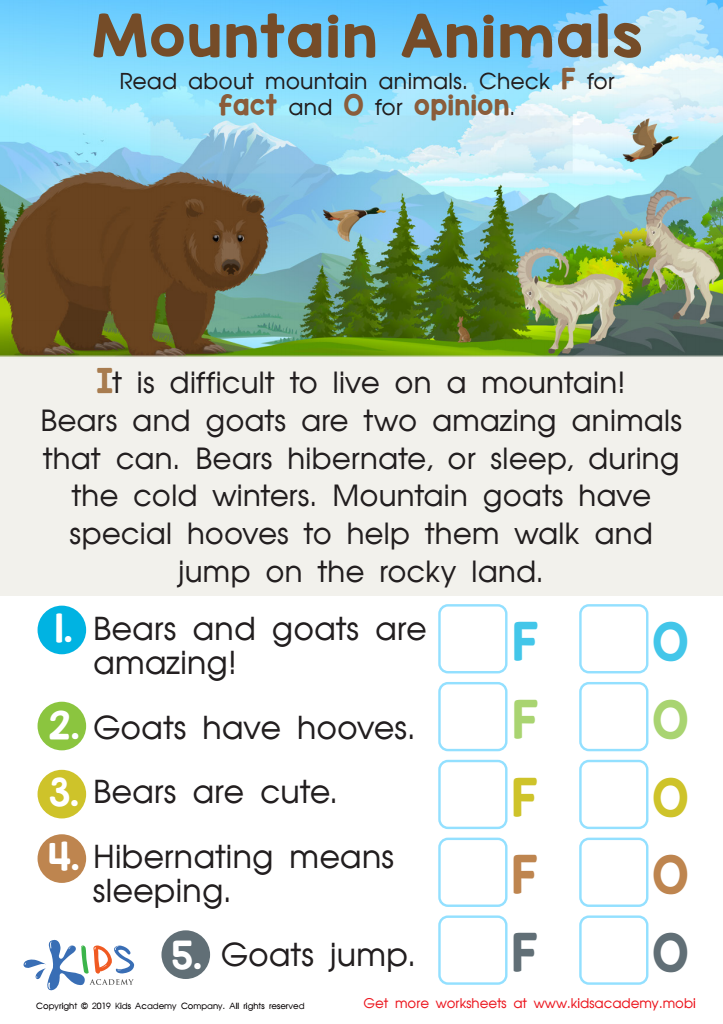
Mountain Animals Worksheet
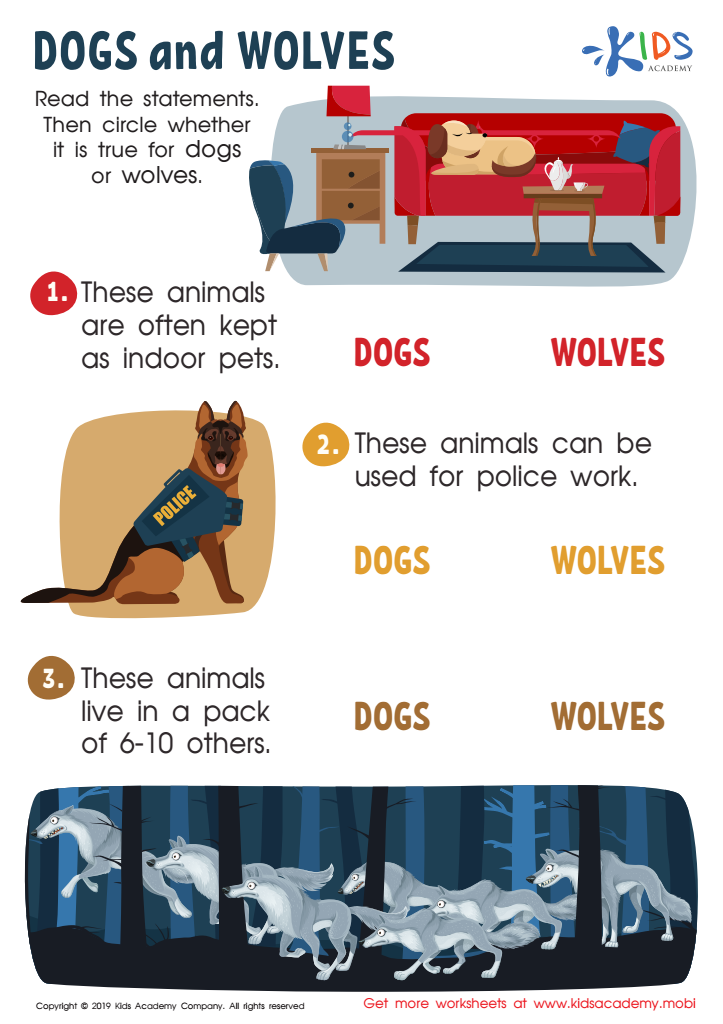
Dogs and Wolves Worksheet







Animal identification reading for ages 3-9 is a foundational educational tool that enriches early childhood development. First, it strengthens vocabulary and language skills as children learn the names and characteristics of various animals. This continuous expansion of their lexicon is crucial for effective communication and literacy.
Additionally, animal identification fosters curiosity and a love for nature. Children become more aware and appreciative of biodiversity, promoting empathy and environmental stewardship from an early age. Learning about animals also helps kids make connections with the natural world, which is essential for holistic development.
Cognitive development benefits significantly too. Recognizing and naming animals involves memory retention and critical thinking. As children identify patterns or categorize animals (e.g., mammals, birds, reptiles) they enhance their classification skills and understanding of the world.
Social skills also improve through interactive learning. When parents and teachers read with children, it creates a bonding experience, promoting listening and cooperation. Group activities involving animal identification encourage teamwork and verbal sharing.
In summation, animal identification reading not only broadens academic and cognitive abilities but also nurtures emotional and social skills. It's a simple yet powerful way to lay a strong educational foundation, making it an indispensable activity for early childhood development.








