Character recognition Reading Worksheets for Ages 3-9
4 filtered results
-
From - To
Unlock your child's potential with our Character Recognition Reading Worksheets for Ages 3-9 by Kids Academy. Specially designed to make learning fun, our worksheets help children master the crucial skill of recognizing letters and characters. Through engaging and interactive activities, young learners can build strong foundational reading skills, which are essential for their academic success. Each worksheet is crafted to suit different learning styles and developmental stages, ensuring that every child finds joy in the journey of reading. Spark curiosity and foster a love for reading early on with our expertly-developed resources. Visit Kids Academy to ignite your child's learning adventure today!
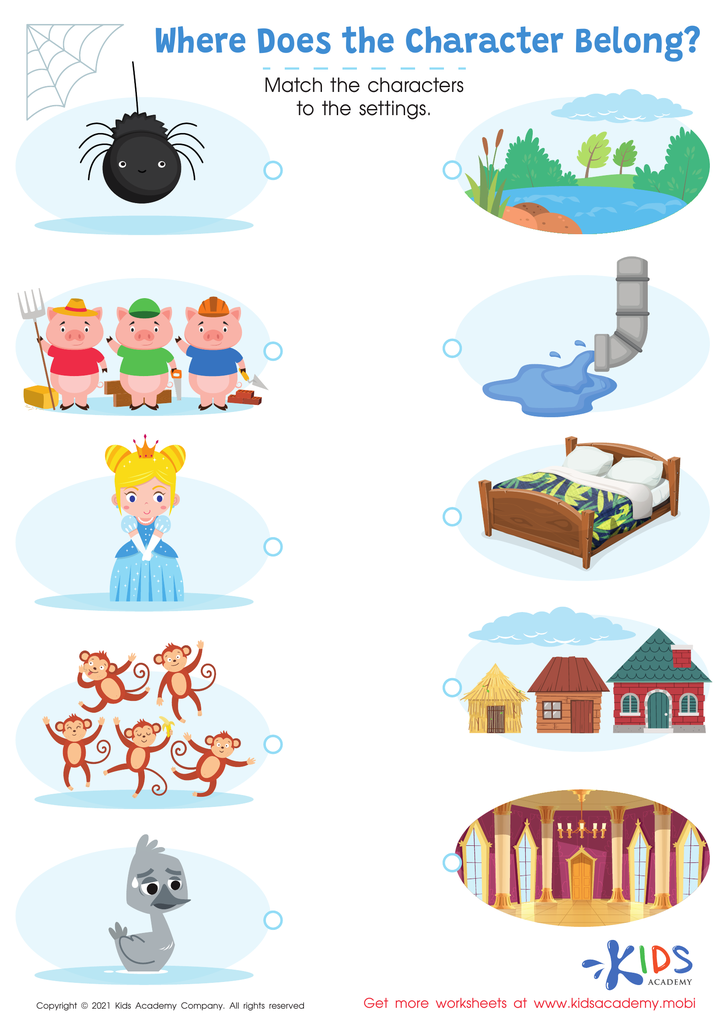
Where Does the Character Belong? Worksheet
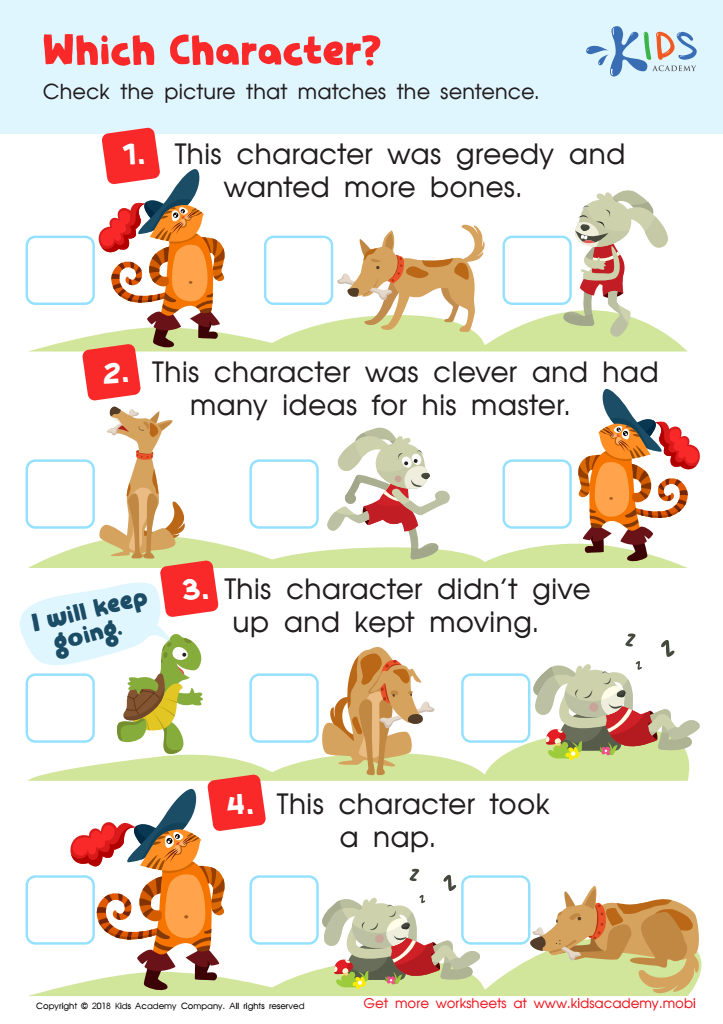
Which Character Worksheet
 Assign to My Students
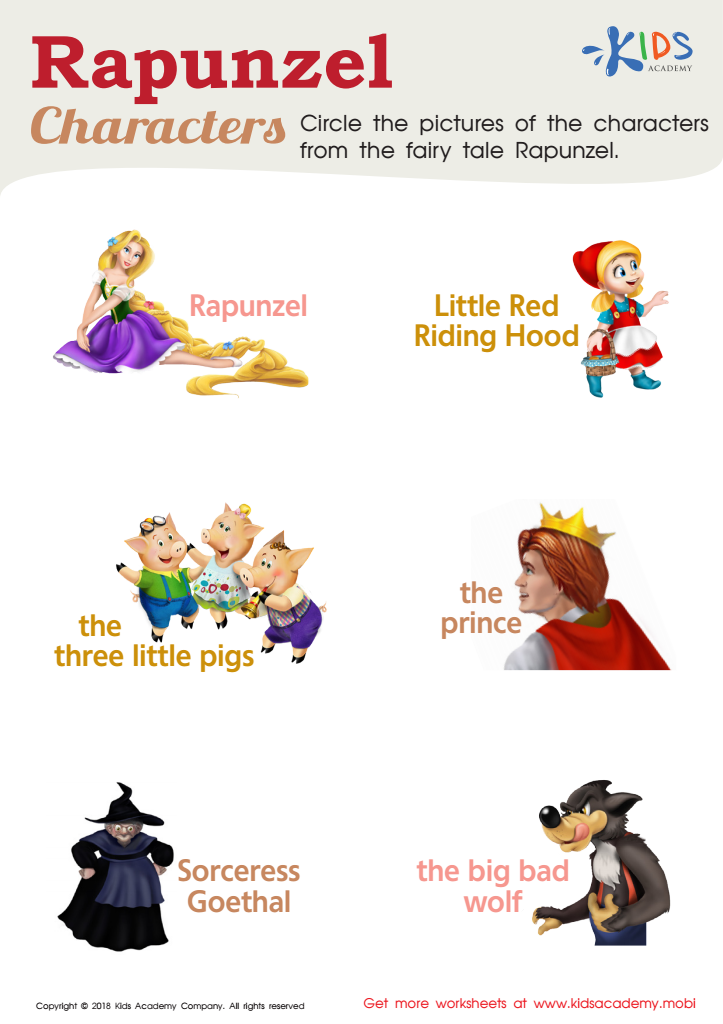
Rapunzel Characters Worksheet
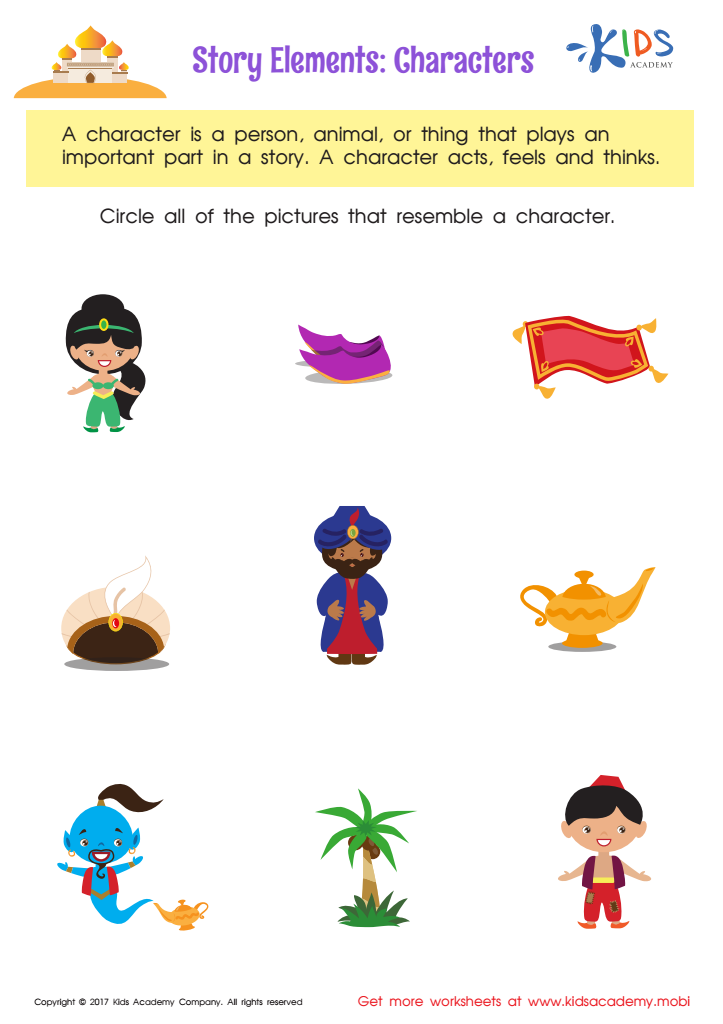
Story Elements Printable







Character recognition in reading is a fundamental skill that greatly influences children's educational trajectory and cognitive development, especially between the ages of 3-9. In early childhood, children’s brains are incredibly receptive to learning new patterns, including the shapes and sounds of letters and numbers. Early character recognition lays the groundwork for literacy, enabling children to decode words, comprehend text, and ultimately develop strong reading skills. These abilities are essential for success across all academic subjects and contribute significantly to cognitive development.
Furthermore, understanding characters at an early age boosts a child’s confidence and curiosity. It empowers them to interact with their environment in a more meaningful way, shaping their ability to follow instructions, participate in class activities, and establish a sense of independence. Early proficiency in reading also contributes to better communication skills, as children who can read well often have a more extensive vocabulary and are better at expressing their thoughts and ideas.
Parents and teachers play a crucial role in fostering this essential skill. By providing access to books, engaging reading materials, and positive reinforcement, they help create a supportive learning environment. This foundational skill not only contributes to academic success but also encourages a lifelong love of learning and intellectual growth. Hence, parents and teachers should prioritize character recognition to give children the best possible start on their educational journey.








