
Verb identification Reading Worksheets for Ages 3-9
3 filtered results
Difficulty Level
Grade
Age
-
From - To
Subject
Activity
Standards
Unlock the world of verbs for children ages 3-9 with our engaging Verb Identification Reading Worksheets from Kids Academy! Our carefully designed printable worksheets are perfect for young learners, helping them master verb recognition while enhancing reading skills. Each activity targets a range of difficulty, ensuring progression for all levels. Fun, interactive exercises foster a love for grammar, making learning effortless for kids. Download and print these effective resources to support your child's journey in understanding verbs, boosting both their confidence and literacy foundation. Start exploring our vibrant worksheets today!
Favorites
With answer key
Interactive
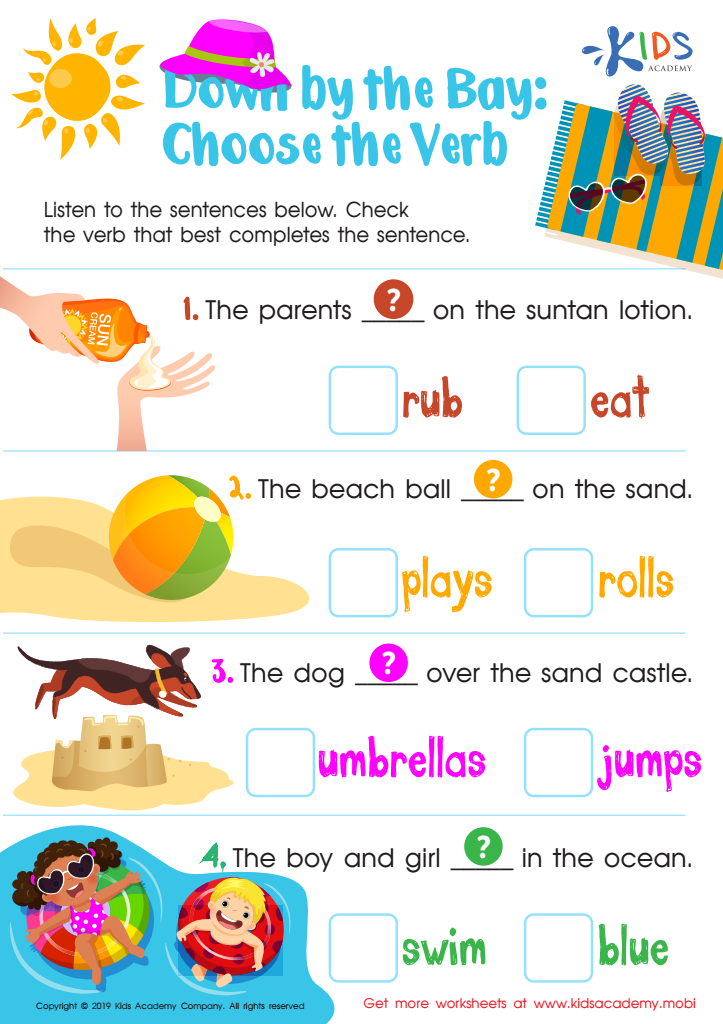
Down by the Bay: Choose the Verb Worksheet
Teach your kids about verbs: words that describe actions, like 'playing', 'eating', 'talking'. Ask your child to give their own verbs, then read the sentences in a worksheet and help them pick the best one for each question.
 Assign to My Students
Down by the Bay: Choose the Verb Worksheet
Worksheet
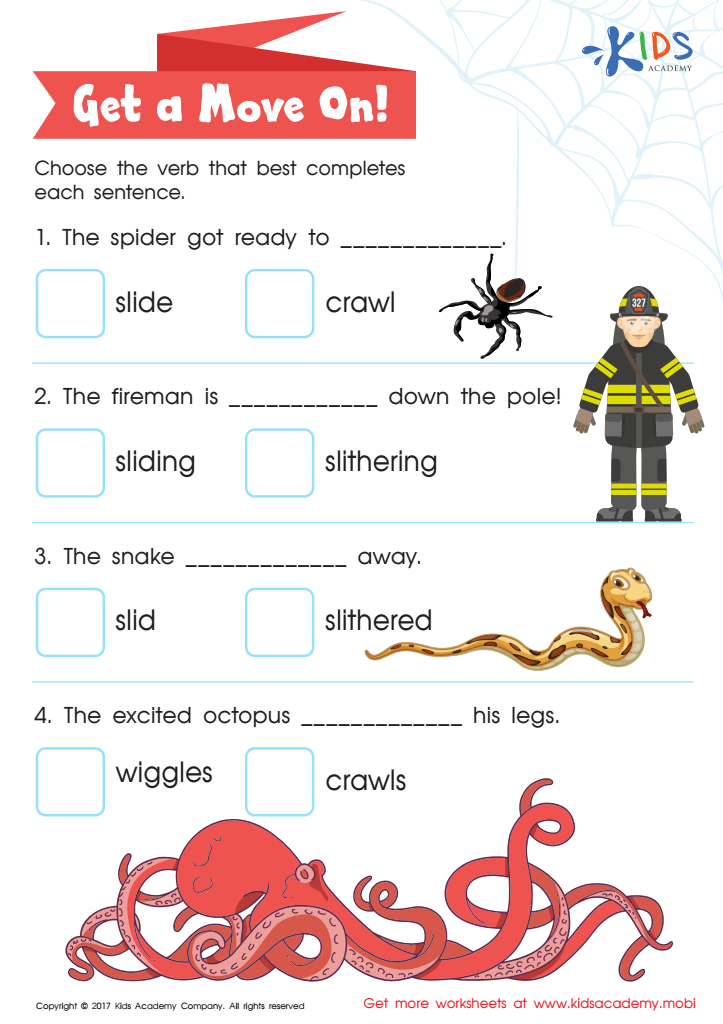
Verb Worksheet
Help your child learn verbs with this fun verb worksheet for grade 2! Firemen slide down poles, spiders crawl - they'll learn while they select the right verb in each sentence.
Verb Worksheet
Worksheet
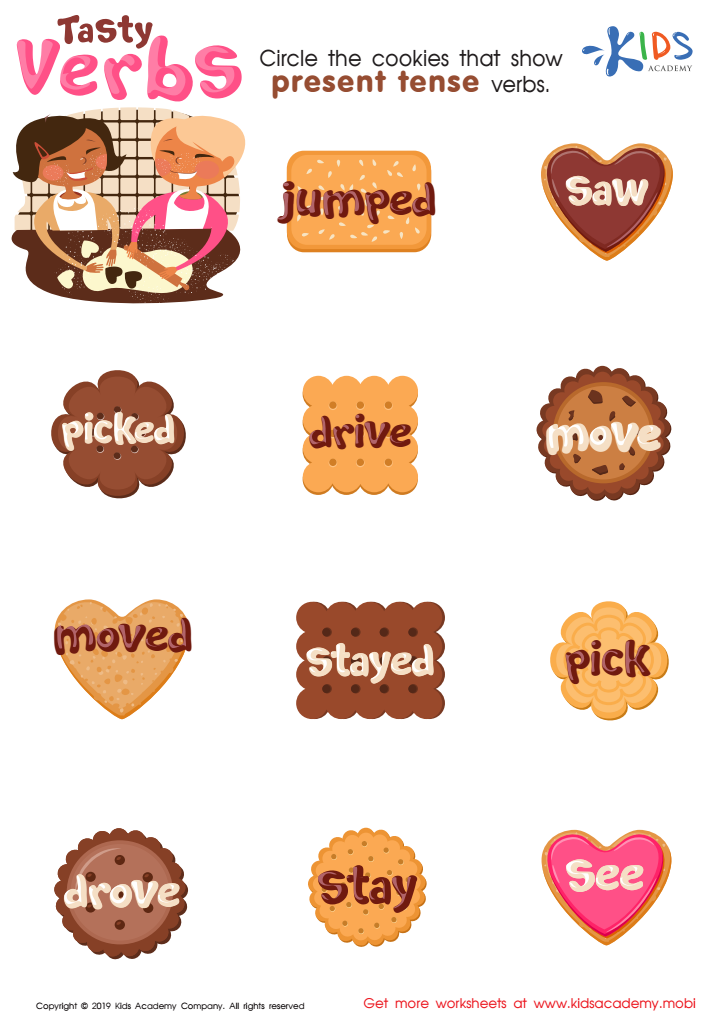
Tasty Verbs Worksheet
Verbs can show actions, past events, and future happenings. Master present tense verbs with this cookie-themed worksheet! Read the verbs on each cookie and help kids form sentences using the word in present tense. Circle the correct answers for each cookie. Give them a tasty treat while learning something new!
Tasty Verbs Worksheet
Worksheet
Join Kids Academy for Free
Who is primarily going to use this learning content?








Verb identification is a critical aspect of early literacy development for ages 3-9, and it holds significant benefits for both parents and teachers. First and foremost, understanding verbs—the action words in sentences—enables children to grasp how sentences convey action, making comprehension easier. This foundational skill enhances overall reading proficiency, which is crucial for academic success.
For parents, encouraging verb identification in everyday conversations and storytelling can enrich their children's vocabulary and foster a love for reading. It allows parents to be active participants in their child's learning journey, creating a nurturing and stimulating environment that promotes continuous learning outside the classroom.
Teachers, on the other hand, can use verb identification to improve students' grammatical skills, aiding in their ability to construct well-formed sentences. This not only helps in writing but also in verbal communication, both of which are essential skills for future educational endeavors and social interactions. By integrating verb identification into various learning activities, teachers can cater to different learning styles, making lessons more engaging and effective.
Overall, focusing on verb identification during these formative years sets the stage for better reading fluency and comprehension, ensuring children are well-prepared for the more complex literacy challenges ahead.








