
Text analysis Reading Fiction Worksheets for Ages 3-9
3 filtered results
Difficulty Level
Grade
Age
-
From - To
Subject
Activity
Standards
Our "Text Analysis Reading Fiction Worksheets for Ages 3-9" nurture early literacy skills through engaging activities. Designed to enhance comprehension and critical thinking, these printables help young readers identify key story elements, make predictions, and draw connections. Tailored to different reading levels, our worksheets promote confidence as kids explore fun, age-appropriate fiction. Perfect for home or classroom use, they provide a strong foundation for future reading success. Empower your child to become an enthusiastic and reflective reader with our expertly crafted text analysis worksheets. Visit Kids Academy for a delightful learning journey!
Favorites
With answer key
Interactive
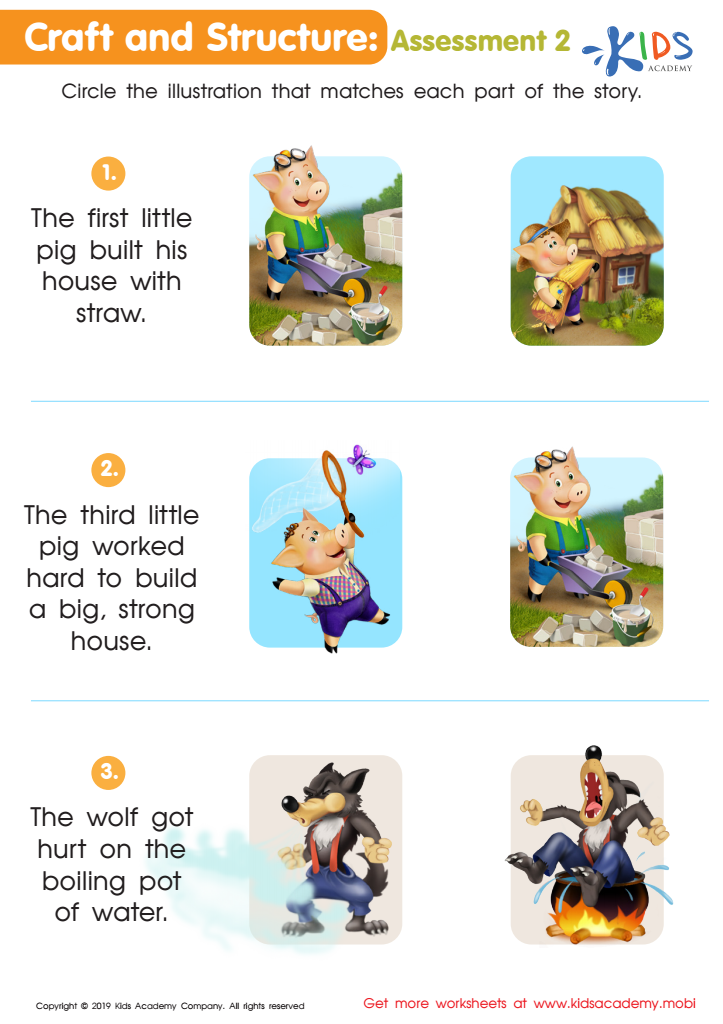
Craft and Structure: Assessment 2 Worksheet 2
This fun printout with colorful illustrations will assess how much your kids pay attention to story time. Go through the pictures and help them circle the ones that match each part of the story. Stimulate their brains and have fun in the process!
 Assign to My Students
Craft and Structure: Assessment 2 Worksheet 2
Worksheet
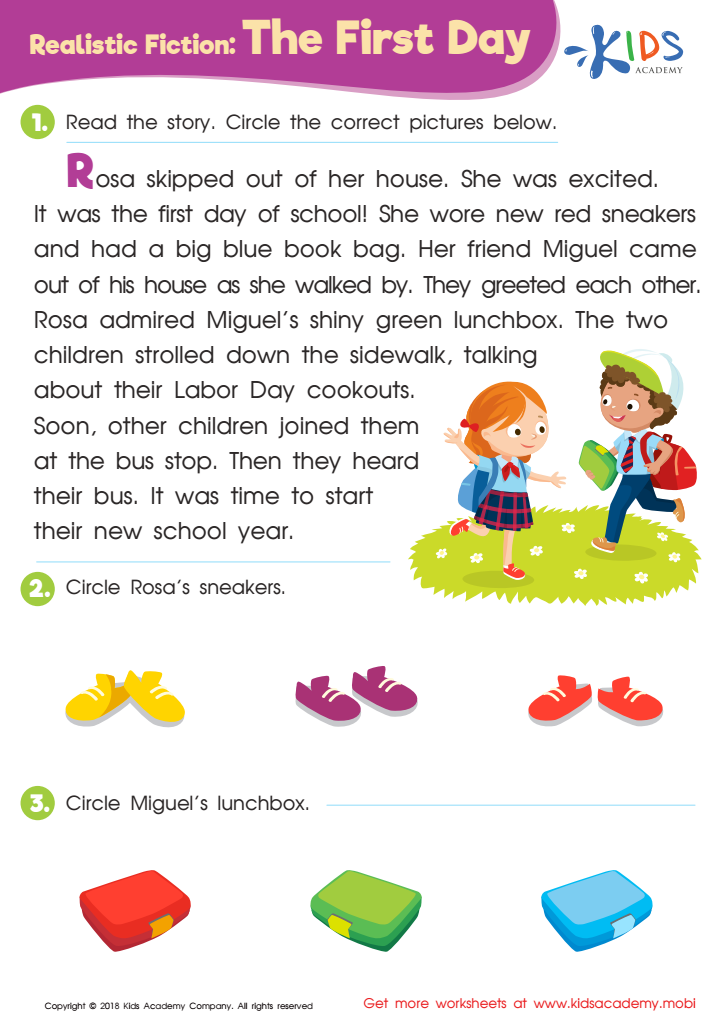
Realistic Fiction: The First Day Worksheet
Fiction is made-up events, so story-writing is fiction writing. In this worksheet, there's a short story about Rosa, her friend Miguel, and their first day back at school. Read the story aloud to your kids and help them circle the right pictures to the questions. Repeat if needed.
Realistic Fiction: The First Day Worksheet
Worksheet
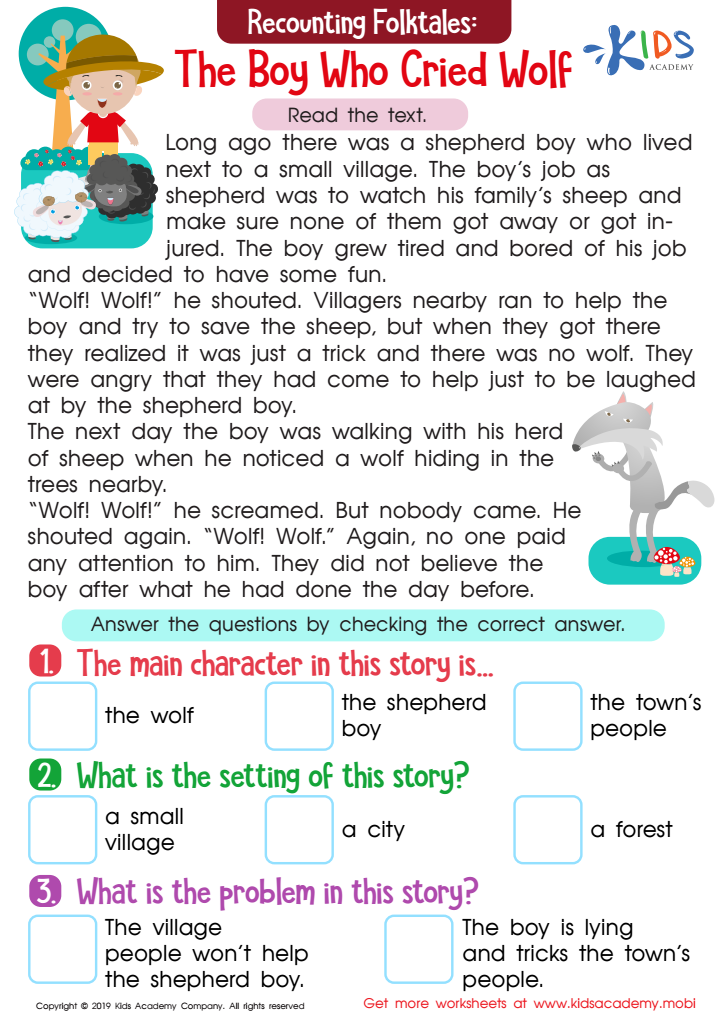
The Boy Who Cried Wolf Part 1 Worksheet
Storytime can be your kid's favorite part of the day. Ask them what their favorite stories are, then read the text in the printout. Read along with them, making sure they understand each word. At the end, go over the questions and have them check the correct answers.
The Boy Who Cried Wolf Part 1 Worksheet
Worksheet
Join Kids Academy for Free
Who is primarily going to use this learning content?



.jpg)
.jpg)


Caring about text analysis in reading fiction for children aged 3-9 is essential as it fosters multiple critical developmental benefits. At this crucial stage, children are developing foundational skills that shape their academic and social trajectories. Text analysis deepens comprehension, helping children not just to read but to understand and engage with stories. Comprehension enhances vocabulary, exposes them to new ideas, cultures, and perspectives, and improves cognitive abilities such as empathy, critical thinking, and imagination.
For parents and teachers, encouraging text analysis means actively participating in discussions about characters, plot, settings, and themes. This interaction improves children's language skills and enhances their ability to express ideas and emotions. It establishes a habit of paying attention to details, identifying patterns, and making inferences, which are key skills for problem-solving and learning across subjects.
Moreover, reading fiction is enjoyable and can build a lifelong love for reading, which is associated with higher academic achievement. Emotional and social skills are also honed through characters’ experiences, enabling children to better understand their own and others' feelings. Ultimately, prioritizing text analysis in young readers lays a strong foundation, making reading a meaningful, engaging, and educational activity.








