Categorizing animals Science Worksheets for Ages 3-9
3 filtered results
-
From - To
Explore our engaging "Categorizing Animals Science Worksheets" designed for children ages 3-9! These fun and educational worksheets enhance young learners' understanding of animal classification. Students will dive into the world of biodiversity as they sort animals by various categories, such as habitats, types, and characteristics. With colorful illustrations and age-appropriate activities, these worksheets stimulate curiosity and build critical thinking skills. Perfect for home or classroom use, they support science concepts while making learning enjoyable. Ignite a passion for wildlife education with our carefully crafted resources, ensuring your child develops a strong foundational knowledge in science through play and exploration!
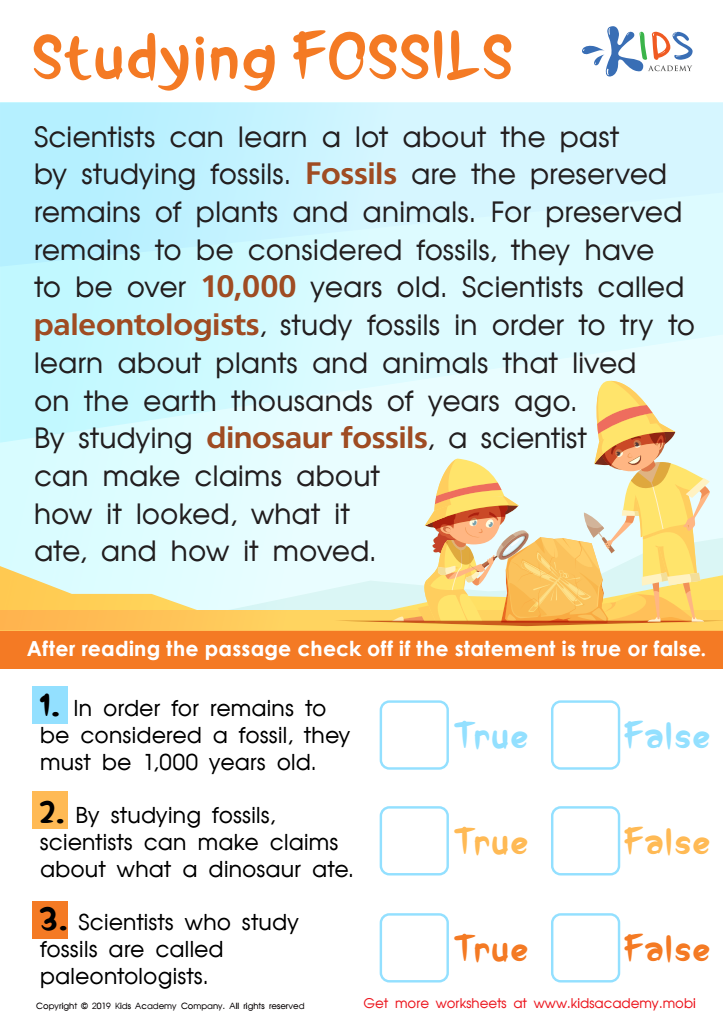
Studying Fossils Worksheet
 Assign to My Students
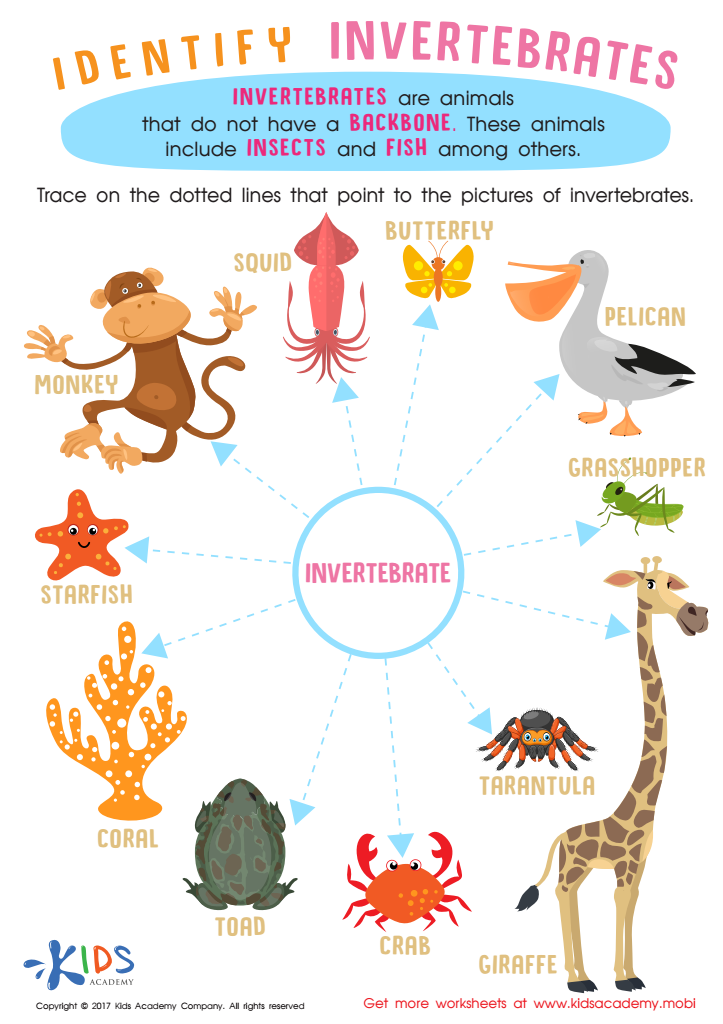
Invertebrates Worksheet for Grade 3
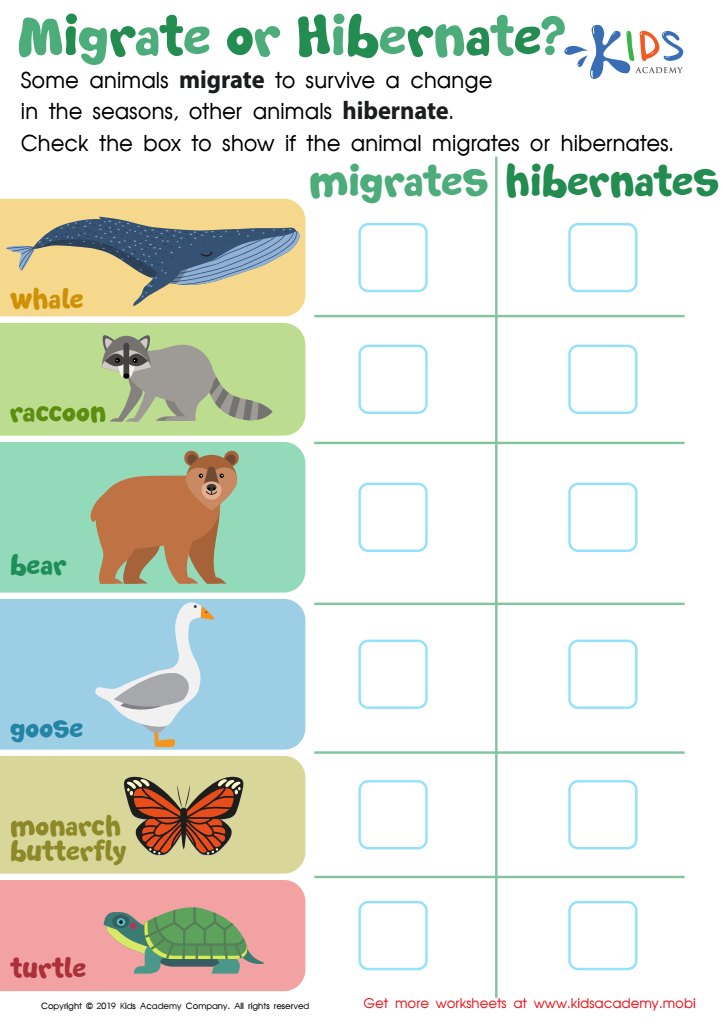
Migrate or Hibernate? Worksheet


.jpg)




Parents and teachers should care about categorizing animals for children aged 3-9 because it lays the foundation for essential cognitive and social skills. Early exposure to the wonders of the animal kingdom fosters curiosity and engages children with the natural world. By categorizing animals—whether by habitat, diet, or physical characteristics—children develop critical thinking and analytical skills, as they learn to sort, classify, and recognize patterns.
Additionally, this topic introduces basic science concepts, like ecosystems, biodiversity, and the interdependence of life, George as children identify different species. Understanding these concepts can lead to a respect for nature and instills values of conservation and responsibility towards the environment, cultivating eco-conscious citizens.
Furthermore, learning about animals often sparks imaginative play and storytelling, enhancing language development and boosting creativity. It also provides opportunities for social interaction and collaboration in group activities, reinforcing teamwork and communication skills.
Incorporating animal categorization into early education creates a rich, multi-faceted learning experience that nurtures a child’s innate curiosity while building a groundwork for future scientific inquiry. This foundation is crucial for instilling a lifelong love of learning and an understanding of animals’ roles in our world.







