Developing analytical skills Science Worksheets for Ages 3-9
4 filtered results
-
From - To
Unlock your child's potential with our "Developing Analytical Skills Science Worksheets" for ages 3-9! Tailored to enhance critical thinking, these engaging worksheets encourage young learners to explore scientific concepts through observation, comparison, and problem-solving. Each activity is designed to foster curiosity, enabling children to ask questions, analyze data, and draw conclusions while making learning fun. From interactive challenges to vivid illustrations, our worksheets promote independent thinking and spark a love for science in young minds. Ideal for home or classroom use, these resources serve as valuable tools for parents and educators aiming to nurture analytical skills in the formative years. Get started today!
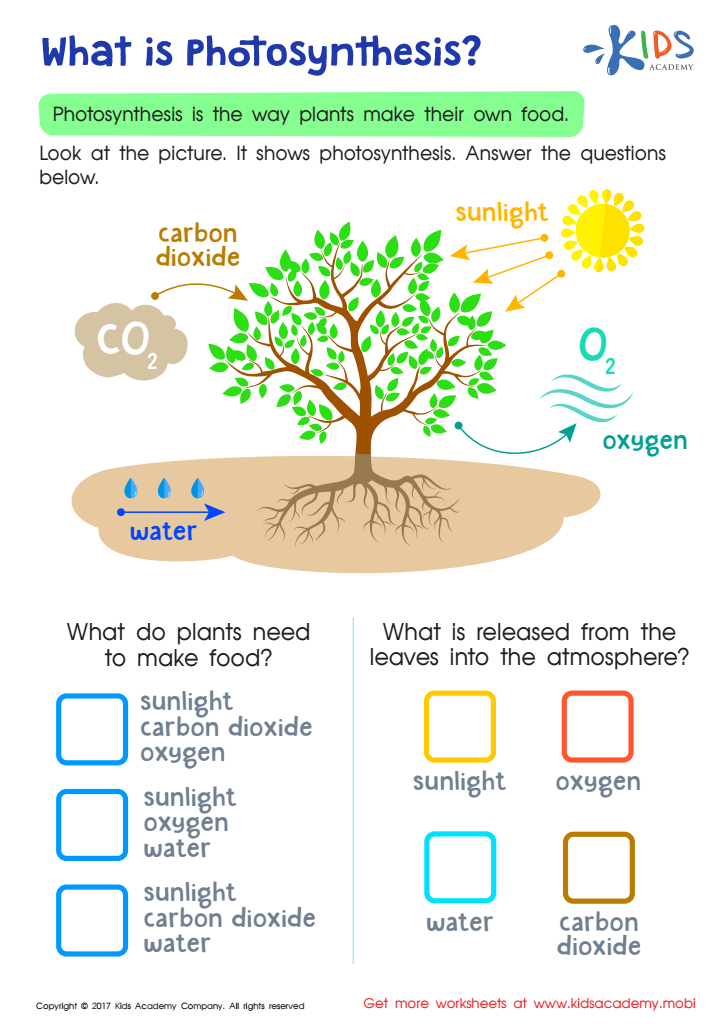
What is Photosynthesis Printable
 Assign to My Students
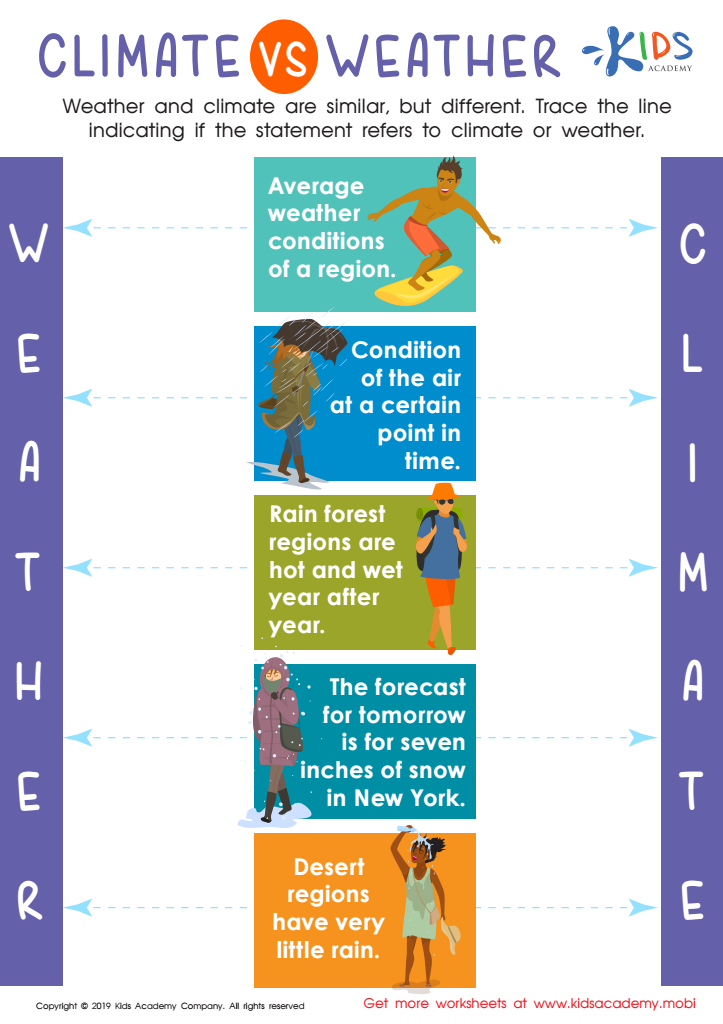
Climate vs Weather Worksheet
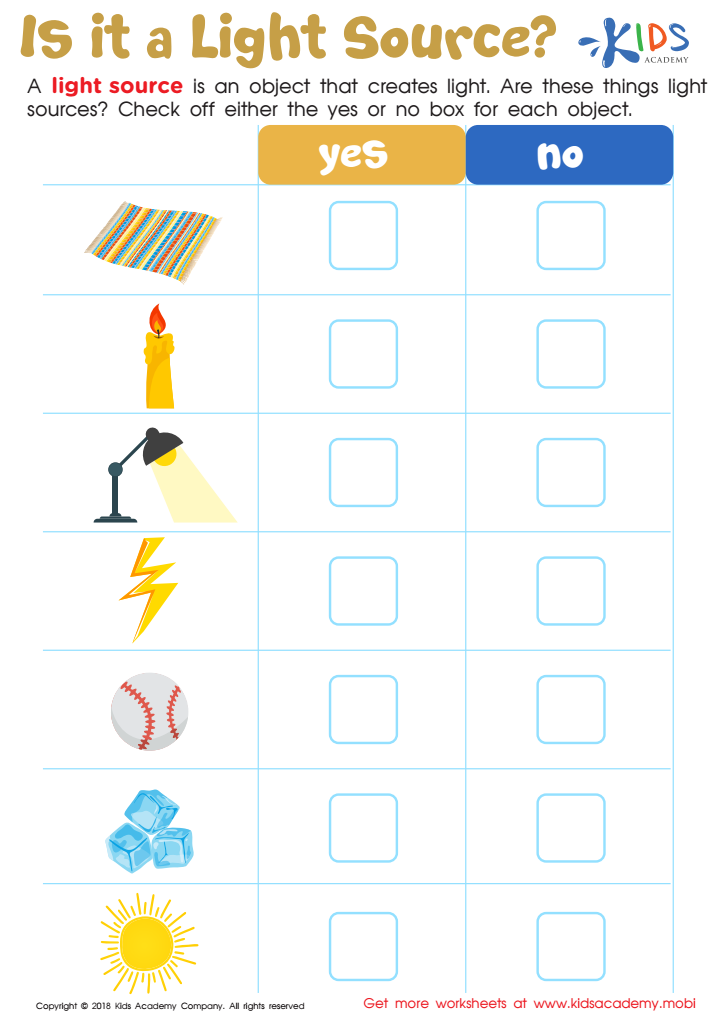
Is It a Light Source? Worksheet

How Light Travels Worksheet








Developing analytical skills in children aged 3-9 is crucial for their cognitive and personal growth. At this early stage, children are naturally curious, and fostering their analytical abilities helps them make sense of the world around them. When parents and teachers prioritize these skills in a science context, they enable children to think critically and logically.
Analytical skills encourage children to ask questions, investigate, and explore. This process promotes problem-solving and decision-making abilities that are essential for their educational journey and future careers. A solid foundation in analytical thinking enhances children's capacity to understand complex concepts, view problems from multiple angles, and devise effective solutions.
Moreover, nurturing these skills in a scientific environment teaches children about the scientific method—observation, hypothesis, experiment, and conclusion. This structured approach enriches their cognitive development and instills a lifelong love for learning and inquiry.
Additionally, strong analytical skills in science help children develop resilience and perseverance, as they learn to navigate challenges and setbacks. By focusing on developing these skills, parents and teachers equip children with the tools they need not only for academic success but also for effective participation in an increasingly complex world.







