Categorizing objects Physical Science Worksheets for Ages 3-9
3 filtered results
-
From - To
Discover captivating and educational "Categorizing Objects" worksheets specially designed for children ages 3-9. Our expertly crafted activities introduce young learners to fundamental physical science concepts by sorting and classifying objects based on characteristics like size, shape, color, and use. Foster critical thinking and observation skills in a fun and engaging way, making science an enjoyable part of your child’s early education. Ideal for preschool through elementary-aged students, these printable worksheets are perfect for reinforcing lessons at home or supplementing classroom learning. Explore our diverse selection and inspire a love for science today with Kids Academy!
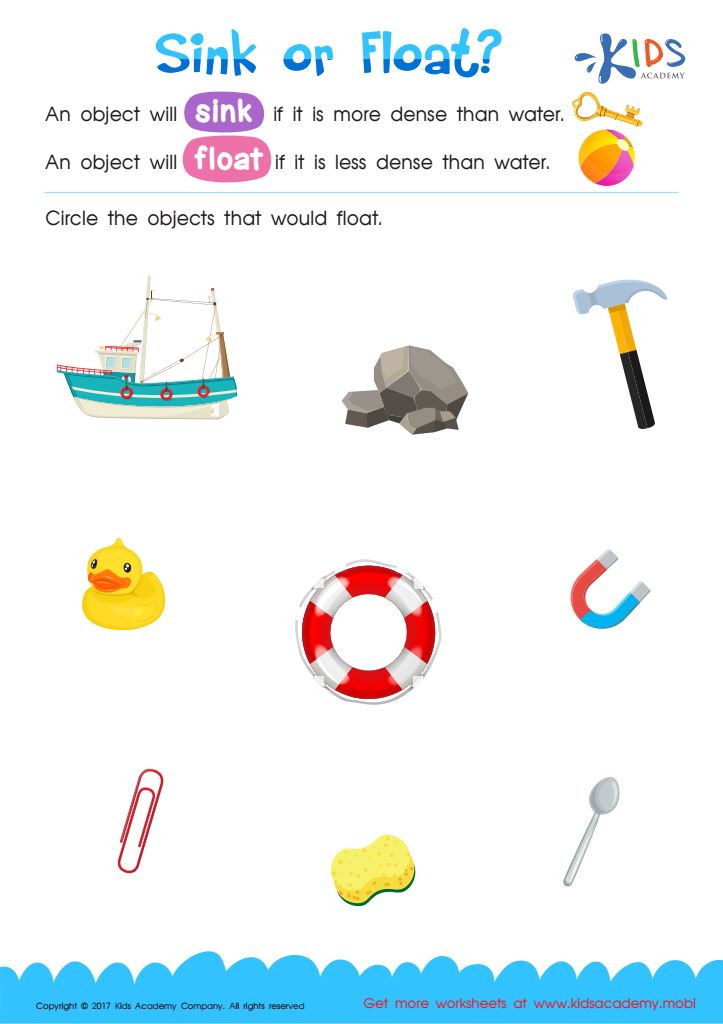
Sink or Float Printable
 Assign to My Students
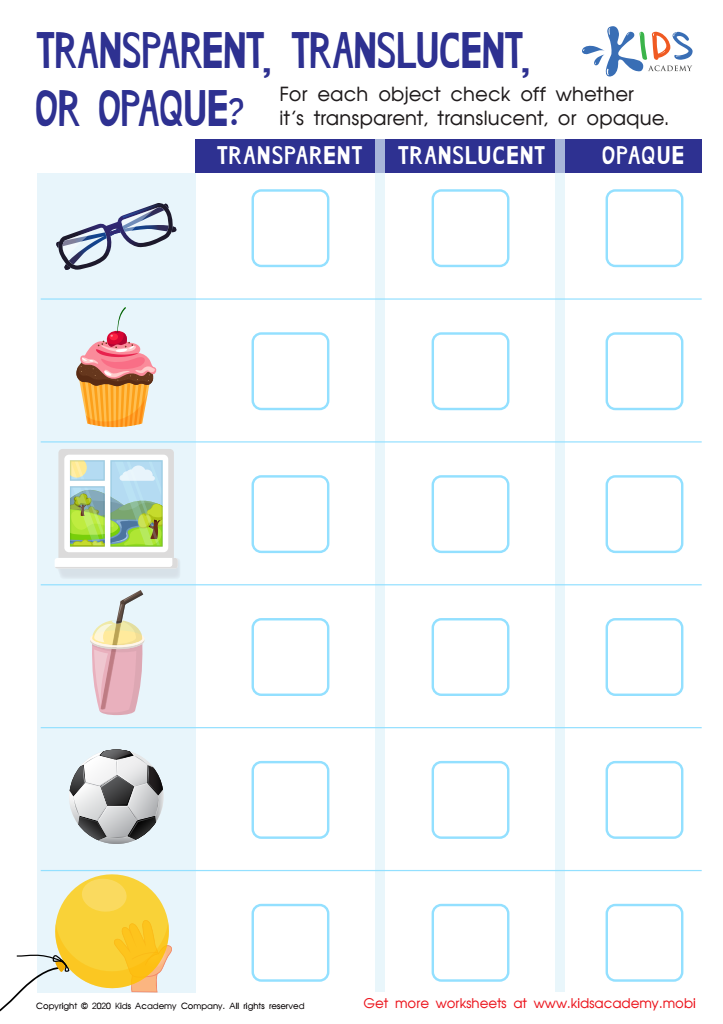
Transparent, Translucent, or Opaque Worksheet
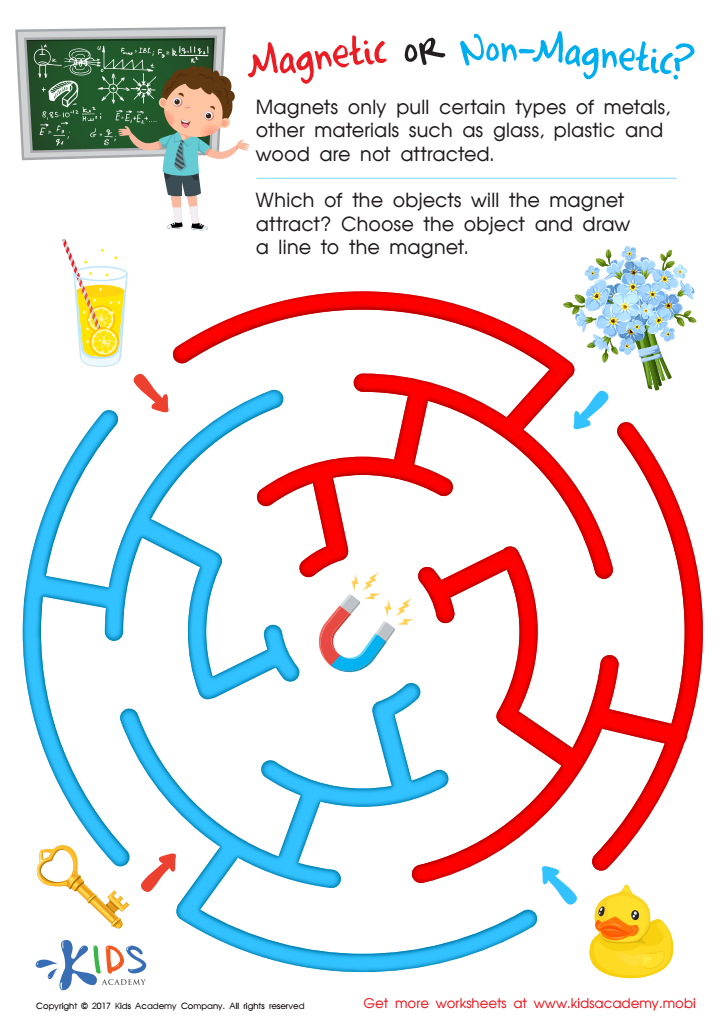
Magnetic or Non–Magnetic Worksheet






Categorizing objects in physical science is crucial for young children aged 3-9 because it lays the foundation for cognitive and educational development. At this pivotal age, children are naturally curious about the world around them. By learning to categorize objects based on properties like size, shape, color, and material, they develop critical thinking and enhance their observational skills.
For parents and teachers, emphasizing categorization helps children learn to organize their thoughts and improves their ability to compare and contrast different objects. This foundational skill supports future learning in science and other disciplines. For instance, understanding that certain animals can be classified as mammals and others as reptiles prepares children for more complex scientific concepts later on.
Additionally, categorizing enhances language development. When children describe why they grouped certain objects together, they practice using descriptive language and improve their vocabulary. Importantly, this skill also teaches problem-solving techniques and introduces basic concepts of sorting and sequencing, which are essential for mathematical reasoning.
In summary, categorizing objects in physical science is more than just a simple activity; it's a gateway to developing higher-order thinking skills, fostering curiosity, and building a solid academic foundation. Consequently, parents and teachers should invest time and effort into teaching young children how to categorize objects effectively.







