Animal Classification Plants and Animals Worksheets for Ages 3-9
7 filtered results
-
From - To
Explore our engaging Animal Classification Worksheets designed for children aged 3-9! These interactive resources help young learners understand the fascinating world of animals, enhancing their knowledge of different species and their characteristics. Our worksheets encourage kids to categorize animals based on their traits while promoting critical thinking and observation skills. Perfect for at-home learning or classroom activities, these printable worksheets feature vibrant illustrations and simple instructions, making learning fun and accessible. With a variety of activities, including sorting games and matching tasks, your little ones will enjoy discovering the diverse classifications of plants and animals while building essential early science skills!
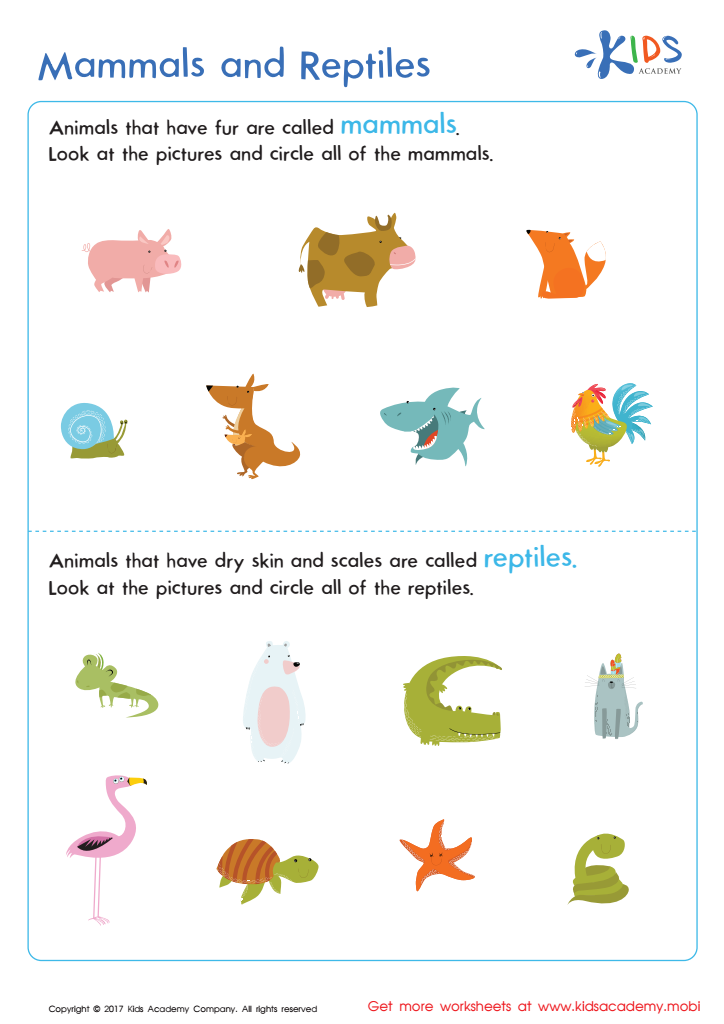
Mammals and Reptiles Worksheet
 Assign to My Students











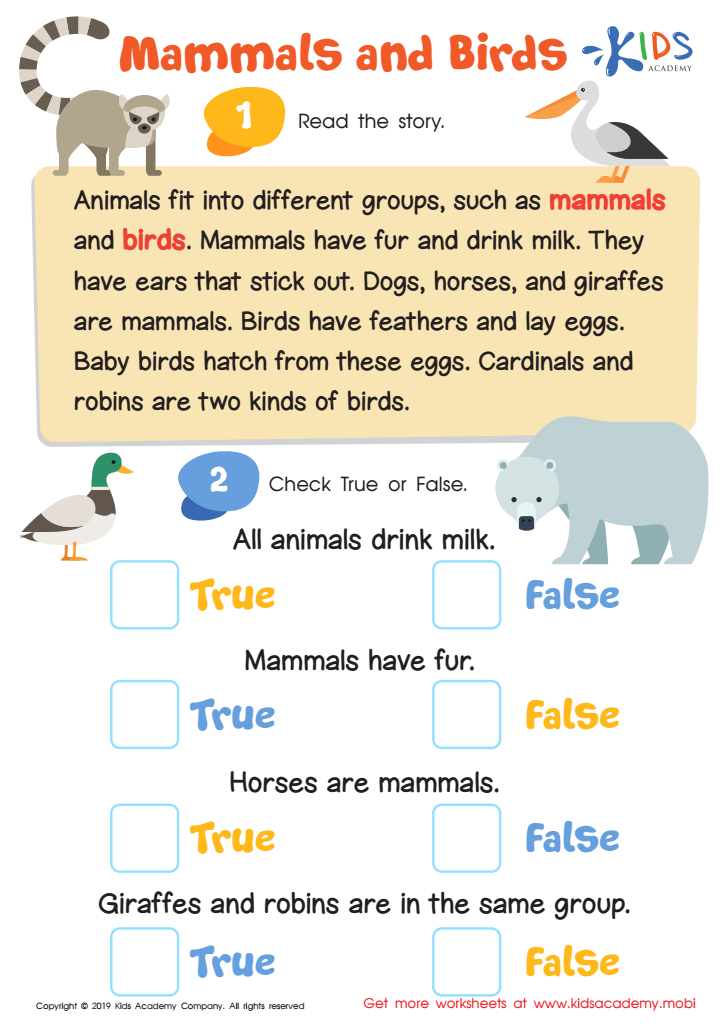
Mammals and Birds Worksheet
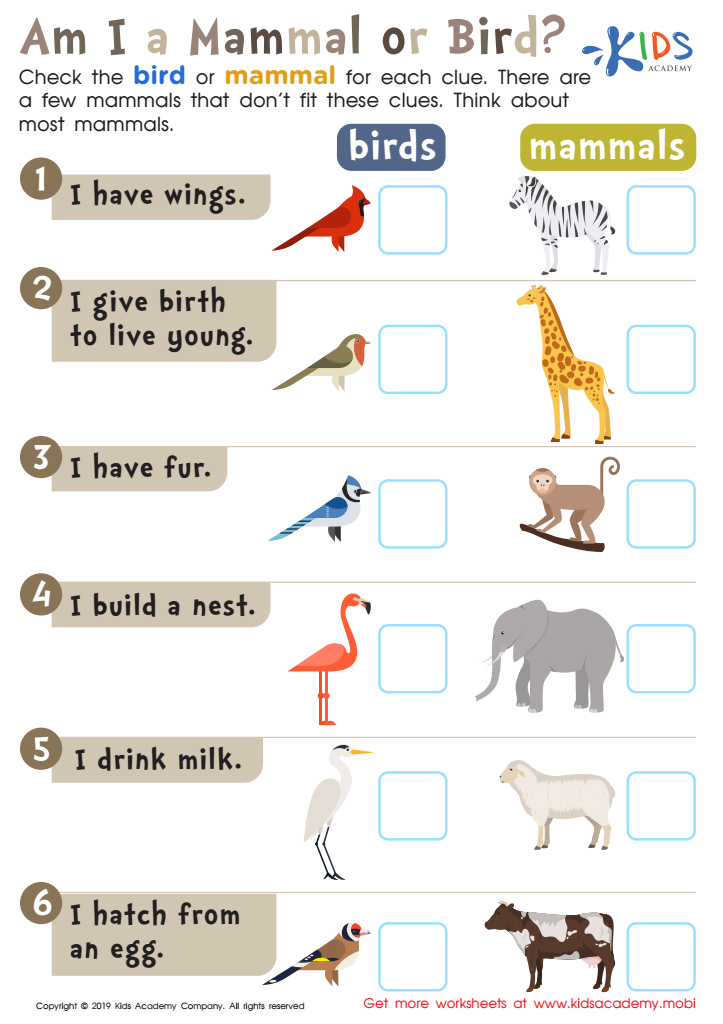
Am I a Mammal or Bird? Worksheet
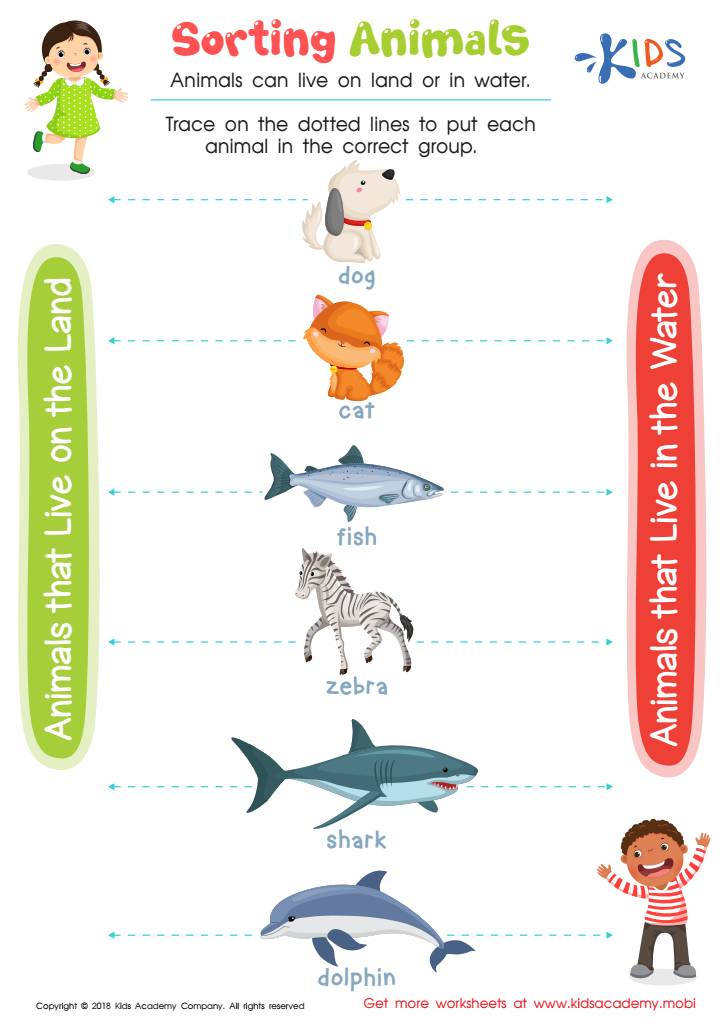
Sorting Animals Worksheet
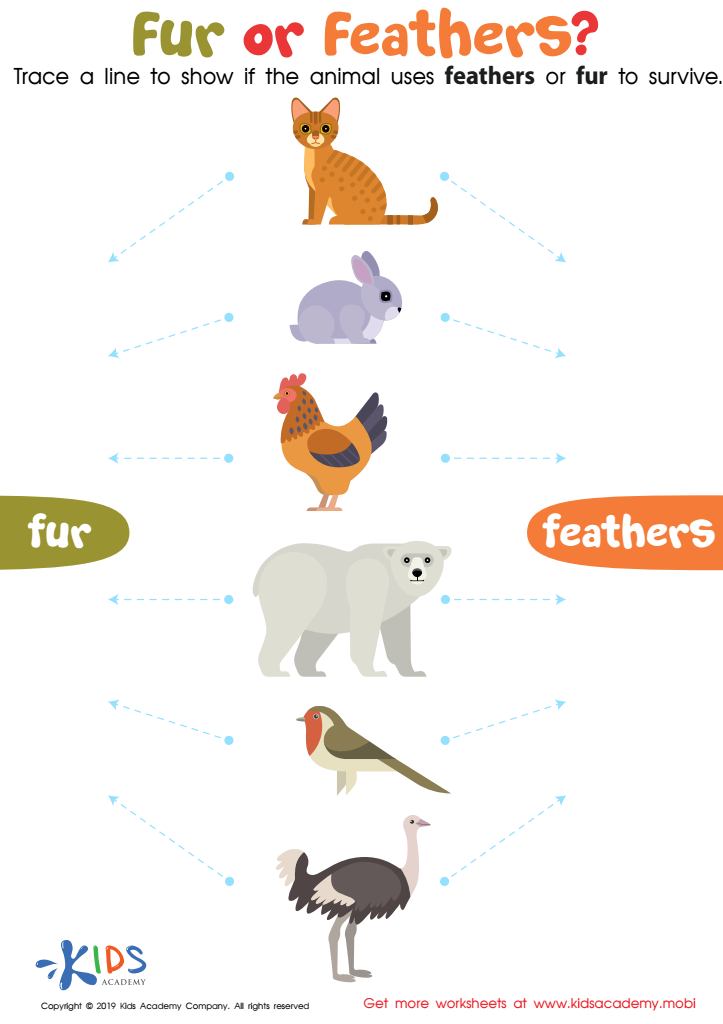
Fur or Feathers? Worksheet
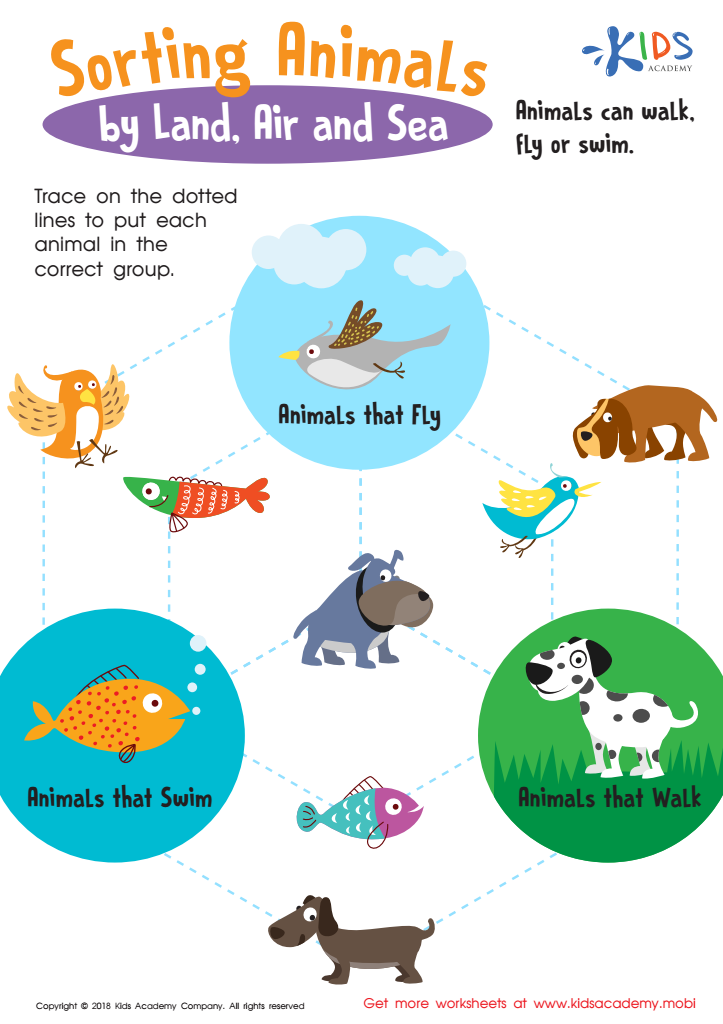
Sorting Animals by Land, Air and Sea Worksheet
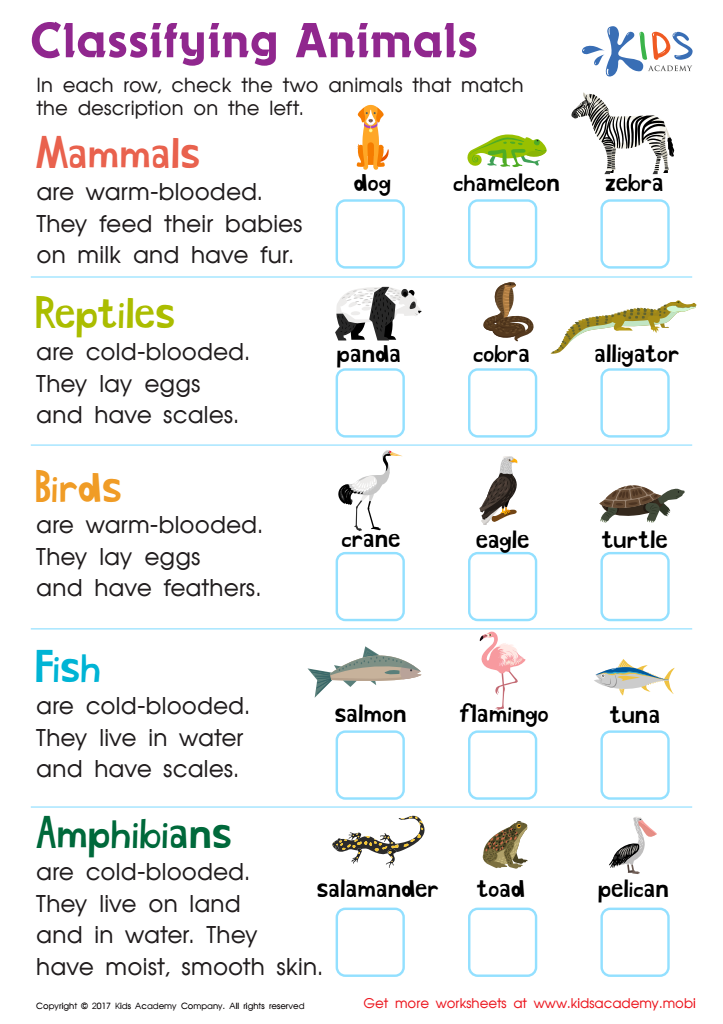
Classifying Animals Worksheet








Understanding animal and plant classification is crucial for young learners aged 3-9, as it lays the groundwork for scientific thinking and curiosity. For parents and teachers, nurturing this knowledge aids in developing observational skills, critical thinking, and a deep appreciation for nature. Early childhood is a prime time for organizing information and making connections; teaching kids to categorize animals and plants fosters cognitive development.
By introducing classification, children learn to identify features such as habitats, diets, and physical traits, which enhance their understanding of ecosystems. This knowledge not only encourages curiosity about the natural world but also fosters empathy towards animals and plants, promoting a sense of responsibility toward environmental conservation.
Engaging children in hands-on activities like nature walks, crafting, or sorting games stimulates sensory experiences and collaborative learning. This interactive approach bolsters language skills as they learn new terminology, enhancing vocabulary and communication abilities.
Ultimately, teaching animal and plant classification helps children make sense of the world around them, instilling a sense of wonder and belonging in nature. Parents and teachers play a vital role as guides, encouraging young learners to explore, ask questions, and develop a lifelong love for science and the environment.








