Understanding pollination Plants and Animals Worksheets for Ages 3-9
3 filtered results
-
From - To
Unlock the wonders of nature with our "Understanding Pollination: Plants and Animals Worksheets for Ages 3-9." Designed to captivate young minds, these worksheets bridge the learning gap between fun and education. Perfect for early learners, they cover the basics of how plants and pollinators like bees, birds, and butterflies interact. Engaging activities and vivid illustrations make complex concepts simple and enjoyable. Watch your child explore the essential role of pollination in our ecosystem while developing critical thinking and observational skills. Give your child the gift of discovery and a lifelong love for science with these captivating resources.
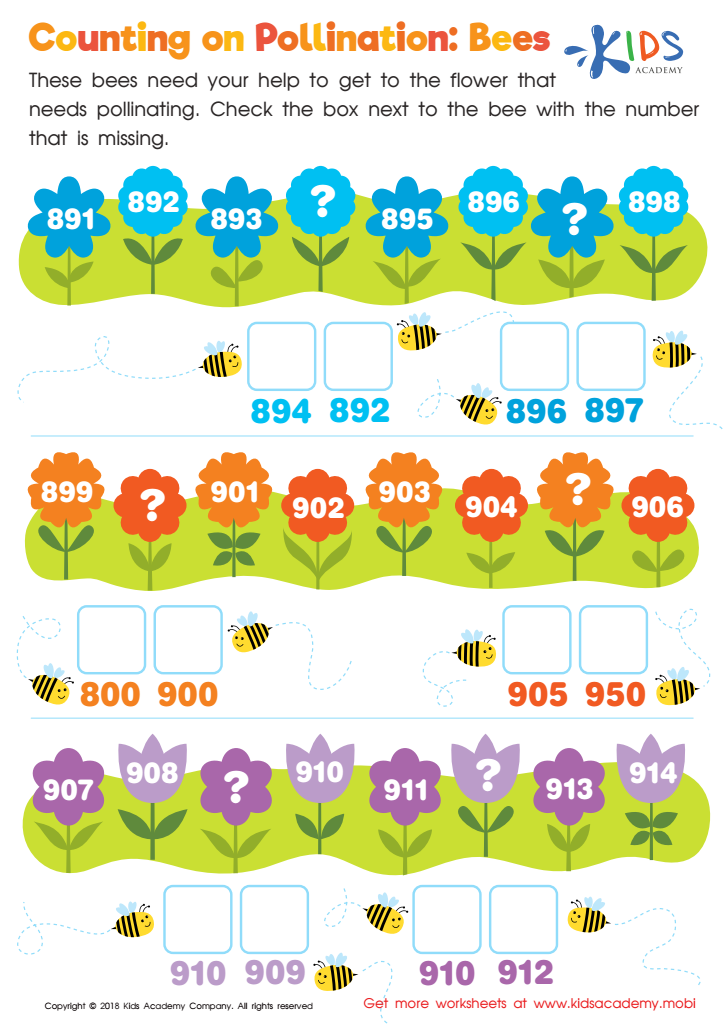
Counting on Pollination: Bees Worksheet
 Assign to My Students











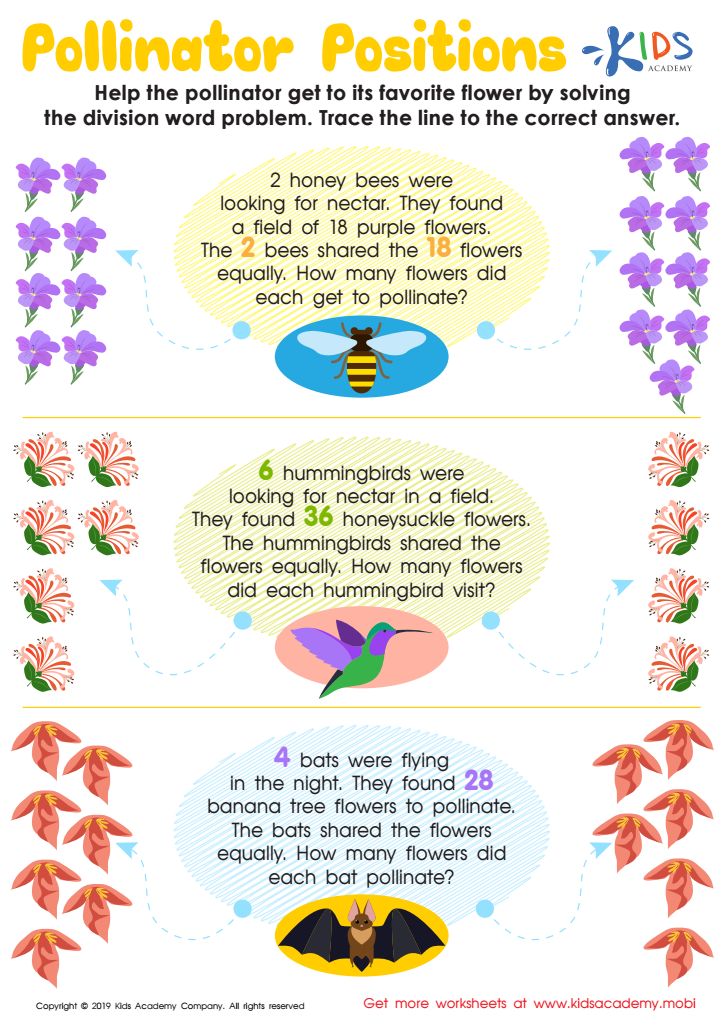
Pollinator Positions Worksheet
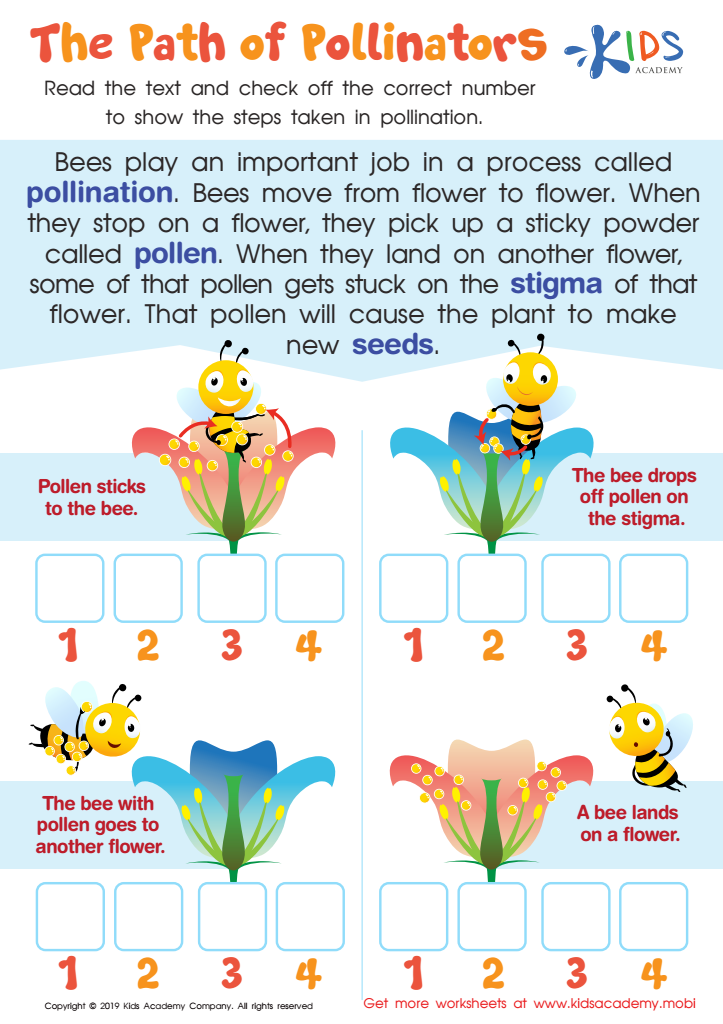
The Path of Pollinators Worksheet







Understanding pollination is critical for young children, and it's essential for parents and teachers to realize its importance. First, it nurtures curiosity and respect for nature. At ages 3-9, children are naturally inquisitive, making it a prime time to introduce them to the wonders of pollination, which is the process where plants reproduce. Knowing that bees, butterflies, and other animals play a key role in helping plants grow connects children to the environment and fosters a sense of responsibility to protect it.
Second, learning about pollination is foundational for grasping broader science concepts. Understanding how flowers turn into fruits and vegetables can lead to better awareness of our food sources, emphasizing the importance of biodiversity. This knowledge fosters healthy habits, encouraging kids to appreciate fresh produce and understand its origins.
Lastly, this topic supports critical thinking skills. Learning about the relationship between plants and their pollinators encourages observational and analytical skills. Discussions around why certain plants and animals are declining can also generate empathy and proactive attitudes toward conservation.
Incorporating pollination lessons into early education is a fun, engaging way to build a strong foundation in science, environmental stewardship, and critical thinking, shaping mindful and knowledgeable future citizens.








