Event sequencing Social Studies Worksheets for Ages 3-9
3 filtered results
Difficulty Level
Grade
Age
-
From - To
Subject
Activity
Standards
Explore our engaging Event Sequencing Social Studies Worksheets designed for children ages 3-9! These worksheets help young learners understand the concept of order and sequence in everyday events. With vibrant visuals and age-appropriate activities, students will develop critical thinking skills as they arrange events logically. Perfect for enhancing comprehension in social studies, our resources cover a variety of topics, including family routines, community events, and historical timelines. Sidebar questions encourage discussion and deepen learning. Ideal for classroom use, homeschooling, or supplemental practice, these worksheets make social studies fun while building vital academic skills. Start your child’s interactive learning journey today!
Favorites
With answer key
Interactive
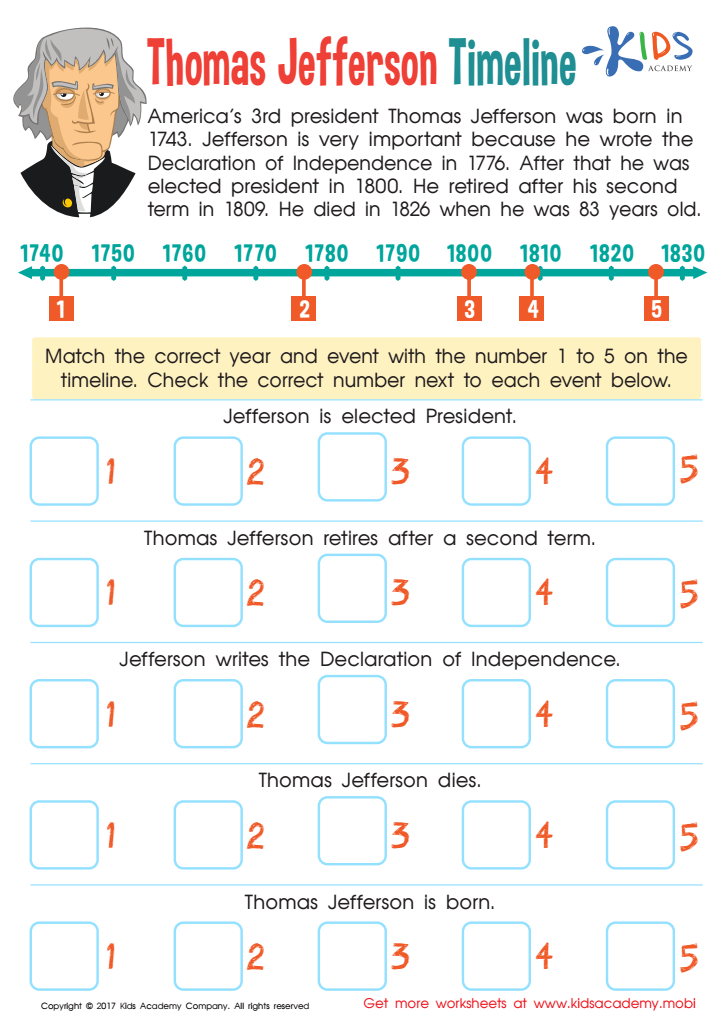
Thomas Jefferson Timeline Worksheet
Check your child's reading comprehension and knowledge of US history with this Thomas Jefferson timeline worksheet! Have them read the paragraph to learn about him, then use what they've read to fill in the timeline.
 Assign to My Students
Thomas Jefferson Timeline Worksheet
Worksheet
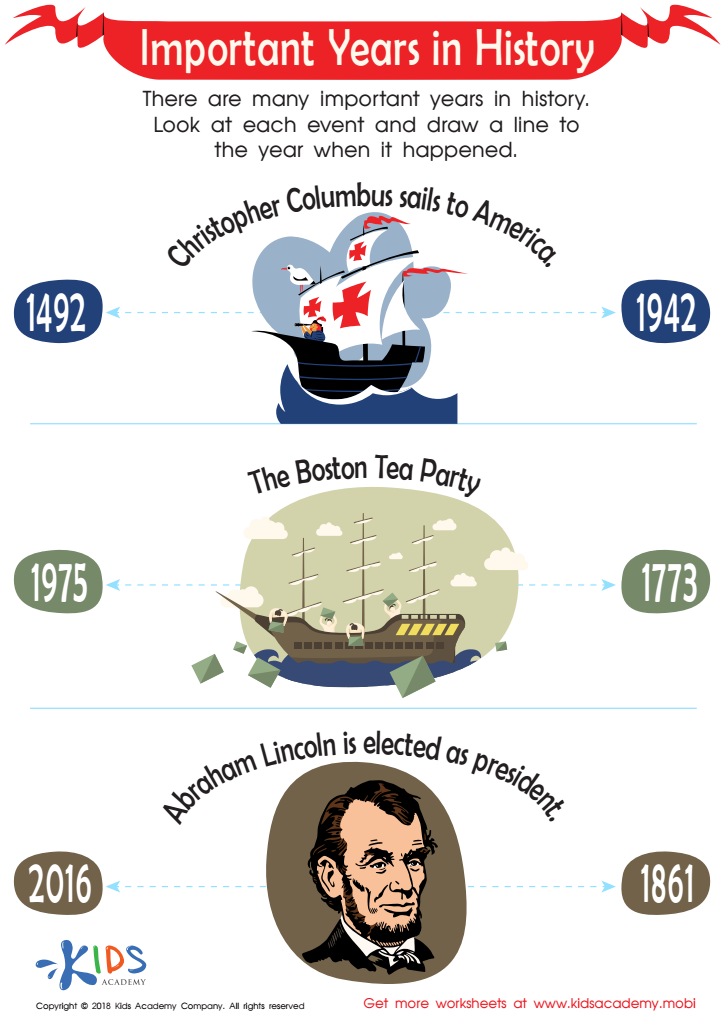
Important Years in History Worksheet
Ask your students if they can name any important dates in history. Then, look at the images in the worksheet with them. Read the sentences above each one to them and have them trace a line to the year when the event occurred.
Important Years in History Worksheet
Worksheet
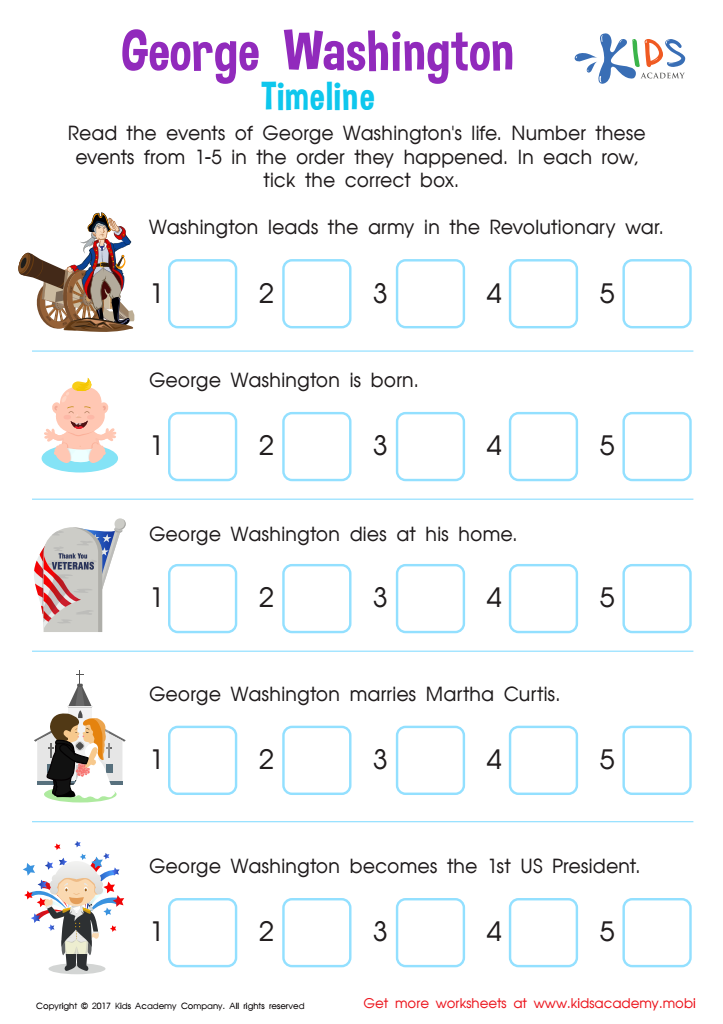
George Washington Timeline Worksheet
Help your child learn about George Washington and practice sequencing events! This printable worksheet will boost their reading and comprehension skills while they review historical facts. It's a great challenge to keep them engaged and learning.
George Washington Timeline Worksheet
Worksheet
Join Kids Academy for Free
Who is primarily going to use this learning content?






Event sequencing in social studies is a crucial skill for children ages 3-9 as it fosters critical thinking and comprehension. By understanding the order of events, young learners enhance their narrative skills, allowing them to grasp more complex concepts related to history, culture, and community. This skill supports their ability to retell stories, make connections, and understand causal relationships—fundamental aspects of cognitive development.
Moreover, event sequencing helps children navigate their social world more effectively. It aids them in recognizing how past actions influence present situations, which is vital for developing empathy and cultural awareness. When students sequence events, whether in stories, historical timelines, or everyday situations, they learn to analyze and interpret information, encouraging nurturing inquisitiveness and intelligence.
From a teaching perspective, integrating event sequencing in social studies creates a more engaging learning environment. It provides opportunities for collaborative learning and encourages discussions that promote a deeper understanding of the content. For parents, reinforcing this skill at home can strengthen their child's ability to verbalize thoughts and experiences, laying a foundation for lifelong learning and civic participation. Ultimately, investing in event sequencing is vital for developing well-rounded, informed, and conscientious future citizens.