Historical Knowledge Social Studies Worksheets for Ages 3-9 - Page 2
26 filtered results
-
From - To
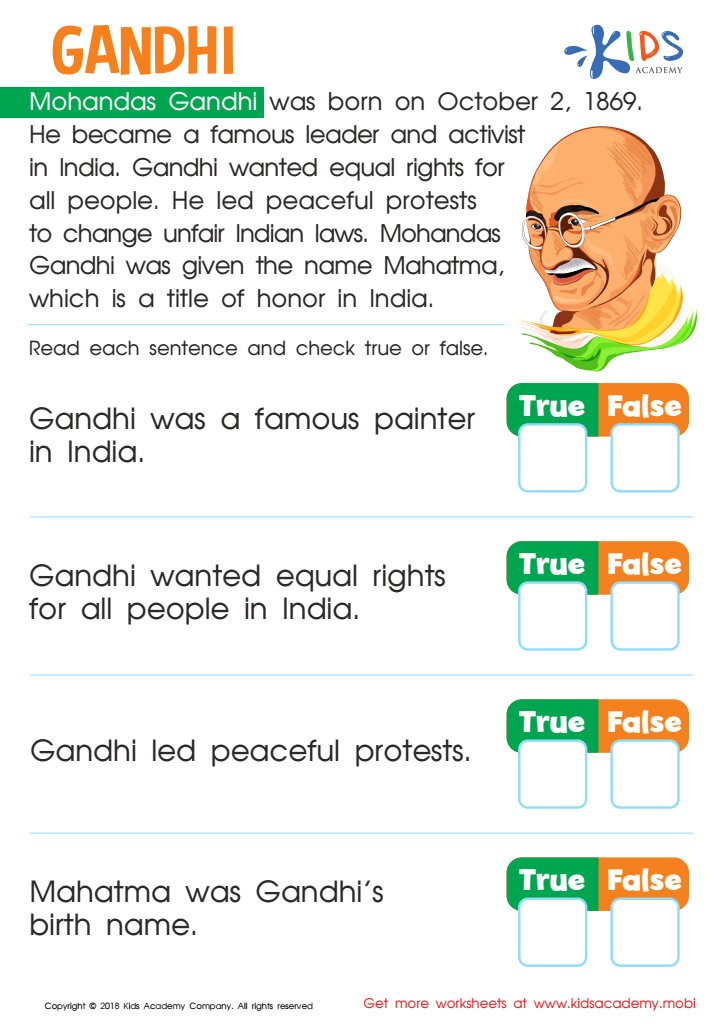
Gandhi Worksheet
 Assign to My Students
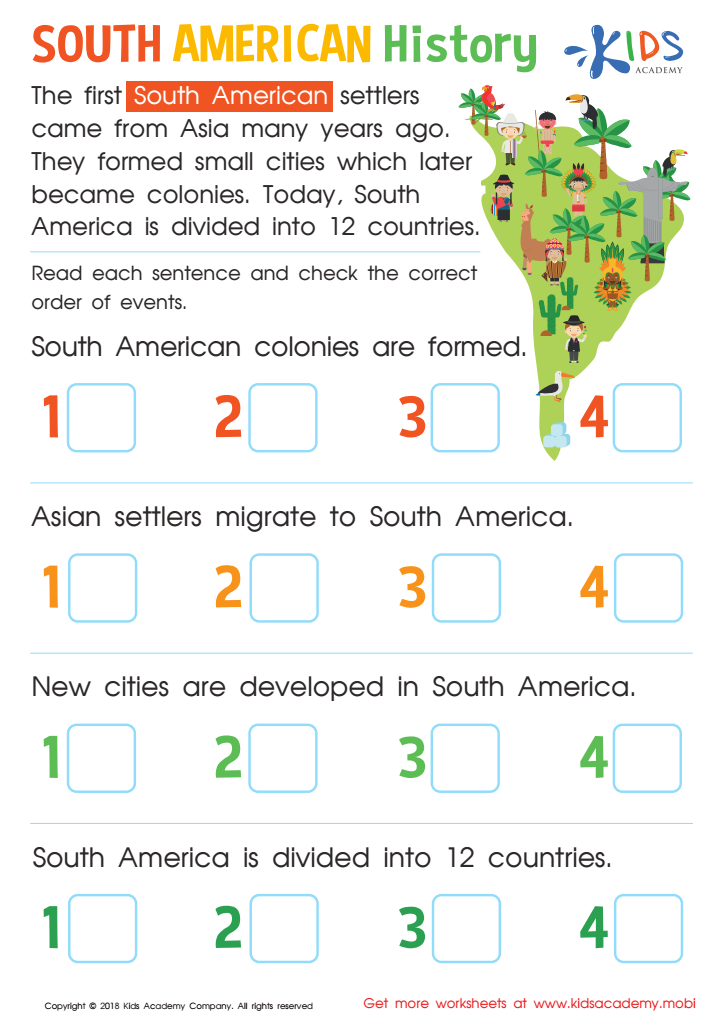
South American History Worksheet







Parents and teachers should prioritize historical knowledge in social studies for young children aged 3-9 because it lays the foundational skills for critical thinking and citizenship. Introducing history at an early age helps children understand their cultural heritage and the context of the world around them. By learning about past events, significant figures, and diverse cultures, children develop empathy and an appreciation for different perspectives, fostering social cohesion.
Additionally, early exposure to historical concepts helps build literacy and comprehension skills. Narratives about history stimulate curiosity, ignite imagination, and enhance language development as children engage with stories from the past. This age group is particularly impressionable, and early lessons in history can shape values such as respect, responsibility, and cooperation.
Moreover, knowledge of history encourages informed decision-making and helps children recognize patterns and connections in contemporary society. Understanding how past events influence current issues empowers young learners to become active participants in their communities. In an increasingly globalized world, nurturing an understanding of historical dynamics enhances children's ability to navigate complexities and foster inclusivity. Therefore, engaging children in social studies cultivates informed, caring future citizens who value diversity and historical understanding.