Understanding patterns Social Studies Worksheets for Ages 3-9
4 filtered results
-
From - To
Discover our engaging "Understanding Patterns Social Studies Worksheets," designed for children ages 3-9. These worksheets provide an interactive approach to teaching young learners about patterns in their world, blending essential social studies concepts with fun activities. Through hands-on exercises, children will explore various types of patterns found in nature, art, and everyday life. With vibrant illustrations and age-appropriate tasks, our worksheets foster critical thinking, enhance cognitive skills, and encourage creativity. Perfect for use at home or in the classroom, these resources help children recognize and understand the significance of patterns in their surroundings while building a strong foundation in social studies concepts.
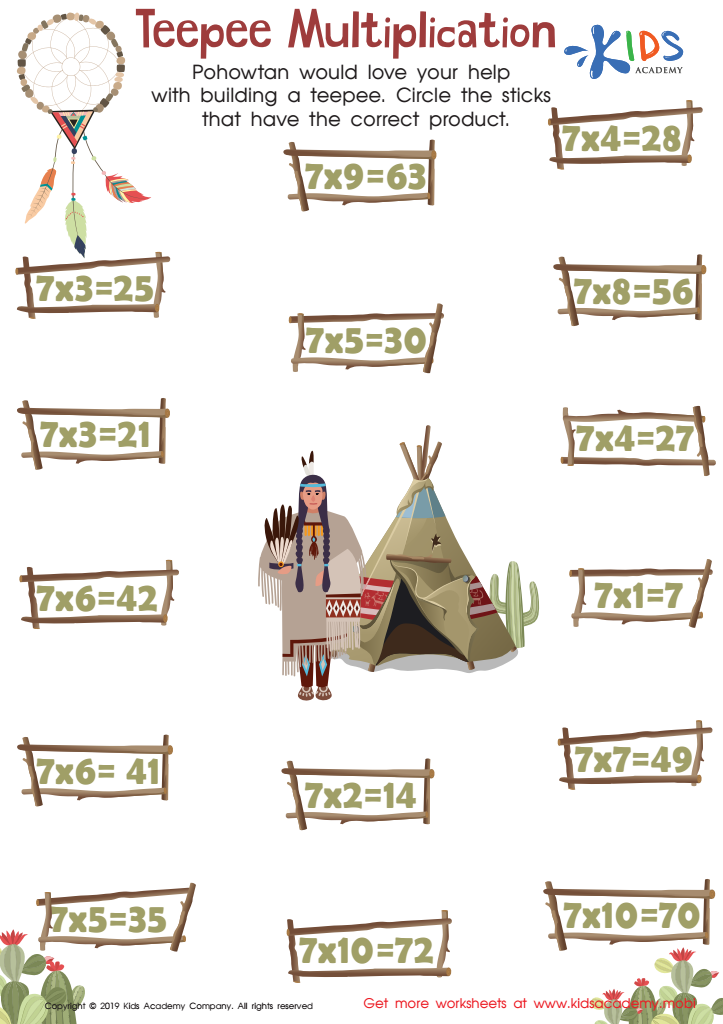
Teepee Multiplication Worksheet
 Assign to My Students
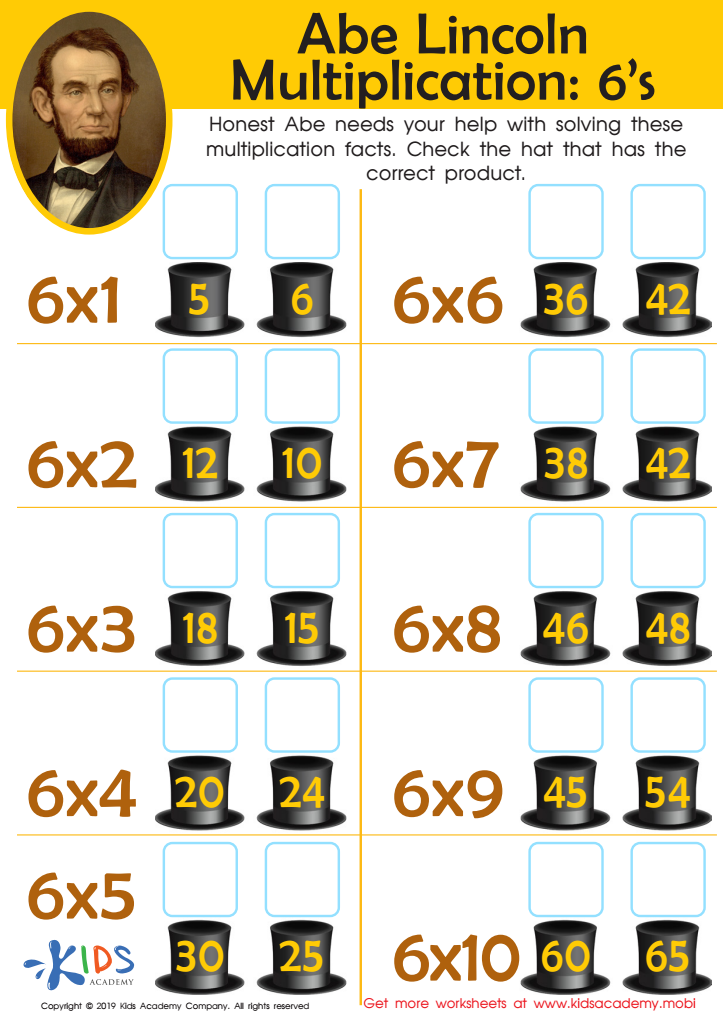
Abe Lincoln Multiplication: 6’s Worksheet
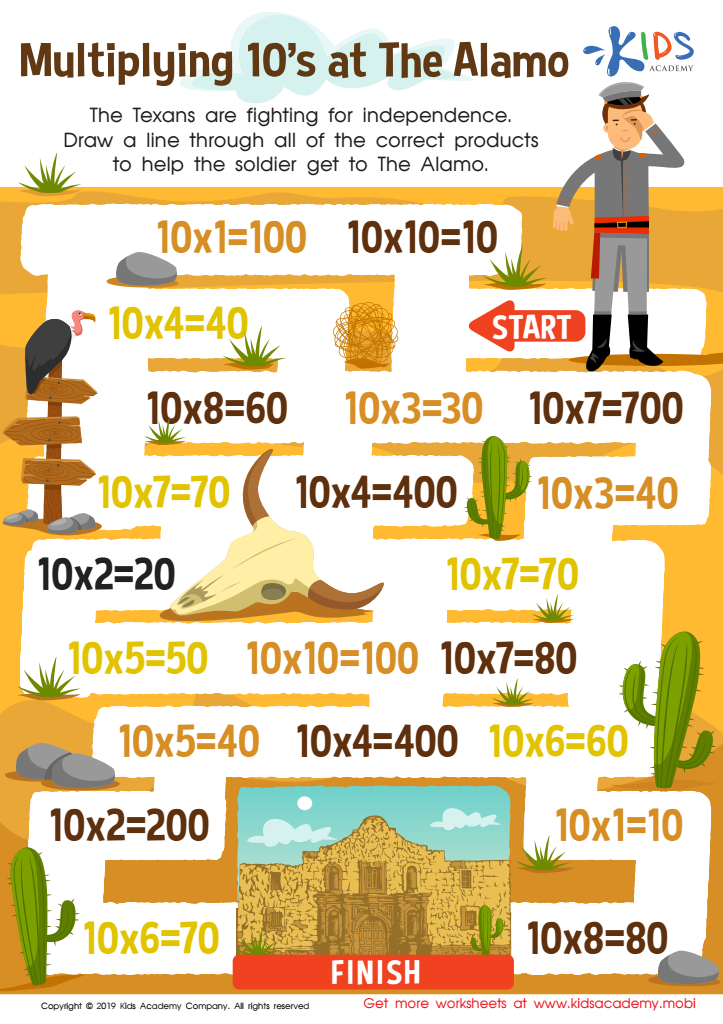
Multiplying 10’s at The Alamo Worksheet
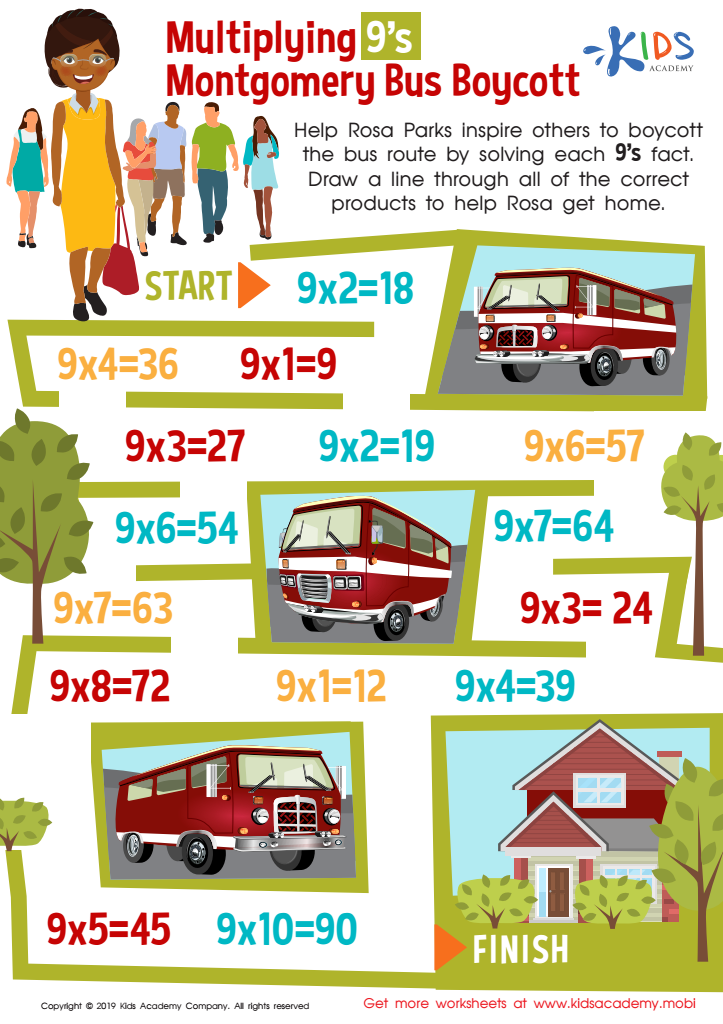
Multiplying 9’s Montgomery Bus Boycott Worksheet








Understanding patterns in Social Studies is crucial for children ages 3-9 as it lays the foundation for critical thinking, problem-solving, and social awareness. At this developmental stage, children are naturally curious and actively exploring their surroundings. Teaching them to recognize patterns in social structures, behaviors, and historical events helps them make sense of the world around them.
Patterns inform children about relationships and processes, such as the recurrence of seasons, the significance of community roles, and the evolution of traditions. By identifying similarities and differences, children gain the cognitive skills needed to analyze concepts such as cause and effect, social justice, and cultural diversity.
Moreover, recognizing patterns enhances children's communication skills, as they learn to articulate their observations and ideas about society. This understanding fosters empathy and respect for others, promoting a sense of community and collaboration. Parents and teachers play a pivotal role in encouraging these discussions, fostering an environment where curiosity is nurtured.
In a rapidly changing world, empowering children with an understanding of social patterns equips them to become informed, responsible citizens capable of contributing positively to society, making it imperative for adults to prioritize this area of learning.