Fine motor skills development Cursive Writing Worksheets for Ages 3-9
12 filtered results
-
From - To
Enhance your child's fine motor skills with our Cursive Writing Worksheets designed for Ages 3-9. These engaging exercises focus on developing dexterity, coordination, and the precision needed for fluent cursive handwriting. Ideal for young learners, each worksheet is crafted to make learning fun and effective, offering step-by-step guides and creative activities to support muscle memory and control. Watch as your child progresses from simple strokes to beautiful, flowing cursive letters. Perfect for at-home practice or classroom use, these worksheets are an essential resource for building essential writing skills. Explore now for successful, confident print into cursive transitions.
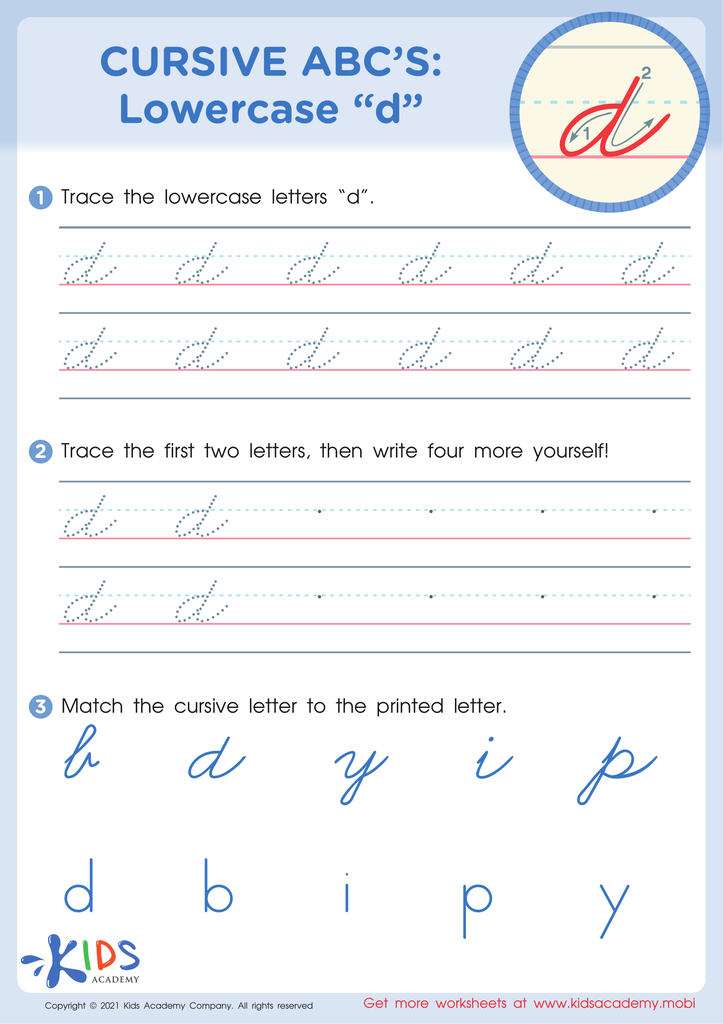
Cursive ABCs: Lowercase d
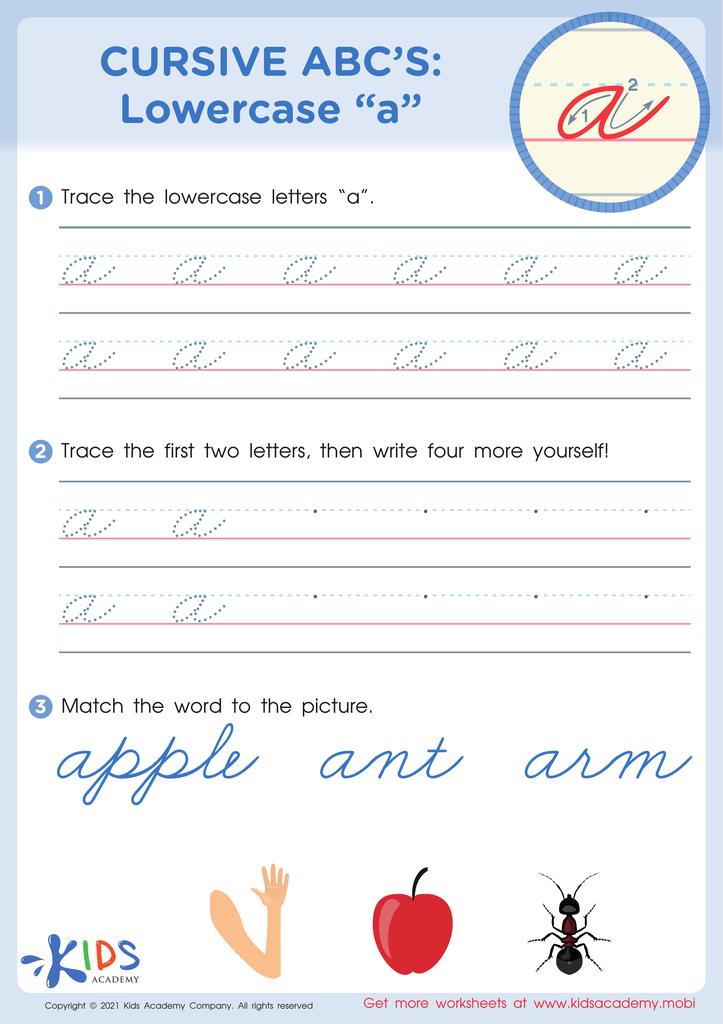
Cursive ABCs: Lowercase a
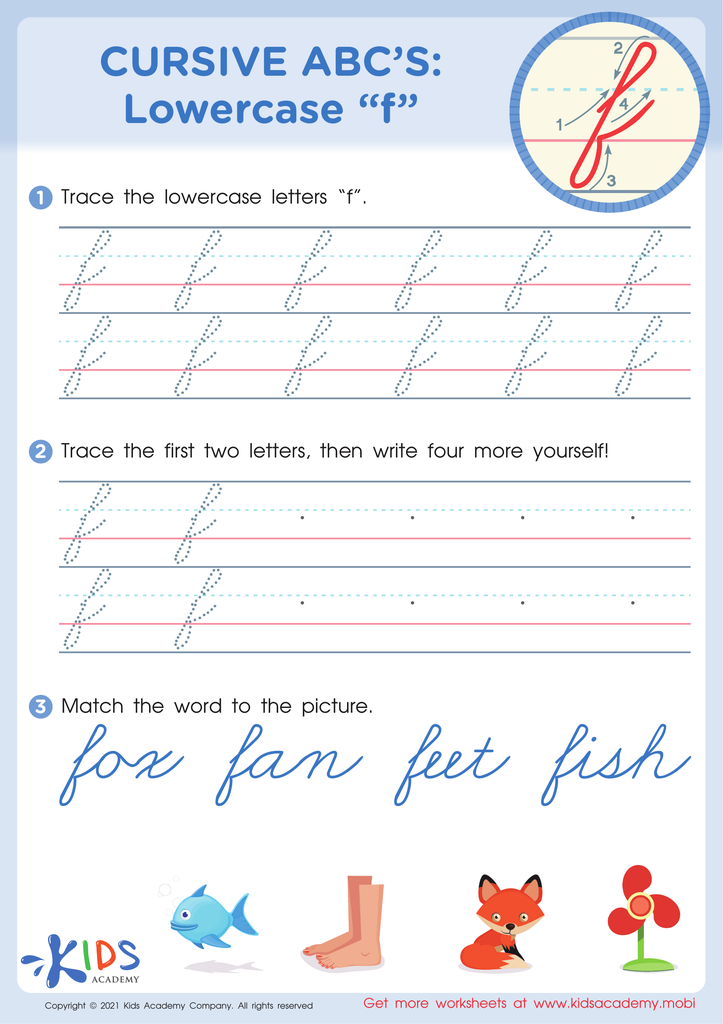
Cursive ABCs: Lowercase f
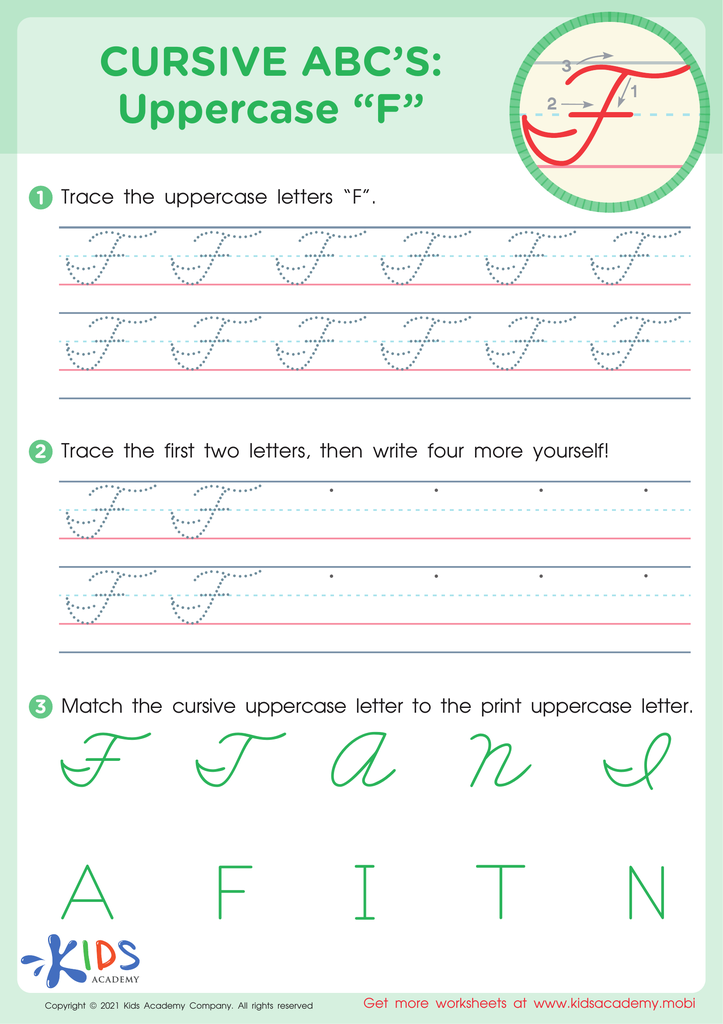
Cursive ABCs: Uppercase F
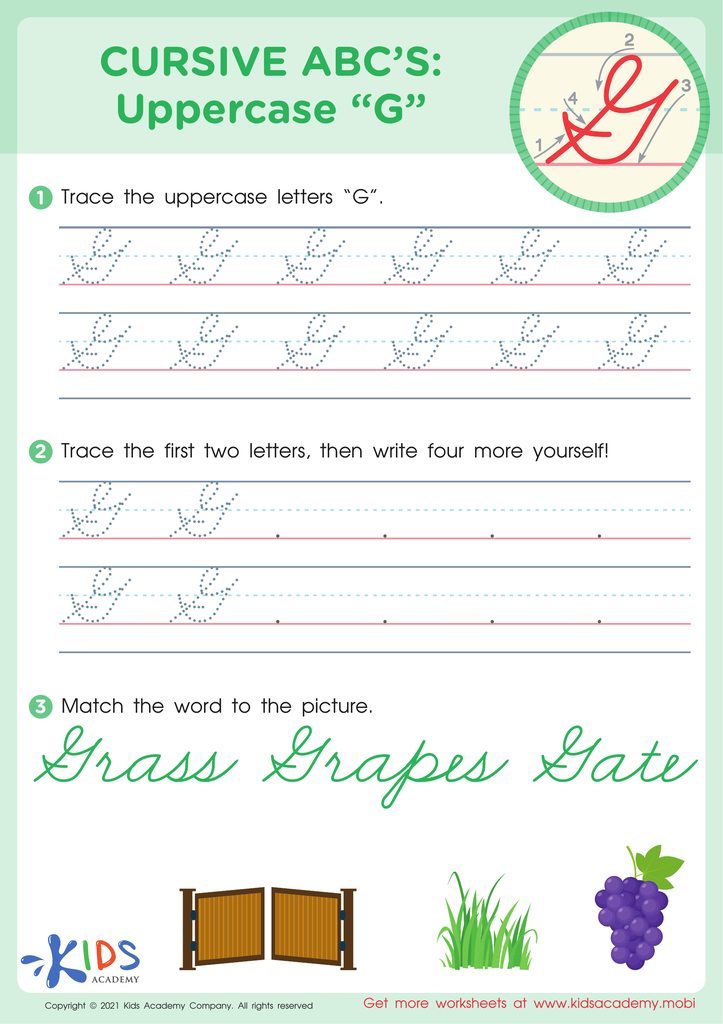
Cursive ABCs: Uppercase G
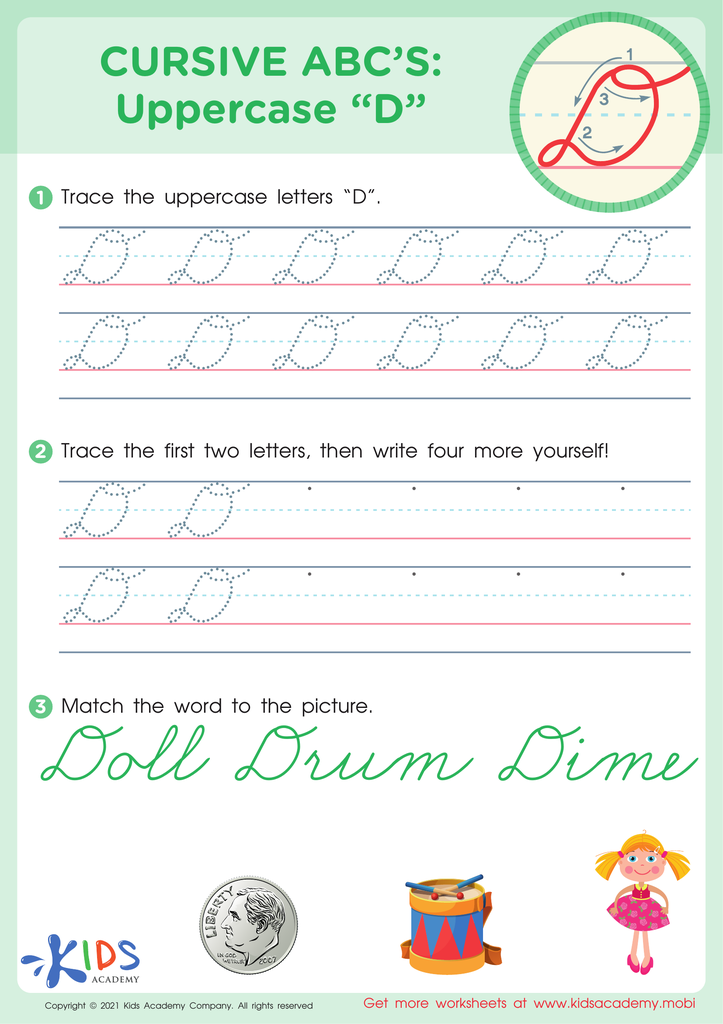
Cursive ABCs: Uppercase D
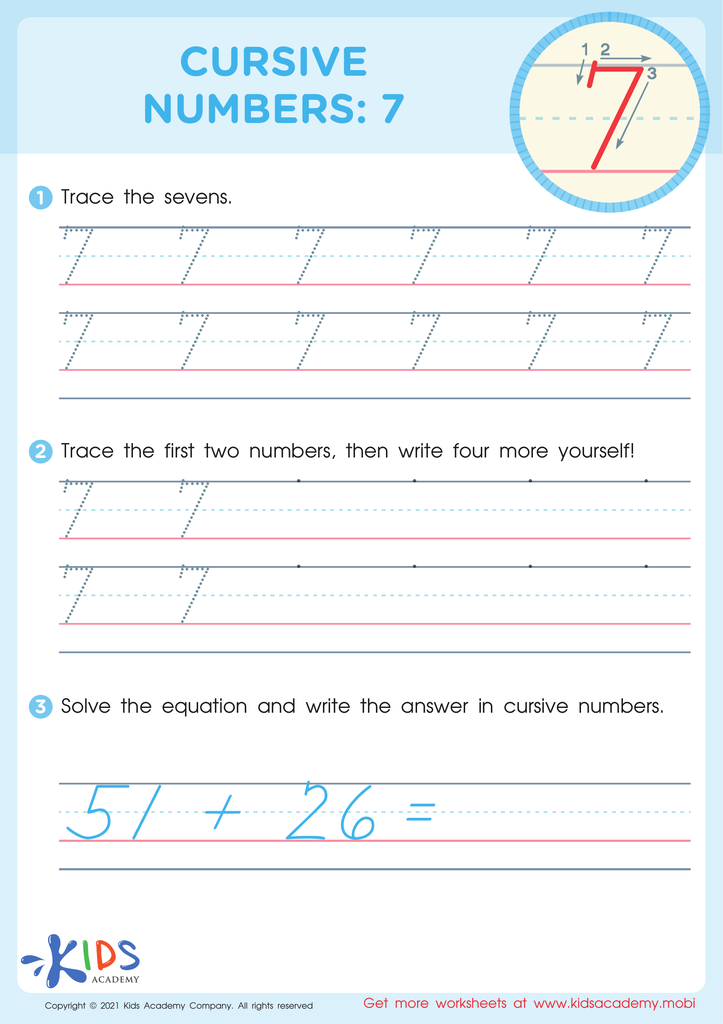
Cursive Numbers: 7 Worksheet
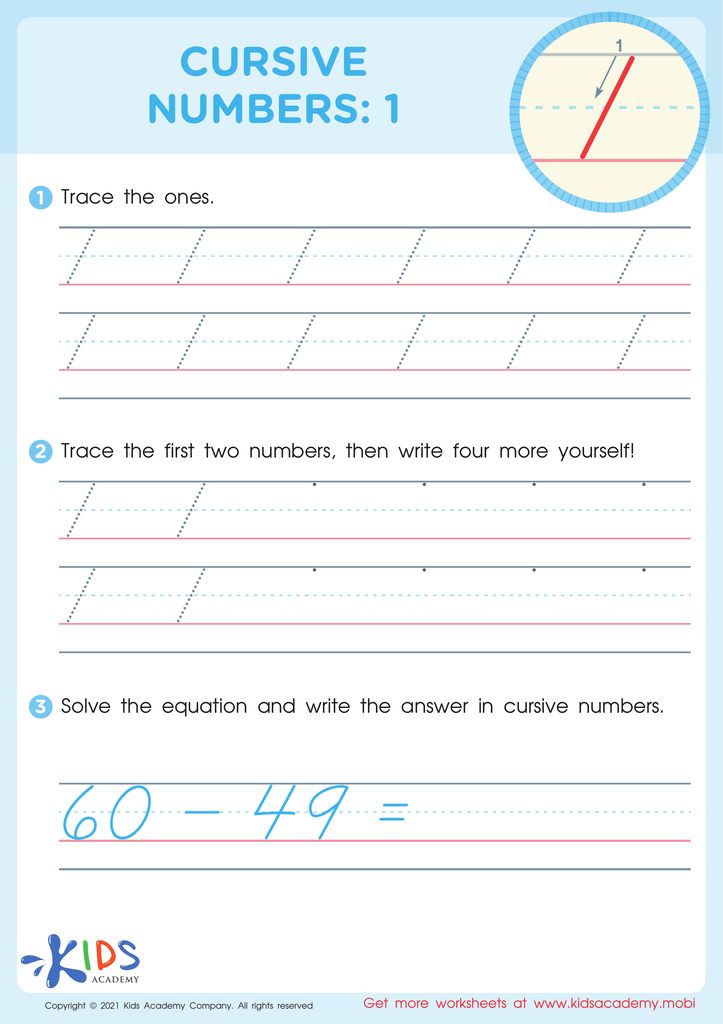
Cursive Numbers: 1 Worksheet
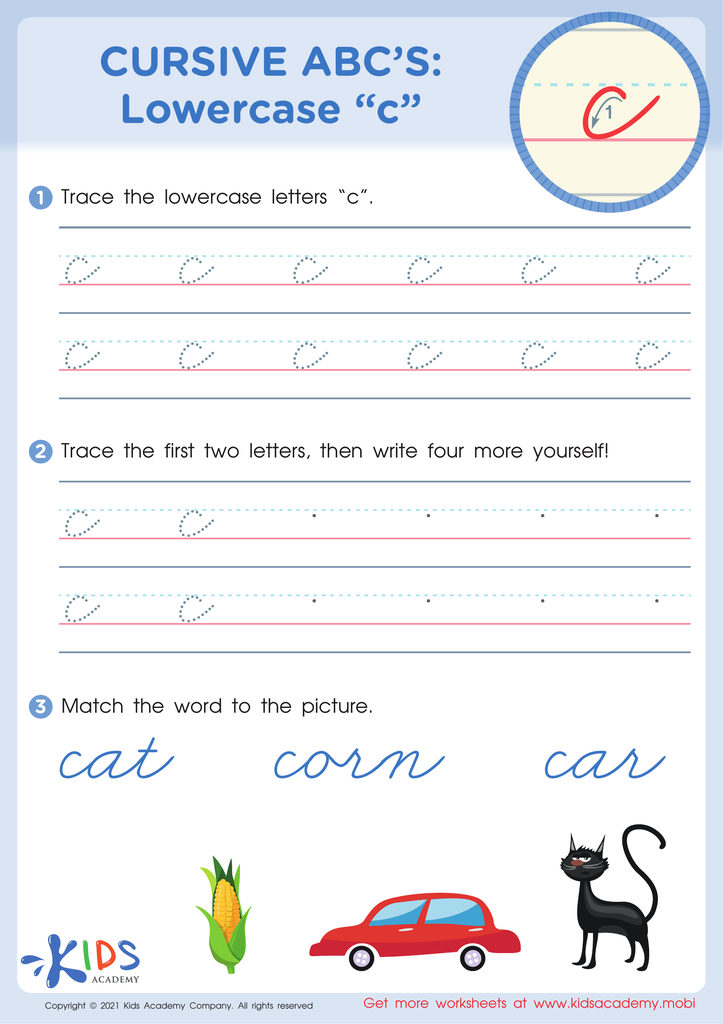
Cursive ABCs: Lowercase c
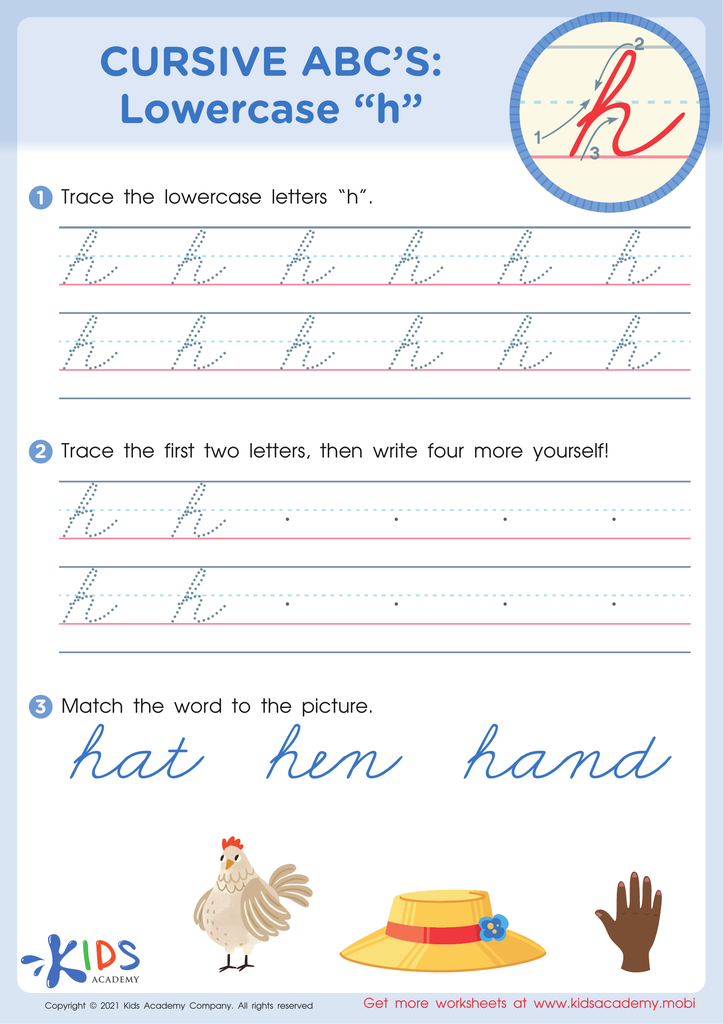
Cursive ABCs: Lowercase h
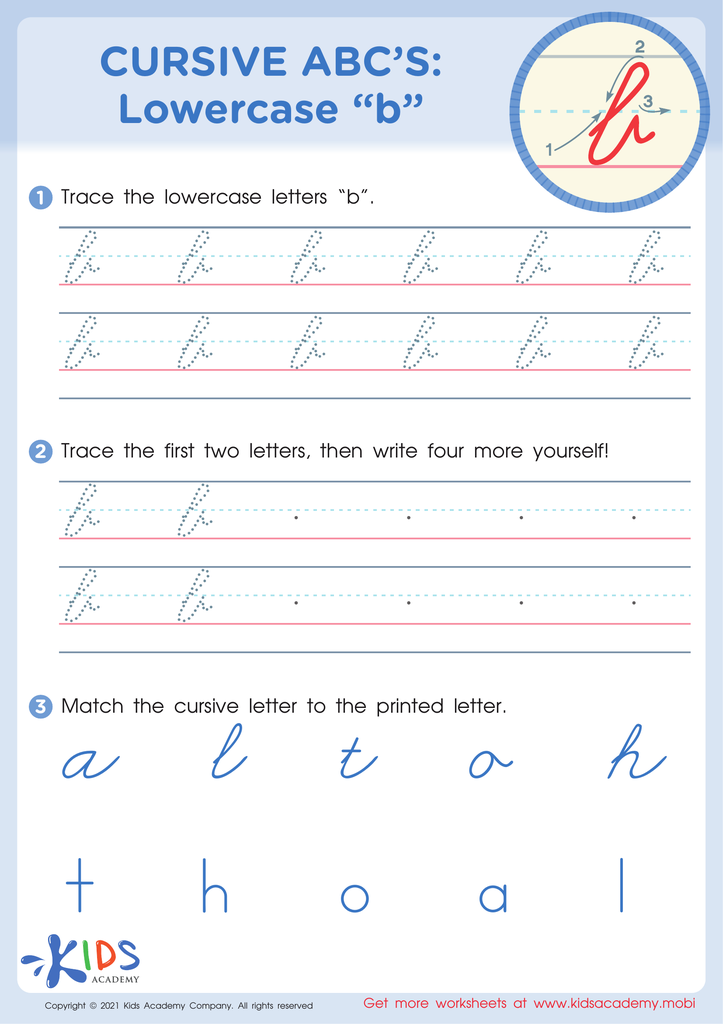
Cursive ABCs: Lowercase b
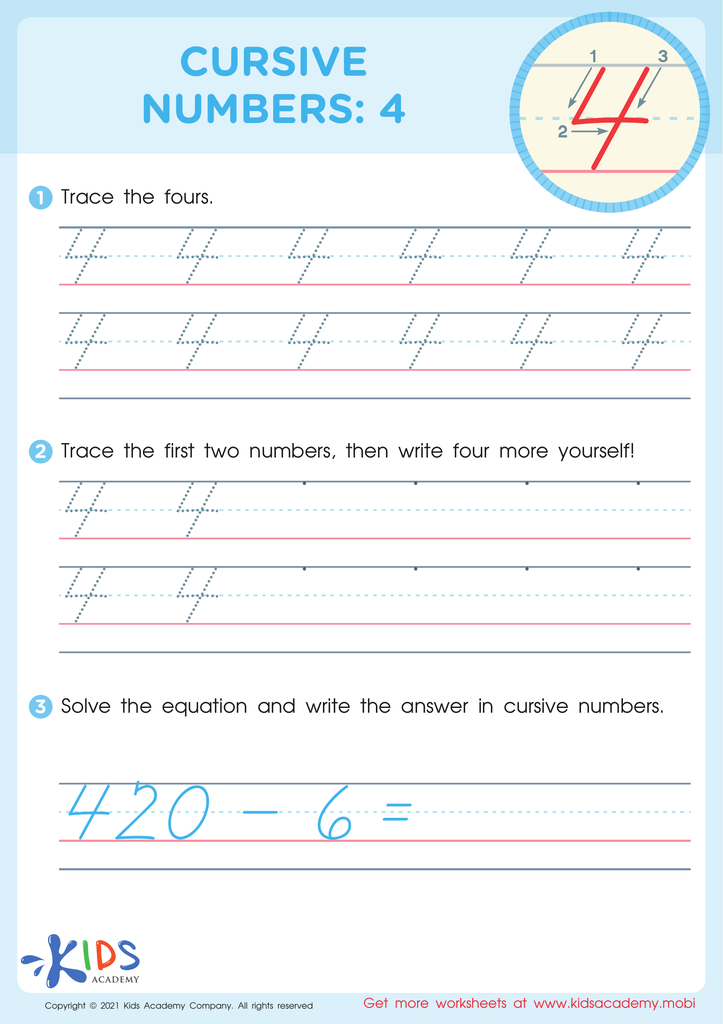
Cursive Numbers: 4 Worksheet







Developing fine motor skills through cursive writing is essential for children ages 3-9 because these skills form the foundation for more complex tasks both academically and in daily life. Fine motor proficiency, which involves the coordination of small muscle movements in the hands and fingers, strengthens hand-eye coordination, enhances dexterity, and promotes better control and precision in tasks.
Cursive writing, in particular, encourages the continuous, flowing movement that builds muscle memory and makes writing easier and more efficient over time. This form of writing often improves children's ability to read and spell, as it requires them to think about each letter's shape and connections. The fluid motion of cursive writing stimulates brain development, linking cognitive and motor processes, fostering better retention of information, and enhancing cognitive development.
Moreover, the careful attention required to produce cursive script can boost concentration and patience, which are crucial life skills. Fine motor skills also have broader implications, facilitating daily activities such as buttoning clothes, handling utensils, and using scissors, thereby fostering greater independence in youngsters. Prioritizing motor skill development through cursive writing equips children with essential abilities that support their overall growth, academic achievement, and everyday functioning, making it a critical focus for parents and teachers alike.








