
Vocabulary Building Alphabet Worksheets for 3-Year-Olds
6 filtered results
Difficulty Level
Grade
Age
-
From - To
Subject
Activity
Standards
Enhance your child's language skills with our Vocabulary Building Alphabet Worksheets for 3-Year-Olds from Kids Academy! Specifically designed for little learners, these fun and engaging worksheets focus on each letter of the alphabet, aiming to expand vocabulary and boost early literacy skills. Your child will enjoy tracing letters, identifying objects, and matching words to pictures, all while developing a strong foundation for reading and writing. Perfect for at-home practice or supplementing preschool education, our worksheets are a valuable tool in fostering a love for learning and advancing language development. Unlock your child's potential today!
Favorites
With answer key
Interactive
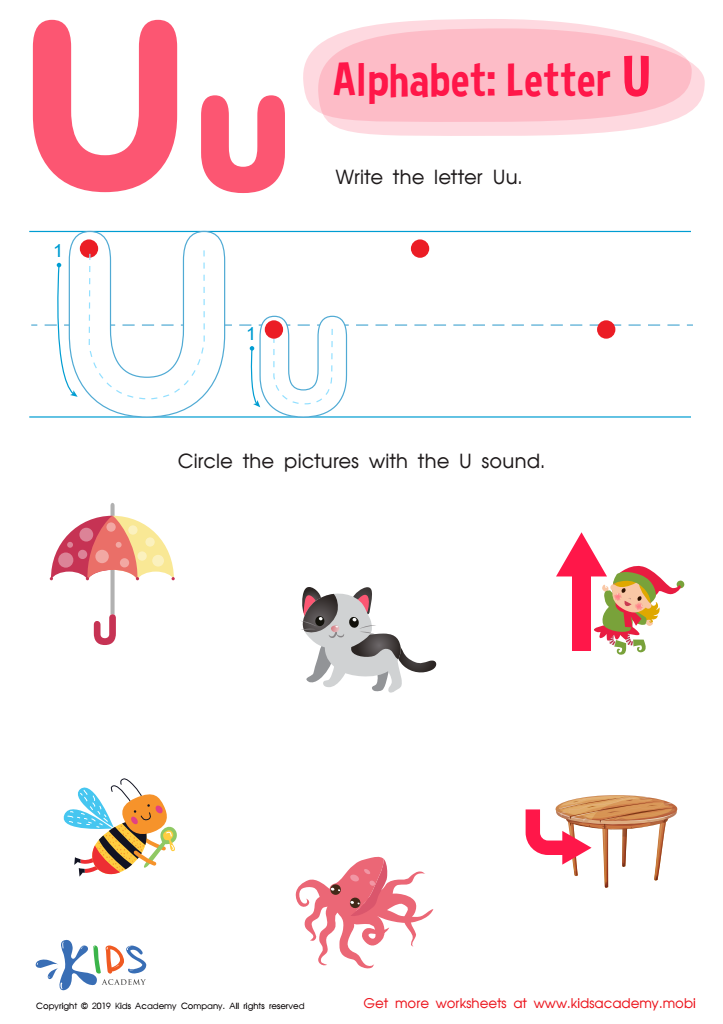
Letter U Tracing Worksheet
Your students can have fun and learn about the alphabet with this letter «U» worksheet. Pre-schoolers will trace the letter «U», circle words with the letter sound, and learn phonics while boosting their confidence. Doing these tasks will help them understand the letter more.
Letter U Tracing Worksheet
Worksheet
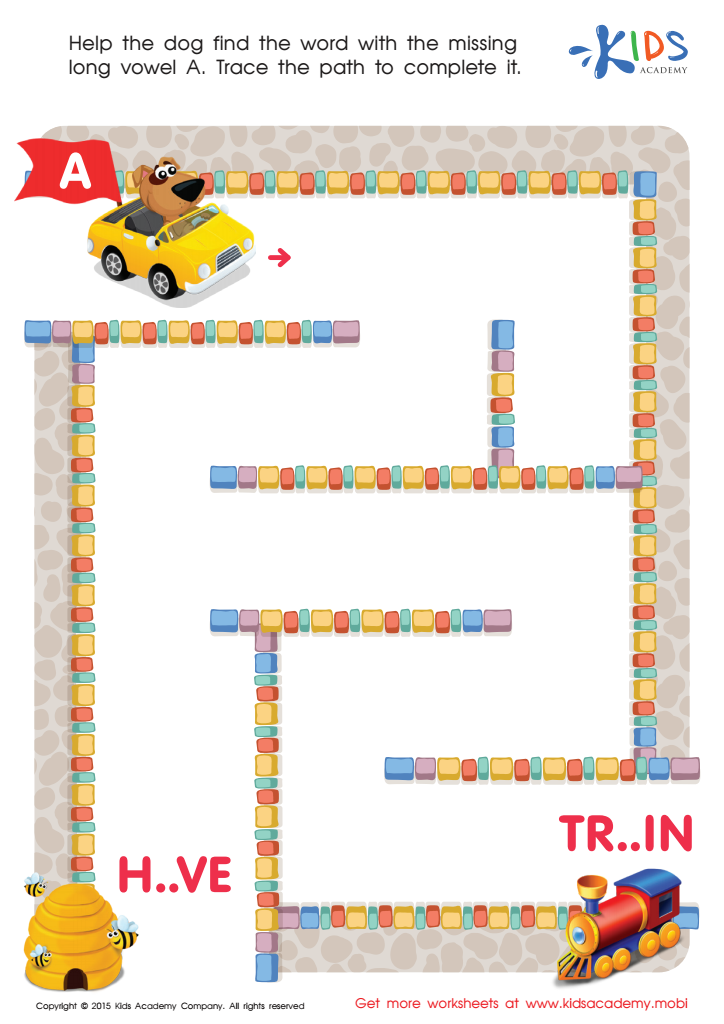
Long Vowel Sound A Worksheet
Teach your young learner about the long vowel A with this colorful free printable phonics worksheet. The long vowel A says its name while the short vowel A does not. Complete the worksheet by tracing the root to the toy train and helping the dog by filling in the missing letter A. Have them practice writing and spelling with phonics while having fun!
Long Vowel Sound A Worksheet
Worksheet
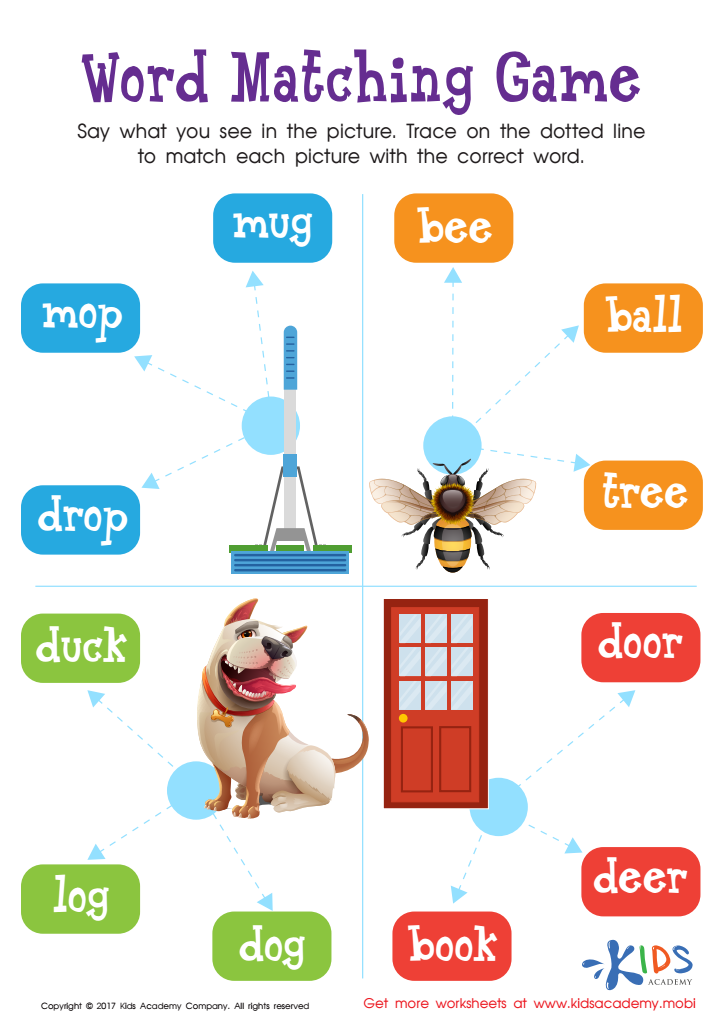
Word Matching Game Worksheet
Help your early reader develop prereading skills with this fun matching worksheet! Visual cues help them learn sight words, decode words in word families, and identify phonetic patterns. They'll practice discerning sounds past initial consonants while saying the name of the picture and finding the matching word - and reading at the same time!
Word Matching Game Worksheet
Worksheet
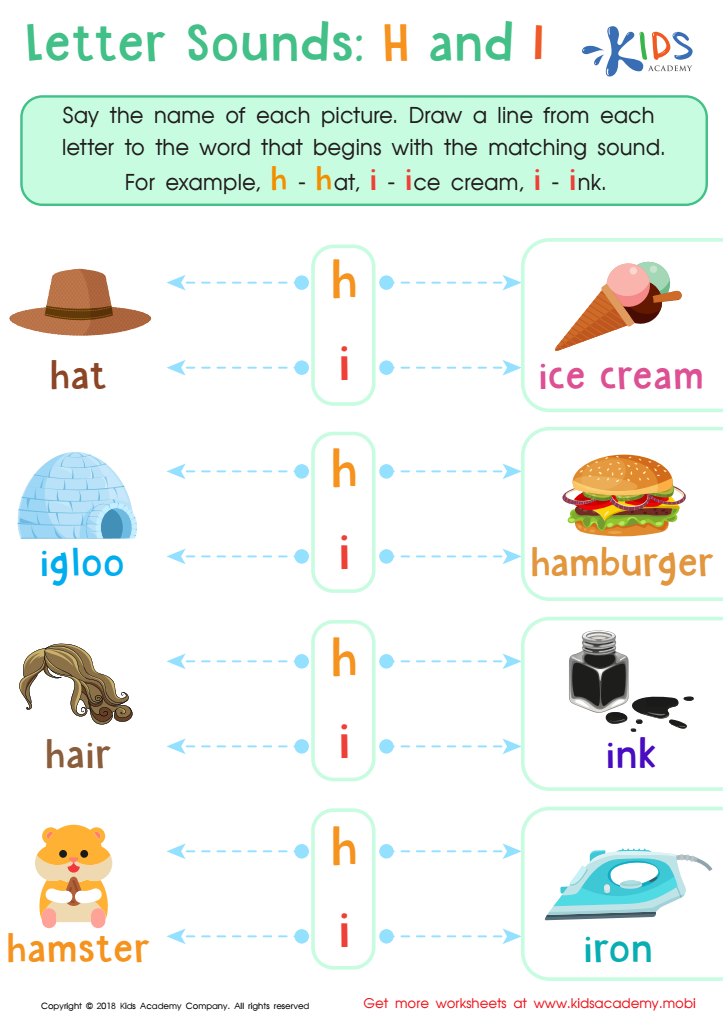
Letter H and I Sounds Worksheet
Preschoolers will have fun and develop reading and writing skills at the same time! They'll use pictures to recognize familiar words and differentiate between 'H' and 'I' sounds. Then they'll trace lines to connect each sound to the picture, improving their fine-motor skills. Bright and cheerful visuals make learning a breeze!
Letter H and I Sounds Worksheet
Worksheet
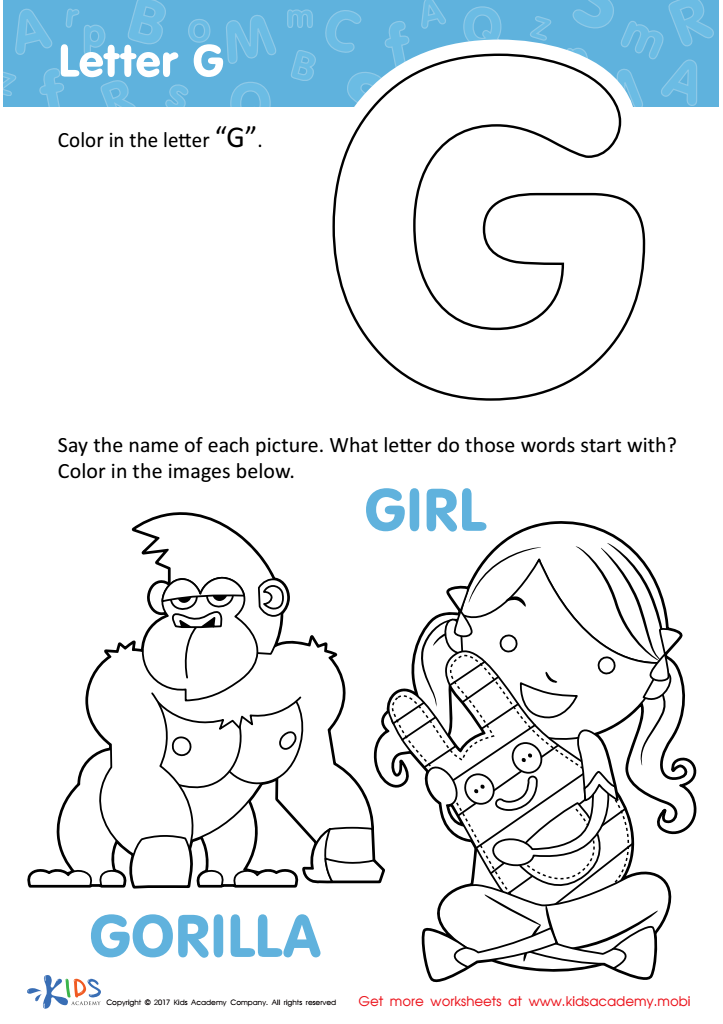
Letter G Coloring Sheet
This "G" coloring page encourages creativity and teaches kids the letter "G" sound. With its fun visuals and familiar words, it's sure to excite your child. Plus, you can talk about the letter’s sound with the pictures given.
Download (PDF)
 Assign to My Students
Assign to My Students
Letter G Coloring Sheet
Worksheet
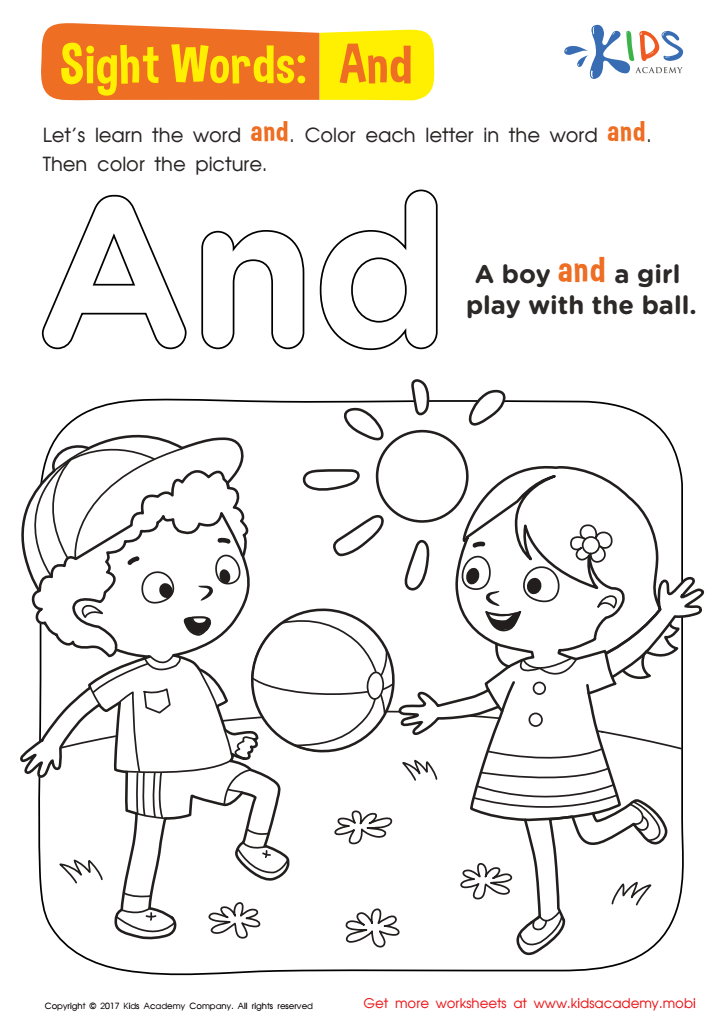
And Worksheet Sight Words Worksheet
Help your child get a jumpstart on reading with sight words! Print out this fun worksheet and get your child to read the sentence. Point out the word "and", then color the word and enjoy the rest of the scene! It's a great way to introduce sight words and get their early reading skills going!
Download (PDF)
Assign to My Students
Assign to My Students
And Worksheet Sight Words Worksheet
Worksheet
Join Kids Academy for Free
Who is primarily going to use this learning content?








Vocabulary building is crucial for 3-year-olds because it lays the foundation for their future language development, reading skills, and overall academic success. At this age, children are rapidly absorbing new information and are particularly receptive to learning new words. A Vocabulary Building Alphabet is an effective tool as it introduces letters and new words simultaneously, creating an engaging and educational experience.
For parents and teachers, supporting vocabulary growth in 3-year-olds can lead to a host of benefits. Firstly, a rich vocabulary enhances a child’s ability to express themselves clearly and understand others. This improved communication can significantly boost their social interactions and emotional development. Secondly, a strong vocabulary is directly linked to later reading success. Children who are exposed to a broader range of words early on find it easier to decode written text and comprehend stories, setting them ahead in literacy skills upon entering school.
Moreover, learning vocabulary through the Alphabet provides a structured yet playful learning environment. Utilizing stories, songs, and interactive activities around letters and words captures the children's interest and makes learning appealing. By investing time and effort into vocabulary building now, parents and teachers set children on a trajectory of academic readiness and a lifelong love for learning.







