Phonological awareness Phonics Worksheets for 3-Year-Olds
7 filtered results
-
From - To
Foster your 3-year-old's foundational language skills with our Phonological Awareness Phonics Worksheets. Specifically designed for early learners, these engaging printable worksheets introduce the basics of phonological awareness, such as recognizing sounds and patterns within words. Through fun, interactive activities, kids practice distinguishing letter sounds and simple word structures, laying the groundwork for future reading success. Our expertly crafted exercises ensure that learning remains playful and stress-free, making it an ideal starting point for developing early literacy skills. Explore our collection today and give your child the gift of confident, early reading skills.
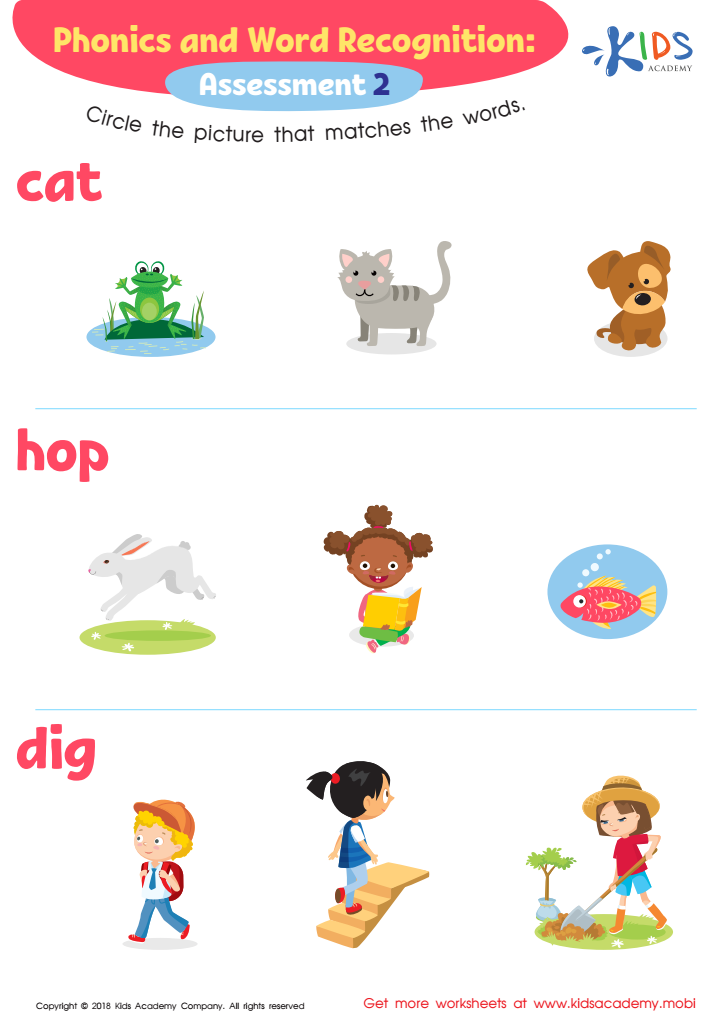
Phonological Awareness: Assessment 2 ELA Worksheet
 Assign to My Students
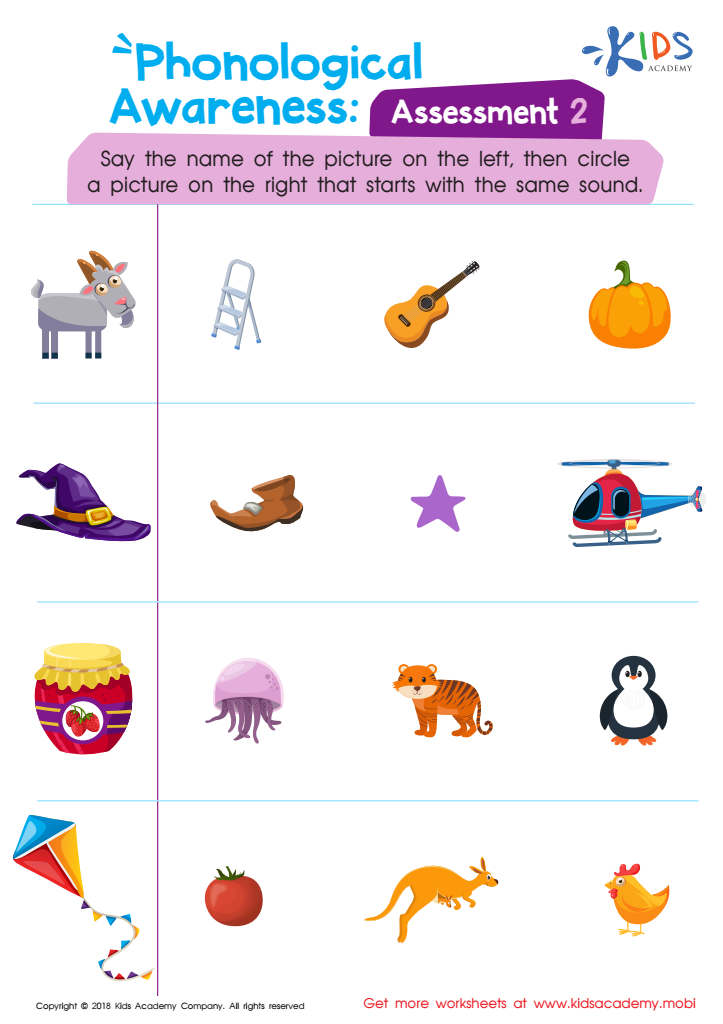
Phonological Awareness: Assessment 2 Worksheet
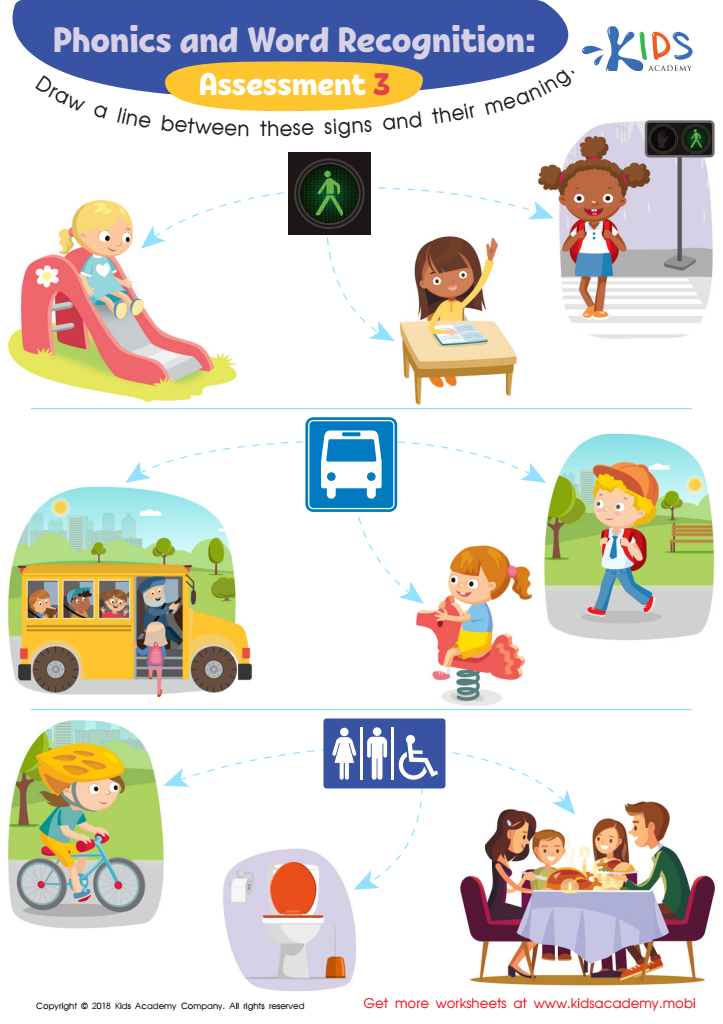
Phonological Awareness: Assessment 3 ELA Worksheet
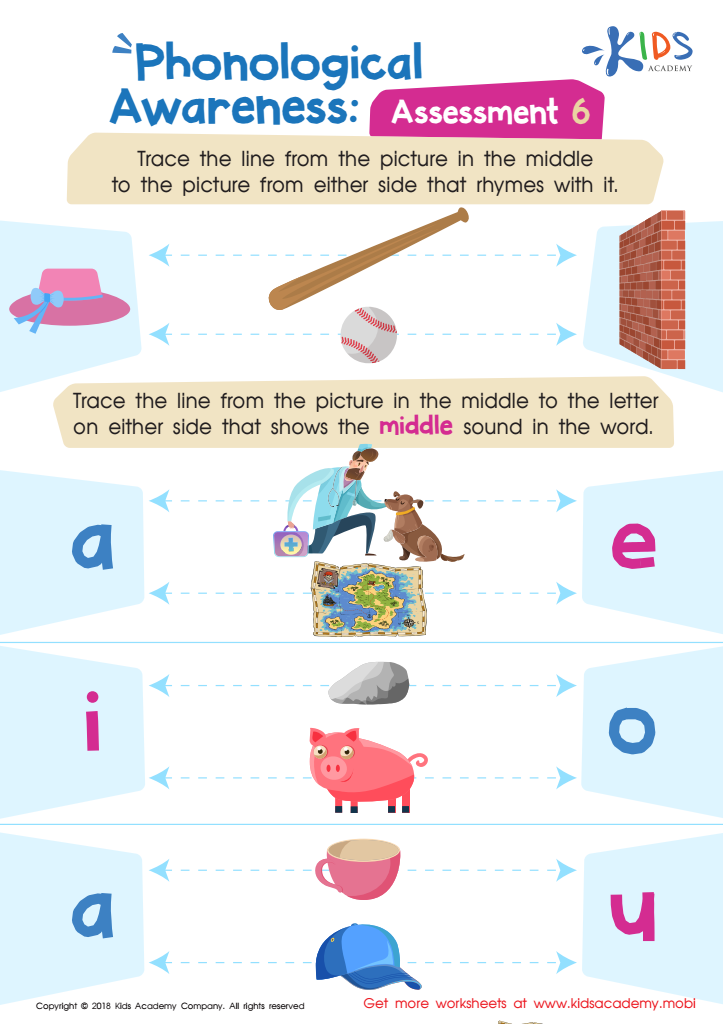
Phonological Awareness: Assessment 6 Worksheet
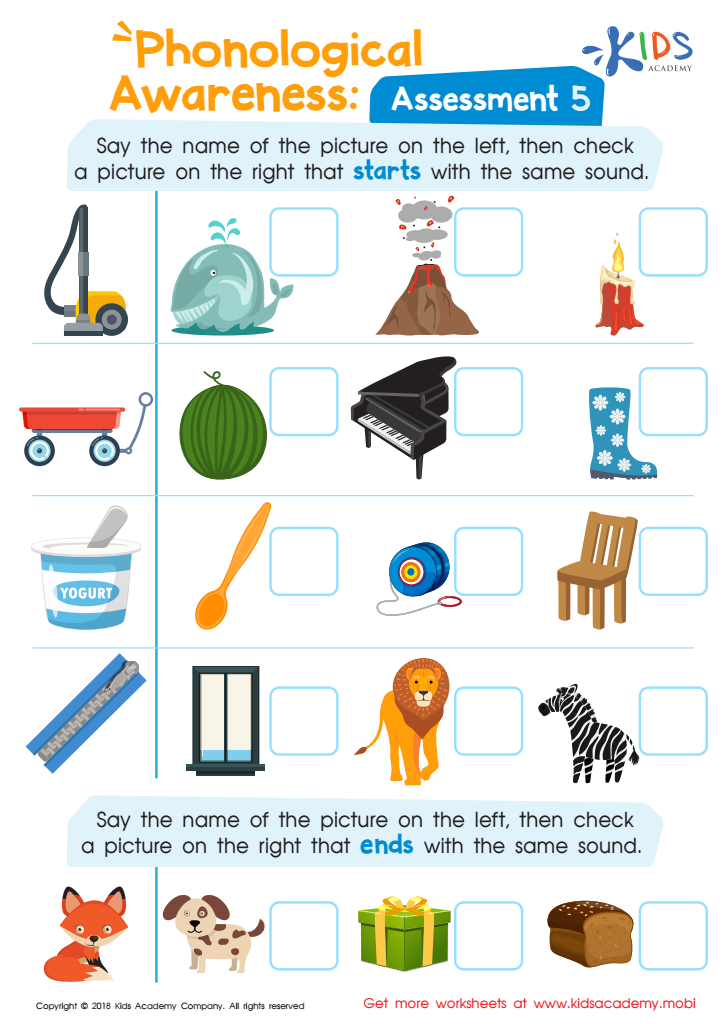
Phonological Awareness: Assessment 5 Worksheet
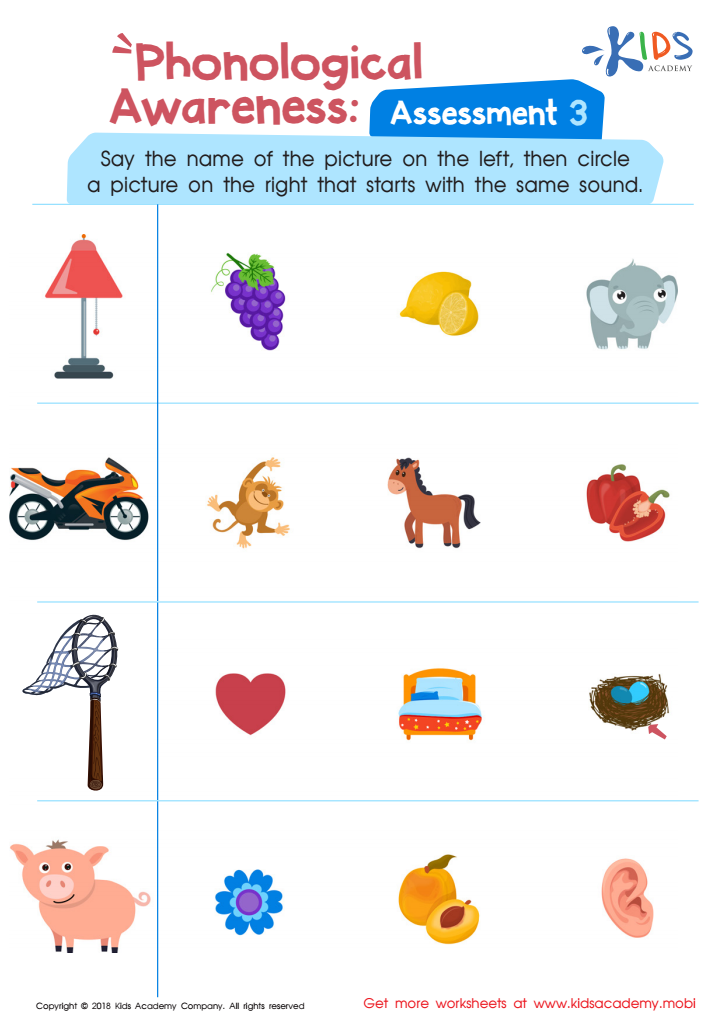
Phonological Awareness: Assessment 3 Worksheet
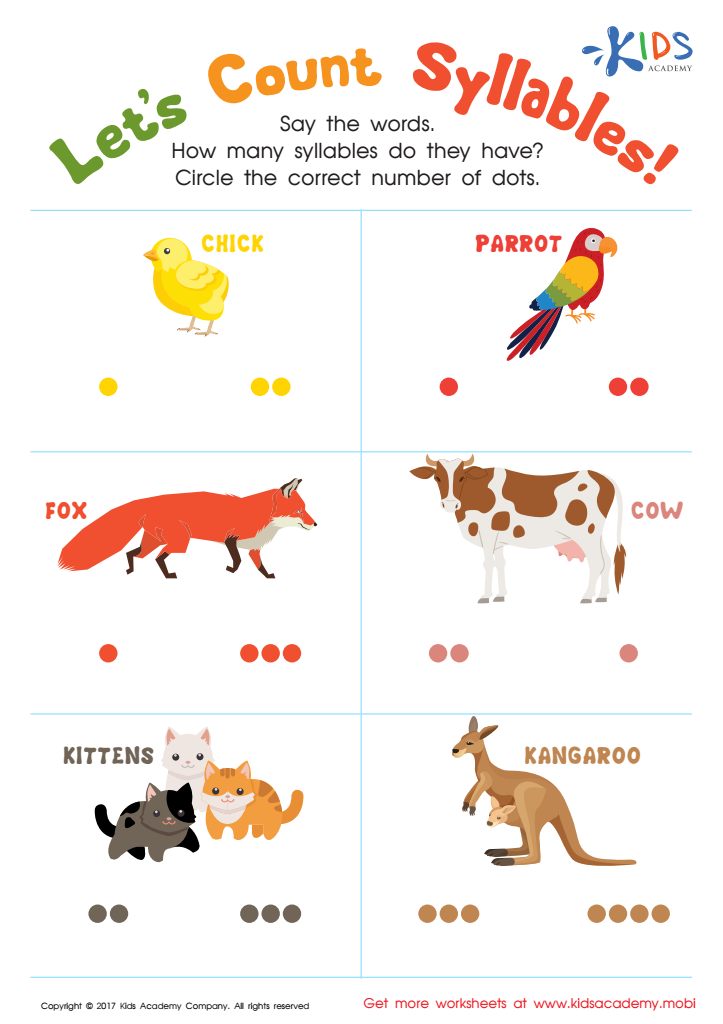
Lets Count Syllables Worksheet








Phonological awareness and phonics are foundational skills essential for early literacy development, making them crucial for both parents and teachers to focus on with 3-year-olds. Phonological awareness involves recognizing and manipulating the sounds of spoken language, which includes skills like rhyming, alliteration, and identifying syllables. For 3-year-olds, engaging in activities that build these skills helps create a strong auditory foundation, facilitating the transition to phonics—a method that connects sounds with their corresponding letters or groups of letters.
Early exposure to phonics enables children to start decoding words more easily, laying the groundwork for reading proficiency. Research indicates that early reading skills are directly linked to later academic success, making phonics instruction a key stepping stone for future learning. Additionally, developing these skills at a young age promotes cognitive development, enhancing memory, attention, and critical thinking.
When parents and teachers prioritize phonological awareness and phonics, they’re equipping their children with the essential tools needed to navigate the complex world of language and literacy. Furthermore, these early-literacy activities are fun and engaging, fostering a love for reading and learning. Ultimately, nurturing these skills helps ensure that children not only become capable readers but also enjoy learning—a dual benefit that can influence their academic journeys positively.







