Division practice Worksheets for 3-Year-Olds
5 filtered results
-
From - To
Discover fun and engaging division practice worksheets designed for 3-year-olds at Kids Academy! These printable worksheets help young learners develop foundational math skills through playful and age-appropriate activities. Featuring colorful graphics and simple exercises, each worksheet makes division an enjoyable learning adventure. Our expertly crafted materials promote critical thinking, number recognition, and problem-solving abilities in a stress-free environment. Perfect for early learners, these worksheets are ideal for both classroom use and at-home practice, ensuring your child gains confidence and proficiency in basic division. Start your child's math journey with our exciting, educational resources today!
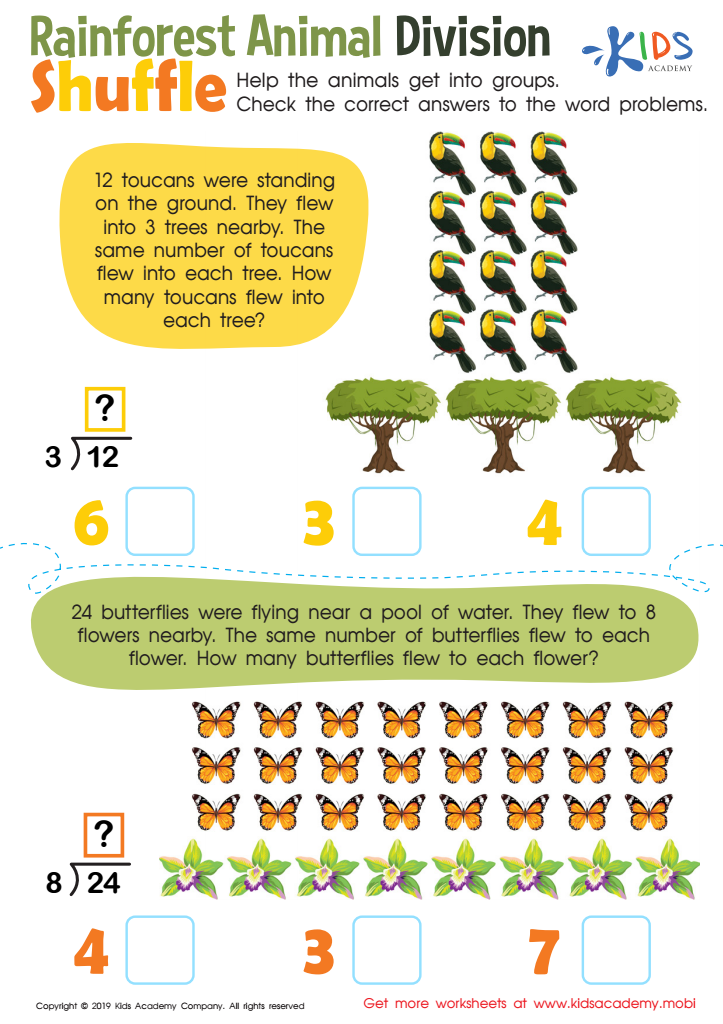
Rainforest Animal Division Worksheet
 Assign to My Students
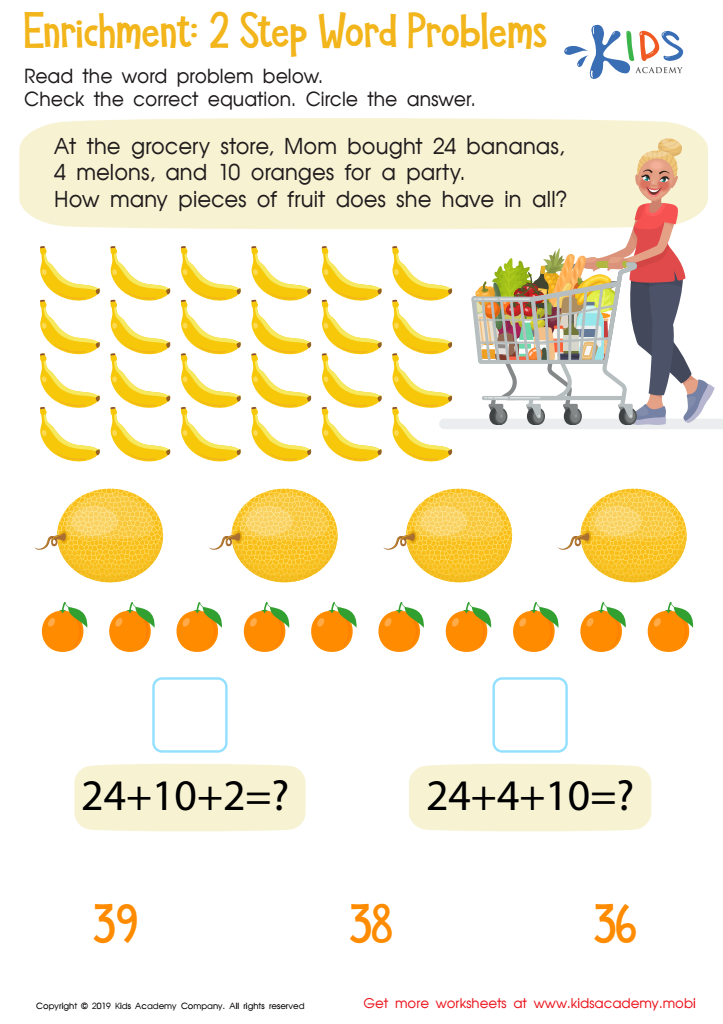
Enrichment -2 Step Word Problems Worksheet
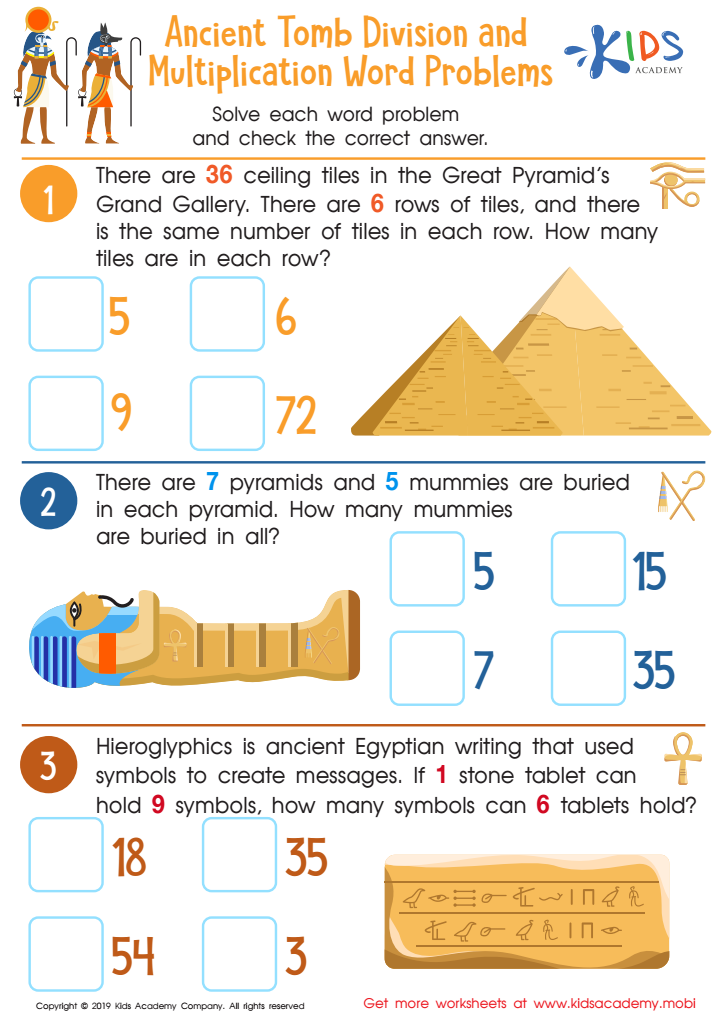
Ancient Tomb Division and Multiplication Word Problems Worksheet
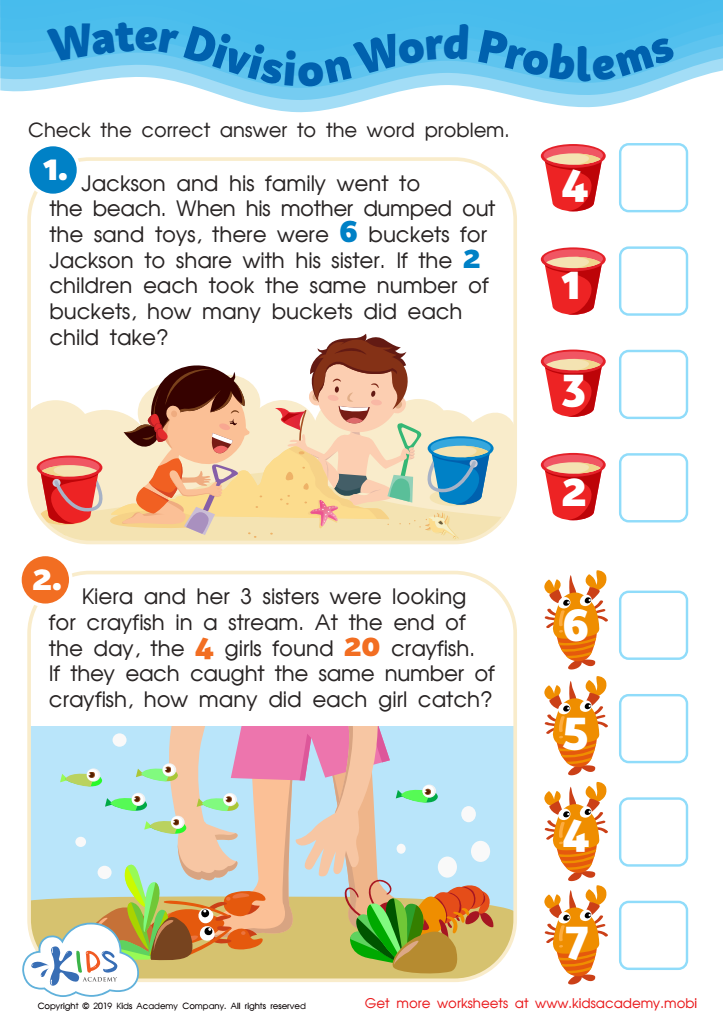
Water Division Word Problems Worksheet
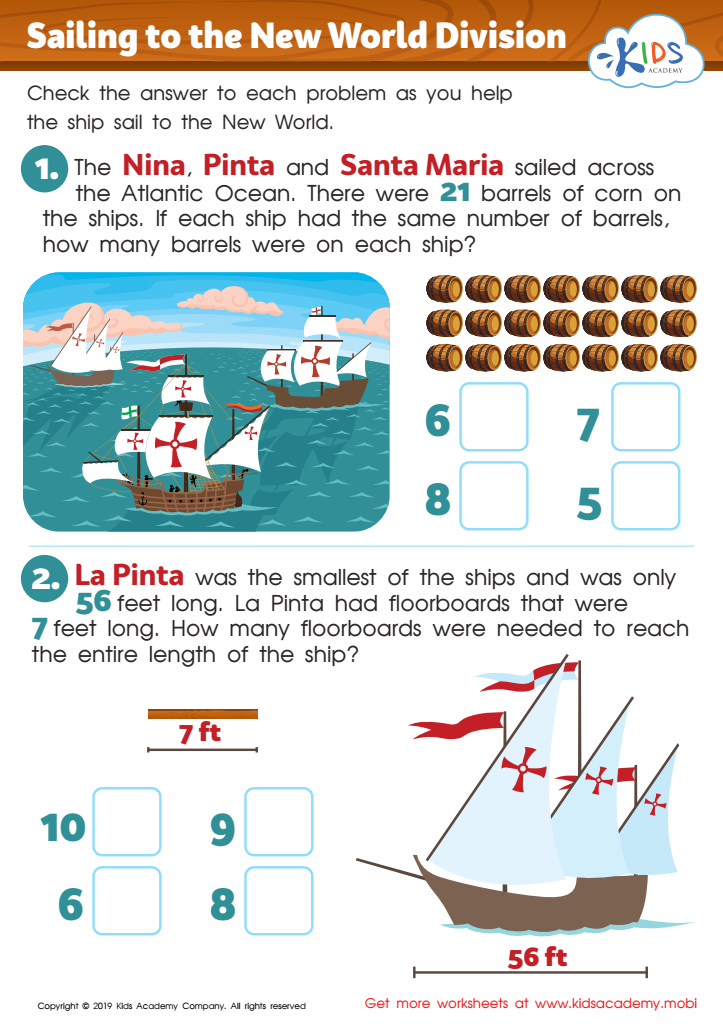
Sailing to the New World Division Worksheet





Division practice for 3-year-olds is crucial despite their young age because it lays the groundwork for future mathematical understanding. At this stage, children's brains are exceptionally absorbent, and they benefit significantly from early exposure to basic mathematical concepts. Engaging in simple division tasks helps them develop critical thinking and problem-solving skills, even when framed as playful activities.
For instance, activities such as sharing toys evenly among friends or dividing snacks into equal portions embrace division in a way that's relatable and enjoyable for young kids. These practical, real-life applications help them grasp the fundamental idea of division being the fair distribution of a whole into parts.
Moreover, early practice with division nurtures fine motor skills and cognitive abilities, promoting overall brain development. When parents or teachers incorporate division into daily routines, children develop numerical literacy and confidence with numbers, leading to a smoother transition into more complex mathematical concepts in later years.
Division practice at an early age cultivates a positive attitude toward math. When math seems fun and achievable, children are more likely to be enthusiastic and motivated learners. Early exposure ensures children won’t find mathematical concepts foreign or intimidating, setting a solid foundation for academic success.








