Phonological awareness Worksheets for 3-Year-Olds
8 filtered results
-
From - To
Explore our engaging phonological awareness worksheets designed specifically for 3-year-olds! These interactive tools support early literacy development by enhancing children's ability to recognize sounds in language. Our activities include rhyming, sound matching, and syllable counting, making learning fun and effective. Each worksheet is carefully crafted to capture young learners' attention, promoting critical listening skills that form the foundation for reading success. Whether at home or in the classroom, our worksheets provide a delightful way for preschoolers to develop essential phonemic skills. Dive into our collection and lay the groundwork for a lifelong love of reading and learning!
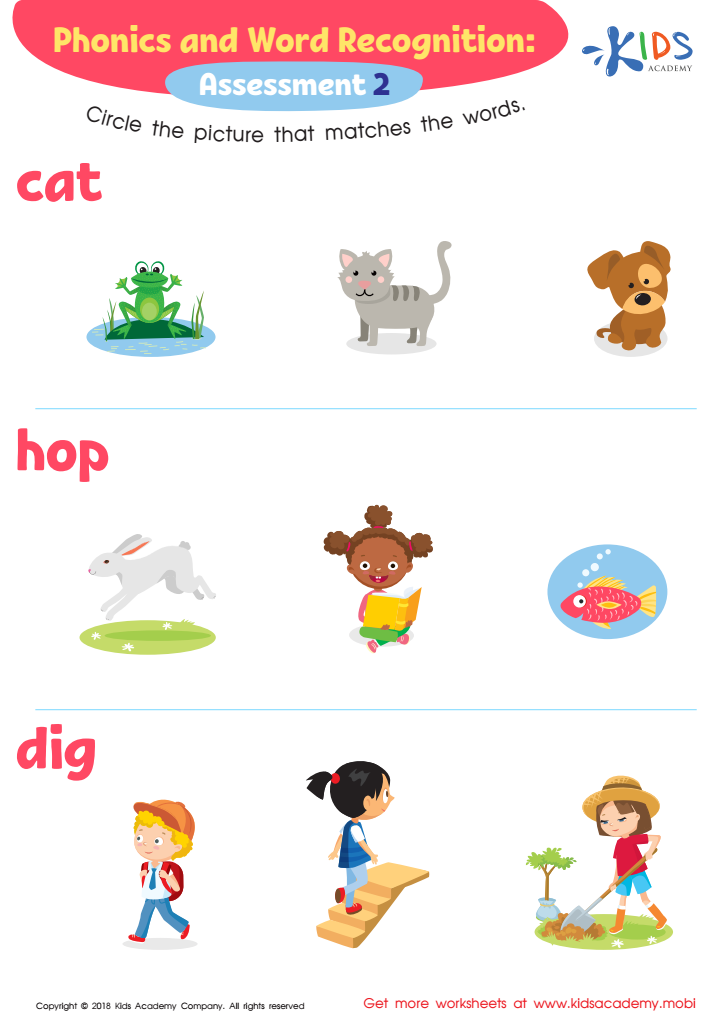
Phonological Awareness: Assessment 2 ELA Worksheet
 Assign to My Students
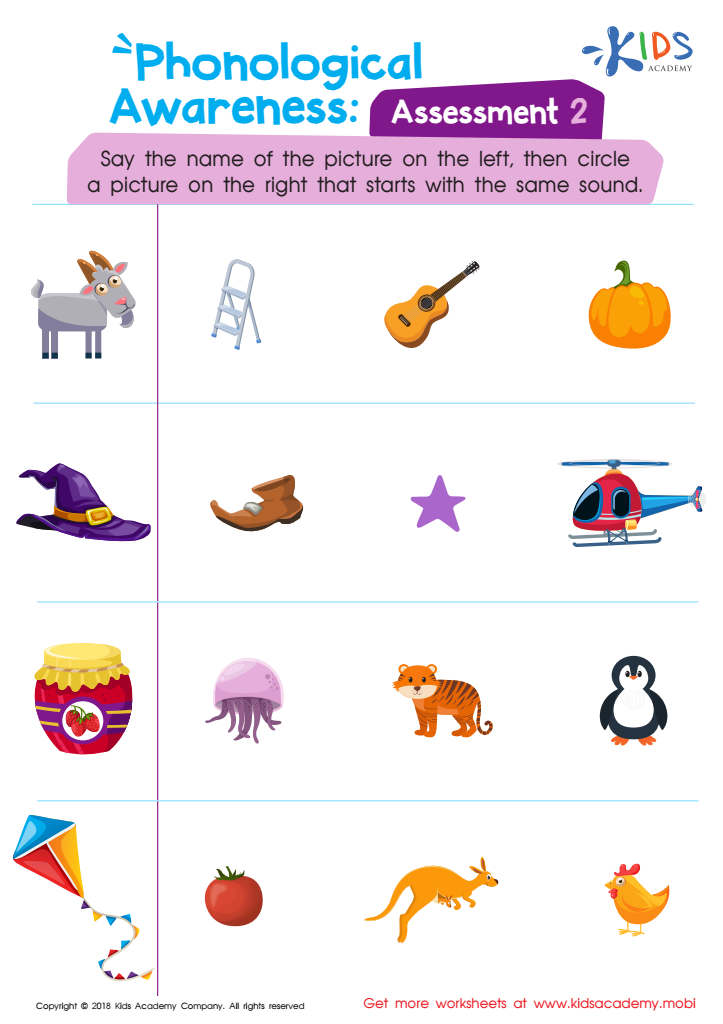
Phonological Awareness: Assessment 2 Worksheet
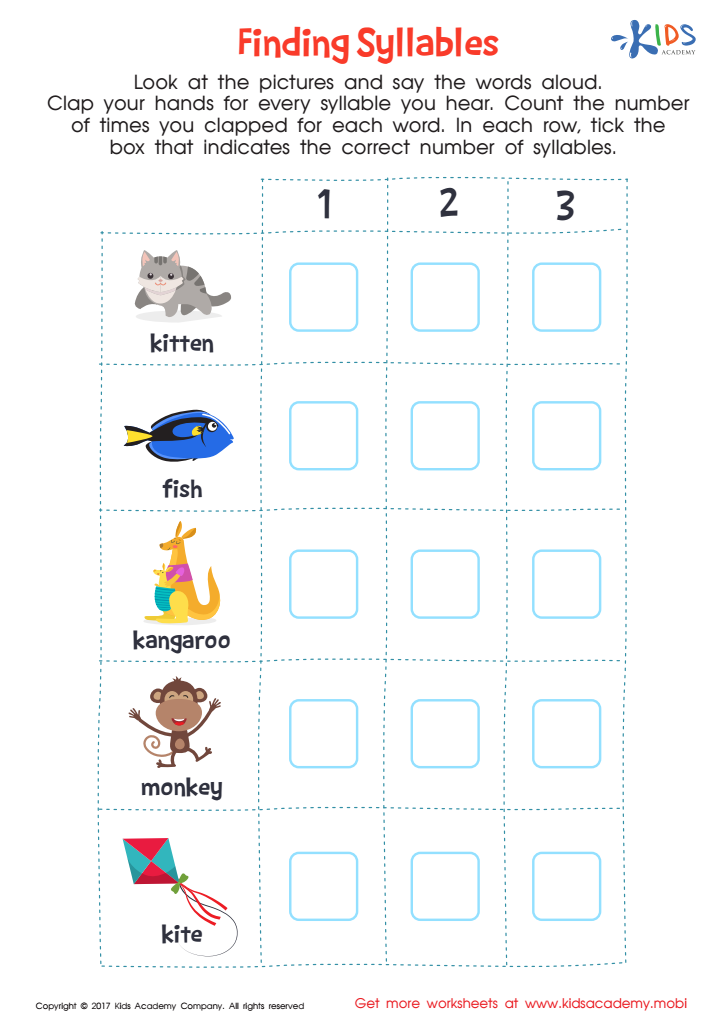
Finding Syllables Word Structure Worksheet
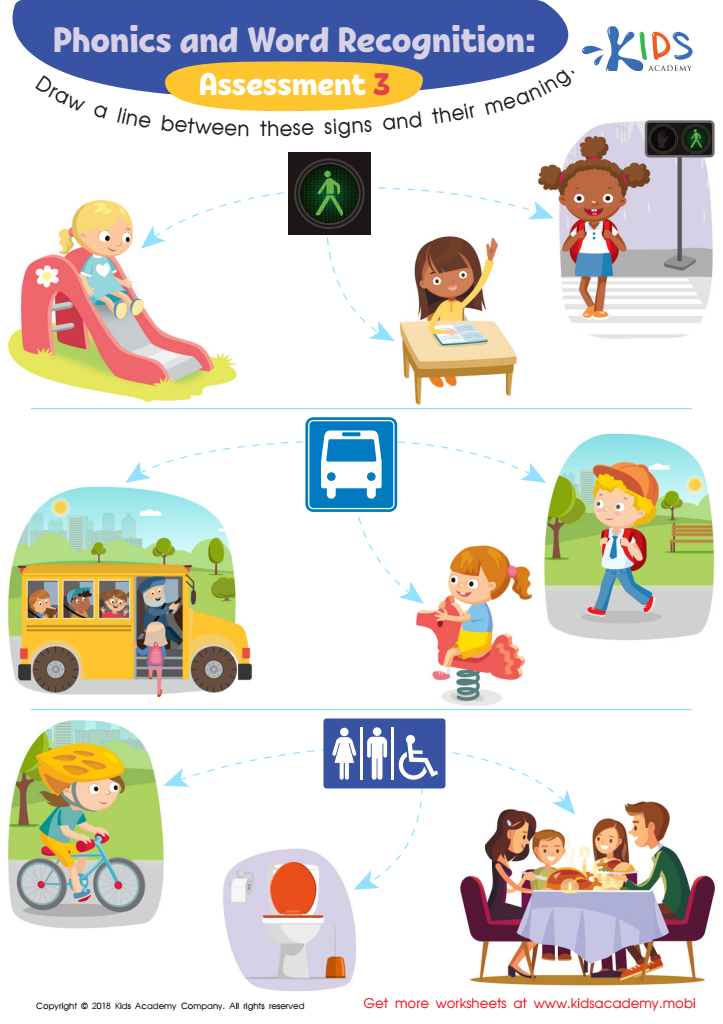
Phonological Awareness: Assessment 3 ELA Worksheet
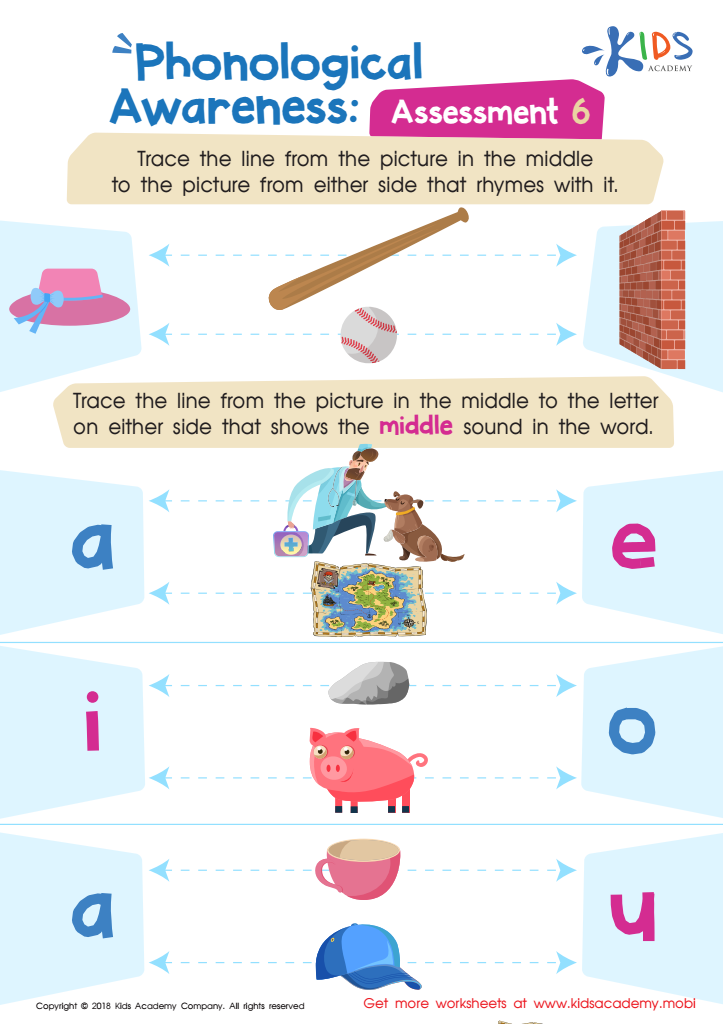
Phonological Awareness: Assessment 6 Worksheet
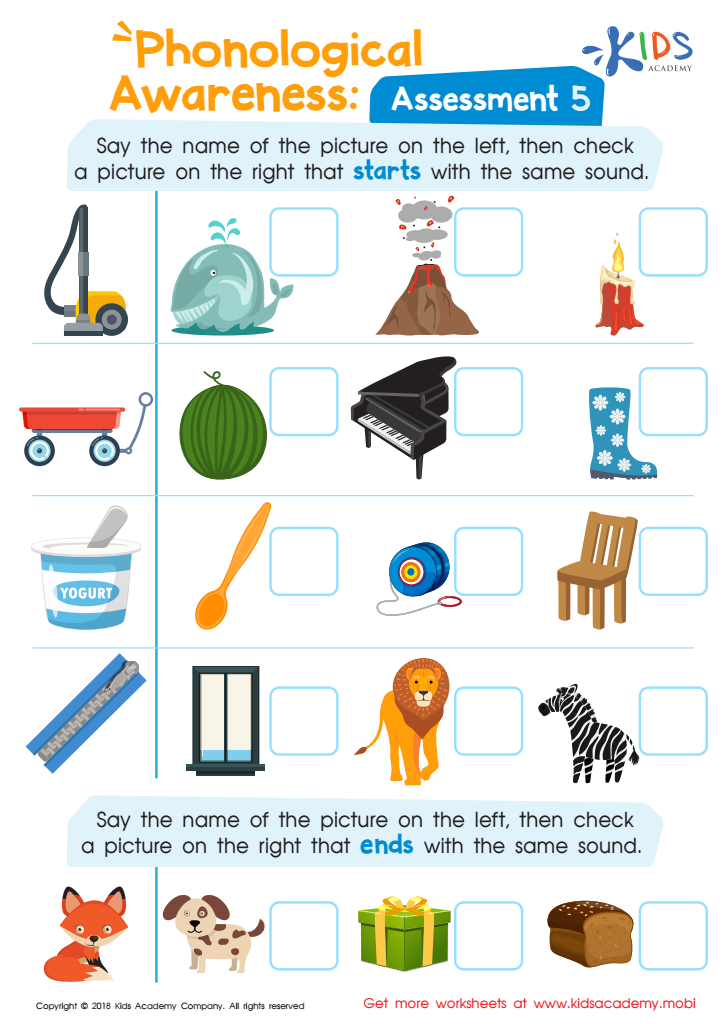
Phonological Awareness: Assessment 5 Worksheet
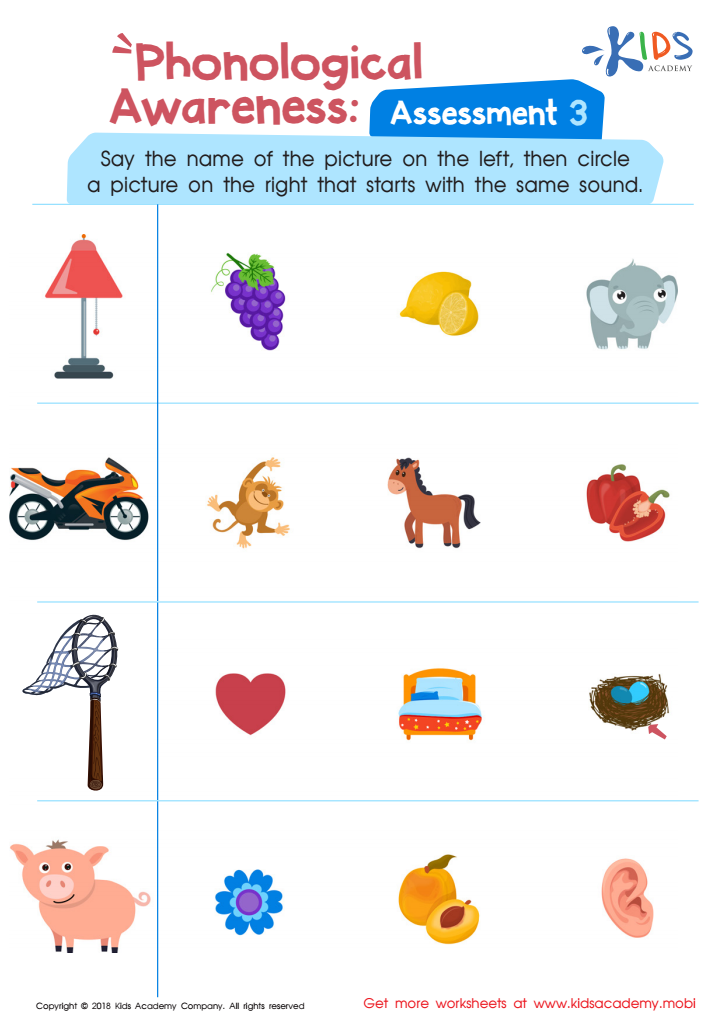
Phonological Awareness: Assessment 3 Worksheet
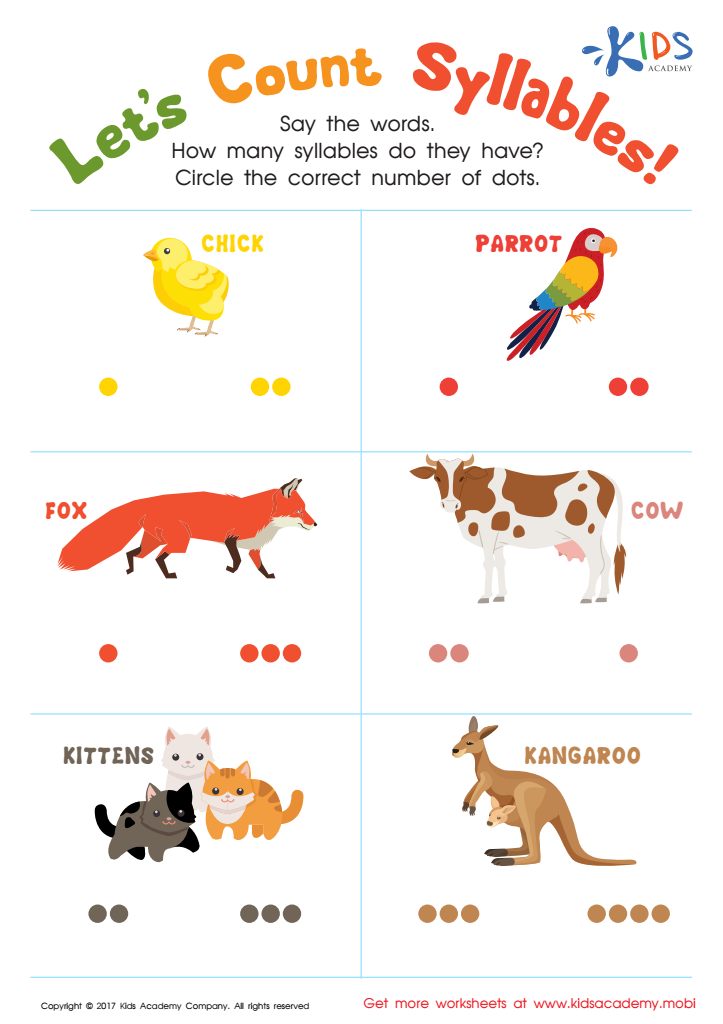
Lets Count Syllables Worksheet



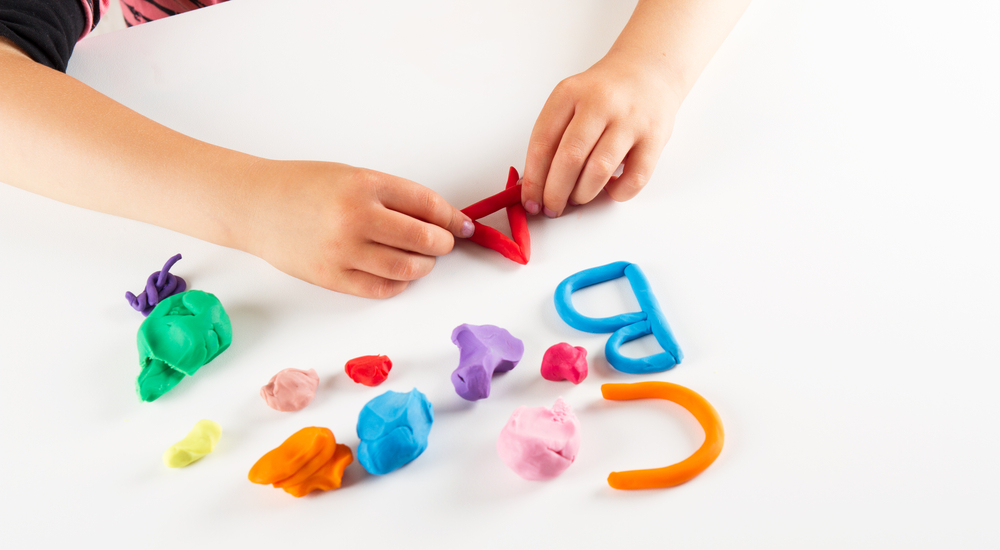


Phonological awareness is a crucial early literacy skill that involves recognizing and manipulating the sounds of spoken language. For 3-year-olds, developing this awareness lays the foundation for future reading and writing success. Parents and teachers should care about phonological awareness for several reasons.
First, it fosters essential listening skills. Children learn to distinguish between different sounds, which is vital for language development. By engaging in activities that promote phonological awareness, such as rhyming games or sound clapping, children can enhance these listening abilities.
Second, phonological awareness helps improve vocabulary. When children learn to manipulate sounds, they become more curious about words, leading to an expanded lexicon that supports both oral and written communication.
Additionally, early exposure to phonological concepts correlates with future academic achievement. Research indicates that children with a strong phonological awareness are more likely to become proficient readers, reducing their chances of encountering difficulties later in their educational journey.
Lastly, focused phonological activities can be fun! They encourage interactive play, strengthening parent-child and teacher-student relationships. In conclusion, prioritizing phonological awareness in early childhood is vital for building language skills and fostering a love for learning.








