Following instructions Addition & Subtraction Worksheets for 3-Year-Olds
5 filtered results
-
From - To
Discover our engaging "Following Instructions Addition & Subtraction Worksheets for 3-Year-Olds" designed to help young learners grasp basic math concepts. These worksheets not only introduce simple addition and subtraction but also emphasize the importance of following instructions. As children navigate fun exercises, they enhance their comprehension skills, listening abilities, and critical thinking. With colorful visuals and interactive prompts, our worksheets provide a playful way to foster early math skills while promoting a solid understanding of directions. Ideal for parents and educators alike, these resources make learning enjoyable and effective. Start your child's math journey today!
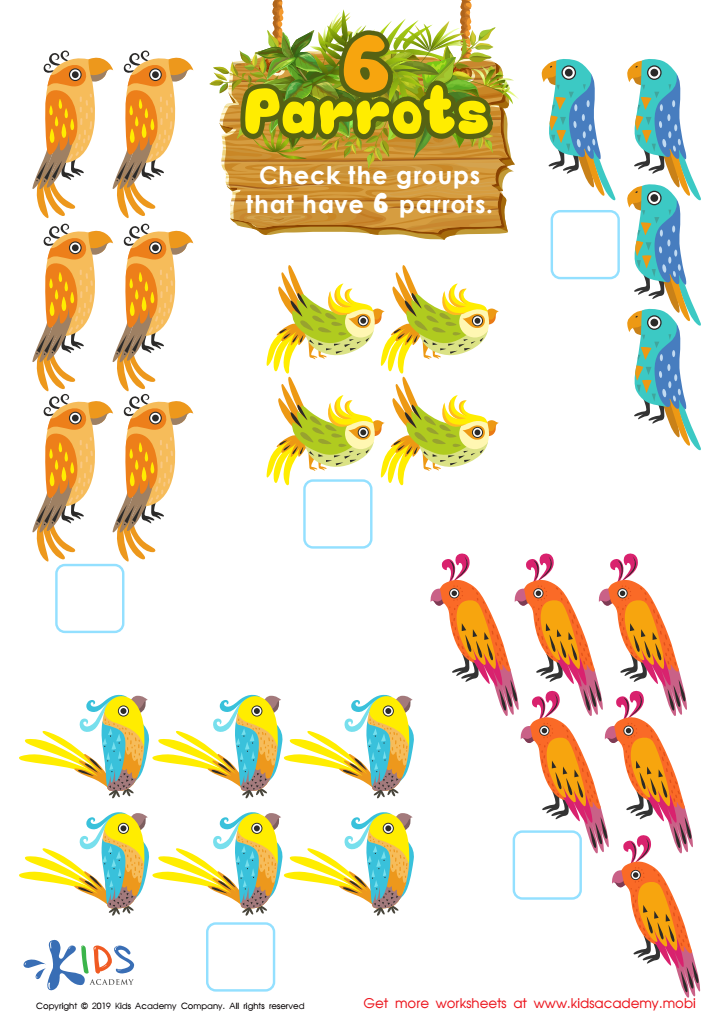
6 Parrots Worksheet
 Assign to My Students
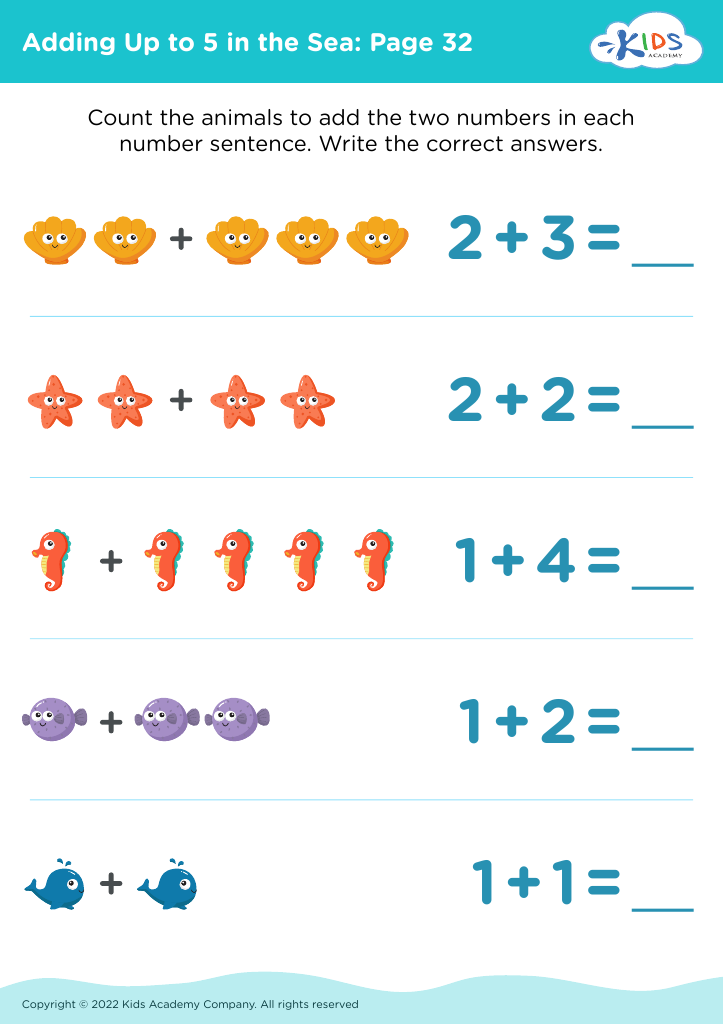
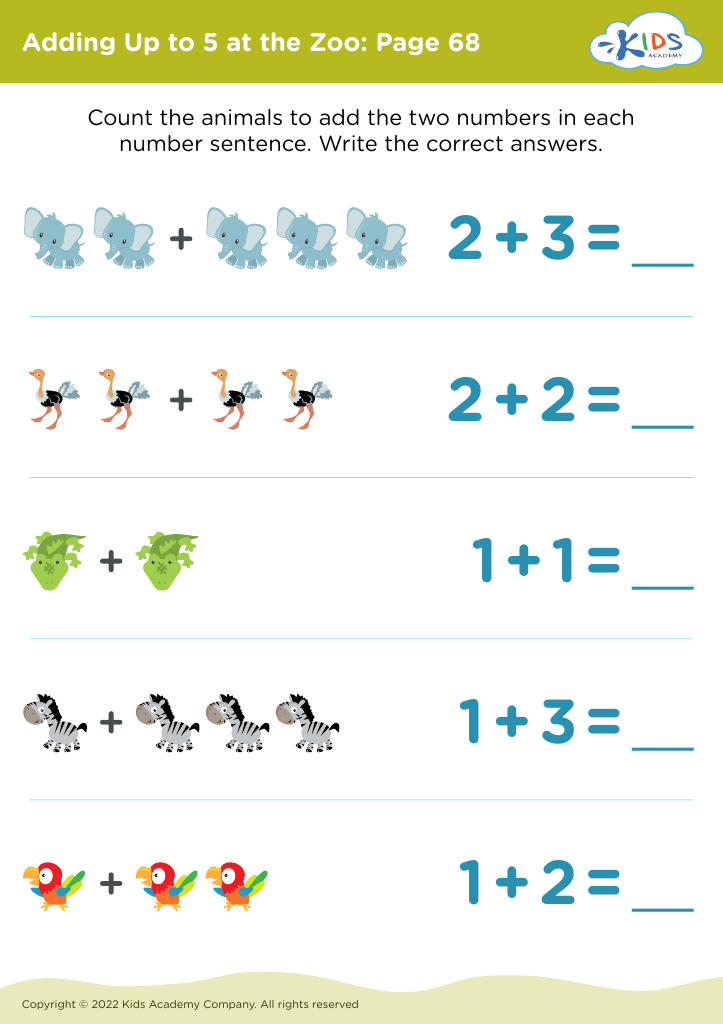
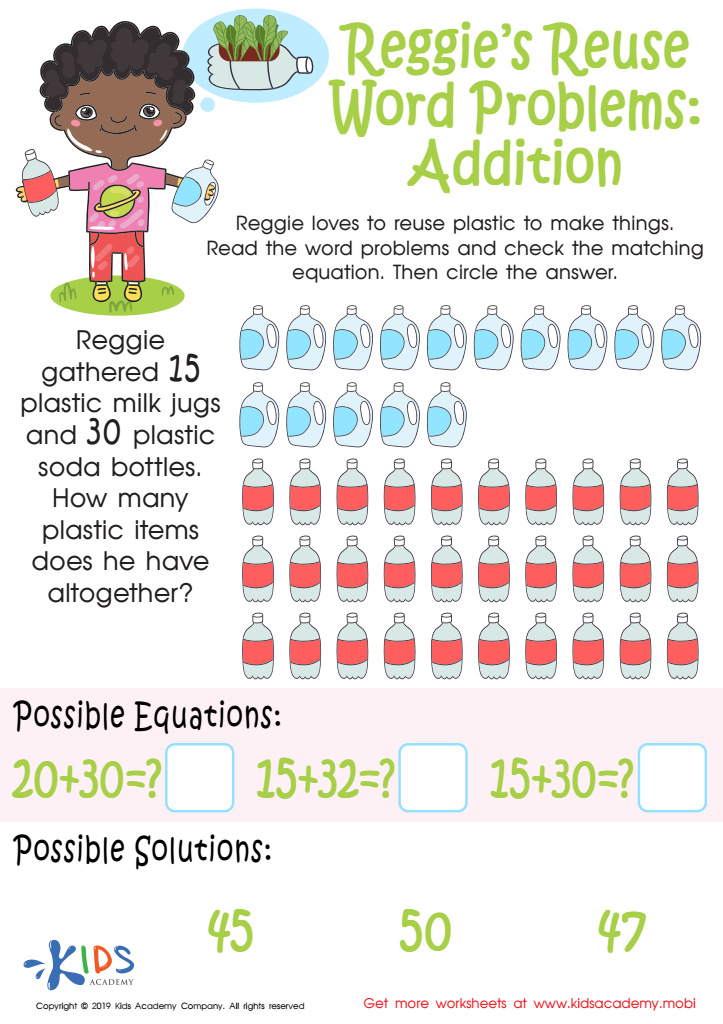
Reggie's Reuse Word Problems: Addition Worksheet
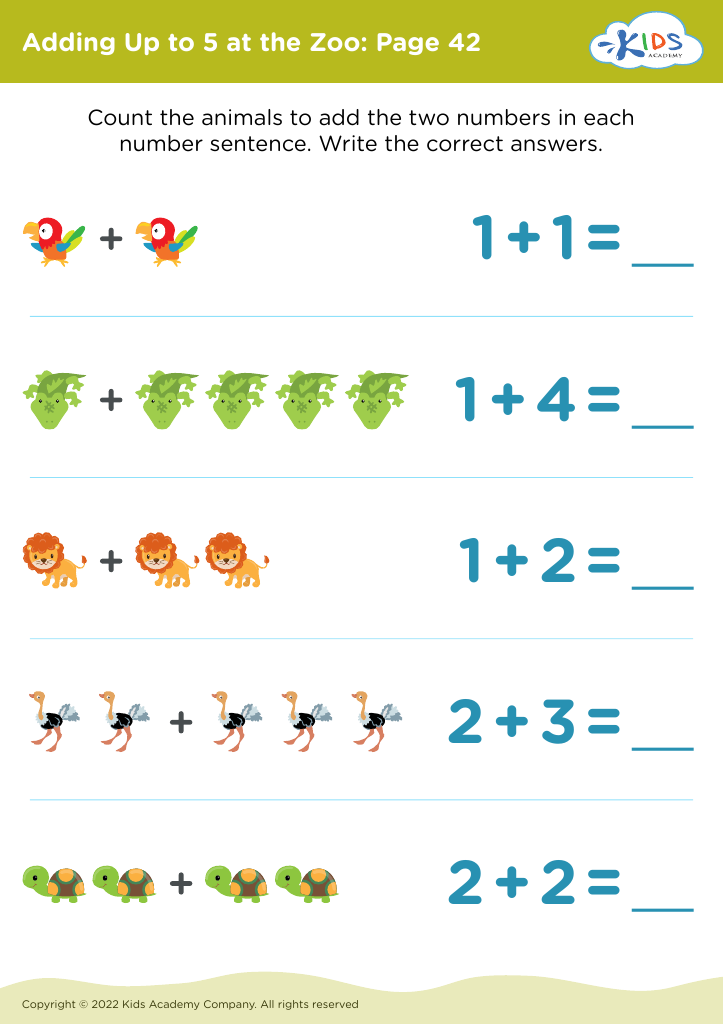








Parent and teacher involvement in early mathematical skills, particularly following instructions for addition and subtraction, is crucial for three-year-olds. At this tender age, children are like sponges, eager to absorb new concepts, and foundational math skills set the stage for future academic success. When young children follow simple instructions related to addition and subtraction, they develop critical cognitive skills, including problem-solving and logical reasoning.
Additionally, engaging in these activities fosters their language skills as they learn to understand and express numerical concepts. Following instructions in a playful manner makes learning enjoyable, helping children develop a positive attitude towards math, which can carry into their later years. Moreover, practicing these skills reinforces number recognition, counting, and fine motor skills through hands-on activities, such as using toys or fingers to illustrate problems.
By integrating such activities into playtime, parents and teachers can reinforce the importance of following directions, discipline, and patience. This helps children learn to focus and work collaboratively. Overall, emphasizing addition and subtraction is advantageous not only for cognitive development but also for emotional and social growth, making it essential for parents and teachers to prioritize these learning experiences.








