Basic geometry understanding Geometry Worksheets for 3-Year-Olds
3 filtered results
-
From - To
Introduce your little ones to the world of shapes with our Basic Geometry Understanding Worksheets for 3-Year-Olds! Tailored specifically for preschoolers, these engaging worksheets lay the foundation for essential geometrical concepts through fun activities. Kids will explore circles, squares, triangles, and more while developing critical thinking and motor skills. Our interactive approach encourages learning through play, ensuring that children stay curious about their surroundings. Ideal for classroom settings or at-home activities, these worksheets promote cognitive growth while keeping kids entertained. Start your child's journey into geometry and watch them discover the shapes that form our world!
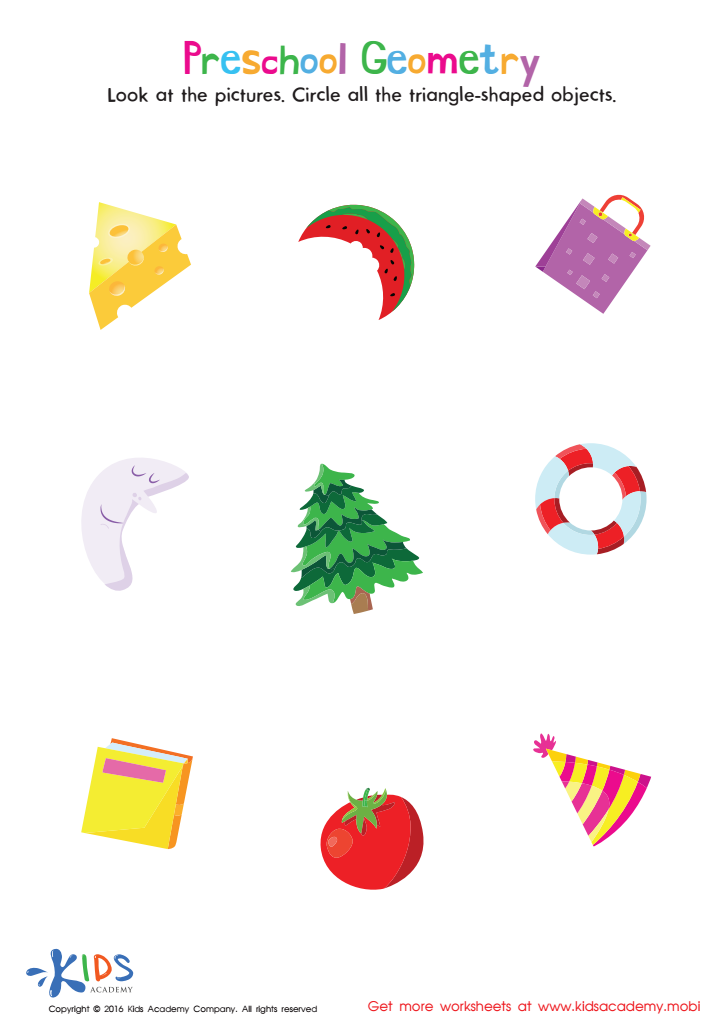
 Assign to My Students











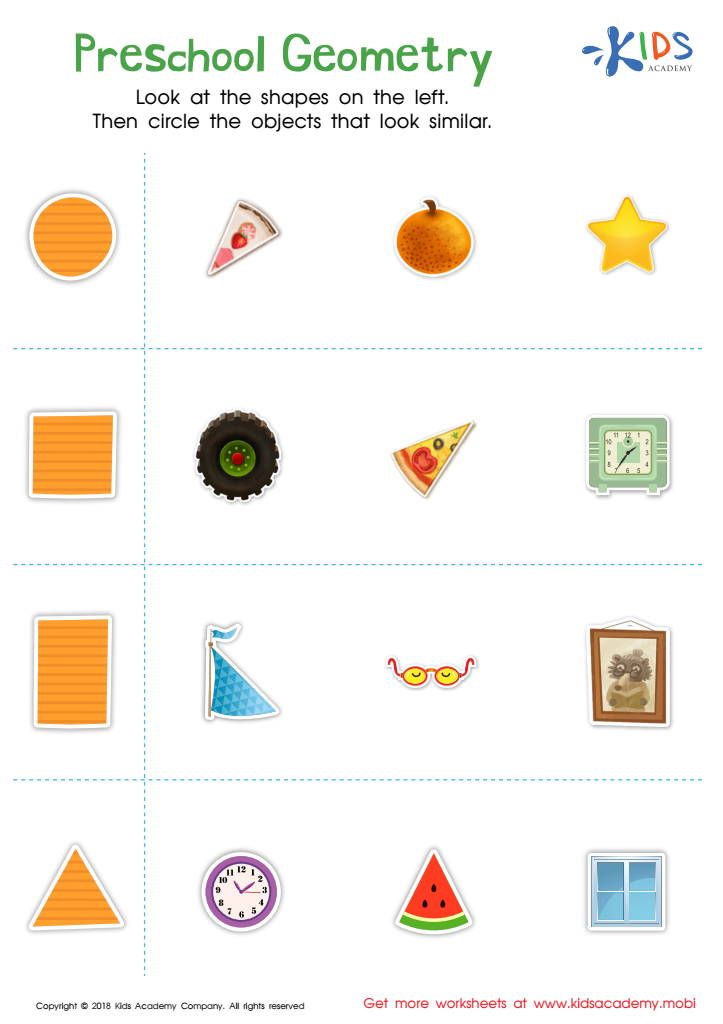
Preschool Geometry Worksheet
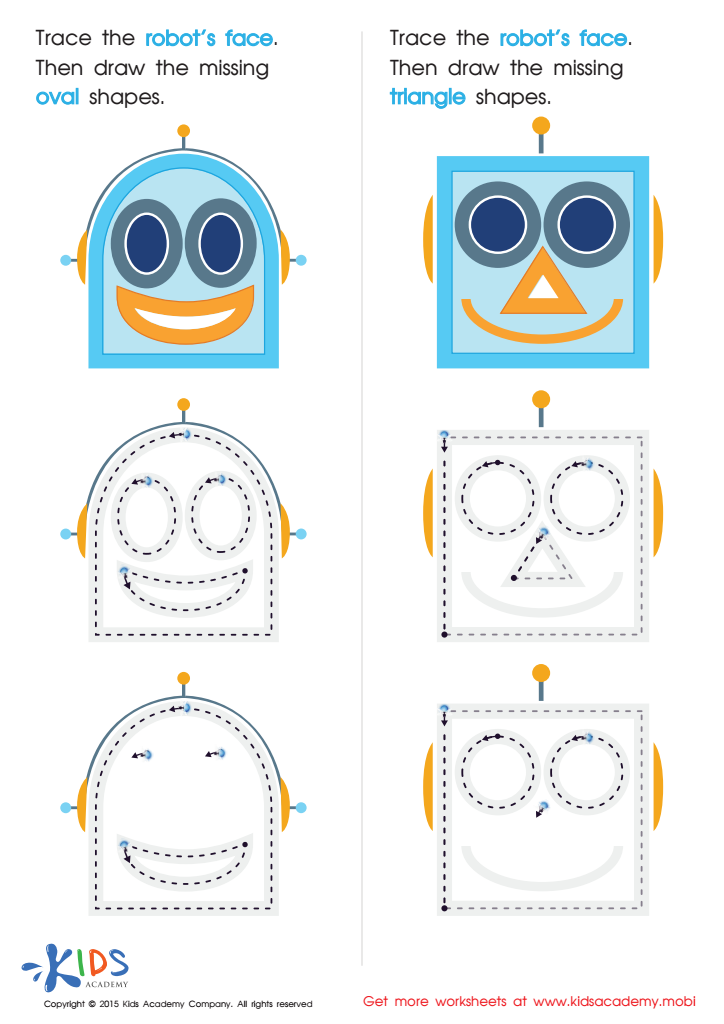
Drawing Ovals And Triangles with Fun Printable








Understanding basic geometry lays the foundation for critical cognitive and spatial skills in young children. For 3-year-olds, learning about shapes, sizes, and spatial relationships fosters curiosity while enhancing their observational skills. As children explore the world through shape recognition, they develop the ability to categorize and connect their experiences to the mathematical concepts they will encounter later in school.
Parents and teachers should care about this foundational learning as it nurtures early math skills, boosting confidence and problem-solving abilities. Engaging little ones through playful activities—like building blocks or shape sorting—makes learning enjoyable while reinforcing concepts in a hands-on manner. The language of geometry, including terms like “square,” “triangle,” and “circle,” further enriches vocabulary and encourages communication skills.
Moreover, early exposure to geometry aids in developing critical thinking and reasoning abilities, which are essential as children progress into more complex mathematical ideas. Understanding geometry also links to spatial awareness, necessary for everyday tasks, such as navigating their environment or understanding maps later in life. By prioritizing basic geometric knowledge, parents and teachers empower children with vital tools that support cognitive development and lifelong learning.








