
Money counting skills Math Worksheets for 3-Year-Olds
3 filtered results
Difficulty Level
Grade
Age
-
From - To
Subject
Activity
Standards
Introduce your 3-year-old to essential money counting skills with our engaging math worksheets! Designed to captivate young learners, these printable activities from Kids Academy help preschoolers identify coins, understand values, and practice basic math concepts in a fun way. Our vibrant and interactive worksheets foster early numeracy skills, build a strong foundation for financial literacy, and enhance fine motor skills. Perfect for parents and educators, these resources offer a playful approach to learning about currency. Start your child’s money counting journey today and watch their confidence in math grow! Download now and inspire a lifelong love of math.
Favorites
With answer key
Interactive
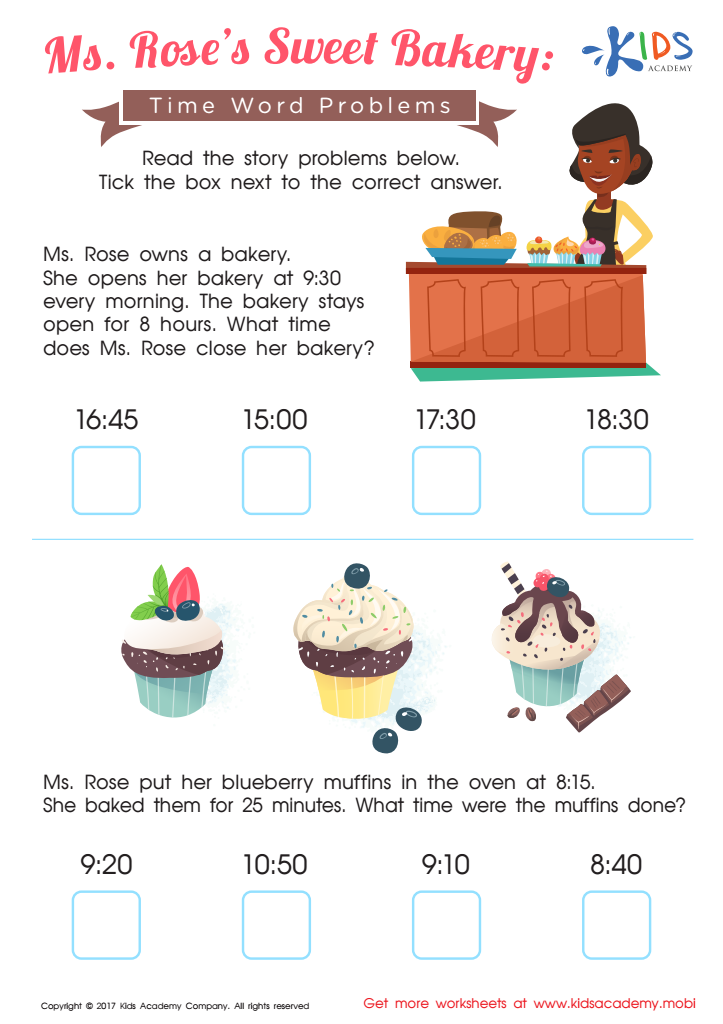
Ms. Roseв's Sweet Bakery Time Worksheet
Help your child understand the 24-hour clock using this fascinating telling time word problems worksheet: Sweet Bakery! Widely known as "military time", this skill isn't taught in school but is important for your kid to master.
 Assign to My Students
Ms. Roseв's Sweet Bakery Time Worksheet
Worksheet
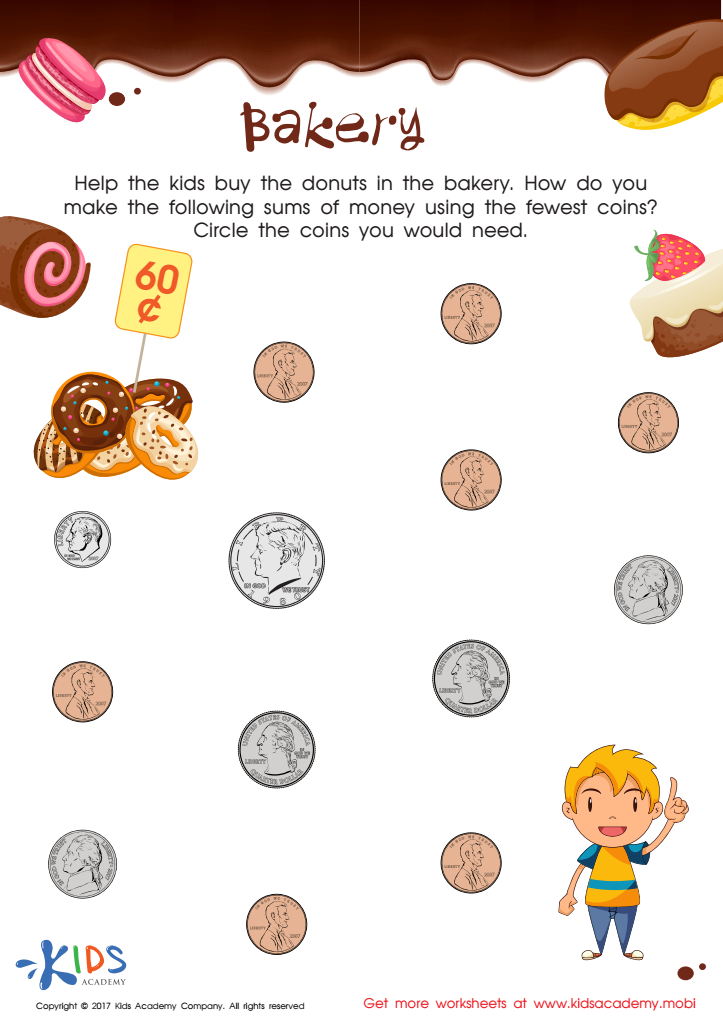
Counting Coins Worksheet
It will challenge them to spend a given amount using the least coins possible. Perfect for 2nd grade.
Help your child learn to count coins with this fun bakery-themed worksheet. It's perfect for 2nd graders and will challenge them to use the least coins possible to spend a set amount. Develop a valuable life skill and have fun while doing it!
Counting Coins Worksheet
Worksheet
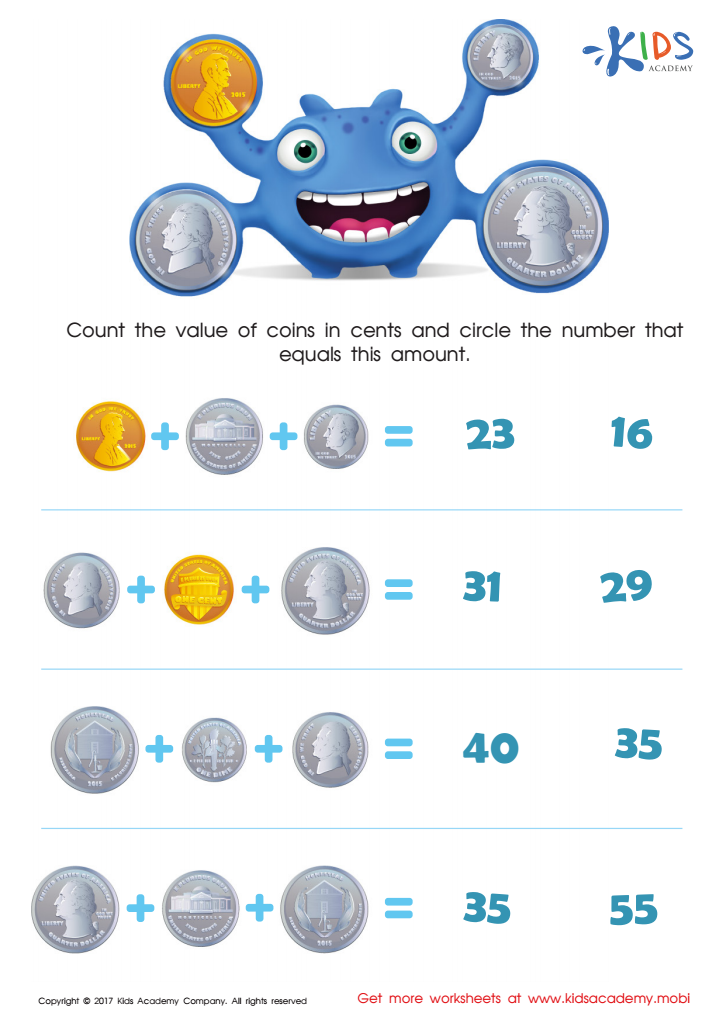
Counting the Coins Money Worksheet
Count coins quickly and work out sums in cents. Remember the value of each coin!
Counting the Coins Money Worksheet
Worksheet
Join Kids Academy for Free
Who is primarily going to use this learning content?




.jpg)



Money counting skills are essential for 3-year-olds because they lay the foundation for both mathematical proficiency and financial literacy. Introducing these concepts early helps children develop an understanding of numbers, values, and the basics of commerce — critical skills for future budgeting and financial decisions. For instance, by interacting with coins and notes, young children begin to recognize different denominations and their values, strengthening their number sense and cognitive abilities.
Moreover, learning to count money enhances fine motor skills and cognitive development. Handling coins requires coordination and precision, while distinguishing between different amounts fosters critical thinking and problem-solving capabilities. These skills are not just academic; they enable practical everyday chores and decision-making processes.
From a socio-emotional perspective, early money counting can instill a sense of responsibility and independence. Children gain a basic understanding of how money is earned, saved, and spent, fostering prudent financial habits and deferred gratification. Additionally, through games and play that involve money counting, children can develop social skills like sharing and cooperation.
In essence, by caring about money counting skills for 3-year-olds, parents and teachers invest in the child's holistic development—mathematical competence, cognitive skills, motor coordination, and essential life skills for responsible financial behavior.








