Discover our engaging "Understanding Quantity Math Worksheets" designed specifically for 3-year-olds! These worksheets offer a fun and interactive way to help young learners grasp basic concepts of quantity, fostering essential early math skills. Through colorful illustrations and approachable activities, children will explore counting, comparing amounts, and recognizing differences in quantity. Crafted to align with developmental milestones, our worksheets promote essential cognitive and fine motor skills while encouraging a love for learning. Parents and educators will appreciate how these resources support hands-on practice across various settings. Start building a strong mathematical foundation for your little one today!

Check out this FREE Trial Lesson on Math for age 3!

Counting Word Problems

Favorites
With answer key
Interactive
  • 3
  • Understanding quantity
  • Math
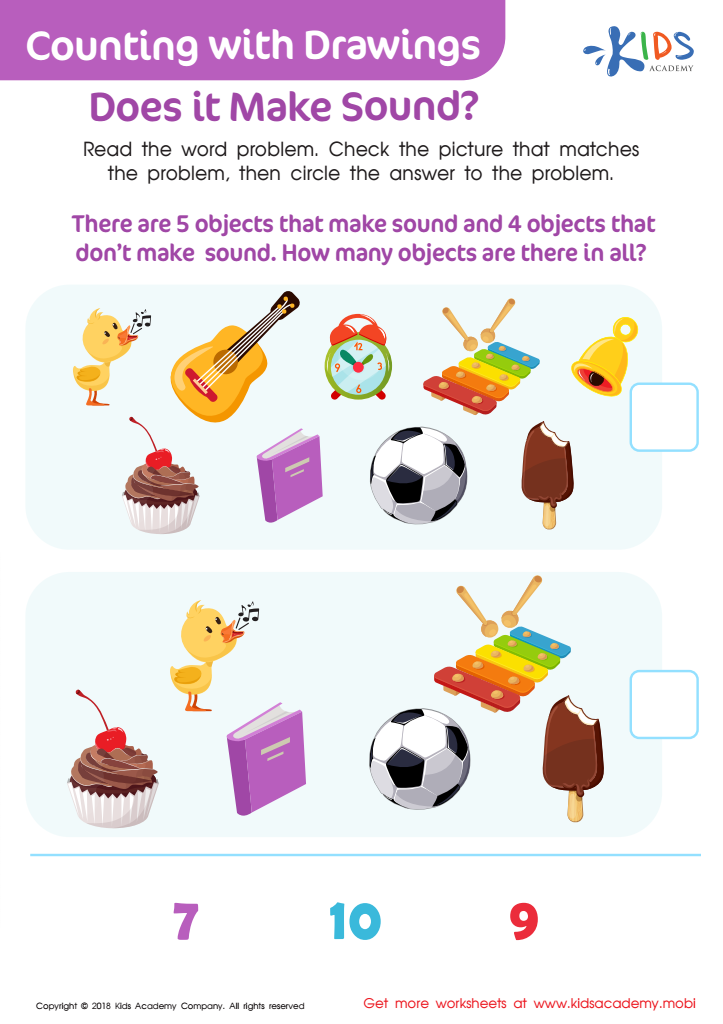
Counting With Drawings. Does It Make Sound? Worksheet

Counting With Drawings. Does It Make Sound? Worksheet

Introduce word problems with this simple worksheet. Ask your students to name the objects pictured, then read the word problem and ask them to circle the answer. With practice, it'll help them scale this challenging area of math.
Counting With Drawings. Does It Make Sound? Worksheet
Worksheet
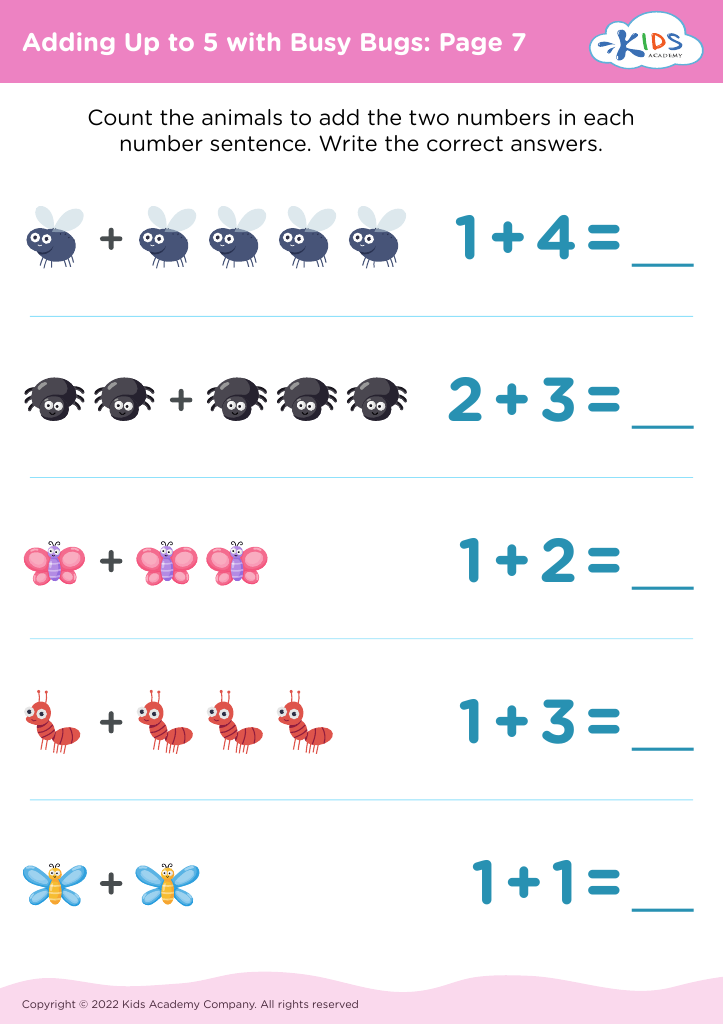
Adding Up to 5 with Busy Bugs: Page 7
Worksheet
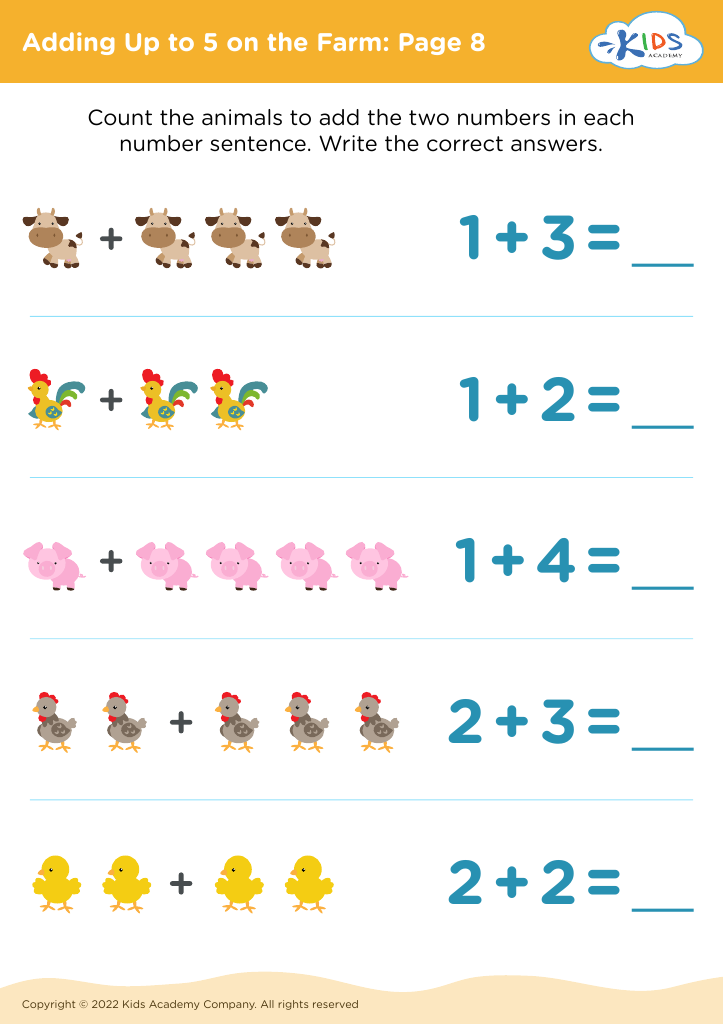
Adding Up to 5 on the Farm: Page 8
Worksheet
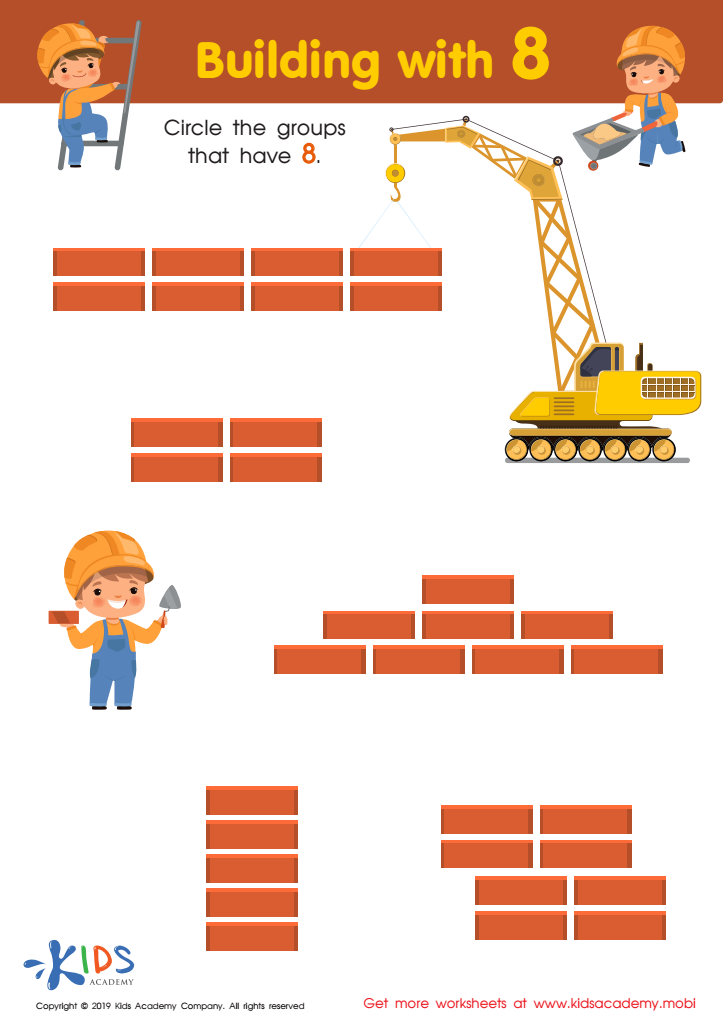
Building with 8 Worksheet

Building with 8 Worksheet

Your child can learn more with this simple exercise! Get them counting and help them circle the groups of 8 bricks. It's a great addition to their post-school lessons, supporting their counting skills. Plus, it's a fun way to learn!
Building with 8 Worksheet
Worksheet
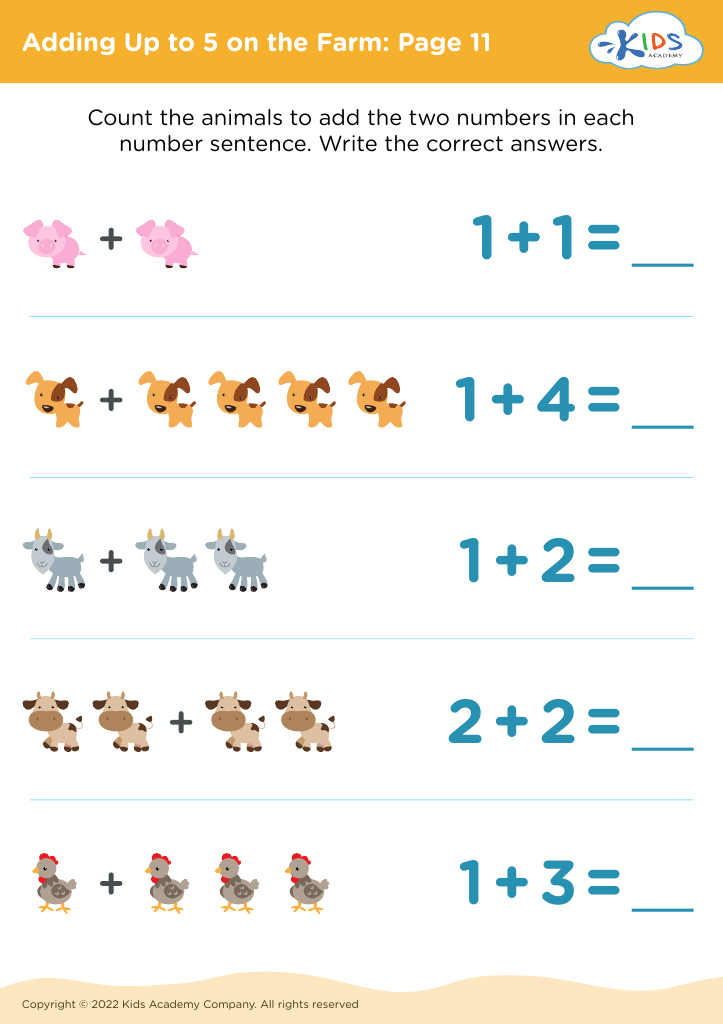
Adding Up to 5 on the Farm: Page 11
Worksheet
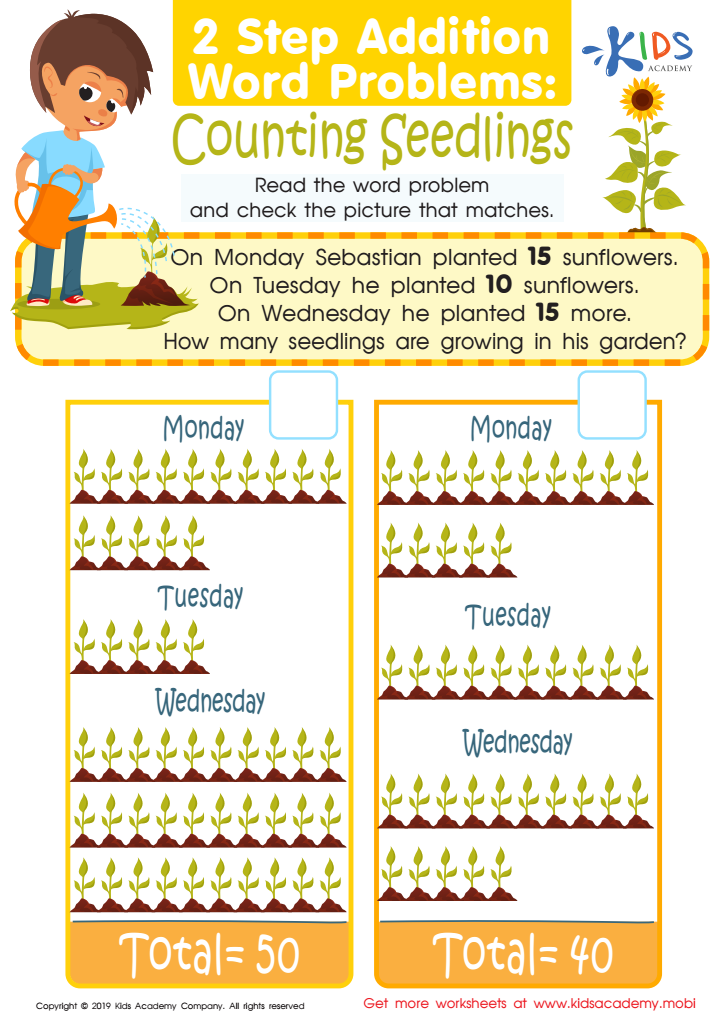
Counting Seedlings Worksheet
Counting Seedlings Worksheet
Understanding math word problems is key. Multiple steps can prove challenging - this free worksheet provides one-to-one picture representation to help kids solve multi-step addition word problems. Strengthen addition skills by choosing the matching picture to the answer.
Counting Seedlings Worksheet
Worksheet
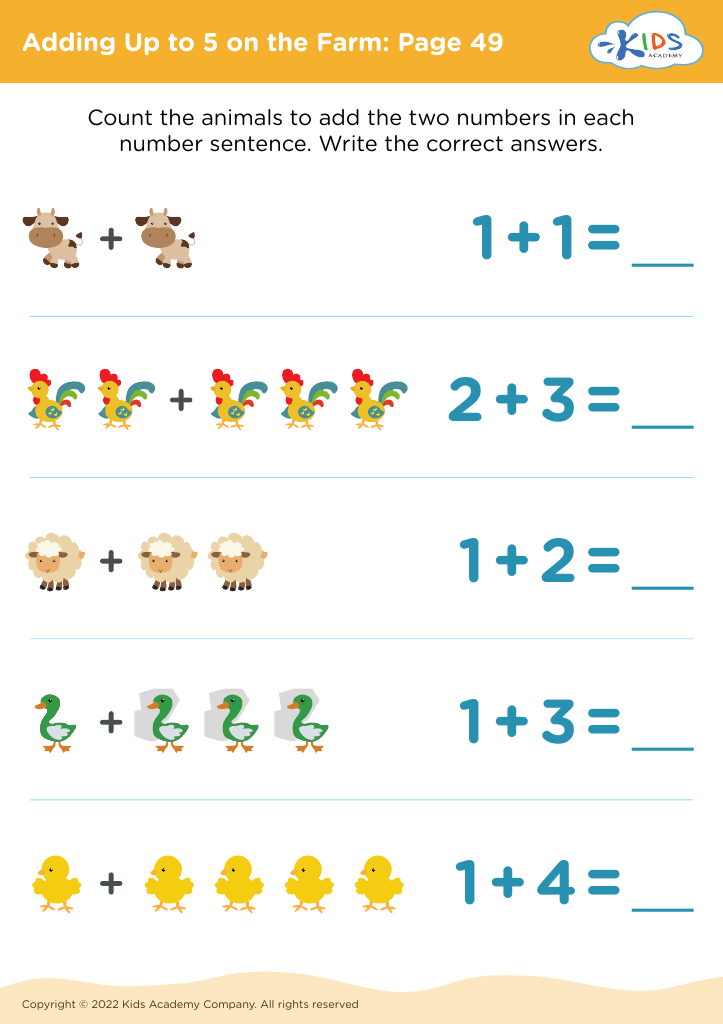
Adding Up to 5 on the Farm: Page 49
Worksheet
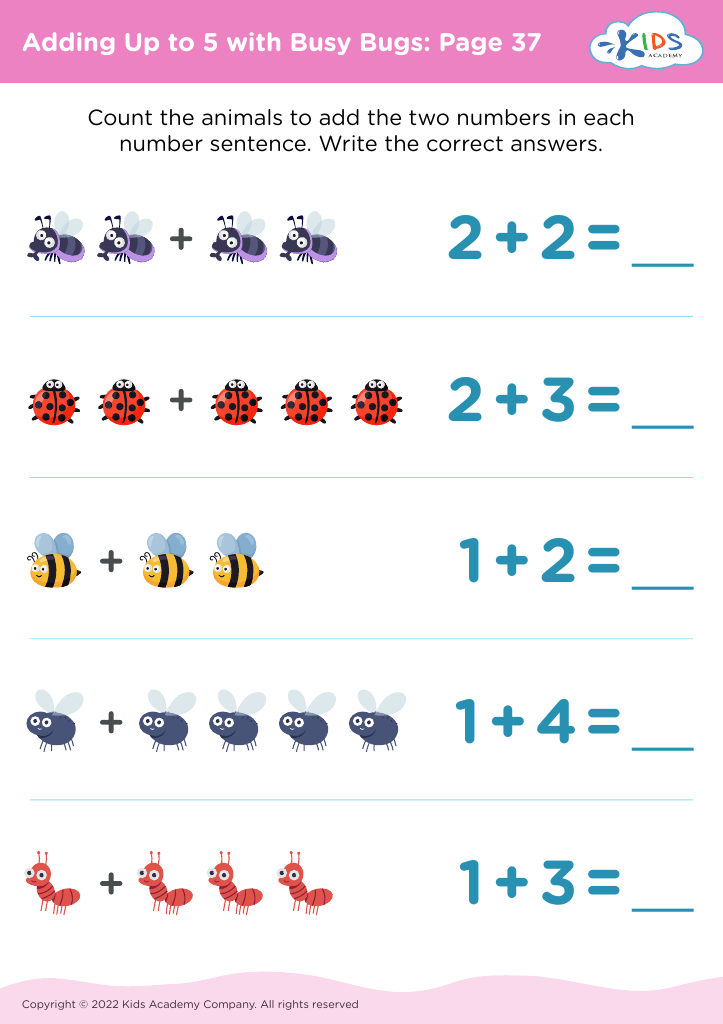
Adding Up to 5 with Busy Bugs: Page 37
Worksheet
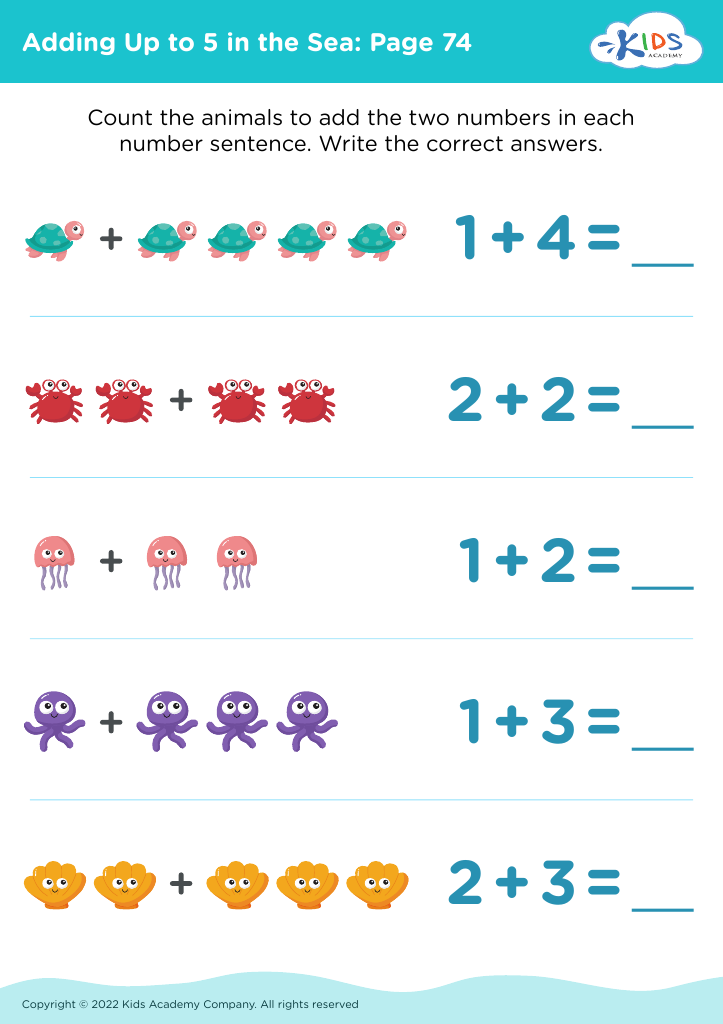
Adding Up to 5 in the Sea: Page 74
Worksheet
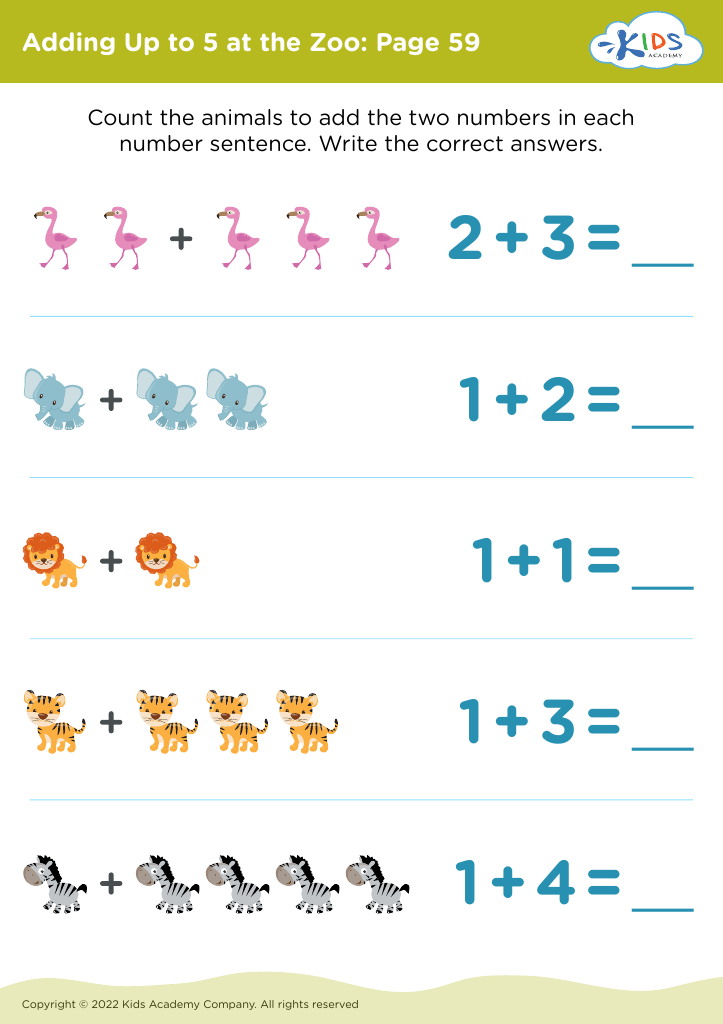
Adding Up to 5 at the Zoo: Page 59
Worksheet
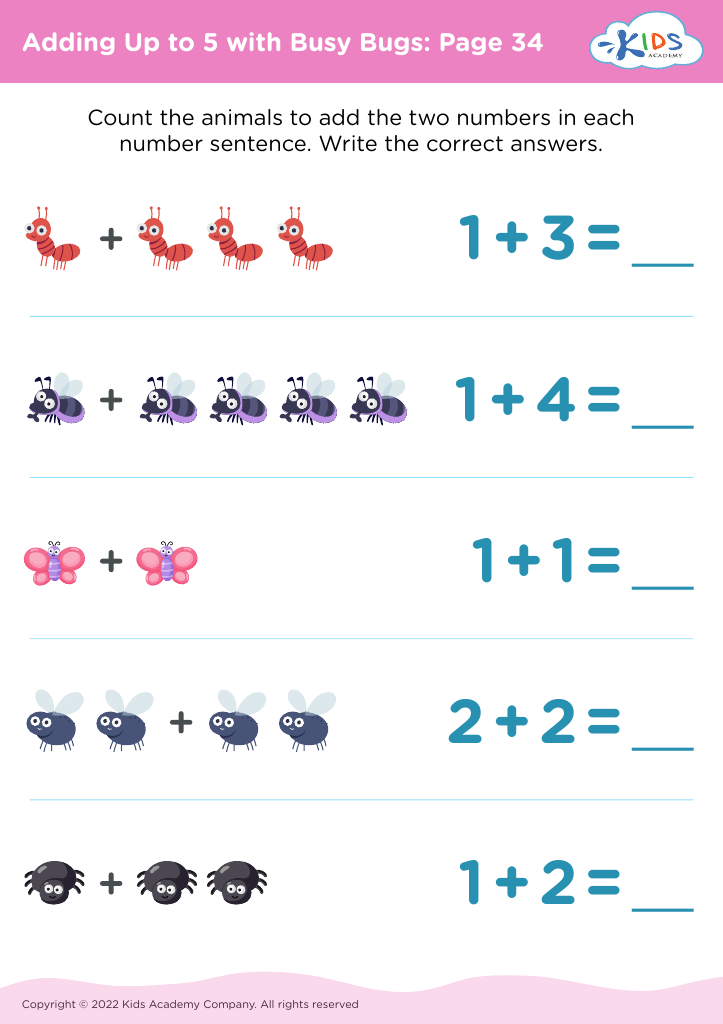
Adding Up to 5 with Busy Bugs: Page 34
Worksheet
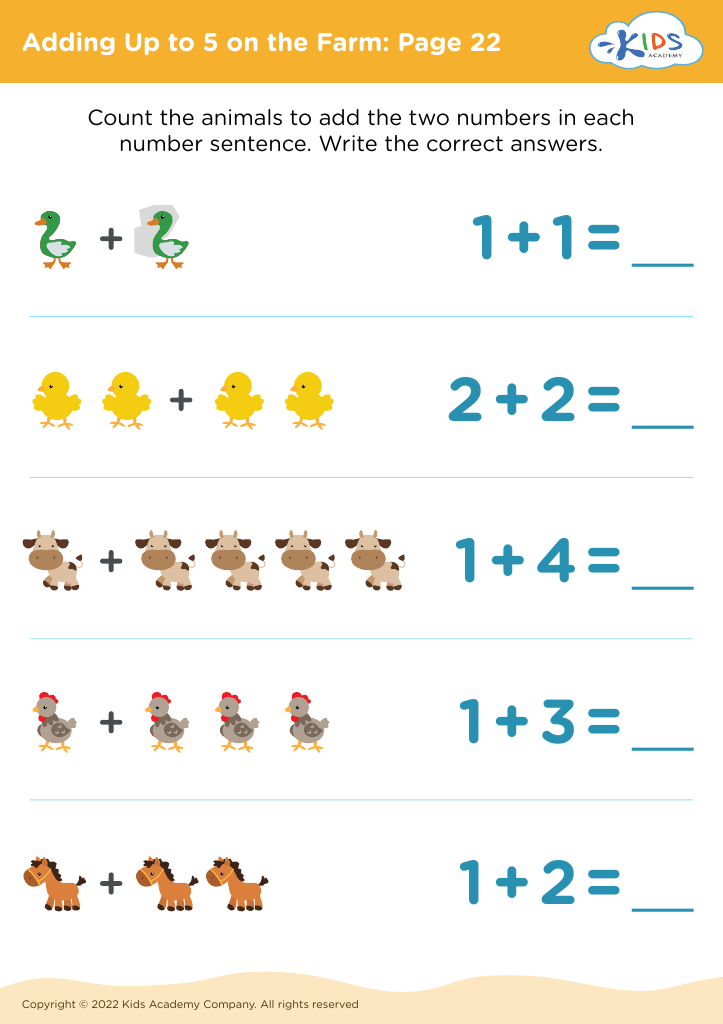
Adding Up to 5 on the Farm: Page 22
Worksheet
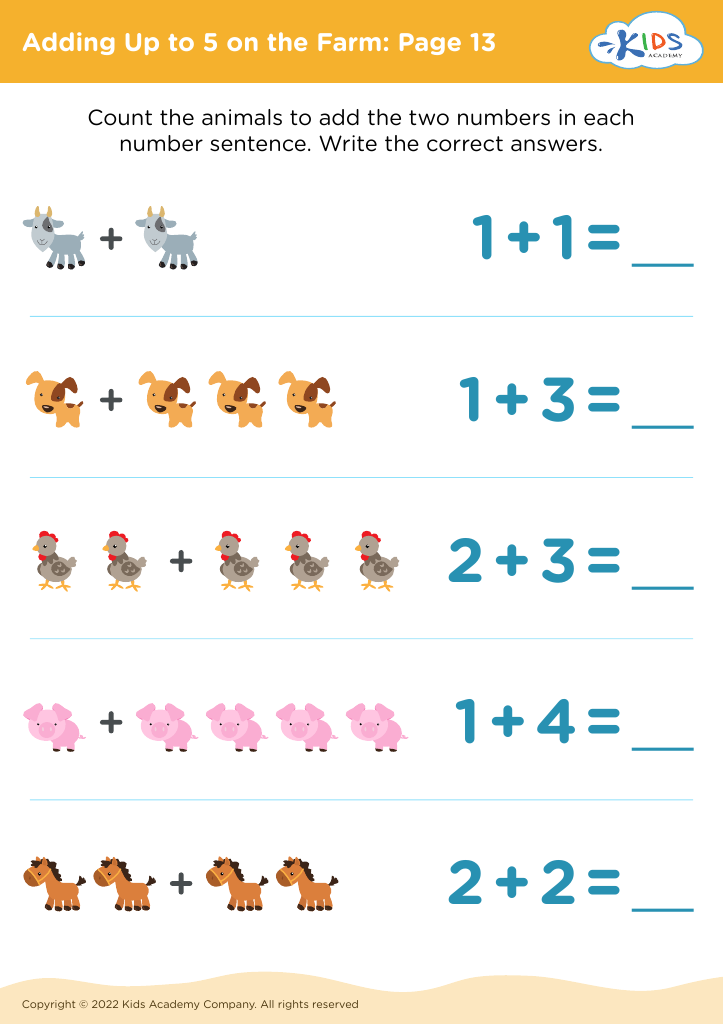
Adding Up to 5 on the Farm: Page 13
Worksheet
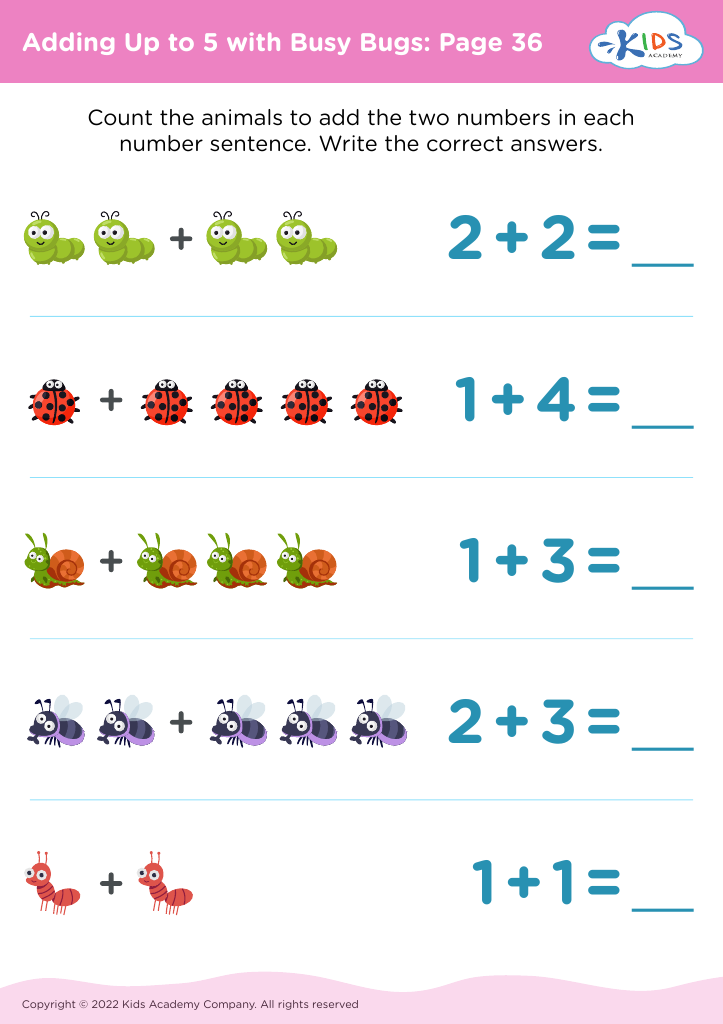
Adding Up to 5 with Busy Bugs: Page 36
Worksheet
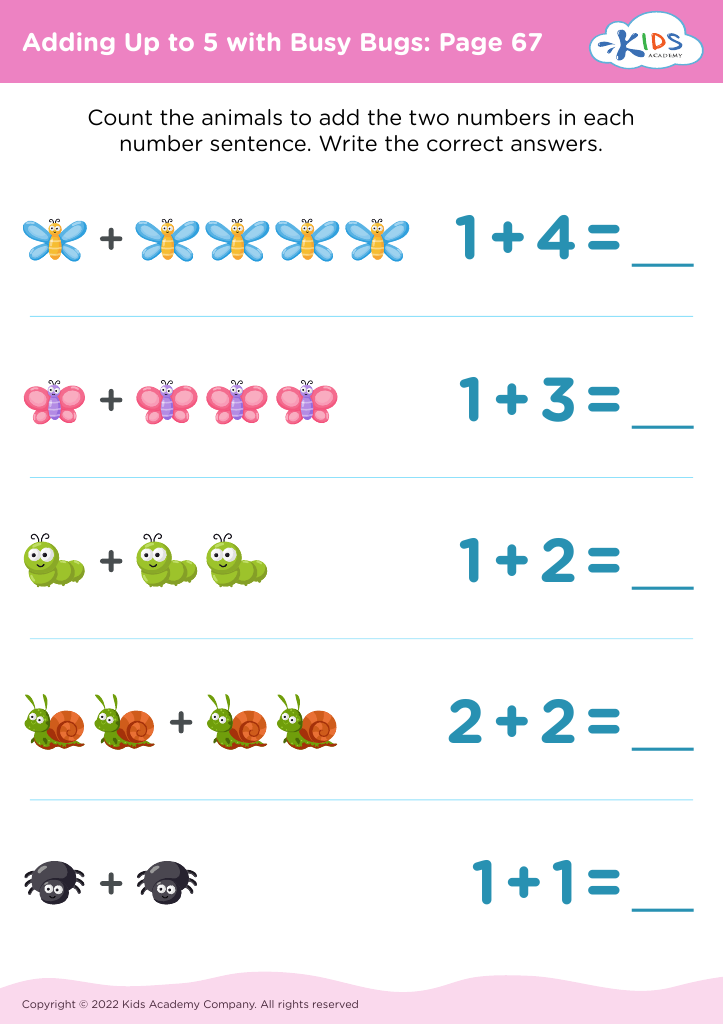
Adding Up to 5 with Busy Bugs: Page 67
Worksheet
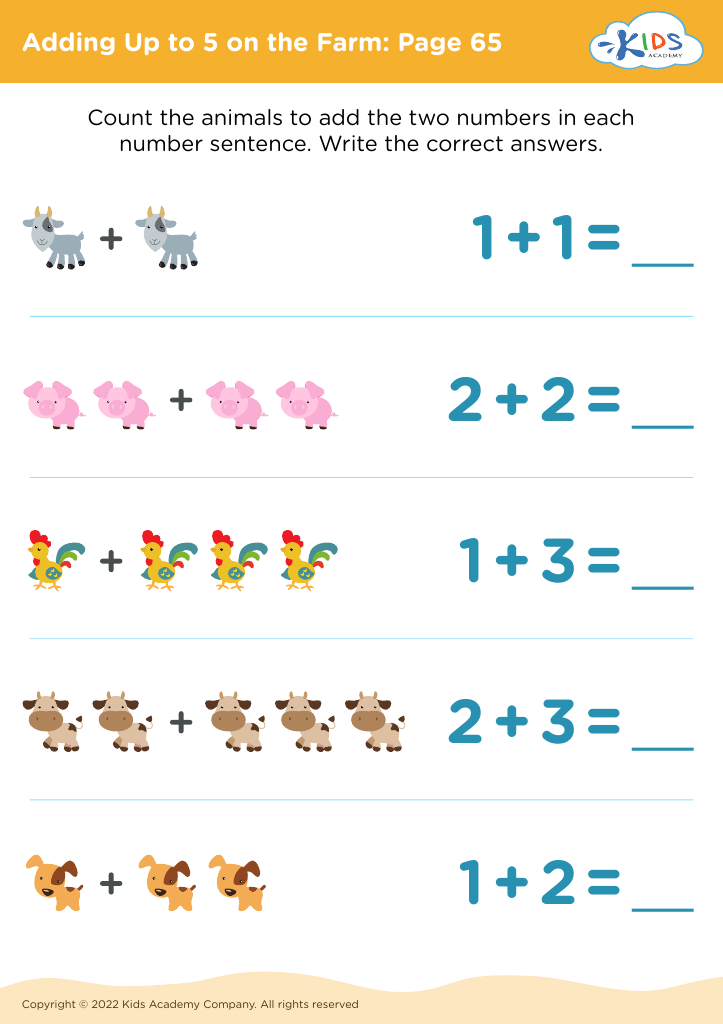
Adding Up to 5 on the Farm: Page 65
Worksheet
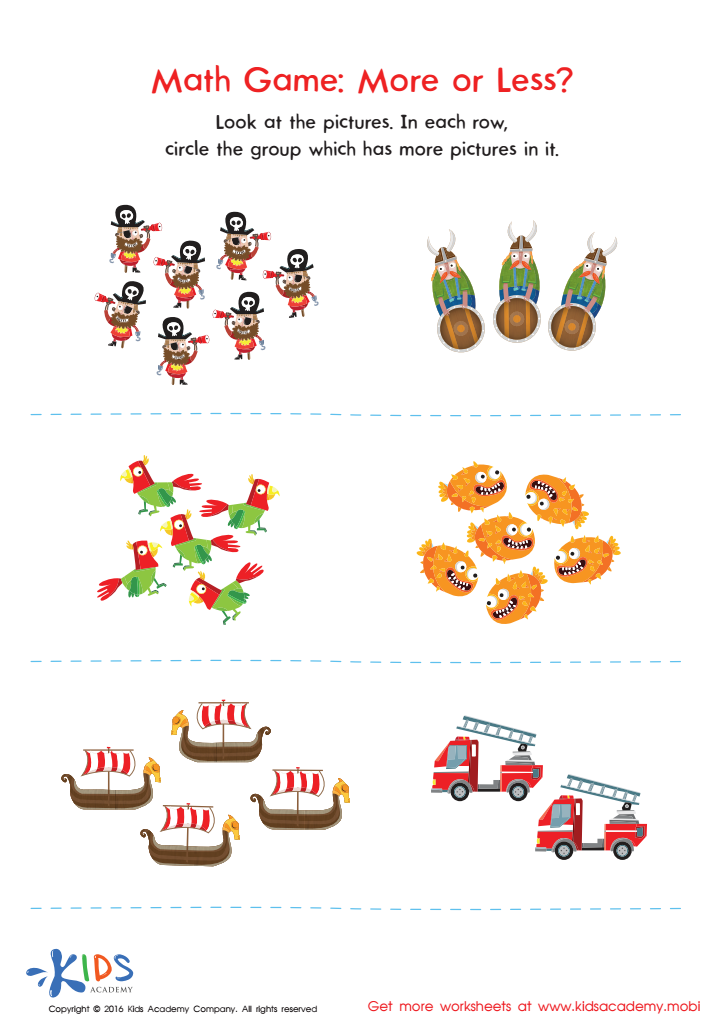
Free Printable More or Less Worksheets for Kindergarten

More or Less Worksheet

Counting and understanding quantity are essential skills for kindergarteners. Get your free printable more or less worksheet now!
More or Less Worksheet
Worksheet
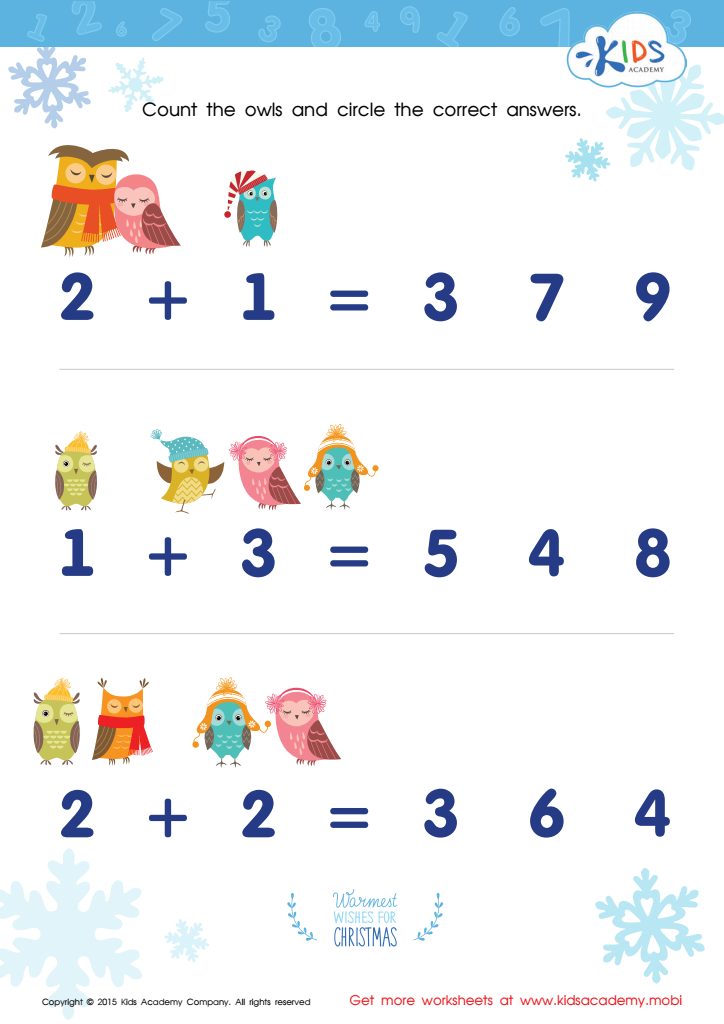
Math PDF Worksheet: Count Little Owls

Count Little Owls Worksheet

Math fun awaits! Count the cute little owls and practice adding single digits up to three indoors. Bright pictures help kids solve these simple problems. Get the free worksheets and enjoy the holiday season with Kids Academy!
Count Little Owls Worksheet
Worksheet
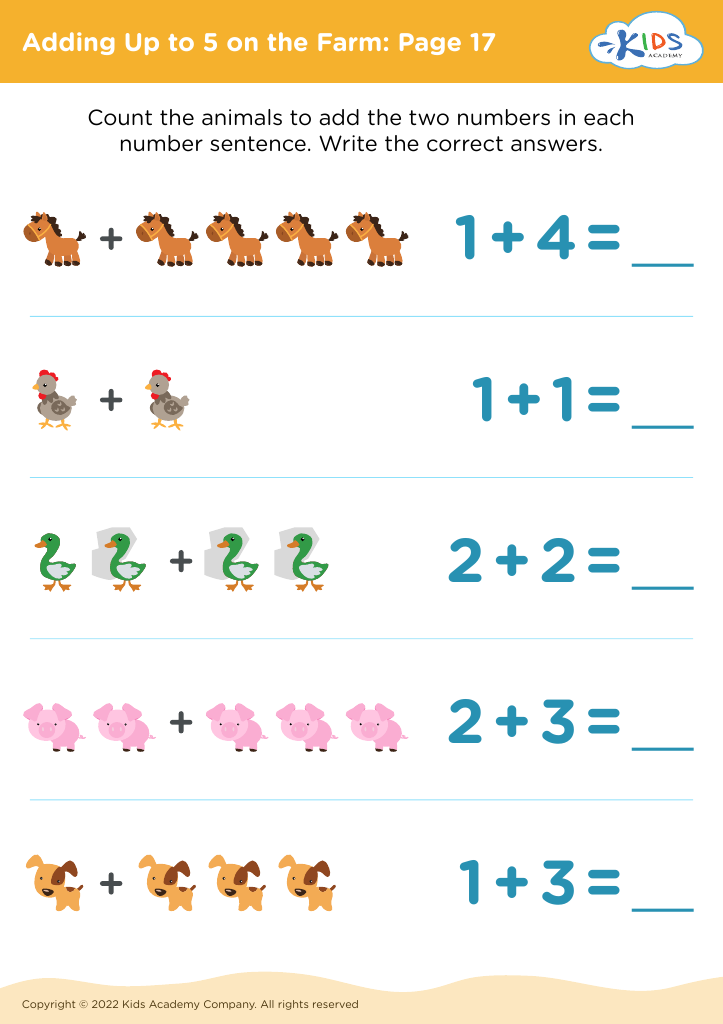
Adding Up to 5 on the Farm: Page 17
Worksheet
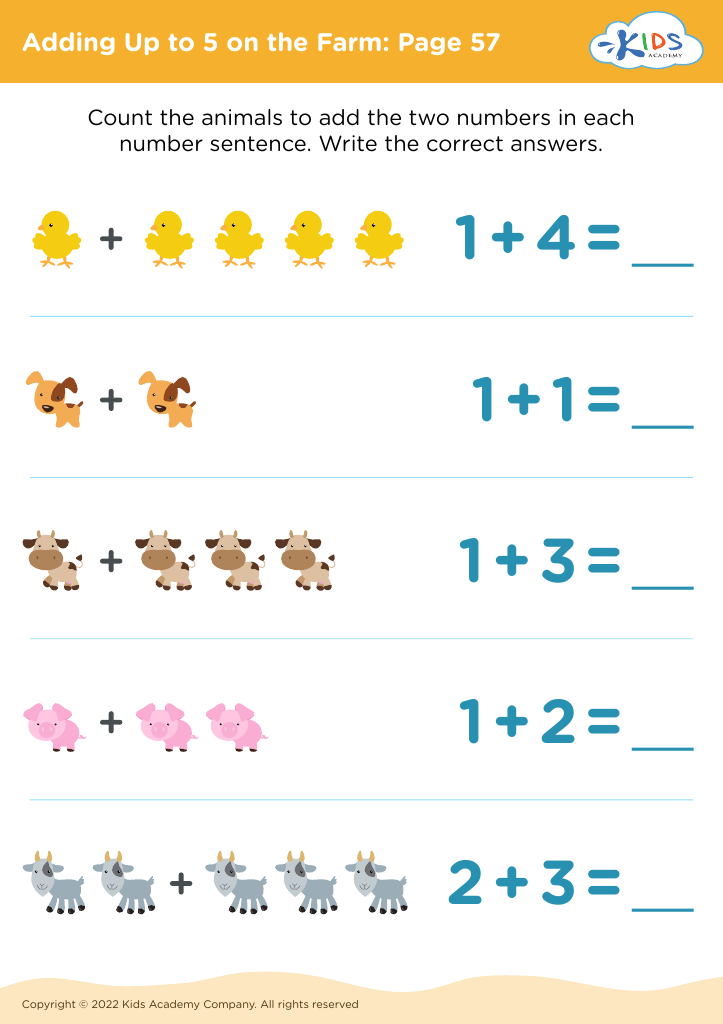
Adding Up to 5 on the Farm: Page 57
Worksheet
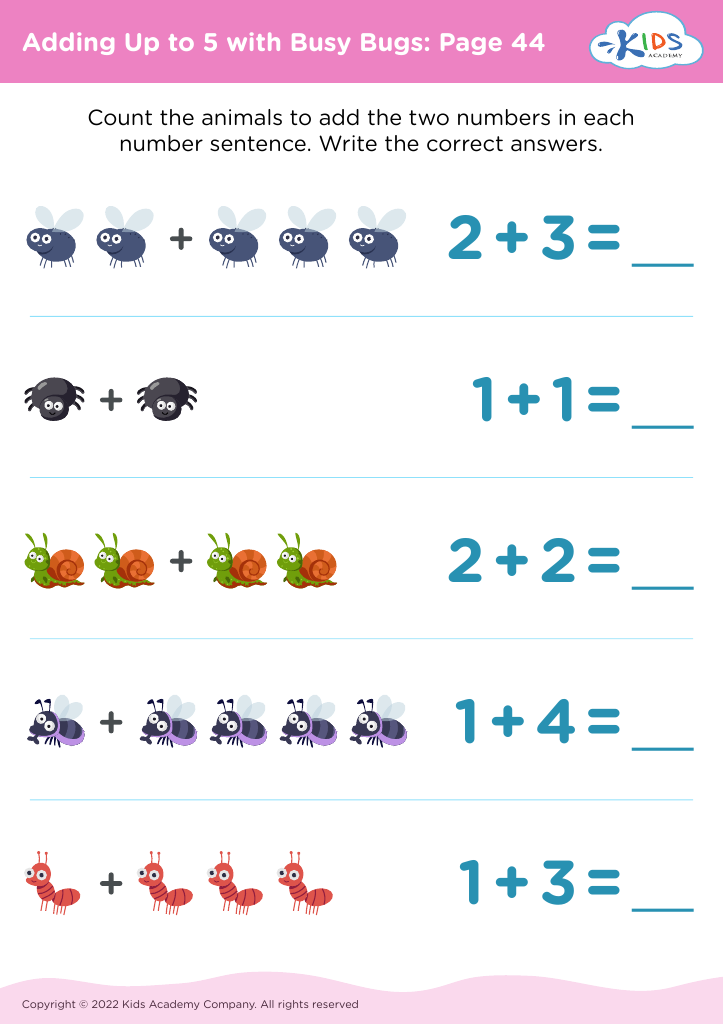
Adding Up to 5 with Busy Bugs: Page 44
Worksheet
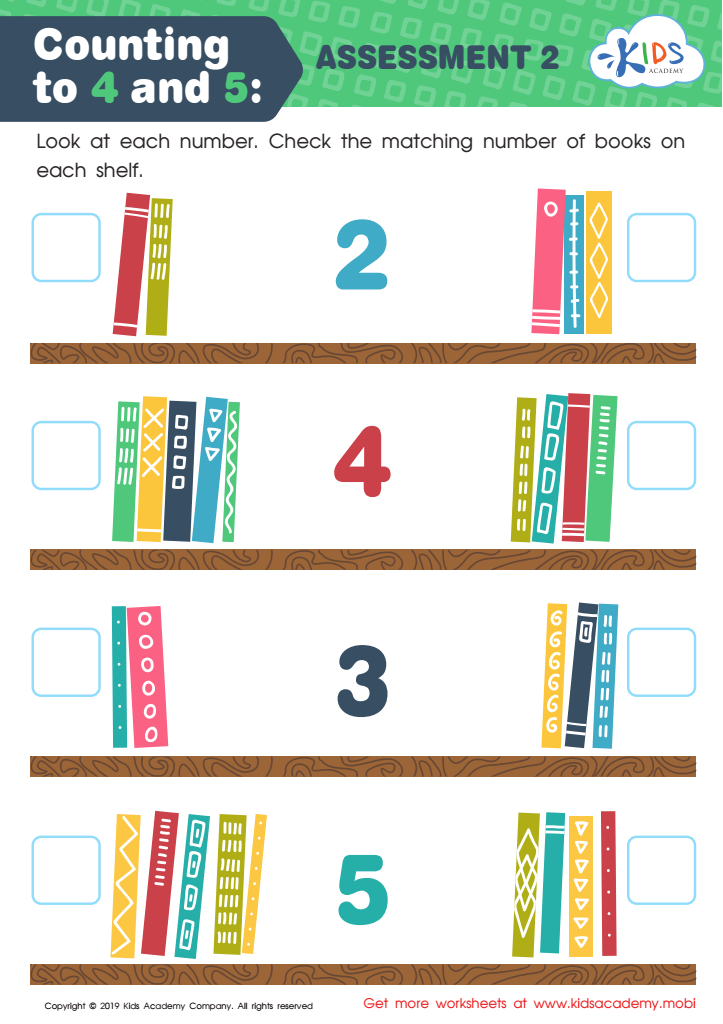
Counting to 4 and 5: Assessment 2 Worksheet

Counting to 4 and 5: Assessment 2 Worksheet

Counting is a key skill for math success. Help your kids get off to a good start by counting the books on each shelf in the pictured printout. Point to each set of books, counting aloud, and then look for the matching number in the centre. With this simple worksheet, your kids can get the practice they need before taking on more advanced math skills.
Counting to 4 and 5: Assessment 2 Worksheet

Worksheet
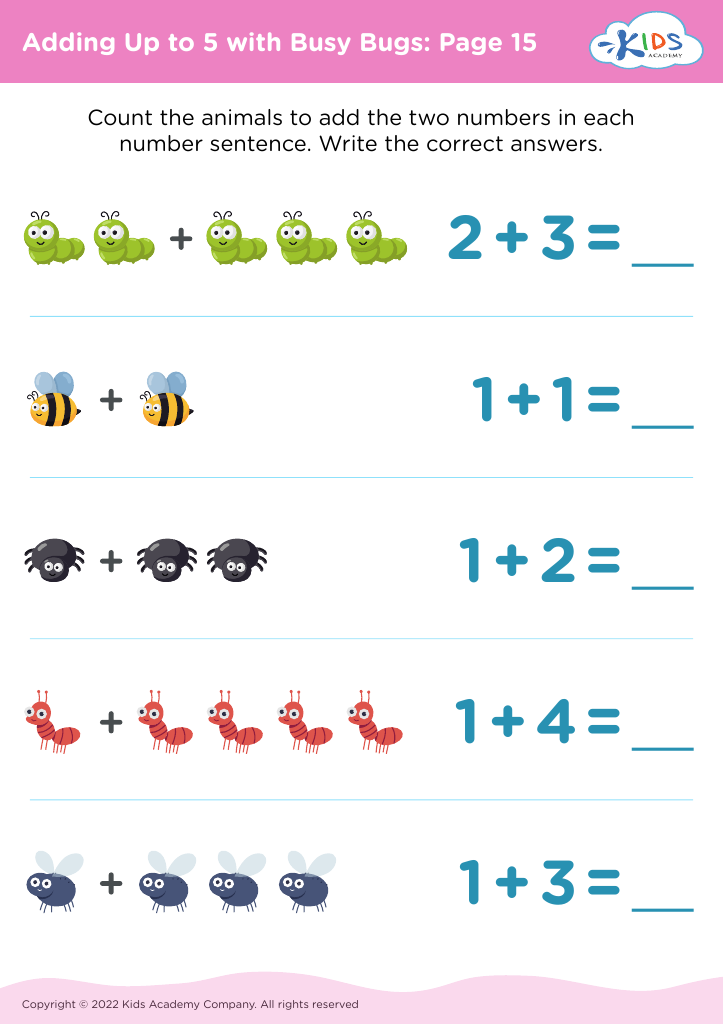
Adding Up to 5 with Busy Bugs: Page 15
Worksheet


Understanding quantity is a foundational aspect of early math education that sets the stage for future learning. For 3-year-olds, grasping concepts of quantity helps develop critical cognitive skills necessary for math and everyday problem-solving. At this age, children begin to comprehend the idea of counting, comparing items, and recognizing that numbers represent amounts.

Parents and teachers should care about nurturing this understanding as it fosters not only math skills but also enhances children's overall cognitive development. Engaging children in activities that involve counting—like sorting toys or sharing snacks—builds their ability to quantify and categorize objects. These early interactions with quantity promote curiosity and help children make meaningful connections to their environment.

Moreover, solidifying a grasp of quantity at this age supports later academic success. Children who engage consistently with these concepts develop higher-order thinking skills, improve their ability to follow instructions, and gain confidence in tackling more complex mathematical ideas as they grow.

By emphasizing the importance of understanding quantity, parents and teachers can lay a strong educational foundation, ignite a love for learning, and prepare young children for future math and life challenges, ultimately ensuring they thrive in the years to come.