Matching skills Matching Worksheets for 3-Year-Olds
5 filtered results
-
From - To
Discover our engaging Matching Skills Worksheets designed specifically for 3-year-olds! These fun, educational activities help young learners develop critical matching and reasoning skills while enhancing their cognitive abilities. Our worksheets feature vibrant images and themes that captivate children’s attention, making learning enjoyable. By connecting similar items, kids build visual discrimination and concentration, vital skills for their early academic journey. Whether used at home or in preschool, these worksheets encourage independent learning and foster a love for education. Explore our extensive collection today and set the foundation for your child's success in matching and problem-solving skills!
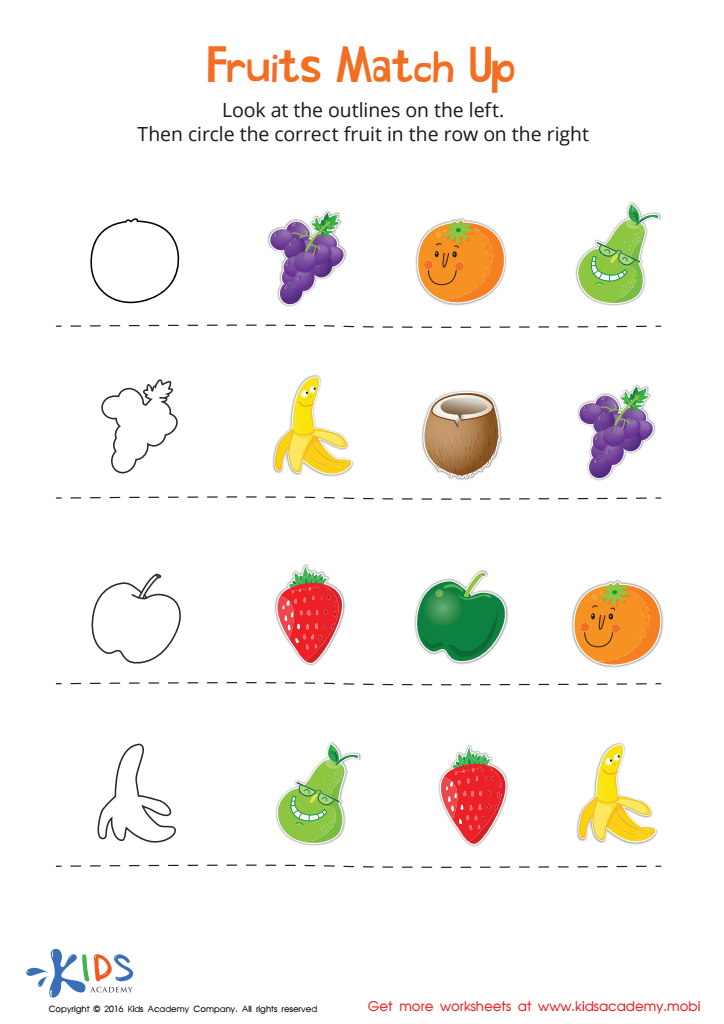
Fruits Match Up Worksheet
 Assign to My Students
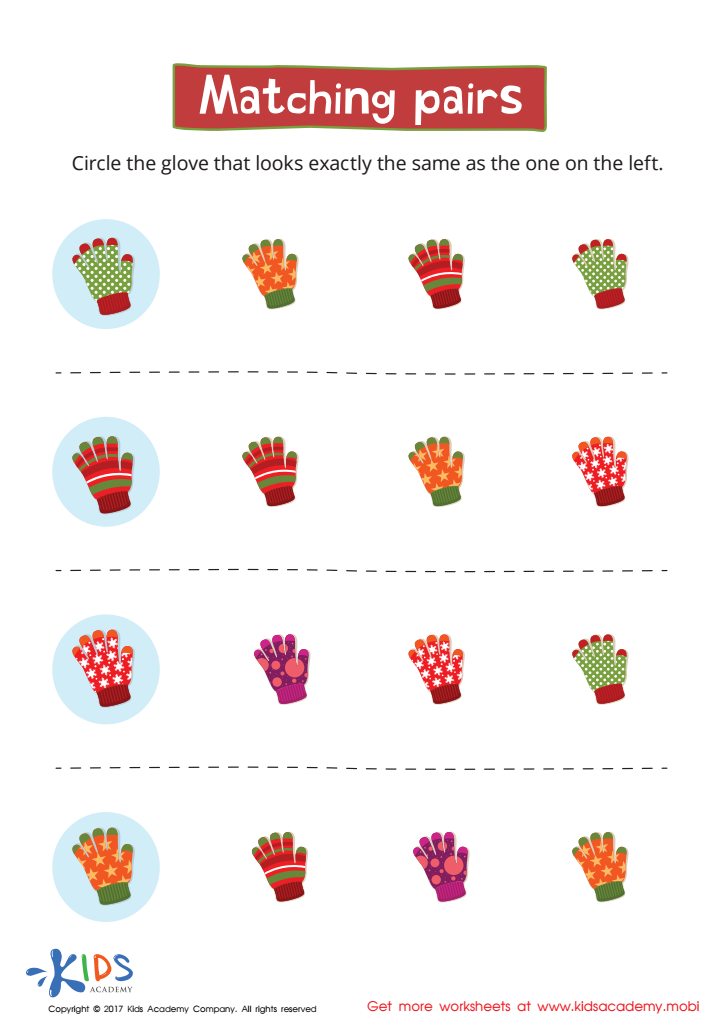
Matching: Matching Pairs Worksheet
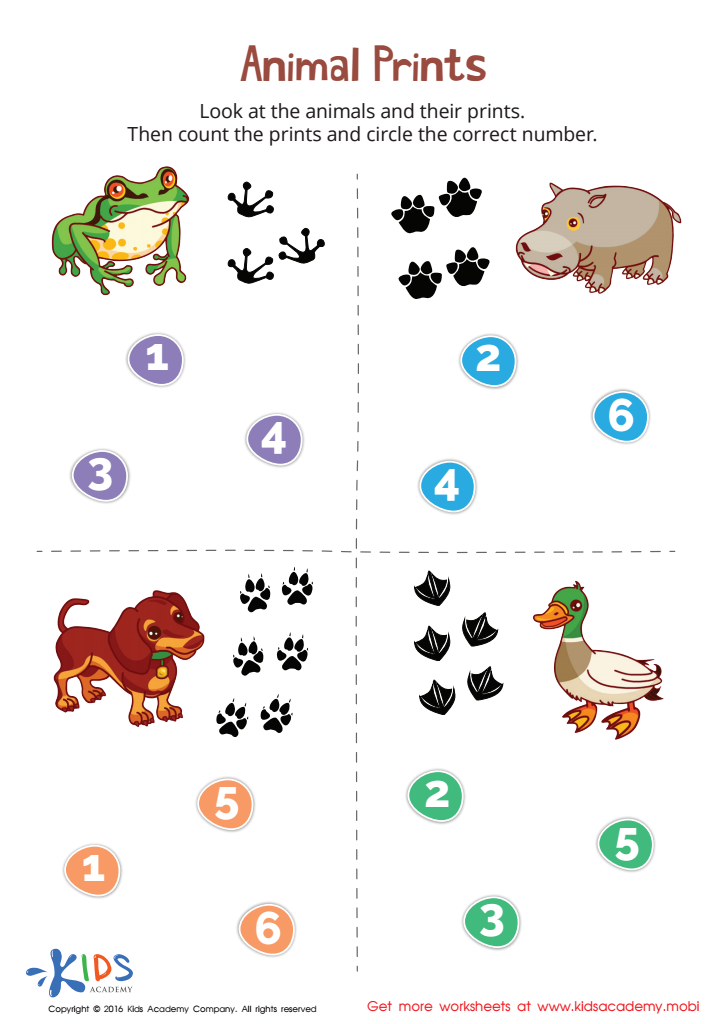
Animal Prints Match-Up Worksheet
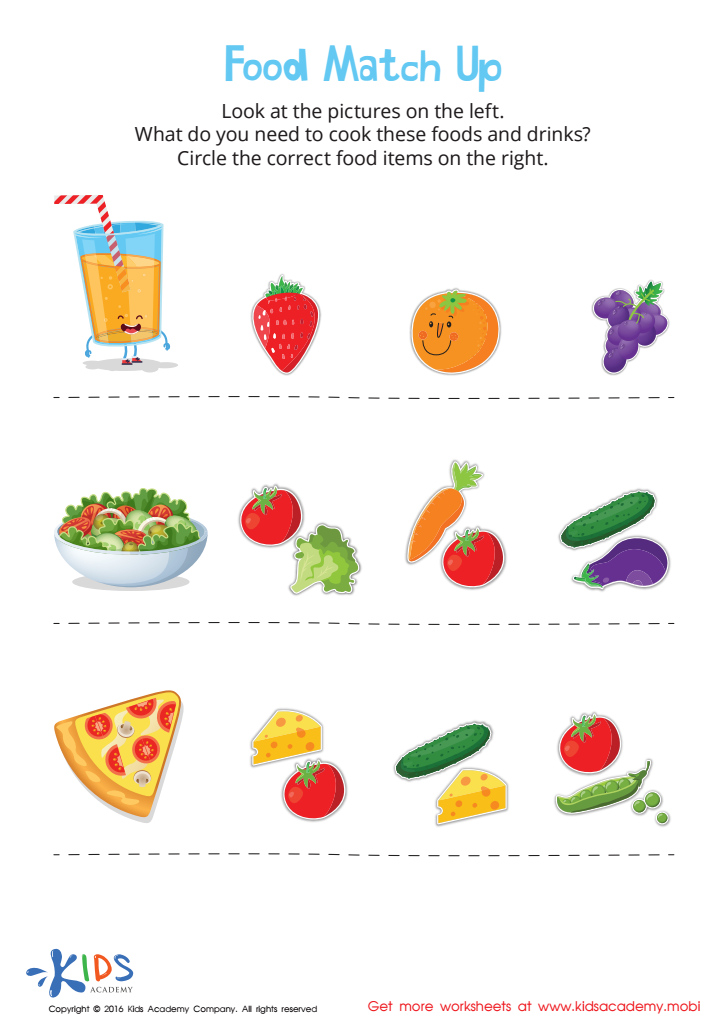
Food Match Up Worksheet
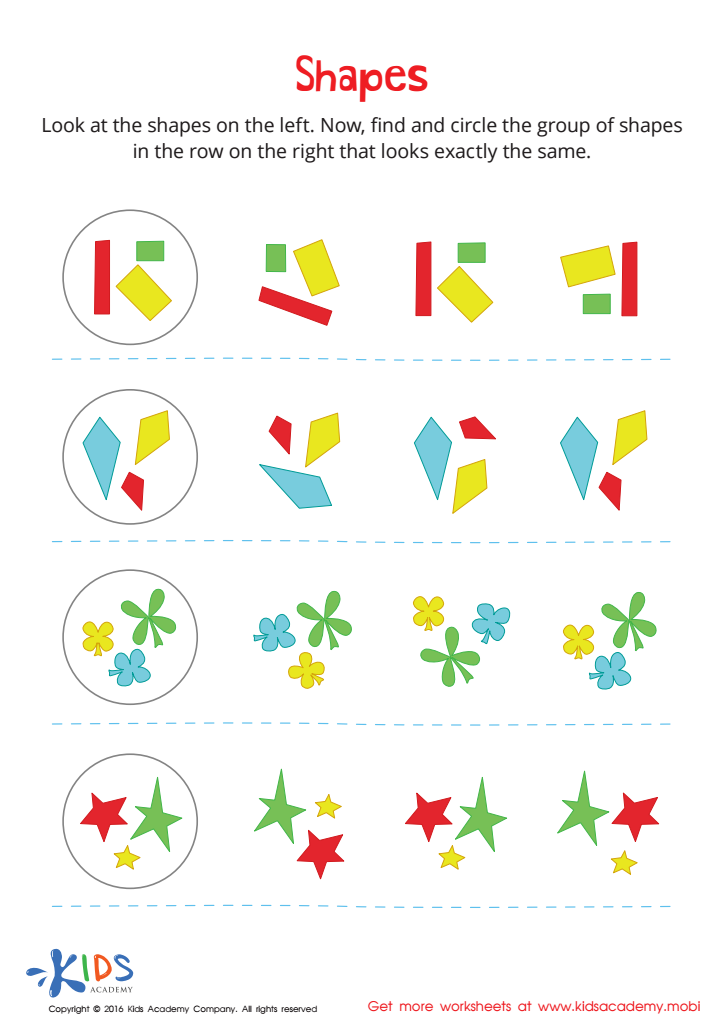
Shapes Worksheet






Matching skills are vital for the cognitive and social development of 3-year-olds, making it essential for parents and teachers to prioritize their cultivation. At this age, children are naturally curious and eager to explore their environment. Introducing matching activities helps enhance their cognitive abilities by promoting pattern recognition, memory, and critical thinking skills. As children match objects, pictures, or shapes, they develop the ability to categorize and make connections—key components for future learning.
Moreover, mastering matching skills aids in language development. As children identify and discuss their pairs, they expand their vocabulary and enhance communication skills. Additionally, these activities foster social skills, as children learn to cooperate, take turns, and engage in collaborative play. This interaction is crucial for building friendships and understanding social cues.
Furthermore, matching games are enjoyable and serve as a delightful form of play that keeps young learners engaged. Integrating these skills into daily routines can pave the way for more advanced concepts in math and logic as they mature. By valuing and nurturing matching skills, parents and teachers help lay a solid foundation for lifelong learning, encouraging curiosity and exploration in young minds.








