Fine Motor Skills Numbers 11–20 Worksheets for 3-Year-Olds
5 filtered results
-
From - To
Enhance your 3-year-old's fine motor skills with our engaging worksheets focusing on numbers 11–20. These activities are designed to strengthen hand-eye coordination and improve dexterity, essential for early learning. Our printable worksheets incorporate fun experiences such as tracing numbers, connecting dots, and coloring, making learning enjoyable and interactive. As children work through the activities, they’ll develop essential pre-writing skills while becoming familiar with numbers beyond 10. These worksheets not only aid in literacy and numeracy but also provide an opportunity for open-ended exploration and creativity. Start your child's learning journey today with these developmentally appropriate and fun resources!
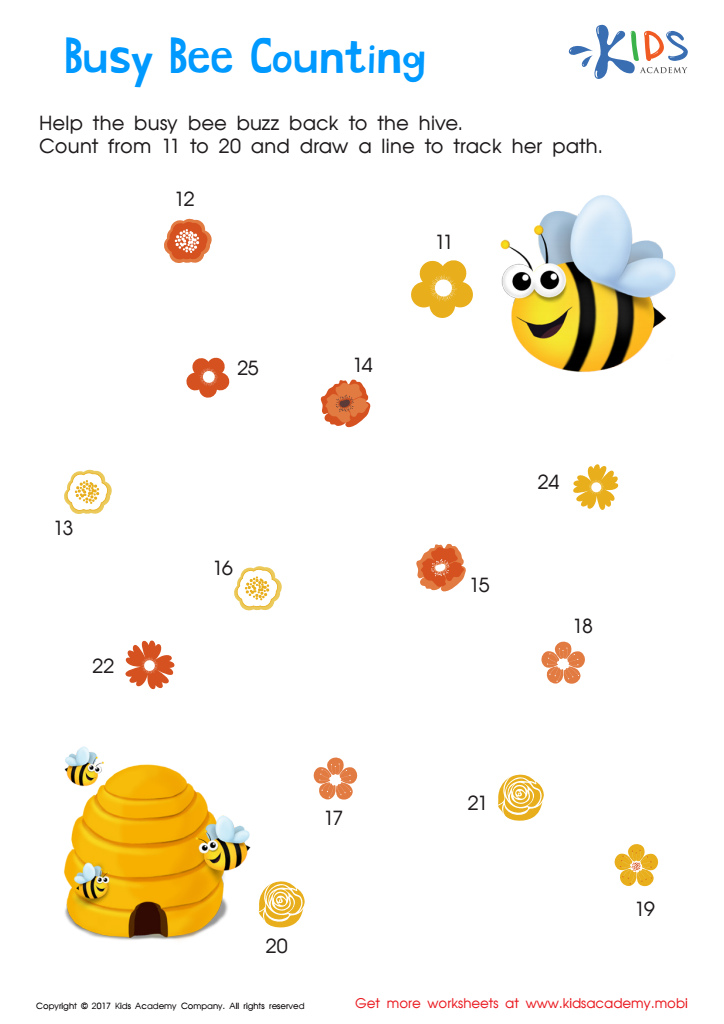
Ordering 11–20: Busy Bee Counting Worksheet
 Assign to My Students
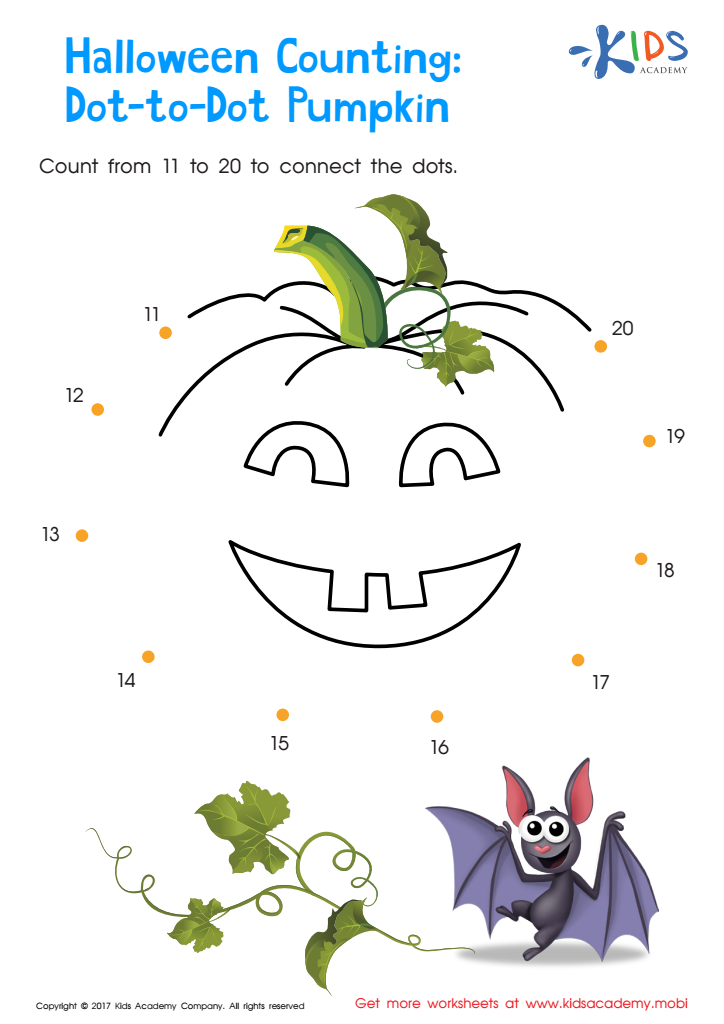
Ordering 11–20: Halloween Counting Worksheet
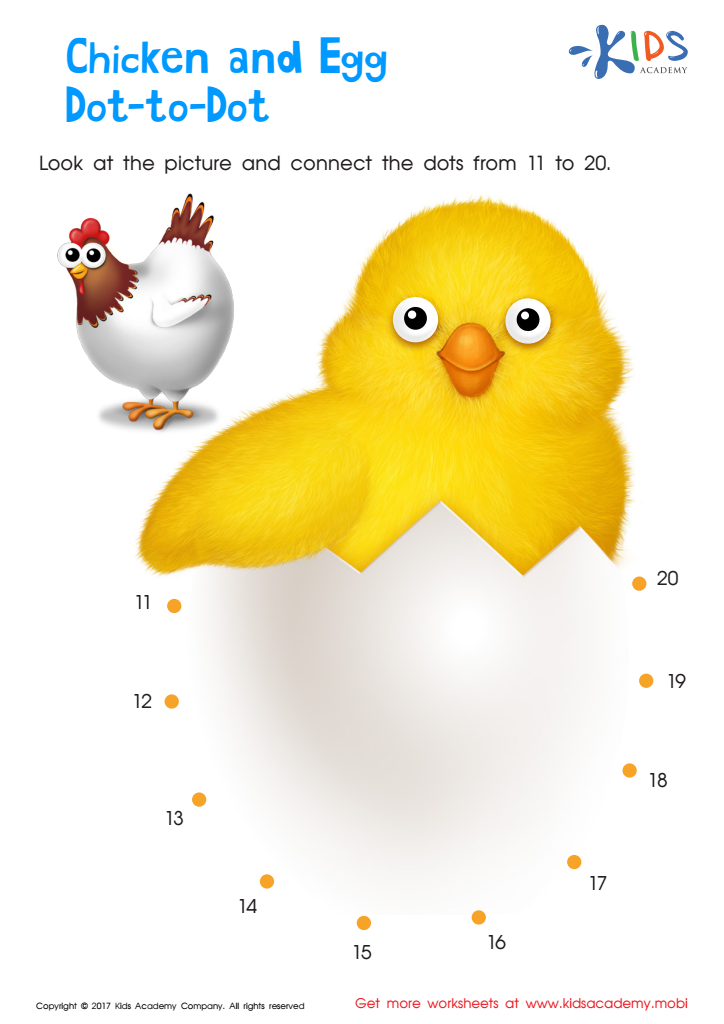
Ordering 11–20: Chicken & Egg Dot–to–dot Worksheet
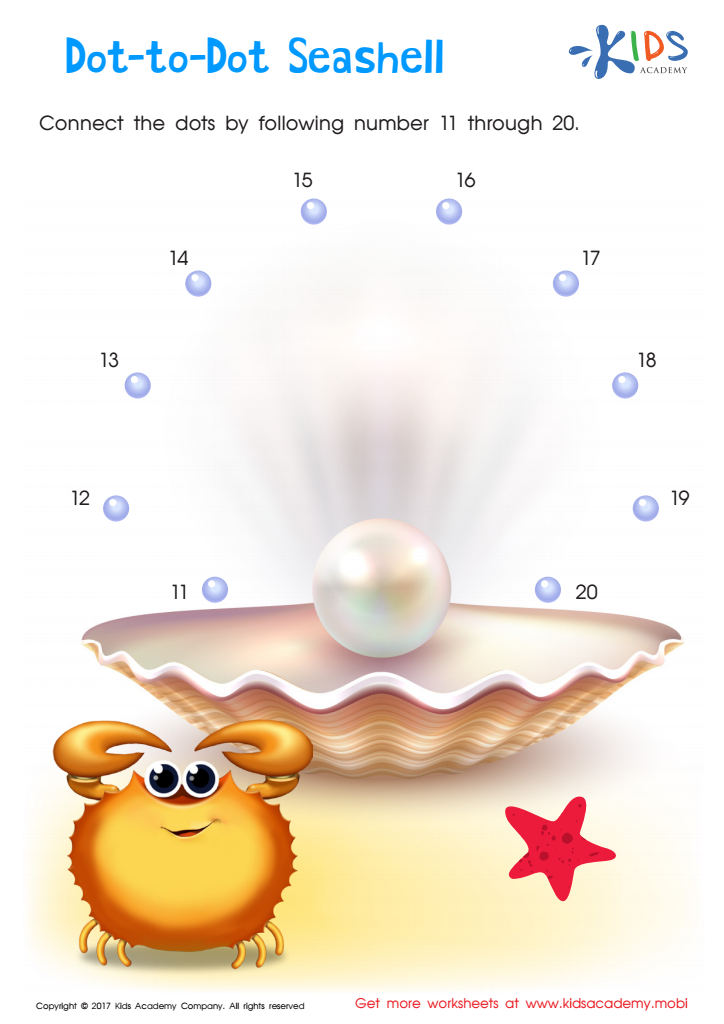
Ordering 11–20: Dot–to–dot Seashell Printable



Fine motor skills are crucial for young children's overall development, especially for 3-year-olds learning to recognize and write numbers 11 to 20. At this age, children are refining their dexterity, hand-eye coordination, and muscle control, which are foundational for future academic success and daily tasks.
Here’s why parents and teachers should prioritize fine motor skills in the context of numbers 11 to 20: First, these skills enhance a child's ability to manipulate objects, such as when they engage with counting beads or number puzzles, thus reinforcing number recognition and sequencing. Second, developing these skills through activities like coloring, cutting, or playdough helps children practice writing numbers, laying the groundwork for essential literacy and numeracy skills.
Moreover, fine motor development promotes cognitive growth, as it encourages problem-solving and critical thinking, vital when discovering number relationships or patterns. Lastly, cultivating these skills fosters independence and self-esteem, as children gain confidence in their ability to complete tasks. By supporting fine motor skill development, parents and teachers equip 3-year-olds with the tools necessary for successful learning and daily interactions, making it an essential focus during this formative stage.