Handwriting practice Reading Worksheets for 3-Year-Olds
3 filtered results
-
From - To
Our Handwriting Practice Reading Worksheets for 3-Year-Olds are designed to make learning fun and engaging. These worksheets focus on developing critical early literacy skills, including letter recognition and fine motor control. Each sheet provides ample opportunities for young learners to practice tracing letters, improving their pencil grip and hand-eye coordination. Our age-appropriate activities ensure that your child enjoys the learning process while building a strong foundation for future reading and writing success. Perfect for parents and educators looking to give their preschoolers a head start in their educational journey! Download now and watch your child's skills grow.
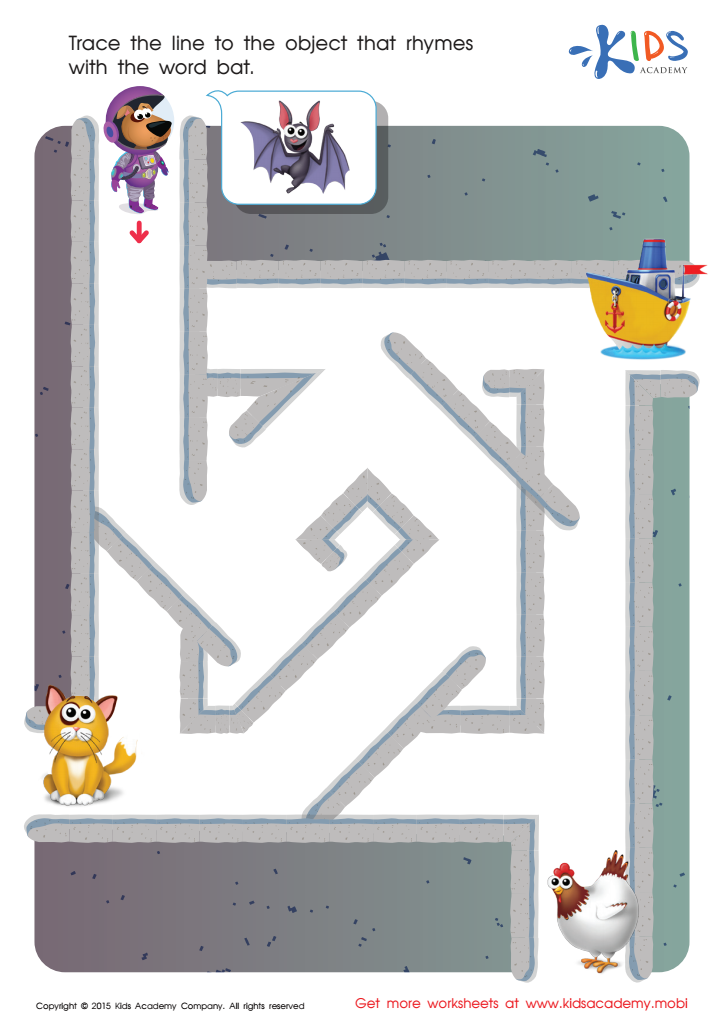
Bat Rhyming Words Worksheet
 Assign to My Students
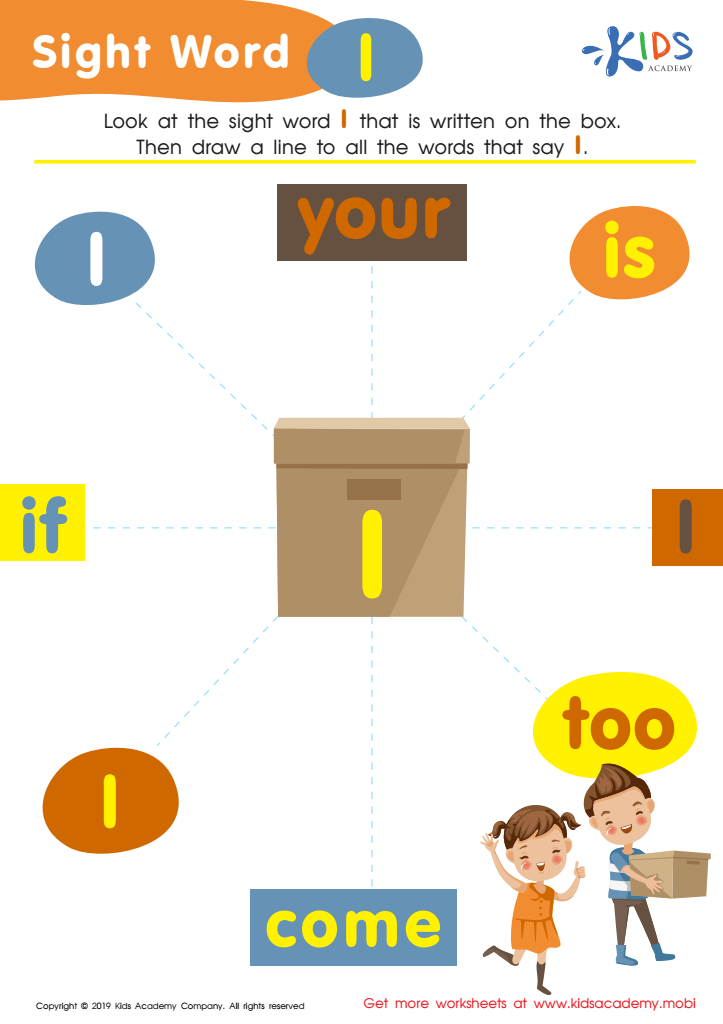
Sight Word I Worksheet
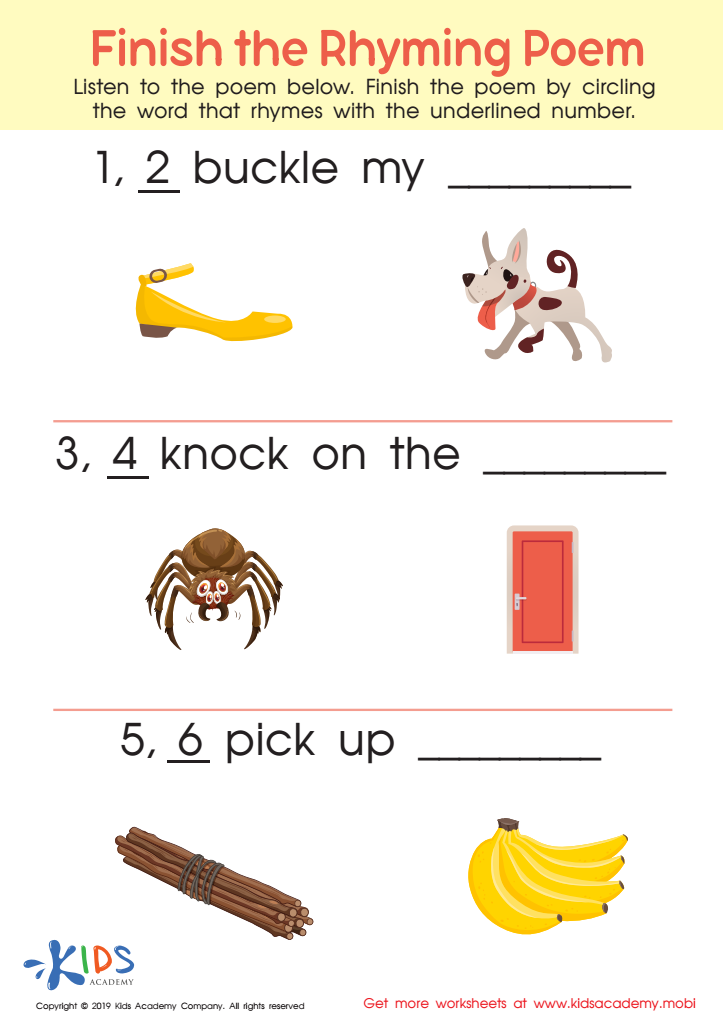
Finish Rhyming Poem Worksheet








Handwriting practice and reading are foundational skills that hold significant importance for 3-year-olds as they begin their journey into formal education. For parents and teachers, fostering these skills early on can provide a substantial head start in the child's cognitive and motor development.
Developing handwriting skills at this young age is crucial because it enhances fine motor skills, hand-eye coordination, and muscle memory. These skills not only aid in writing but are also vital for other daily activities, such as dressing and feeding themselves. Encouraging children to practice holding a pencil correctly and forming basic shapes or letters contributes to their ability to express themselves and gradually develop their writing abilities.
On the other hand, reading practices introduce children to the rich world of language, imagination, and comprehension. Reading with children broadens their vocabulary, improves their listening skills, and fosters a lifelong love of books. Engaging 3-year-olds in storytelling and picture books also enhances their understanding of narrative structure and stimulates their curiosity and imagination.
By prioritizing handwriting practice and reading, parents and teachers can support children's overall learning readiness. These activities lay the groundwork for literacy and learning skills that will prove invaluable as children progress through their early years of education, ultimately setting the stage for future academic success.








