Weather Vocabulary Science Worksheets for 3-Year-Olds
3 filtered results
-
From - To
Explore our engaging Weather Vocabulary Science Worksheets designed specifically for 3-year-olds! These fun and educational resources foster early learning through colorful visuals and interactive activities, helping young children grasp essential weather concepts. Your little ones will enjoy identifying different weather types, signs, and vocabulary words while enhancing their language and cognitive skills. Our worksheets are perfect for preschool and early childhood environments, providing a solid foundation in scientific vocabulary. Encourage curiosity about the world around them as they learn about sunny days, rainy weather, snow, and more. Kickstart your child’s scientific journey with our delightful weather-themed resources today!
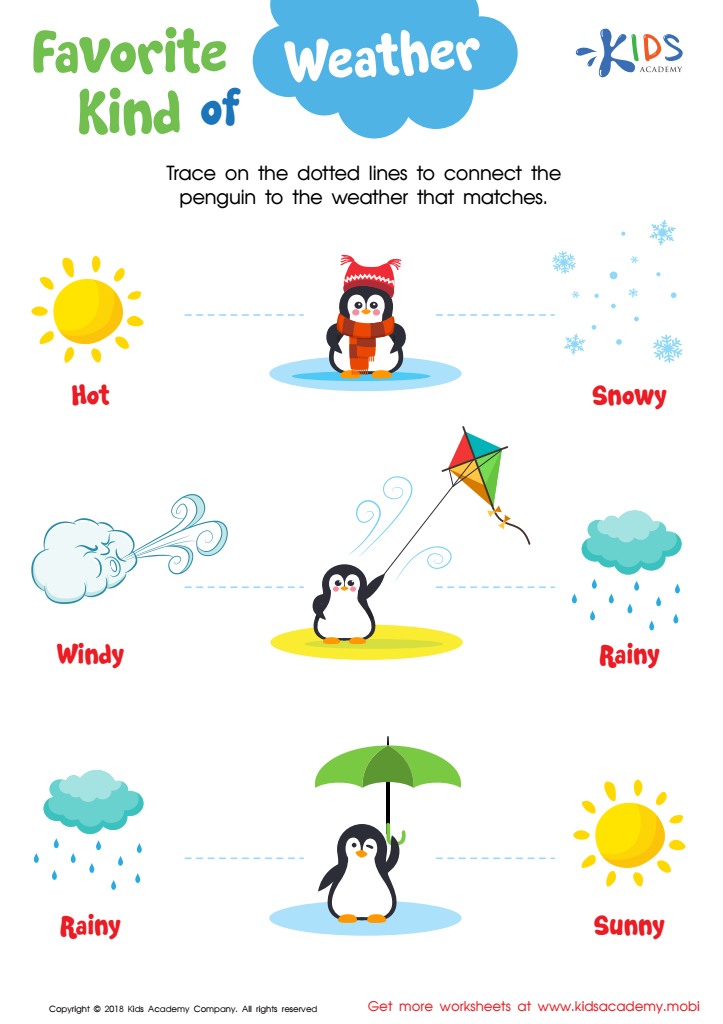
Favorite Kind of Weather Worksheet
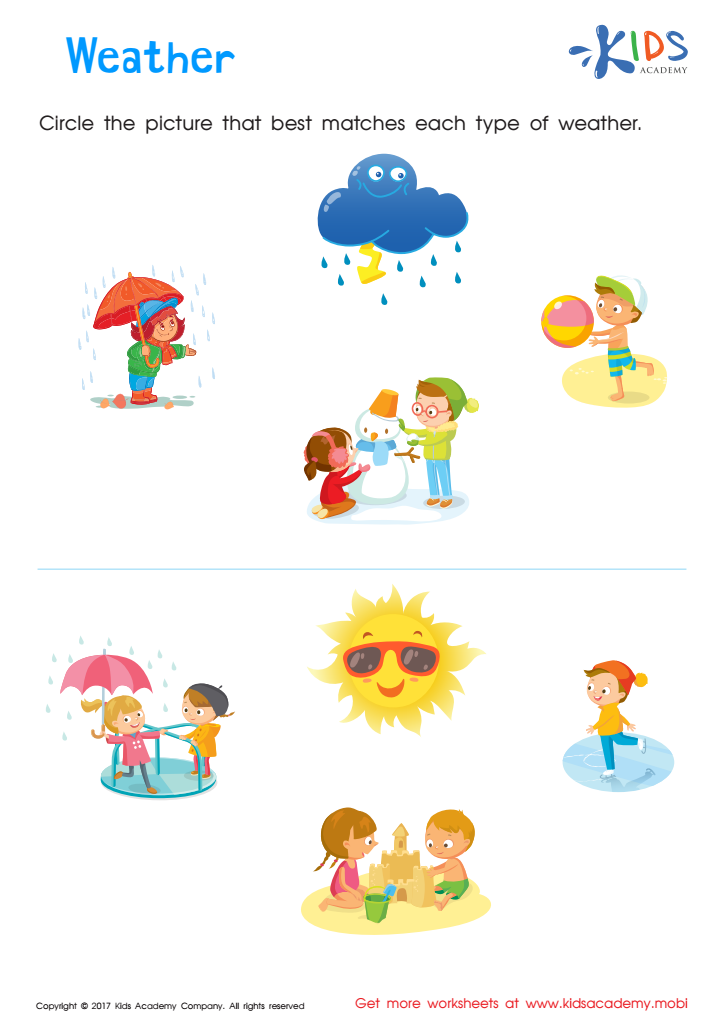
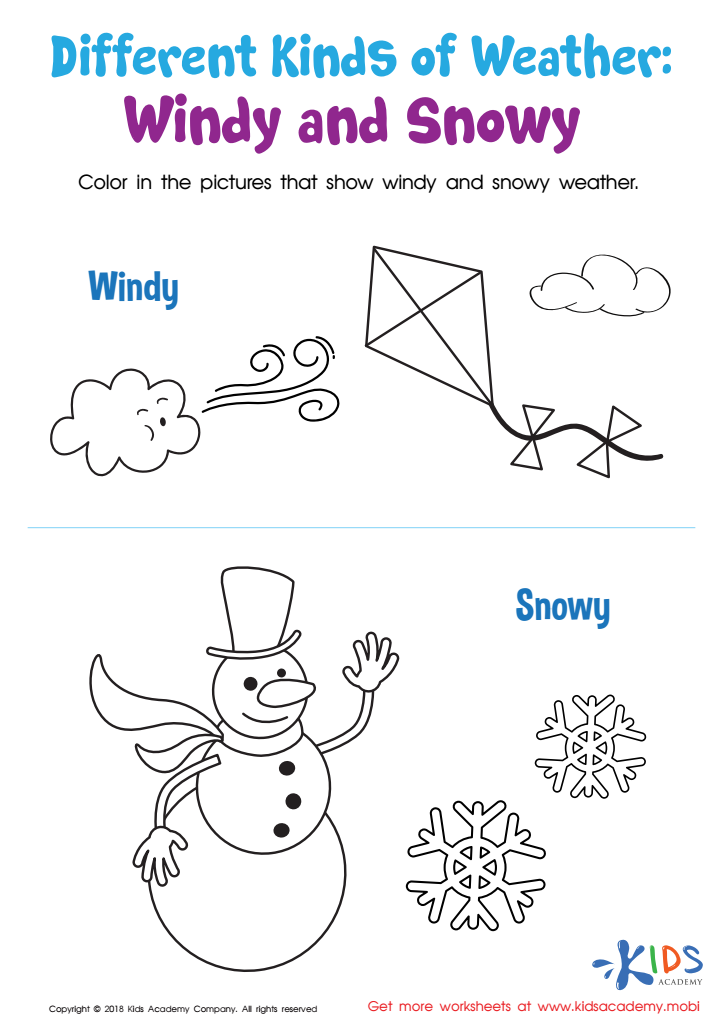
Different Kinds of Weather: Windy and Snowy Worksheet
 Assign to My Students








Teaching weather vocabulary to 3-year-olds is crucial for several reasons. Firstly, it lays a foundational understanding of the world around them. Young children are naturally curious, and introducing them to weather-related terms—like sunny, rainy, windy, or cloudy—helps them make sense of daily experiences. This comprehension fosters cognitive development and reinforces observational skills as they learn to categorize and describe their environment.
Secondly, understanding weather vocabulary enhances communication skills. As children learn to express their feelings and observations about weather, they expand their language usage, which is vital for their overall linguistic development. This early exposure can cultivate a love for language and reading as they encounter weather-themed books, songs, and activities.
Additionally, weather education promotes safety awareness. Teaching children about different weather conditions empowers them to understand the need for appropriate clothing or safety measures during storms, encouraging independence and responsibility.
Finally, it nurtures a scientific mindset. Engaging with weather vocabulary fosters curiosity about natural phenomena, encouraging children to ask questions and explore further. This early scientific interest can pave the way for a lifelong love of learning and exploration in various domains, particularly in science. Engaging parents and teachers in this process is vital to create a supportive learning environment.







