Rhyming skills Alphabet Worksheets for Ages 4-5
3 filtered results
-
From - To
Enhance your child’s language development with our engaging Rhyming Skills Alphabet Worksheets tailored for ages 4-5. These specially designed worksheets from Kids Academy use fun and interactive rhyming activities to help young learners identify and match rhyming words effortlessly. By incorporating colorful illustrations and relatable themes, children will build a strong foundation in phonemic awareness, crucial for early reading success. Perfect for both seasoned educators and parents, our worksheets turn learning into an enjoyable adventure, cultivating a love for reading and improving overall literacy skills. Discover the joy of learning with our age-appropriate and expertly crafted resources.
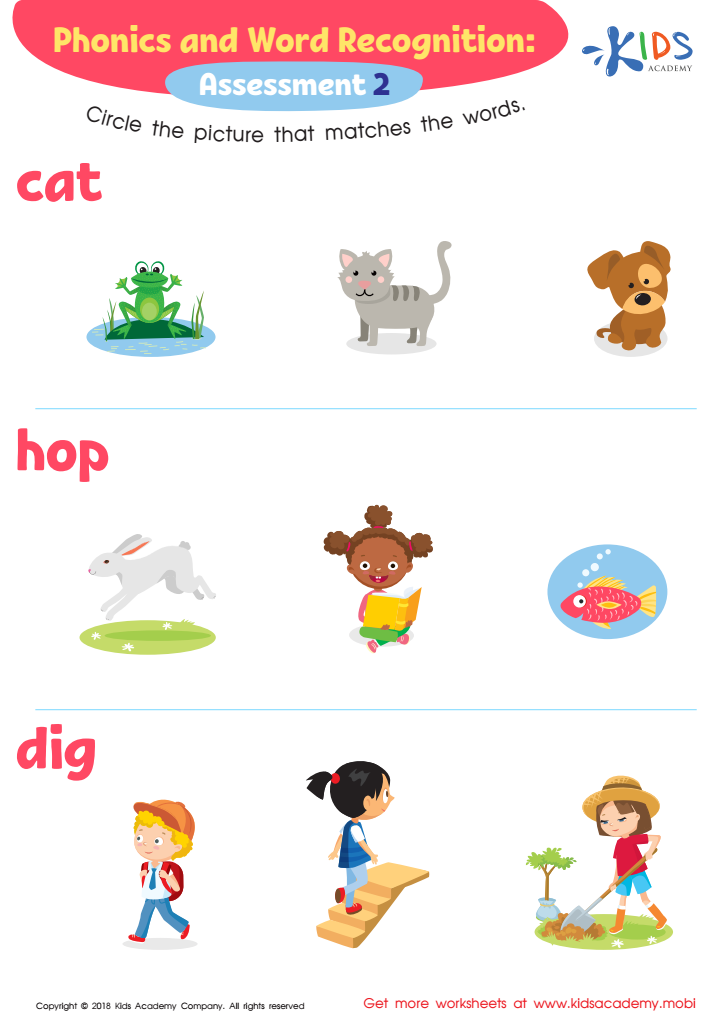
Phonological Awareness: Assessment 2 ELA Worksheet
 Assign to My Students
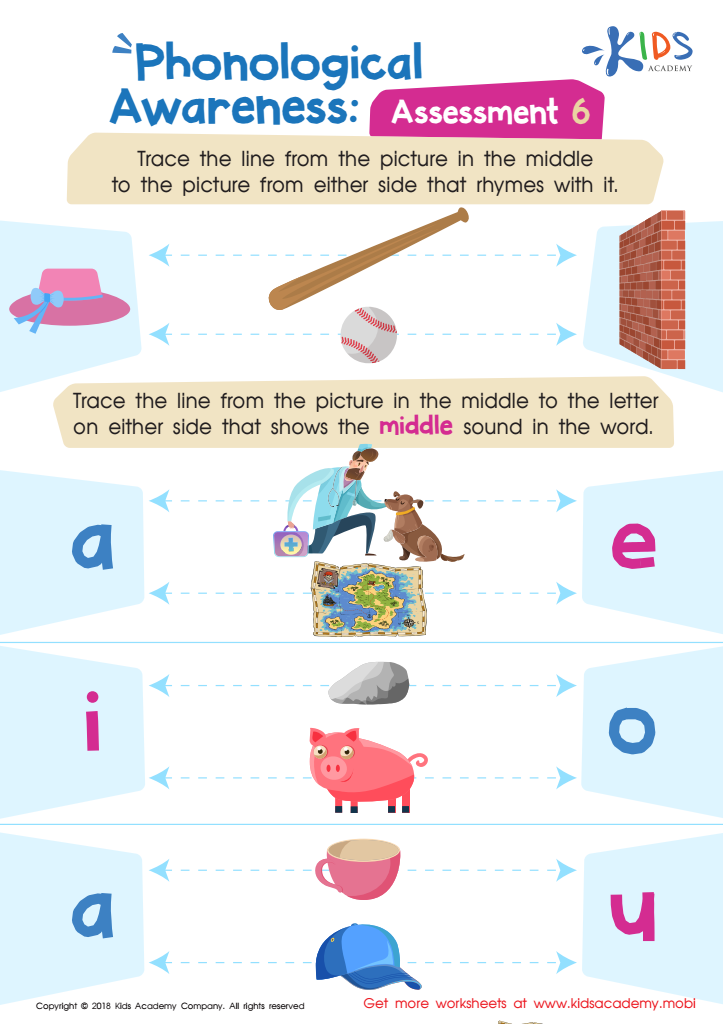
Phonological Awareness: Assessment 6 Worksheet
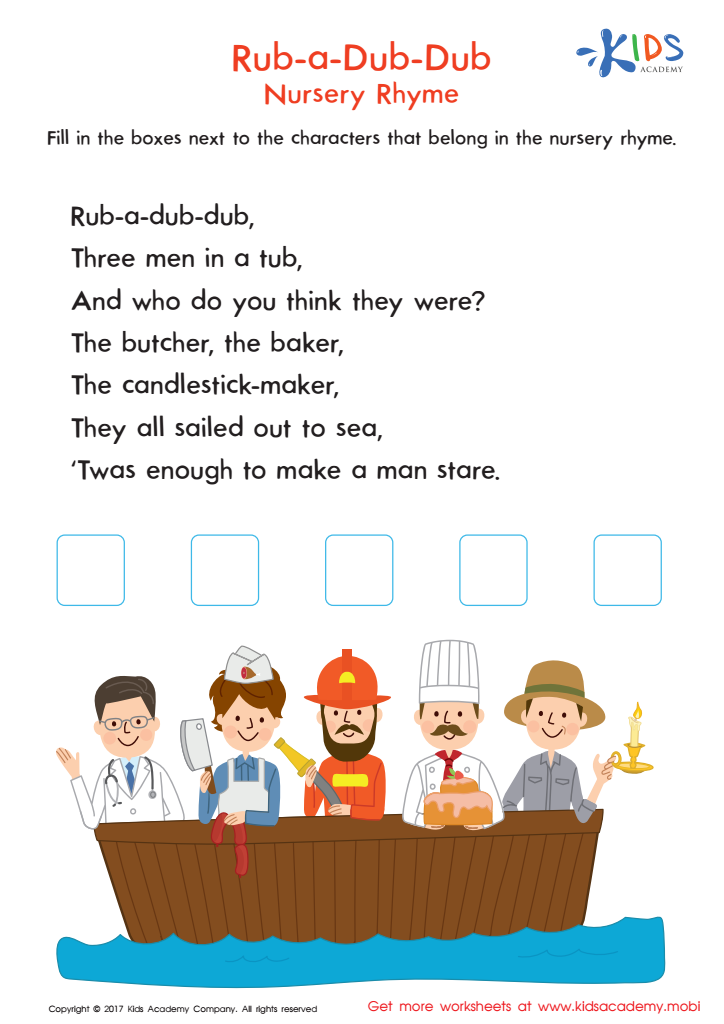
Rub a Dub Dub Printable






Rhyming skills and familiarity with the alphabet are crucial for children ages 4-5 as they lay the foundation for literacy development. Rhyming helps children recognize sound patterns and rhythm, which is essential for their understanding of how language works. Being able to detect and produce rhyming words enhances phonemic awareness—the ability to hear, identify, and manipulate individual sounds in spoken words. This skill is directly linked to proficient reading and writing later on.
Alphabet knowledge involves recognizing letters and knowing their corresponding sounds. This fundamental skill enables children to decode words when they start reading. Learning the alphabet song, for instance, makes use of rhyme and sequence, making it easier for children to remember the order and shapes of letters. Combining rhyming activities with alphabet learning makes these skills engaging and accessible through playful interaction, singing, and games, making learning fun and effective.
Moreover, mastering these skills boosts a child's confidence, promotes vocabulary development, and improves communication abilities. When parents and teachers prioritize rhyming and alphabet skills, they are investing in a child's academic future, setting them up for success in reading, spelling, and overall language comprehension. Hence, these foundational skills are not just educational milestones, but essential stepping stones to lifelong learning and intellectual growth.







