Rhyming skills development Alphabet Worksheets for Ages 4-5
4 filtered results
-
From - To
Develop essential rhyming skills with our engaging Alphabet Worksheets for Ages 4-5! Perfectly designed for preschoolers and kindergarteners, these worksheets help little learners recognize and produce rhyming words while exploring each letter of the alphabet. Each colorful, fun-packed page enhances early phonemic awareness, boosts vocabulary, and supports reading readiness. Kids will delight in playful activities, like matching rhyming words and finishing rhyming patterns, using bright pictures and interactive exercises. Give your child a head start in literacy with our expertly-crafted resources, ideal for at-home practice or classroom use. Unlock the magic of rhymes today!
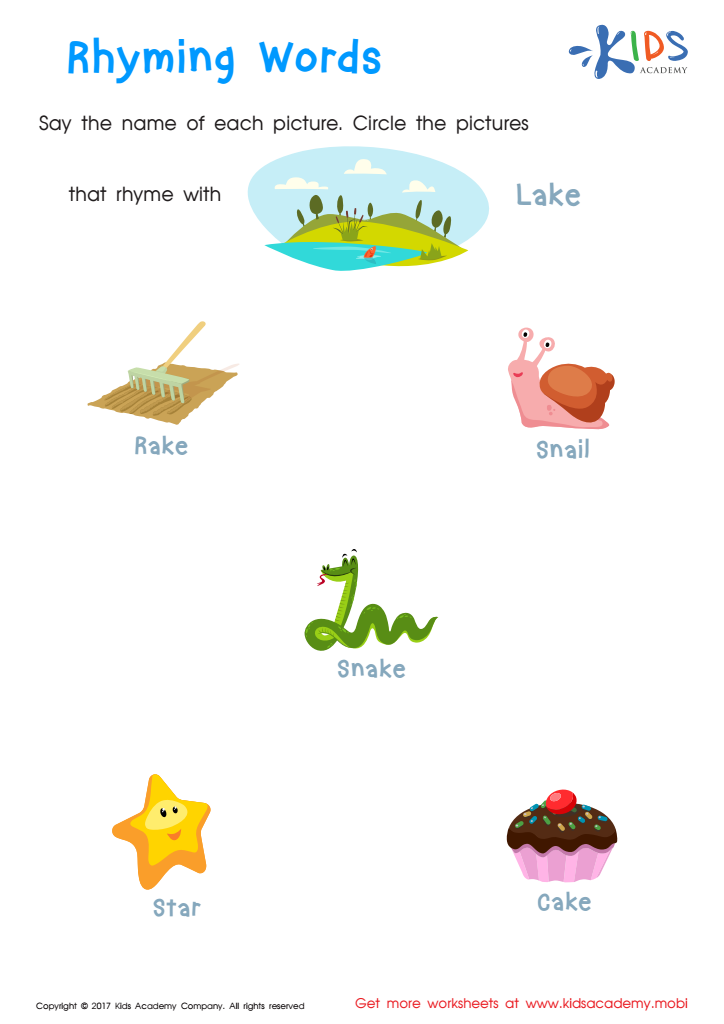
Rhyming Words Rhyming Worksheet
 Assign to My Students
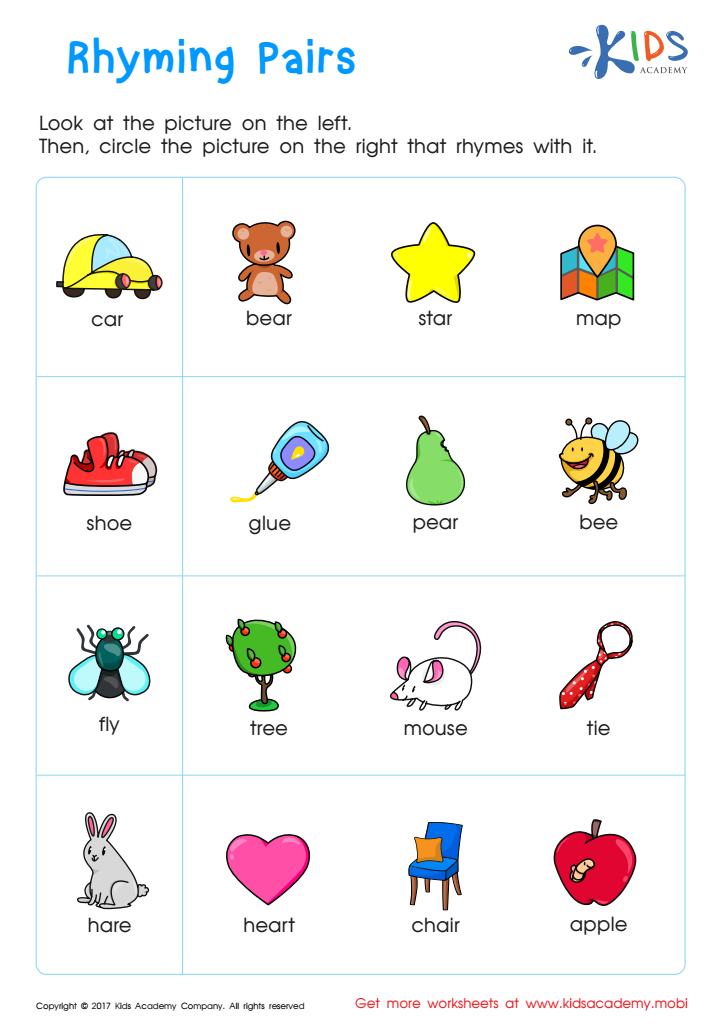
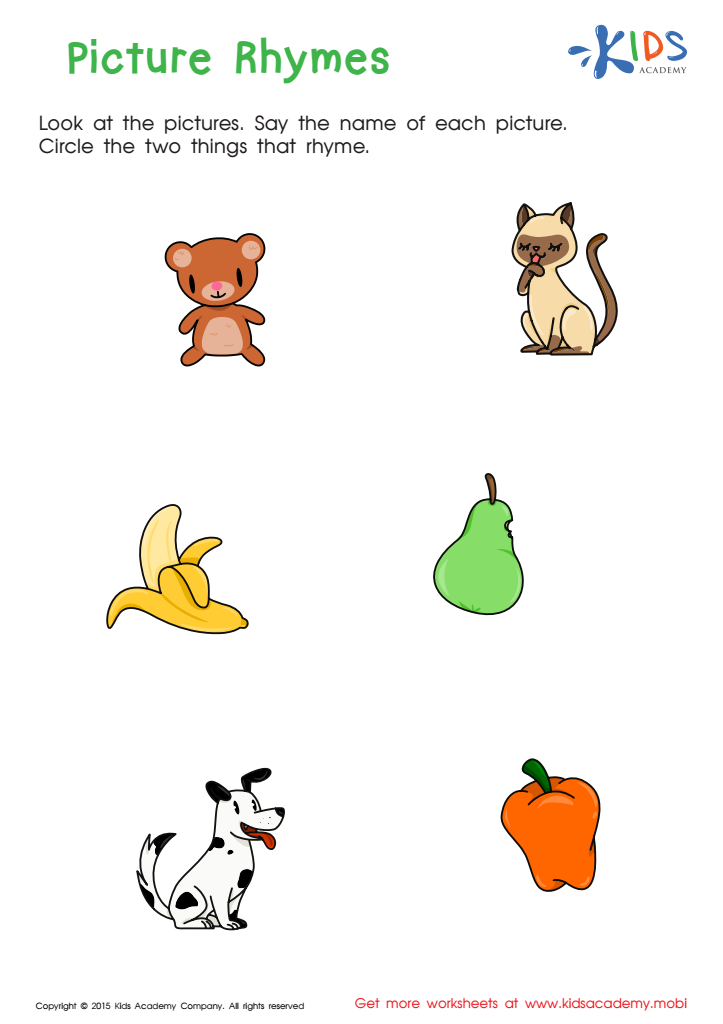
First Words: Picture Rhymes Worksheet
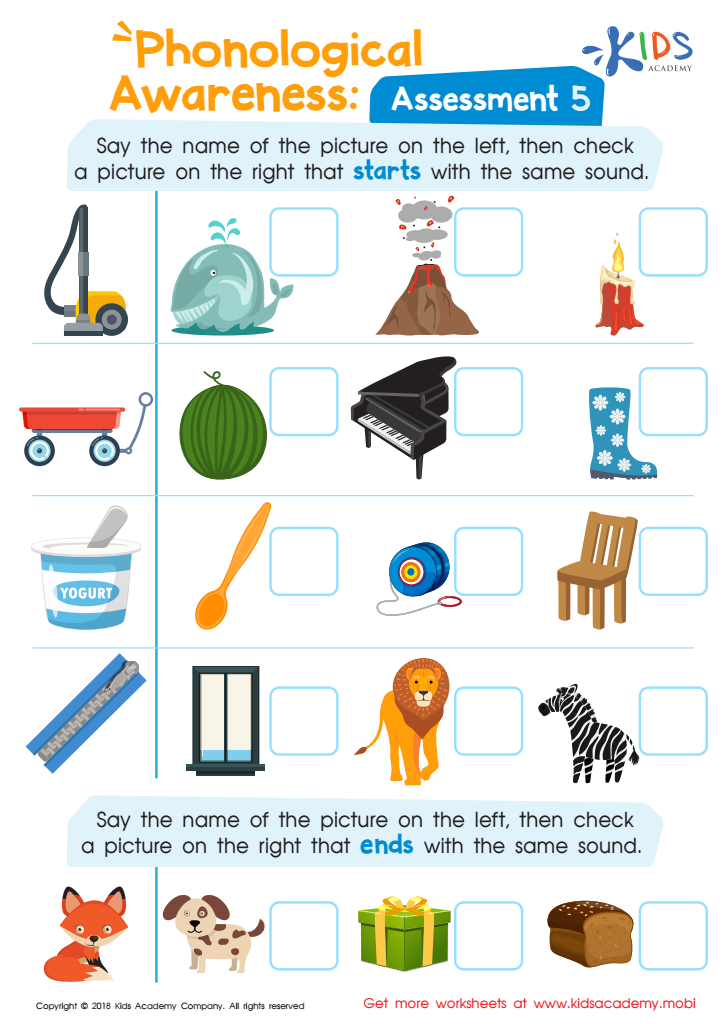
Phonological Awareness: Assessment 5 Worksheet








Rhyming skills play a fundamental role in early childhood literacy and language development. For children ages 4-5, mastering these skills can greatly influence their overall reading and writing abilities in the future. Rhyming helps young learners enhance their phonemic awareness, which is the understanding that words are composed of individual sounds. This awareness is vital for decoding unfamiliar words, making it a cornerstone of successful reading.
Moreover, engaging with the rhyming alphabet introduces children to the rhythm and patterns of language, which are key aspects of fluency and comprehension. When children listen to or create rhymes, they practice listening skills and develop memory through repetition, learning to predict how sentences will end based on previous patterns. This can make learning to read a more enjoyable and less intimidating experience, boosting their confidence.
Additionally, rhyming activities foster a sense of play and creative expression, which keeps children engaged and eager to learn. It encourages them to explore language and build vocabulary in an interactive way. Sing-songs, rhyming games, and rhyming books make abstract linguistic concepts tangible, tangible, fun and accessible. Therefore, both parents and teachers should prioritize rhyming skills to lay a robust foundation for academic success and a lifelong love of learning.







