Lowercase identification Letter Recognition Worksheets for Ages 4-5
5 filtered results
-
From - To
Introducing our engaging Lowercase Identification Letter Recognition Worksheets, designed specifically for children aged 4-5! These interactive and colorful resources stimulate early literacy skills through fun activities that enable young learners to recognize and differentiate lowercase letters effectively. With a variety of exercises like tracing, matching, and coloring, kids will enhance their letter recognition while enjoying the learning process. Perfect for both classroom and home use, these worksheets promote essential skills for reading and writing success. Make learning lowercase letters an exciting journey for your child with our thoughtfully crafted worksheets, fostering confidence and a love for learning at an early age!
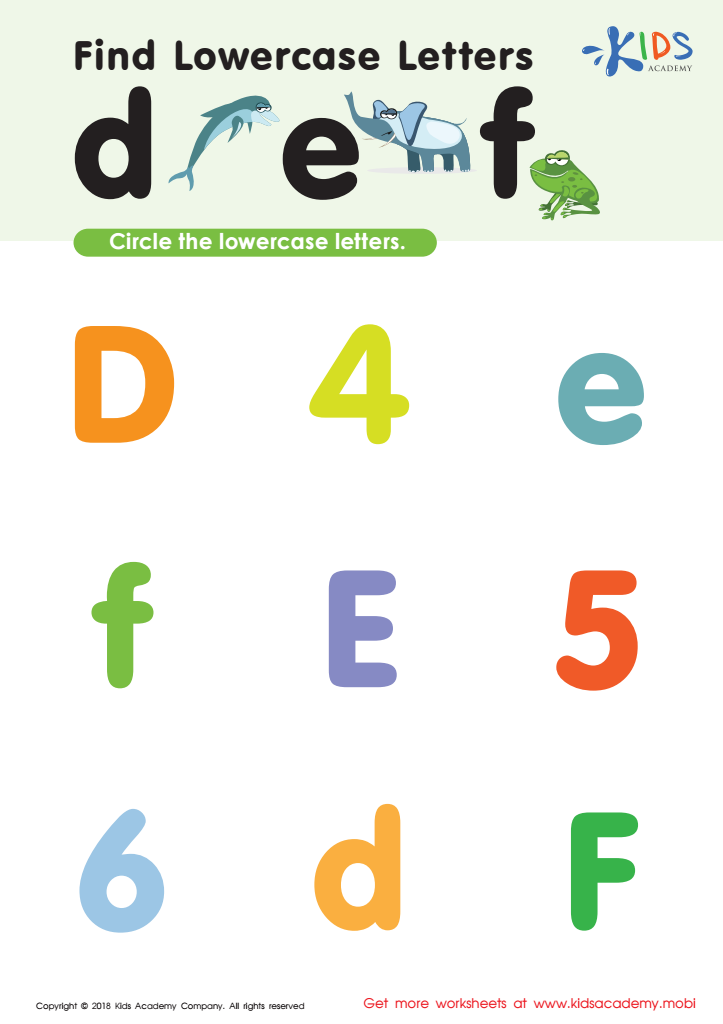
Find Lowercase Letters d e f Worksheet
 Assign to My Students
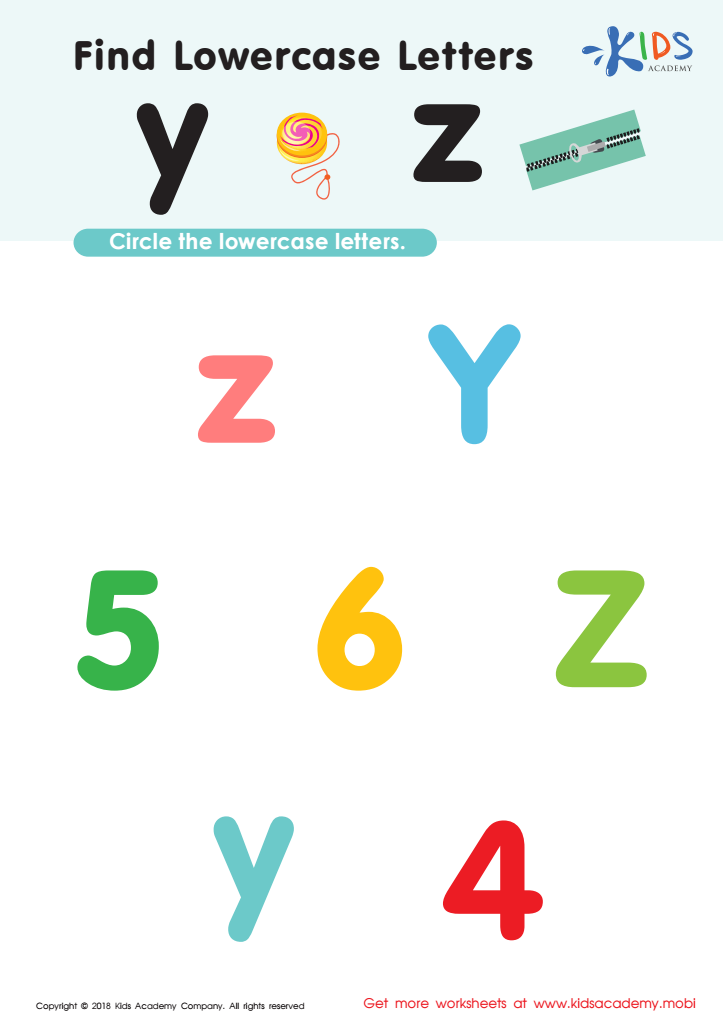
Find Lowercase Letters y z Worksheet
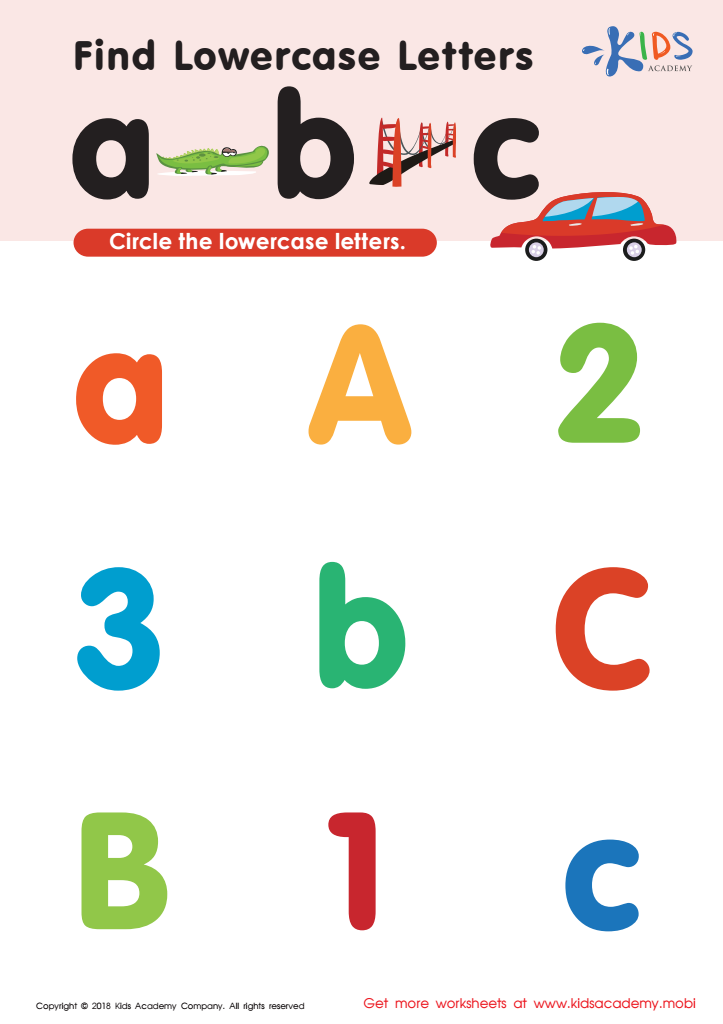
Find lowercase letters a b c Worksheet
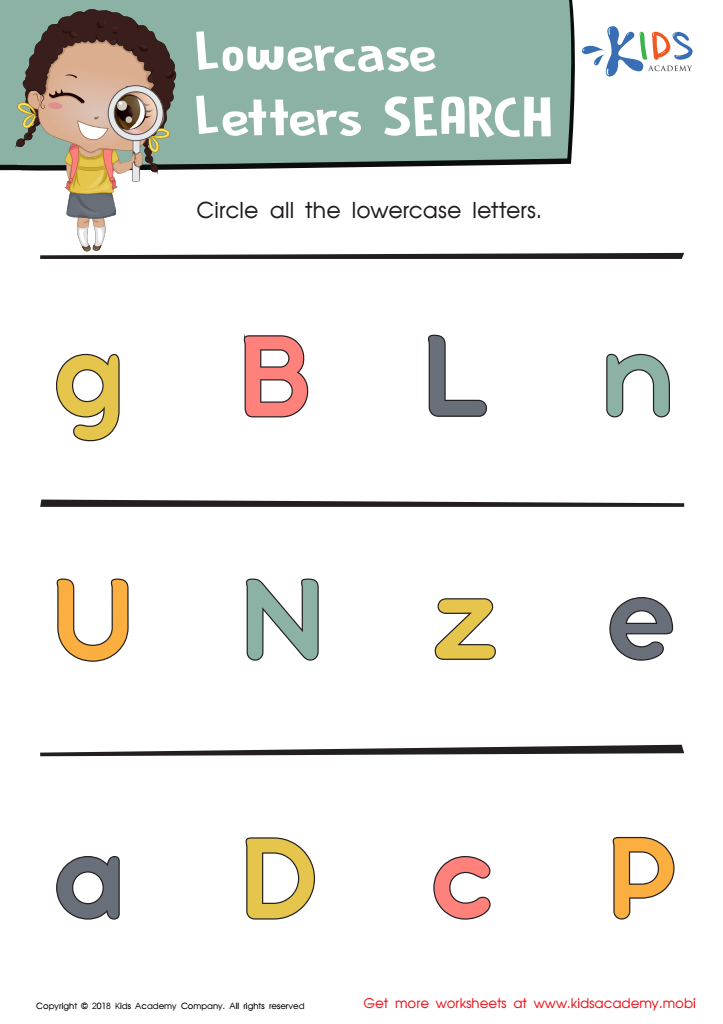
Lowercase Letters Search: Assessment Worksheet
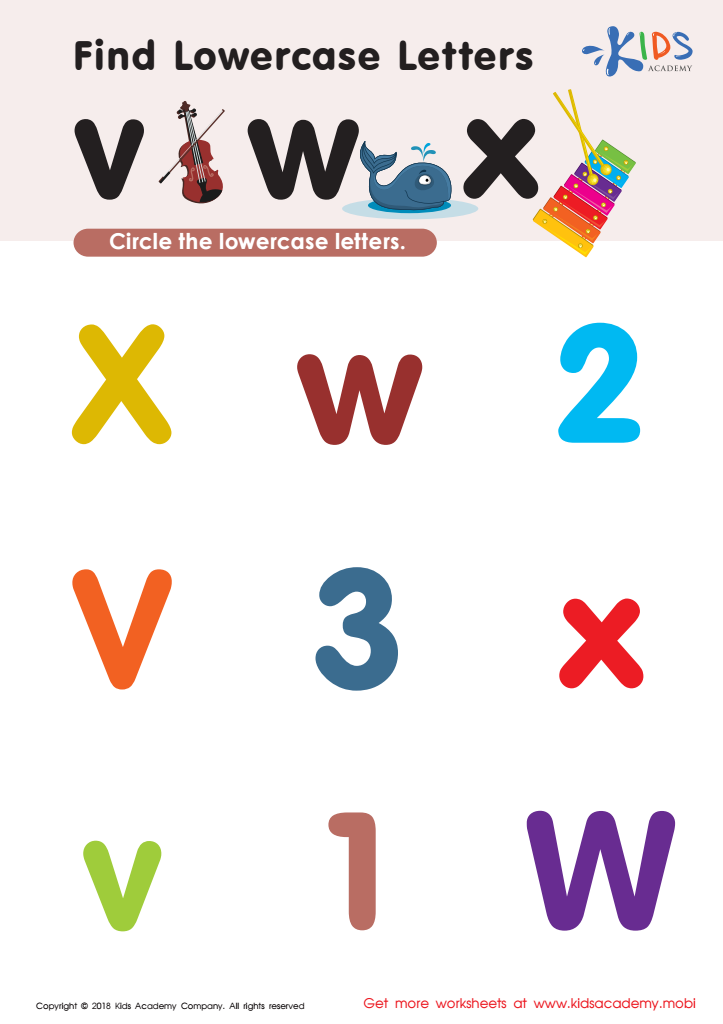
Find Lowercase Letters v w x Worksheet








Lowercase letter identification is a crucial skill for preschoolers aged 4-5, laying the foundation for literacy development. At this stage, children encounter texts that predominantly use lowercase letters, making recognition essential for reading fluency. Understanding lowercase letters helps children grasp basic phonics—the connection between letters and their sounds—enabling them to decode words as they begin to read.
Moreover, lowercase letter recognition aids in writing development, as children learn to form and use these letters when creating their own stories or journals. This skill fosters confidence and creativity in expression. Parents and teachers play a vital role in supporting this learning through engaging activities such as games, storytelling, and interactive writing exercises.
Additionally, early identification of lowercase letters promotes intellectual curiosity and a love for reading. By embedding letters into daily conversations, play, and surroundings, educators can create a rich language environment that fosters continual learning.
Overall, mastering lowercase letter recognition not only prepares children for future educational success but also instills a lifelong appreciation for reading and communication. By emphasizing this skill early on, parents and teachers can significantly impact a child's literacy journey.







