Enhance your child's phonics journey with our Listening Skills Phonics Worksheets for ages 4-5! Designed to support early literacy development, these engaging activities are crafted to improve auditory comprehension and phonemic awareness. Our worksheets provide fun exercises that encourage kids to listen attentively, differentiate sounds, and connect audio to letters and words. With colorful illustrations and easy-to-follow instructions, these resources make learning enjoyable and effective. Ideal for parents and educators, these materials foster foundational skills essential for reading success. Help your little ones build confidence and a love for learning through interactive listening exercises today!

Check out this FREE Trial Lesson on Phonics for age 4-5!

Distinguish Shades of Meaning Among Verbs Describing the Same General Action by Acting out the Meanings

Favorites
With answer key
Interactive
  • 4-5
  • Listening skills
  • Phonics
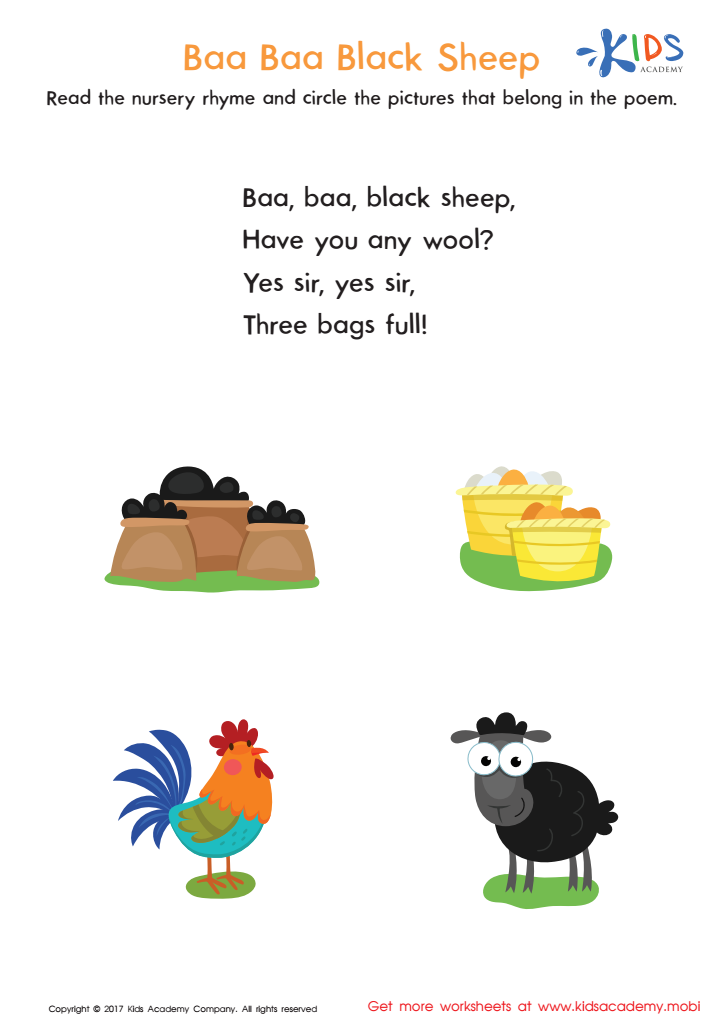
Baa Baa Black Sheep printable worksheet

Baa Baa Black Sheep Printable

Jumpstart your child's reading skills with this printable Baa Baa Black Sheep worksheet! Recite the lines with them, then have them select the pictures associated with the poem to test comprehension. Fun and educational!
Baa Baa Black Sheep Printable
Worksheet
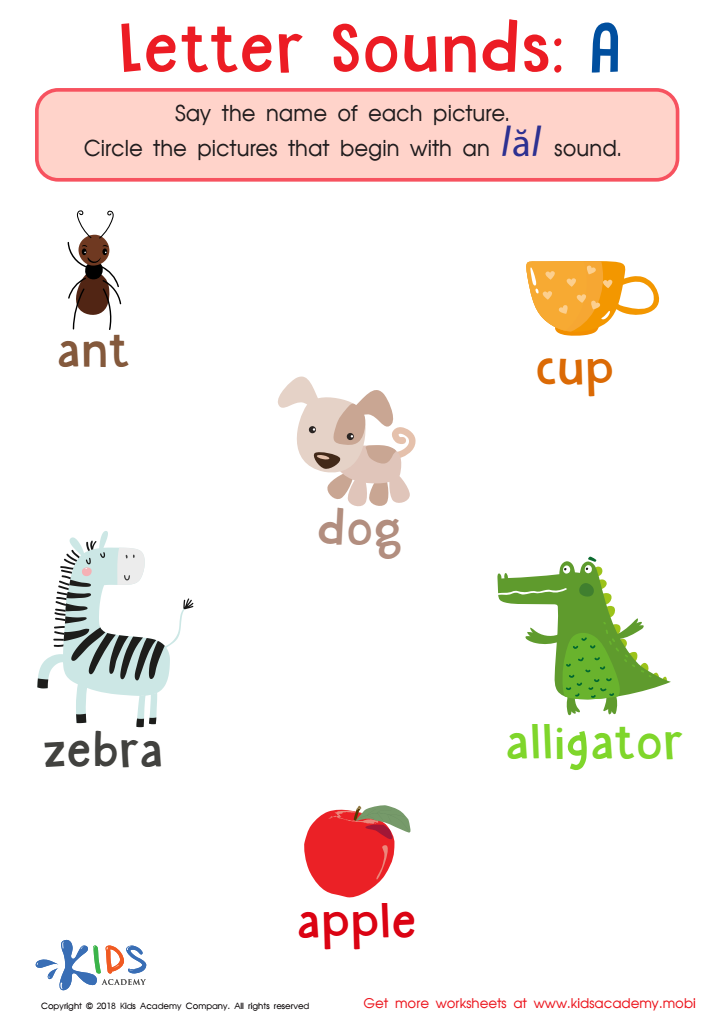
Letter A Sounds Worksheet

Letter A Sounds Worksheet

Encourage your new reader to practice the «ă» sound with this fun, free PDF worksheet. With the help of picture clues, they'll say the name of each word and trace circles around the items that start with «ă». This worksheet is an effective way to boost beginning sound skills while having fun!
Letter A Sounds Worksheet
Worksheet
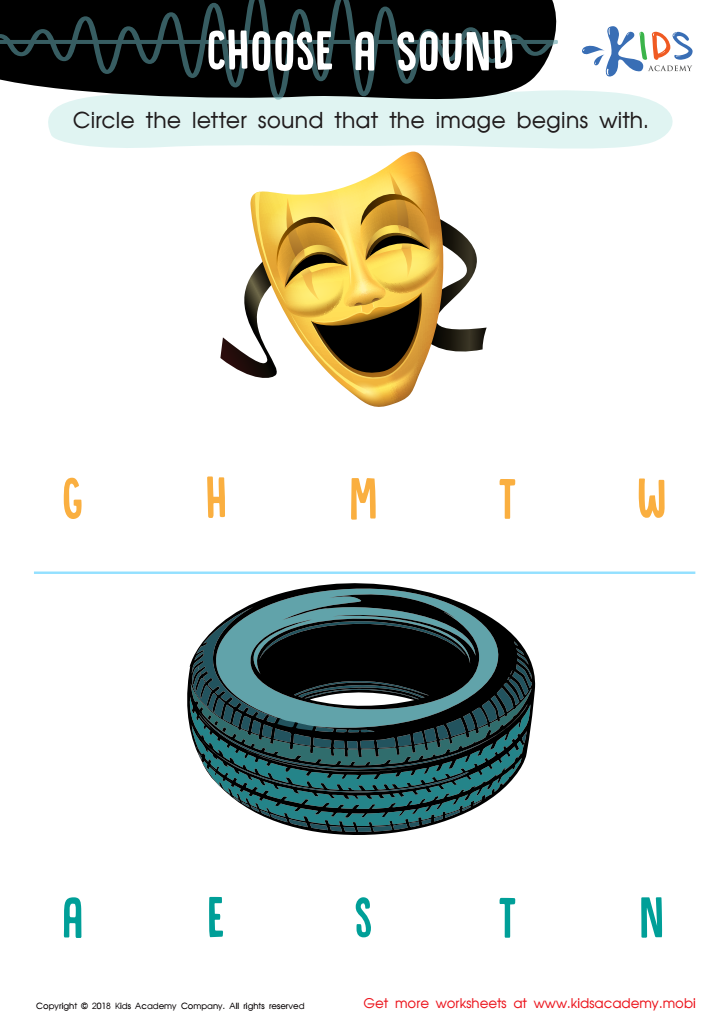
Choose a Sound Worksheet

Choose a Sound Worksheet

Help your child hone pre-reading skills with this colorful worksheet! They'll practice tracing letter sounds, develop phoneme awareness, and gain confidence. Plus, it's a fun way to work on their fine motor skills.
Choose a Sound Worksheet
Worksheet
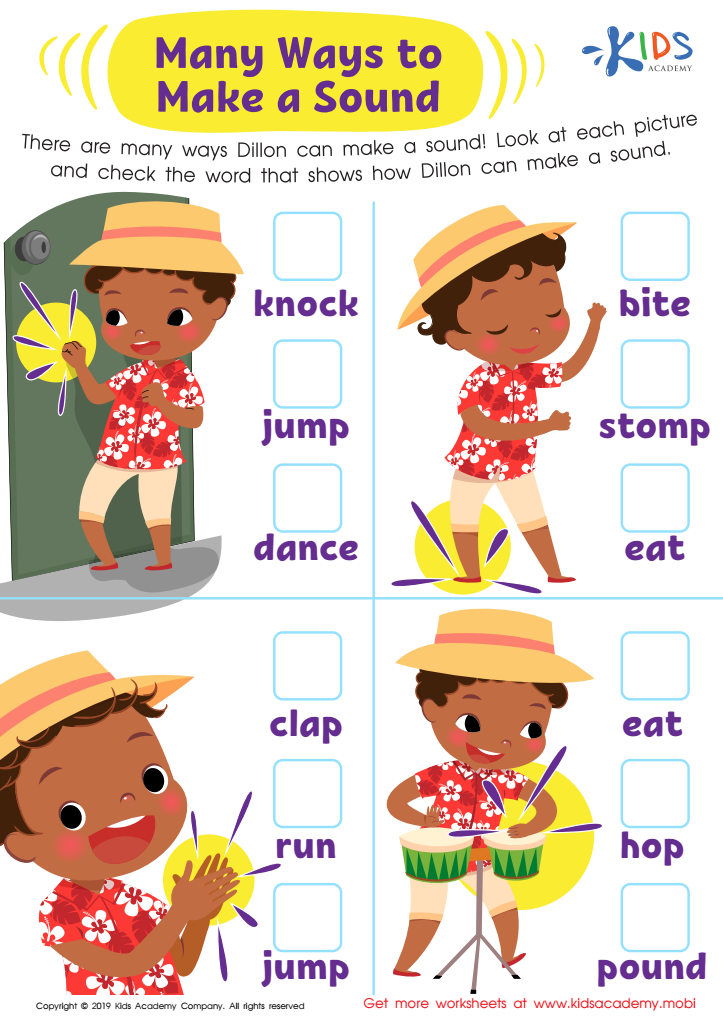
Many Ways to Make a Sound Worksheet

Many Ways to Make a Sound Worksheet

This interactive worksheet encourages creativity and imagination as kids use picture clues to match sound words. It helps them identify the sound methodology and build fine motor skills. Plus, with learning through play, they'll develop stronger vocabularies without even knowing it!
Many Ways to Make a Sound Worksheet
Worksheet
Phonological Awareness: Assessment 4 Worksheet

Phonological Awareness: Assessment 4 Worksheet

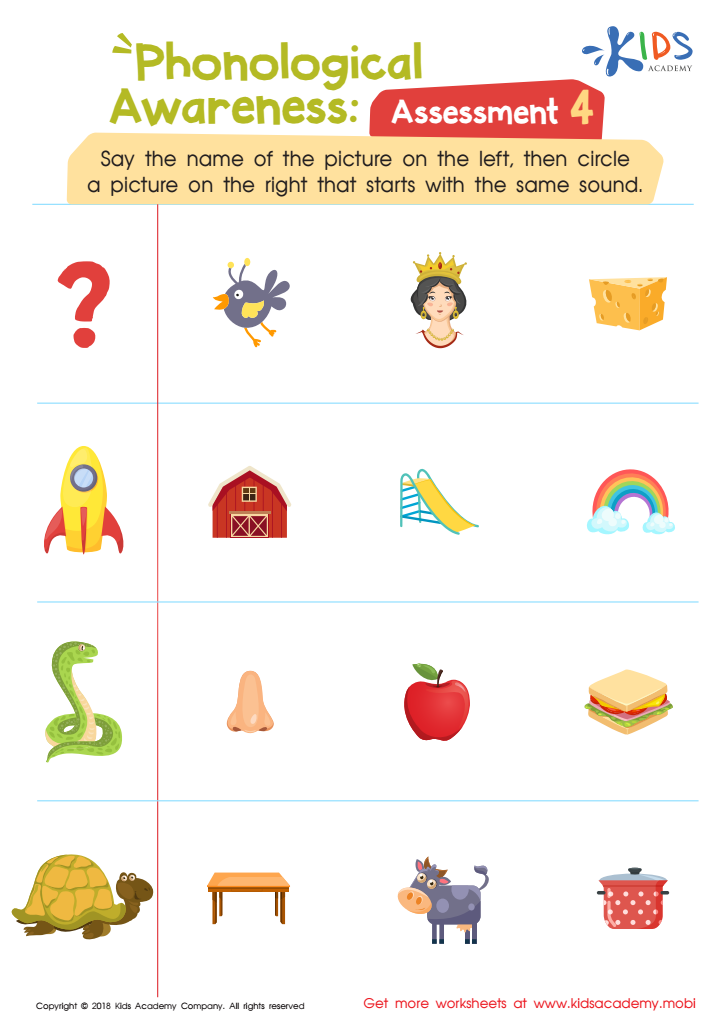
It can be tricky for young readers to differentiate between sounds in words. Make it fun with this downloadable worksheet! Ask your child to name each picture on the left and match the starting sound with an image on the right. This helps assess their phonics skills and make learning enjoyable.
Phonological Awareness: Assessment 4 Worksheet
Worksheet
Matching Consonant Sounds - Part 3 Worksheet Preview

Matching Consonant Sounds: Part 3 Worksheet
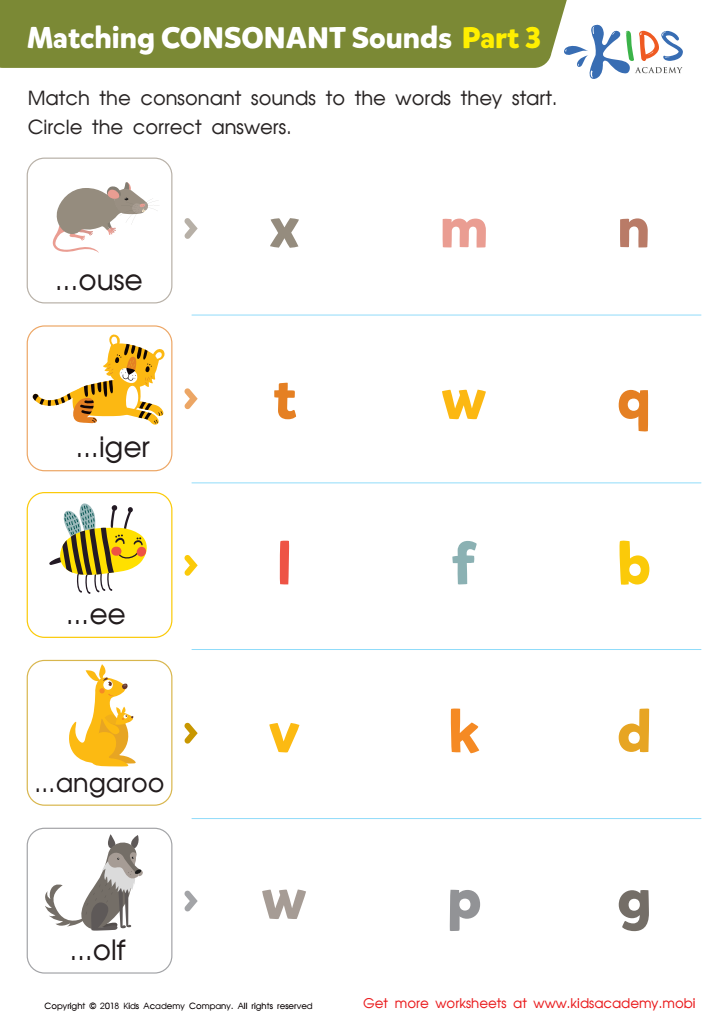
Help your early learner match consonant sounds to words with this fun worksheet! Have them name the pictures and try out each letter in the corresponding column. When they hear the sound that matches, circle it. Have them write the letter in the box to complete the word. Work their way down the page until the critters' names all match with consonants!
Matching Consonant Sounds: Part 3 Worksheet
Worksheet
Phonological Awareness: Assessment 3 Worksheet


Phonological Awareness: Assessment 3 Worksheet

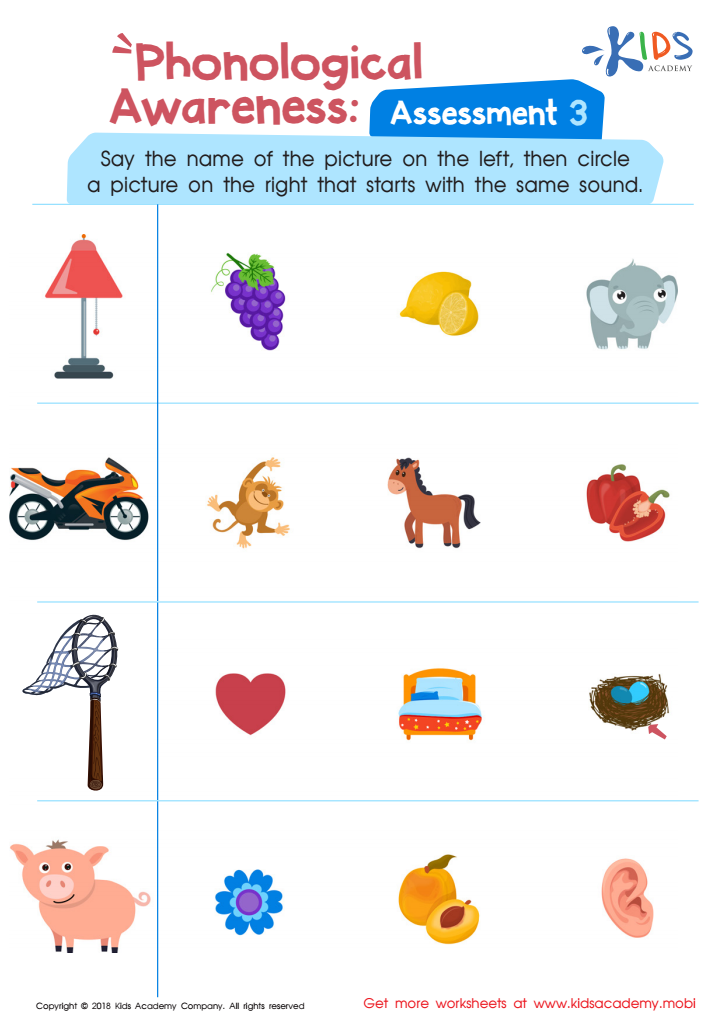
Test kids' reading readiness with a phonological awareness worksheet! With this PDF exercise, encourage children to name each picture aloud and match left to right. Help them learn to recognize word sounds at the start, middle and end of words. They'll be sure to remember that lamp doesn't sound like elephant!
Phonological Awareness: Assessment 3 Worksheet

Worksheet


Listening skills are foundational for early literacy development, especially when teaching phonics to children aged 4-5. At this age, children are in the critical period for language acquisition, and fine-tuning their listening skills can dramatically enhance their reading and writing abilities.

Firstly, strong listening skills enable children to differentiate between sounds, which is essential for phonemic awareness—the ability to hear, identify, and manipulate the individual sounds in words. When children can effectively listen, they are better equipped to understand the relationships between letters and sounds, a key component of phonics instruction.

Additionally, listening promotes comprehension and vocabulary development. Children can absorb new words, phrases, and sentence structures through listening, which helps them make connections when they begin to read. In a classroom setting or at home, engaging in stories, songs, and rhymes enriches children’s auditory experiences and supports phonics learning.

Moreover, developing listening skills fosters better communication and social interactions. This enhances children's confidence, allowing them to actively participate in discussions about stories and concepts. By emphasizing listening skills and phonics, parents and teachers not only prepare children for academic success but also cultivate a love of learning and literacy that will last a lifetime.