Rhyme recognition Phonics Worksheets for Ages 4-5
3 filtered results
-
From - To
Discover engaging Rhyme Recognition Phonics Worksheets for children ages 4-5! Our specially designed worksheets help young learners develop essential phonics skills through fun and interactive activities. By focusing on rhyme recognition, these resources boost your child’s ability to enhance their vocabulary, improve reading fluency, and foster early literacy development. Each worksheet is crafted to spark creativity and make learning enjoyable, featuring vibrant illustrations and relatable themes. Ideal for preschool or kindergarten settings, these worksheets provide educators and parents with the tools needed to support effective phonics instruction. Start your child’s journey to reading success today with our delightful, age-appropriate worksheets!
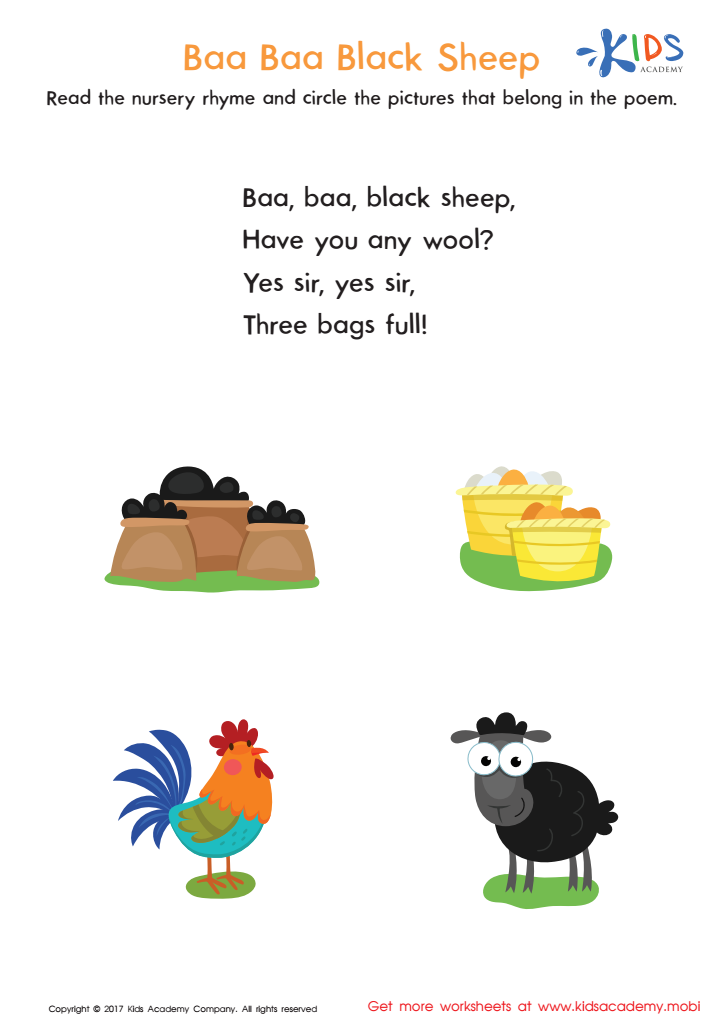
Baa Baa Black Sheep Printable
 Assign to My Students
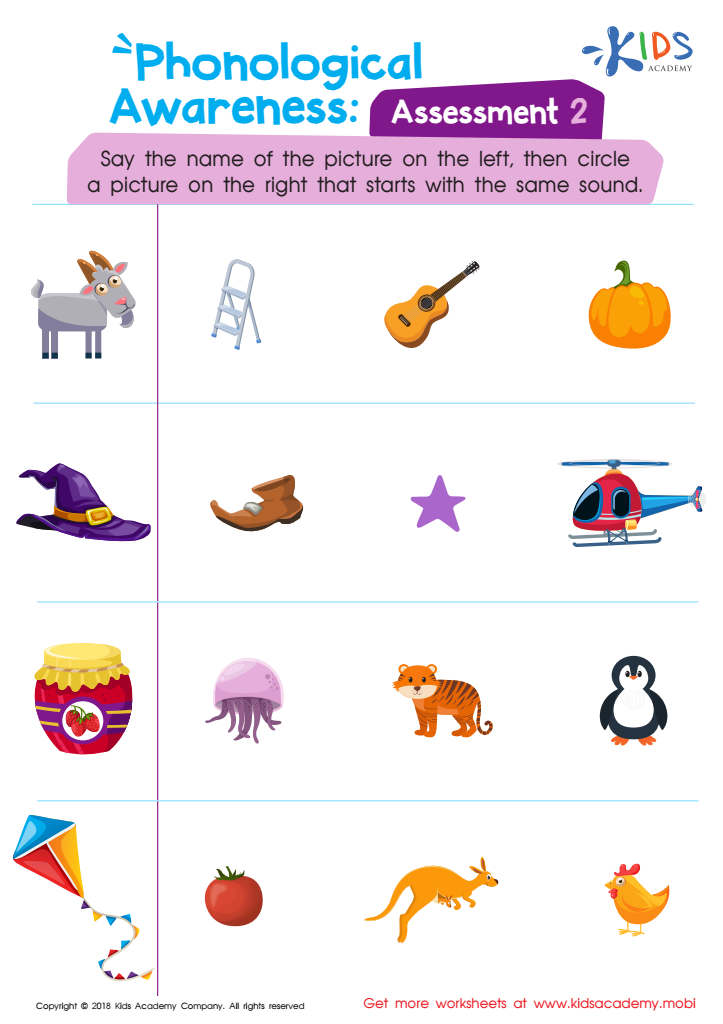
Phonological Awareness: Assessment 2 Worksheet
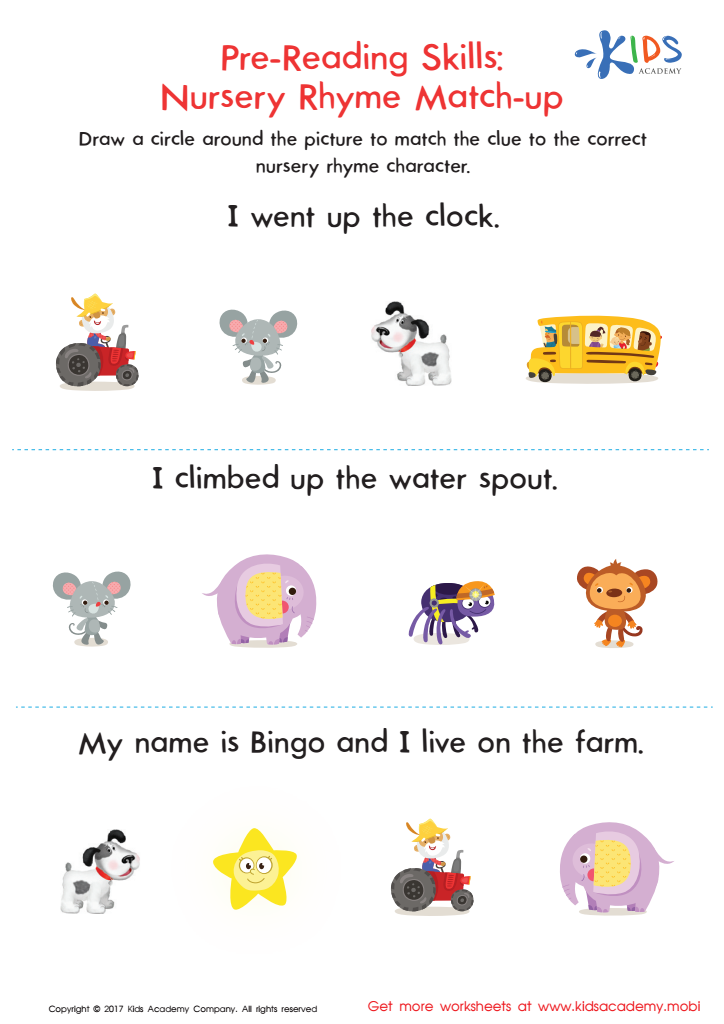
Nursery Rhyme Match–Up Worksheet








Rhyme recognition phonics is crucial for early literacy development in children aged 4-5. Understanding rhymes helps young learners develop phonemic awareness, which is the ability to hear, identify, and manipulate individual sounds in spoken words. This skill lays the foundation for effective reading and writing.
When children recognize and produce rhyming words, they enhance their auditory discrimination. This ability aids them in decoding new words and fosters a love for language, making reading enjoyable. Rhyming activities engage children through playful and repetitive sounds, offering a fun way to practice literacy skills.
Furthermore, rhyme recognition promotes vocabulary expansion. Children exposed to rhyming stories read aloud by parents or teachers encounter a variety of words connected by sound patterns. This rich linguistic exposure empowers them to recognize patterns and predict upcoming vocabulary.
In addition to aiding in literacy, rhyme recognition fosters critical thinking and creativity. Children learn to play with language, creating their own rhymes, thus stimulating cognitive processes. By prioritizing rhyme recognition phonics during these formative years, parents and teachers equip children with essential tools for academic success and instill a lifelong appreciation for reading and language.







