Sound-letter correlation Phonics Worksheets for Ages 4-5
3 filtered results
-
From - To
Our "Sound-Letter Correlation Phonics Worksheets for Ages 4-5" provide engaging and educational activities designed to help young learners understand the relationship between letters and sounds. Through fun and interactive exercises, children will develop early reading skills, improve phonemic awareness, and build a solid foundation for literacy. Perfect for preschool and kindergarten students, these printable worksheets offer a variety of tasks that nurture their listening and speaking abilities while making learning enjoyable. Download now to support your child’s journey towards mastering the alphabet and developing essential phonics skills.
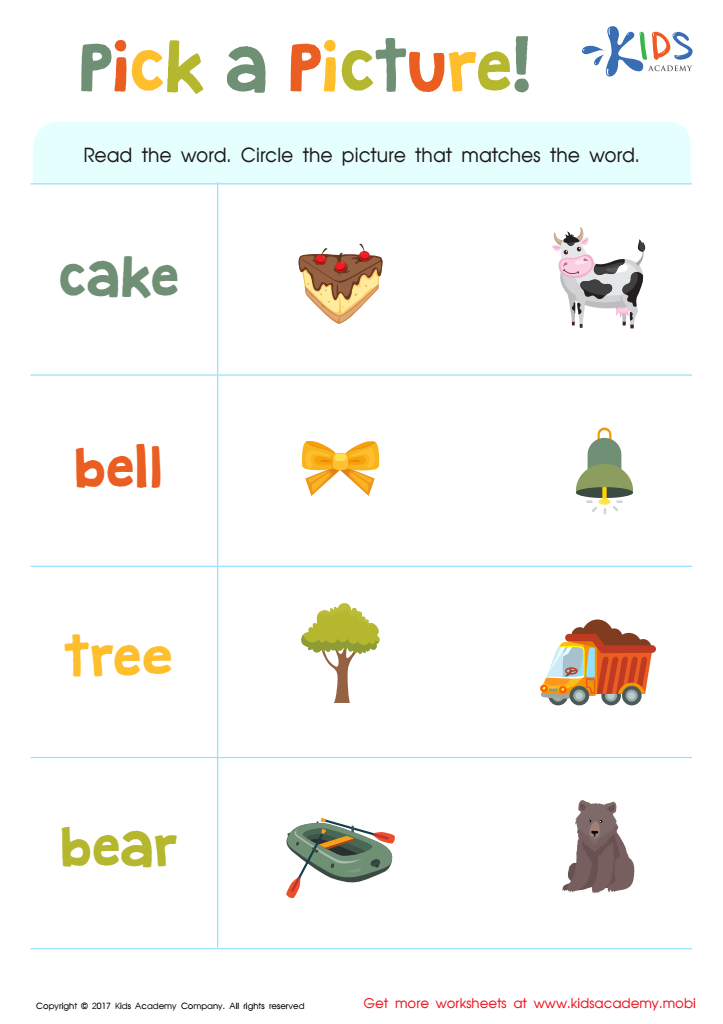
Pick a Picture Word Recognition Worksheet
 Assign to My Students
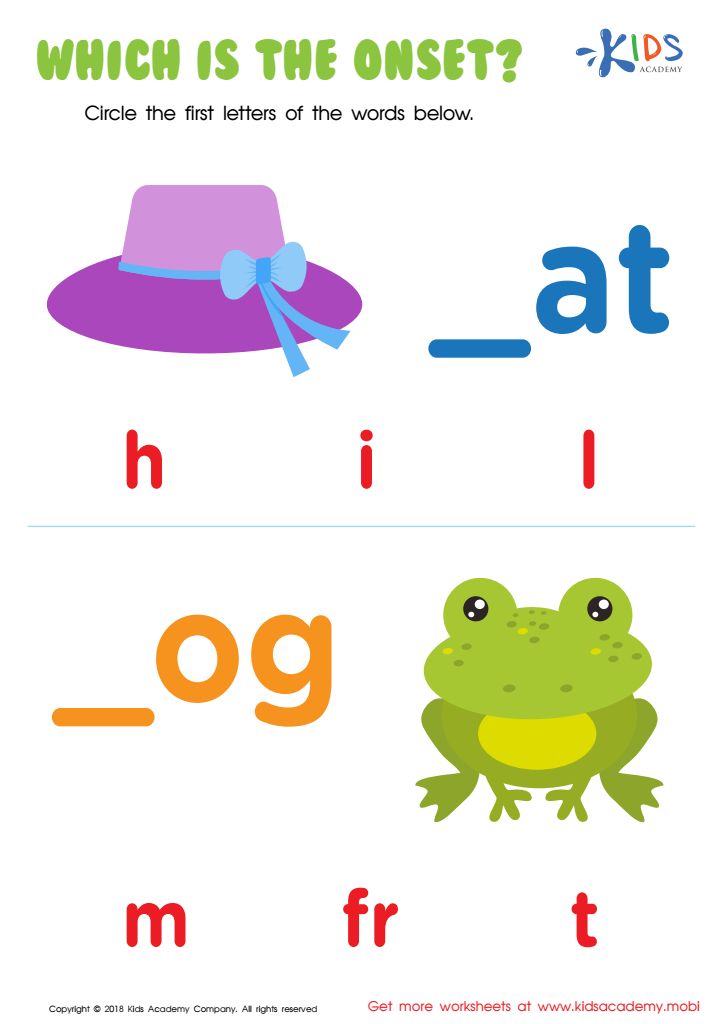
Which Is the Onset? Worksheet
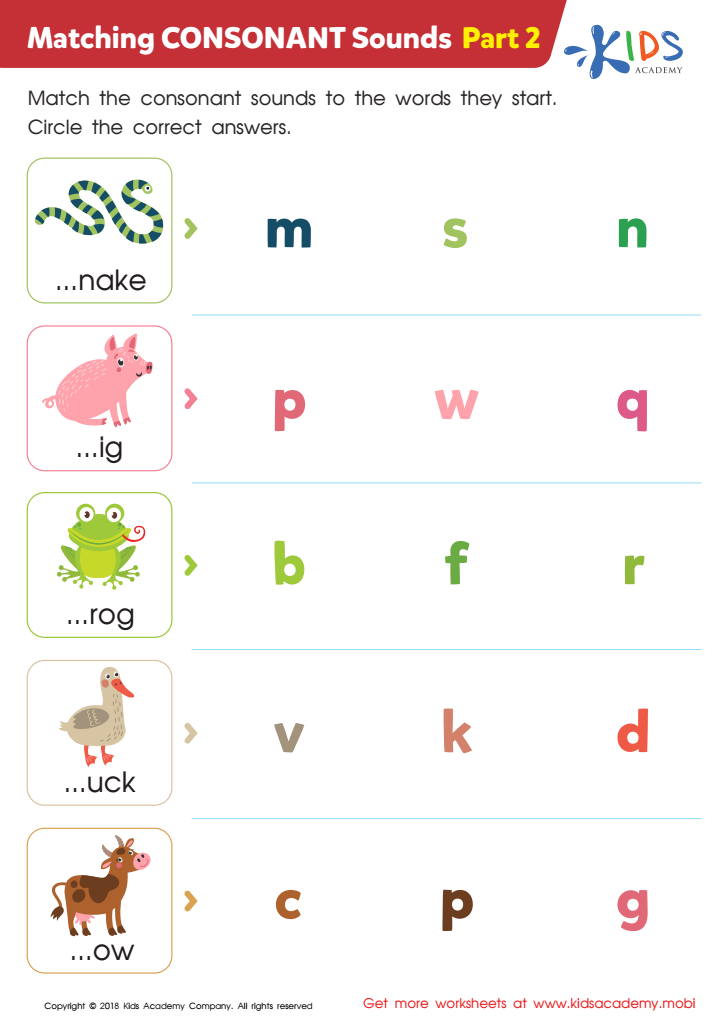
Matching Consonant Sounds: Part 2 Worksheet








Understanding sound-letter correlations through phonics is critical for young children aged 4-5, as it lays the foundation for their reading and writing skills—crucial elements for their overall academic achievement and future success. At this age, children's brains are particularly receptive to learning language, and phonics helps them make the vital connection between sounds (phonemes) and written letters (graphemes).
When children comprehend sound-letter relationships, they develop the ability to decode new words, enhancing their reading fluency and confidence. Engaging with phonics also builds their phonemic awareness, allowing them to recognize and play with the sounds in words, a predictor of effective reading skills. Early mastery of phonics reduces the likelihood of reading difficulties down the road, creating a solid pathway for more advanced literacy skills.
Furthermore, phonic instruction supports spelling accuracy and vocabulary development. As children link sounds to letters, they begin to understand word meanings and construct sentences, bolstering their communication abilities. In a world where literacy is paramount to success, investing in phonics education during these formative years ensures that children not only excel in reading and writing but are also prepared for a lifetime of learning and intellectual curiosity. Parents and teachers play a crucial role in fostering this foundational skill, placing children on the path to educational success.







