Lowercase identification Upper & Lowercase Letters Worksheets for Ages 4-5
5 filtered results
-
From - To
Discover our engaging Lowercase Identification Worksheets designed specifically for children aged 4-5! These user-friendly resources help young learners master recognizing and differentiating between uppercase and lowercase letters. Each worksheet features vibrant illustrations and interactive activities that make learning fun and accessible. By practicing letter identification, kids will enhance their early literacy skills, preparing them for future reading and writing success. Perfect for at-home learning or classroom activities, our worksheets are printable and easily integrated into any educational curriculum. Nurture your child’s love for letters today and set them on the path to confident communication with our delightful worksheets!
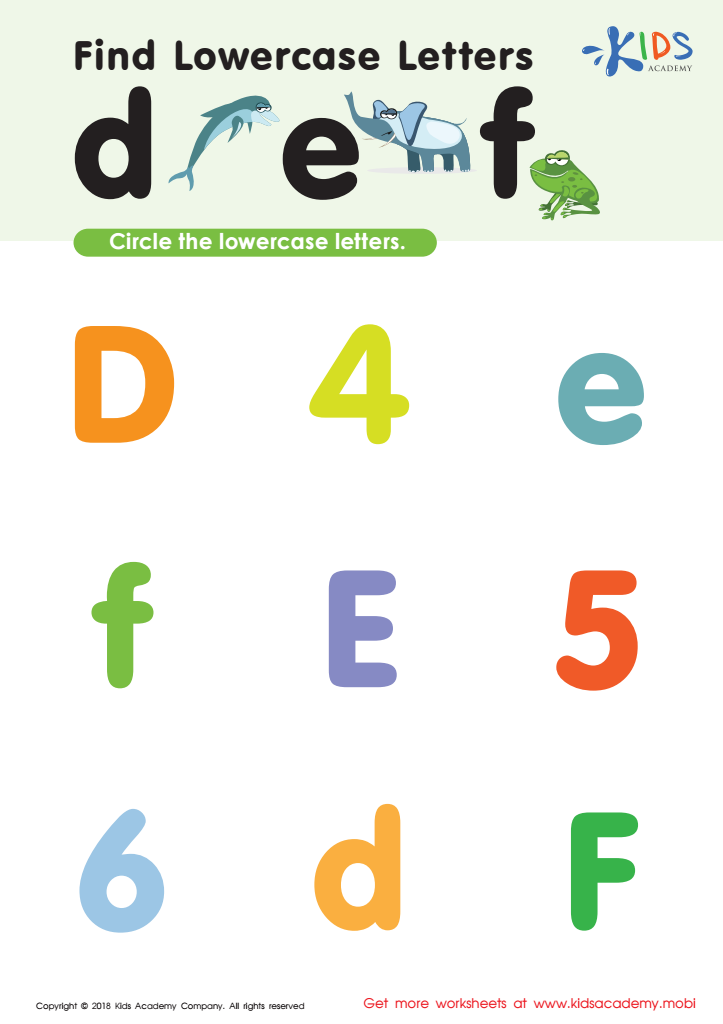
Find Lowercase Letters d e f Worksheet
 Assign to My Students

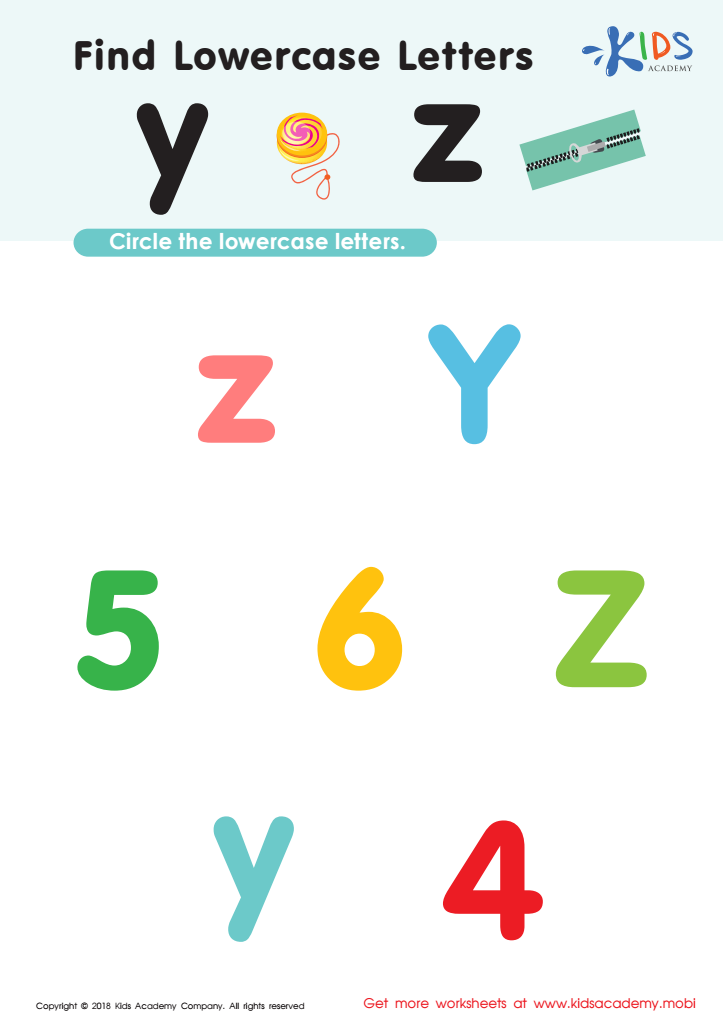
Find Lowercase Letters y z Worksheet
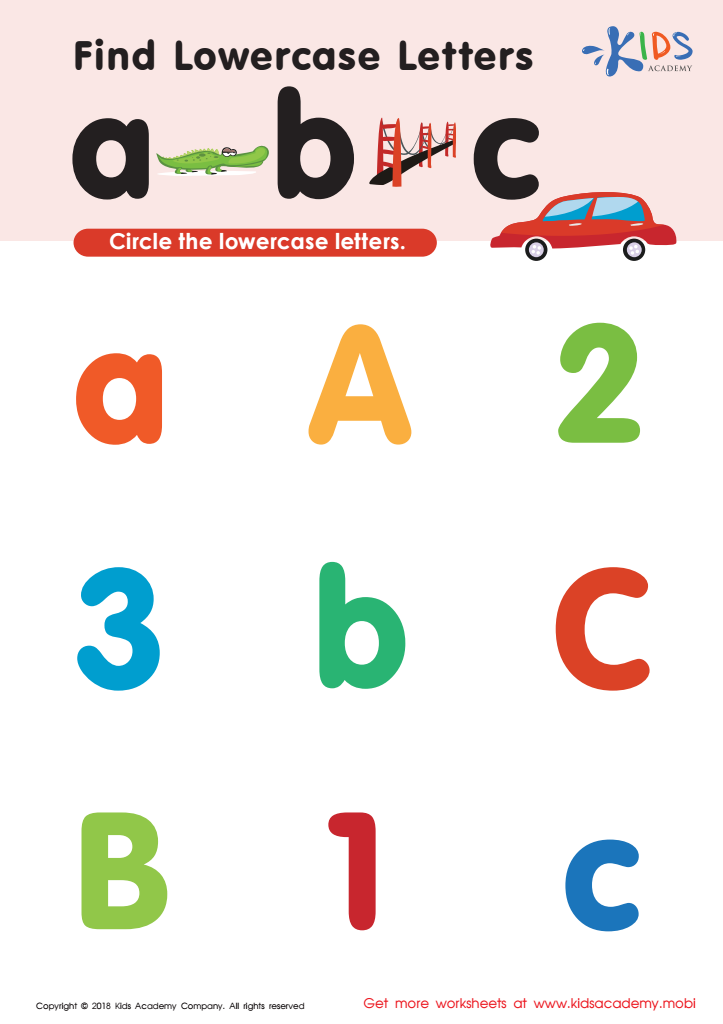
Find lowercase letters a b c Worksheet
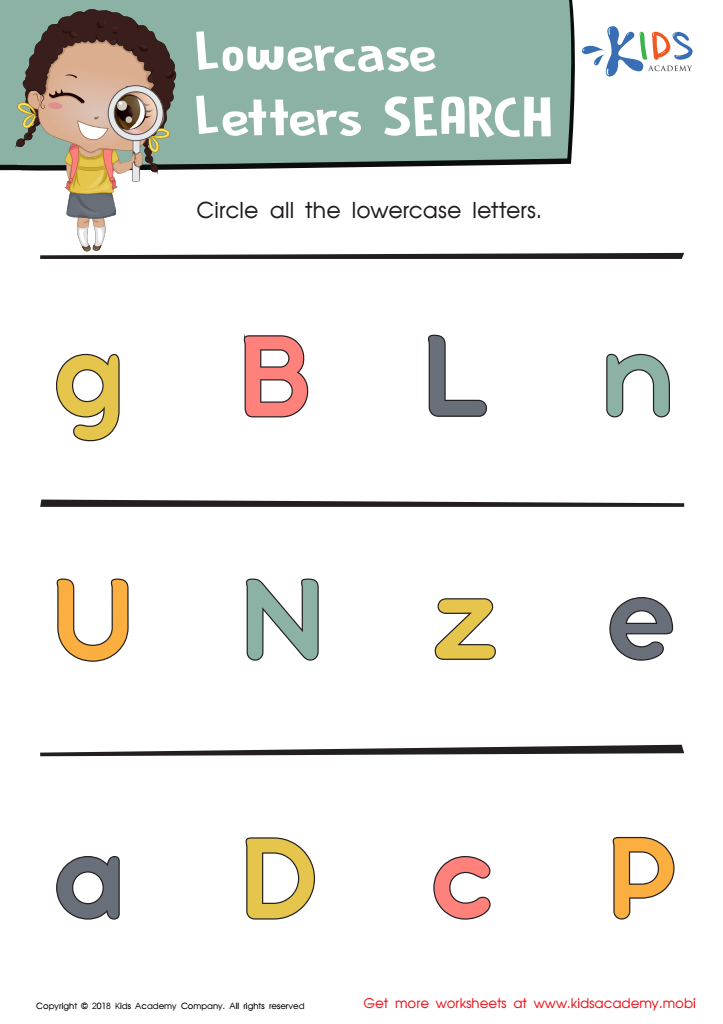
Lowercase Letters Search: Assessment Worksheet
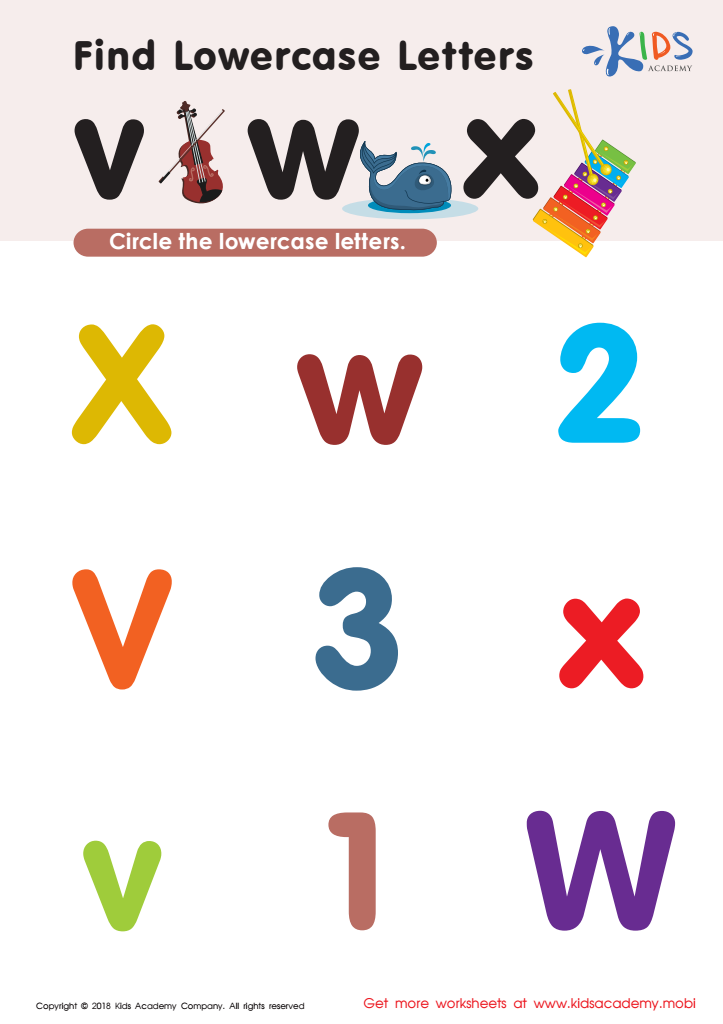
Find Lowercase Letters v w x Worksheet






Lowercase and uppercase letter identification is a fundamental skill for children aged 4-5, serving as the building block for literacy development. Understanding the difference between these two cases is crucial for several reasons. Firstly, lowercase letters make up the majority of text in children's books and daily reading materials, so being able to recognize them helps foster independence in reading and enhances comprehension skills.
Additionally, this skill lays the groundwork for writing, enabling young learners to form words correctly and develop their handwriting. Recognizing uppercase letters is important as well, as they usually signal the beginning of sentences and proper nouns, supporting children in grammatical understanding.
Moreover, mastering letter identification aids in phonemic awareness, linking sounds to letters, which is vital for their future reading endeavors. When children can identify both cases, it builds their confidence and encourages a love for reading and writing.
Parents and teachers play a critical role in facilitating activities, such as alphabet games and storytime, that highlight these concepts. By prioritizing lowercase and uppercase letter recognition, adults can nurture early literacy skills that will benefit children's academic journey and cognitive development profoundly.







