Cognitive Development Worksheets for Ages 4-5 - Page 9
197 filtered results
-
From - To

Night Sky Numbers Worksheet
 Assign to My Students
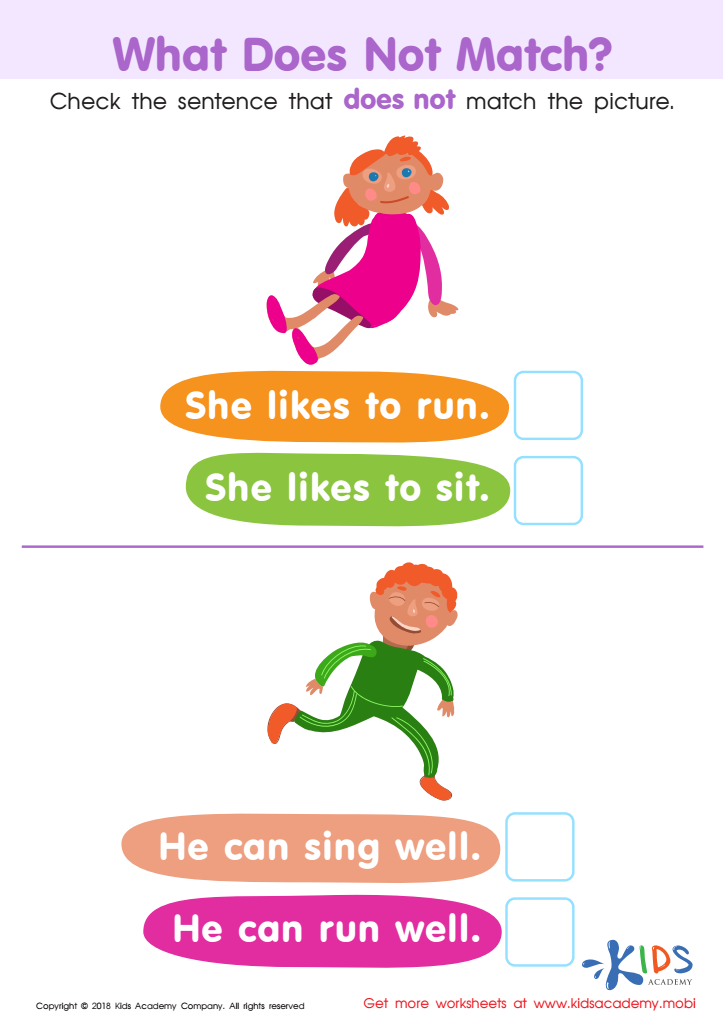
What Does Not Match? Worksheet








Cognitive development during ages 4-5 is a crucial stage in a child's growth, as it significantly influences their ability to think, learn, and understand the world around them. At this age, children begin to develop vital skills such as problem-solving, memory, and basic reasoning. Parents and teachers should care about this developmental stage because it lays the groundwork for later learning and academic success.
Engaging children in activities that promote cognitive skills—such as storytelling, puzzles, and interactive games—helps enhance their language abilities, creativity, and critical thinking. When children grasp concepts like cause and effect or classification of objects, they become more equipped to navigate complex situations in the future.
Moreover, cognitive development directly affects social interactions. As children learn to think critically, they also improve their communication skills and emotional understanding, which are vital for building relationships. Early support in this area can help identify any learning challenges, opening pathways for timely interventions.
By fostering a stimulating environment that encourages curiosity and exploration, parents and teachers play a fundamental role in nurturing well-rounded, confident learners who are prepared to embrace the educational experiences that lie ahead. Investing in cognitive development at this tender age means investing in a brighter future for our children.








