Comparing objects Worksheets for Ages 4-5
6 filtered results
-
From - To
Discover our engaging "Comparing Objects Worksheets" designed for children aged 4-5! These interactive worksheets help young learners develop essential comparison skills by examining the similarities and differences between various objects. Each activity promotes critical thinking and encourages children to describe, sort, and categorize items based on their attributes like size, color, and shape. With vibrant illustrations and age-appropriate challenges, these worksheets make learning fun and effective. Perfect for use at home or in the classroom, our resources support young children's cognitive development while easing them into the foundational concepts of mathematics and observational skills. Download today and capture your child's curiosity!
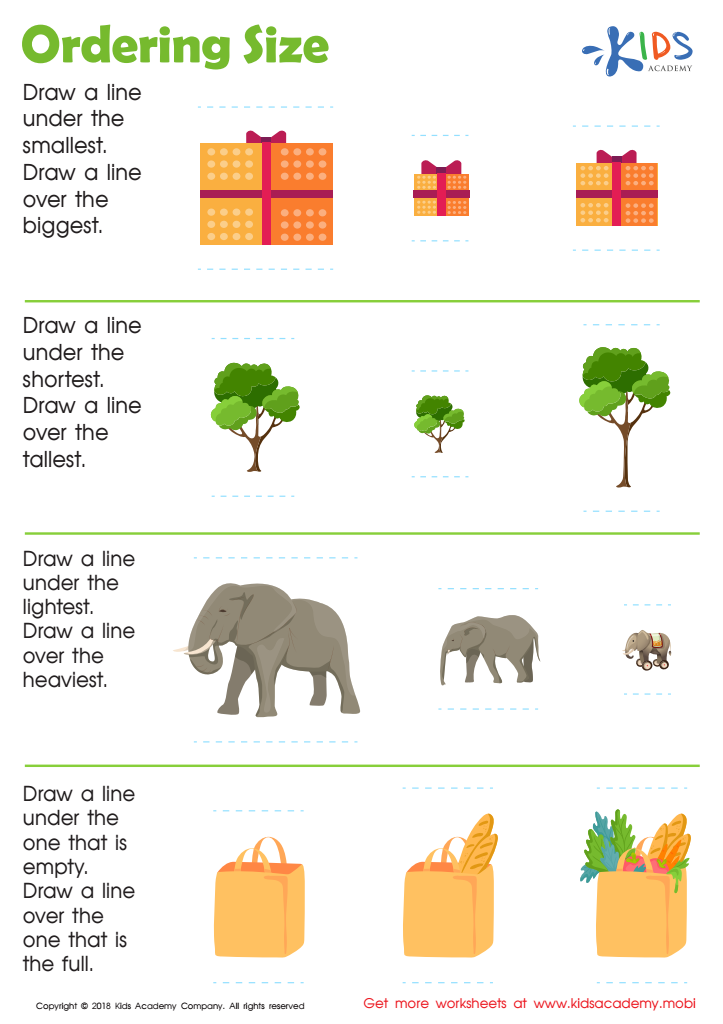
Ordering Size Worksheet
 Assign to My Students
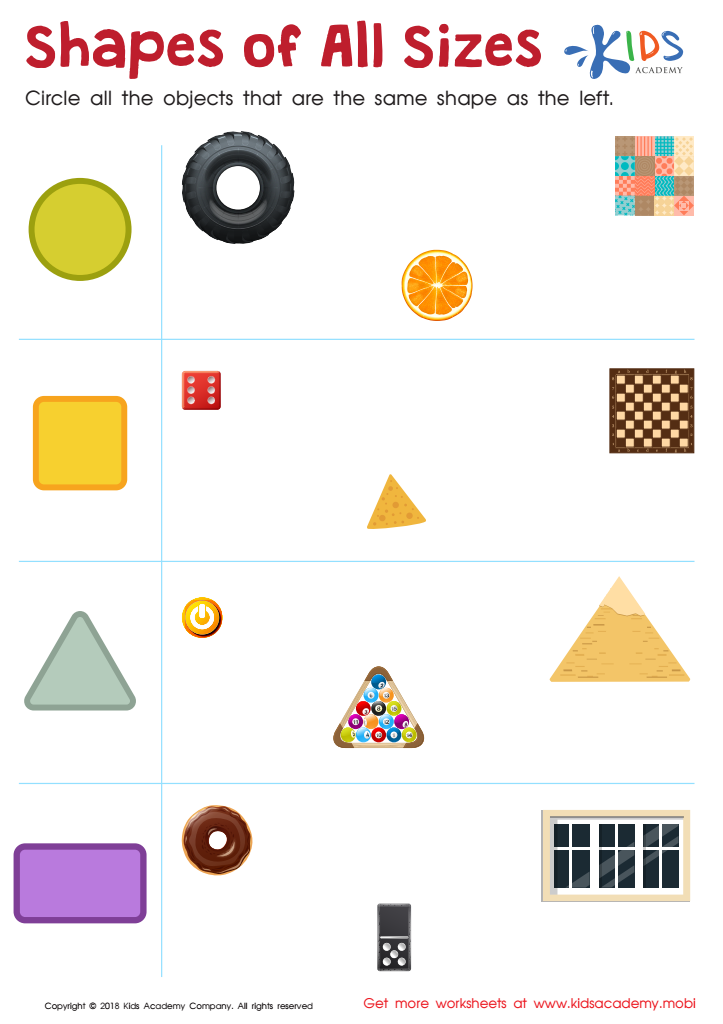
Shapes of All Sizes Worksheet
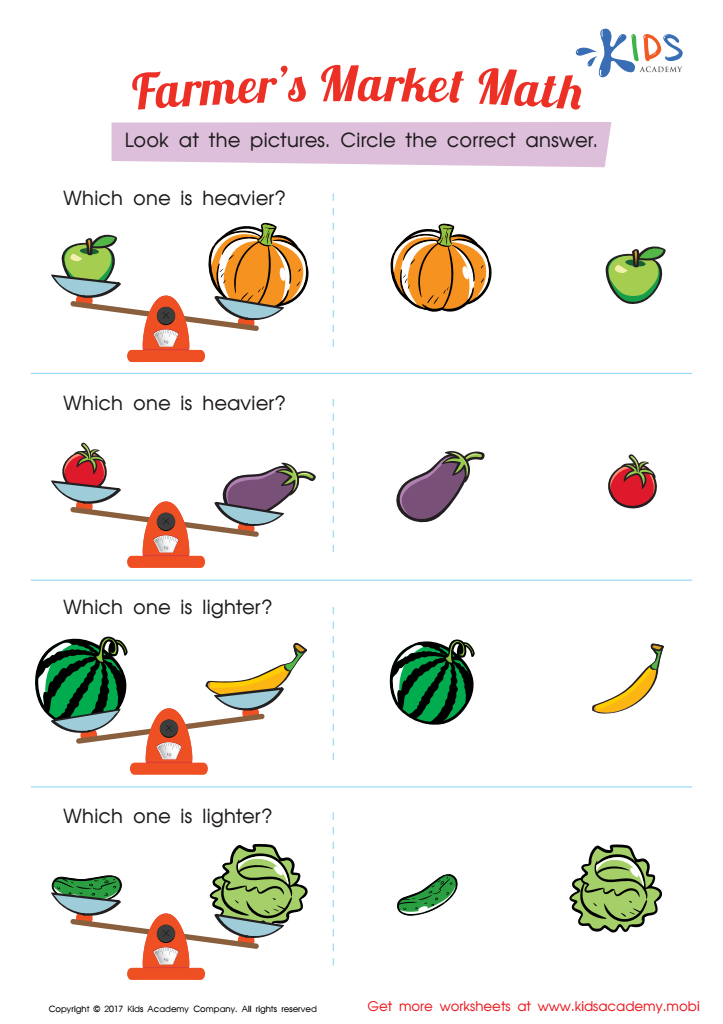
Which One Is Heavier Worksheet
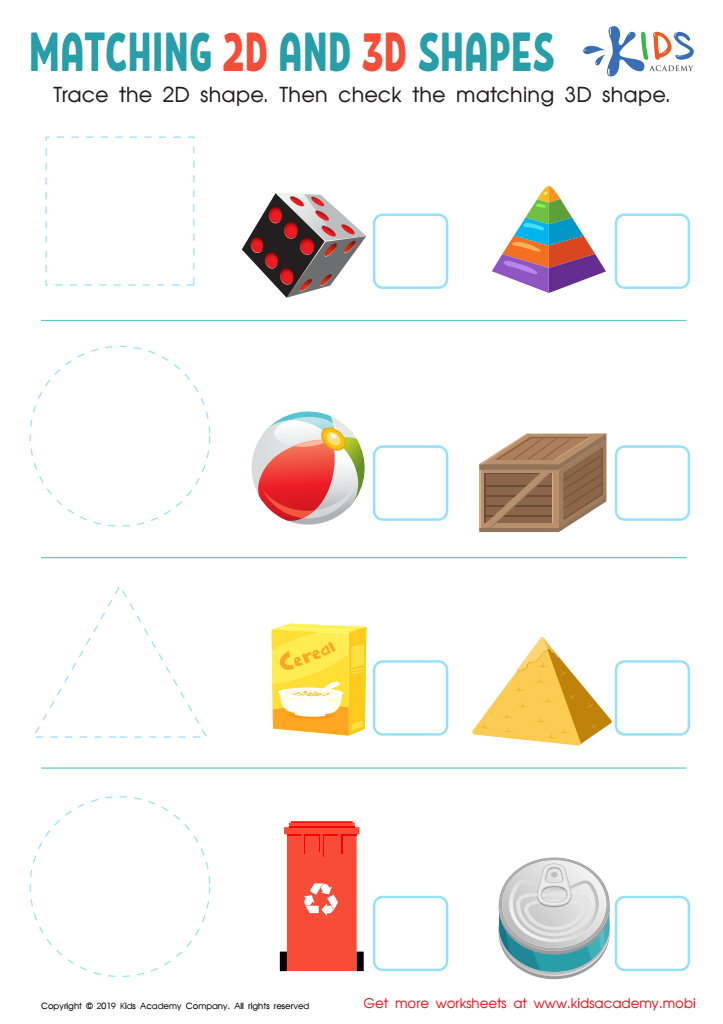
Matching 2D and 3D Shapes Worksheet
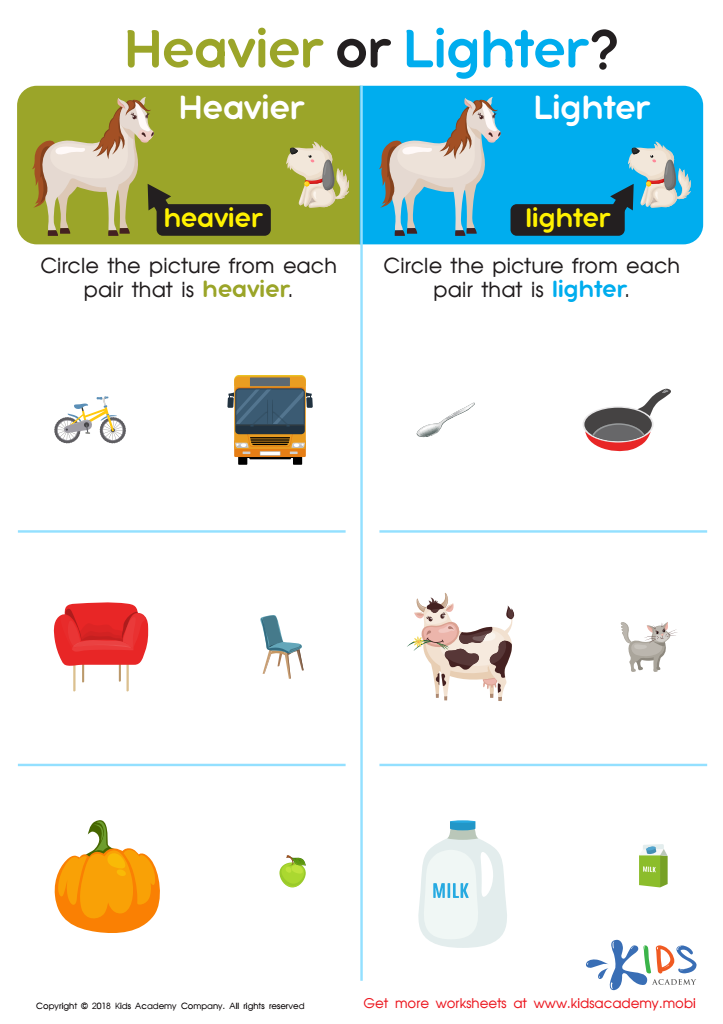
Heavier or Lighter? Worksheet
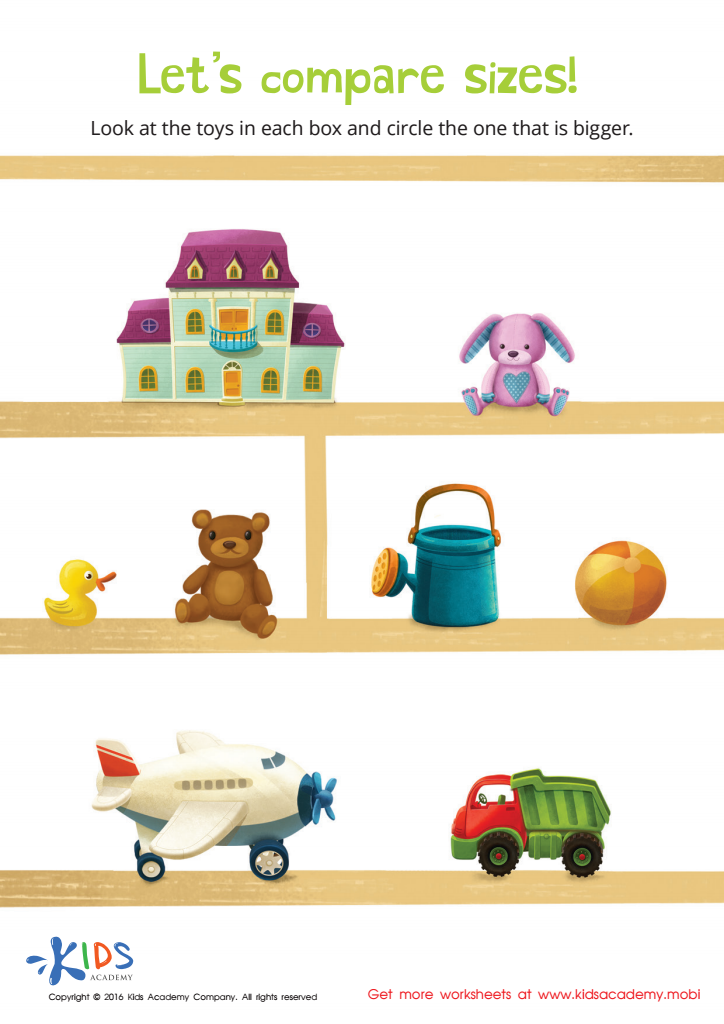
Classifying by Size Sorting Worksheet



.jpg)


Comparing objects is a fundamental skill for children aged 4-5 that lays the groundwork for essential mathematical concepts and critical thinking. Parents and teachers should emphasize this skill because it helps young learners develop a sense of size, shape, quantity, and differences, which are vital components of early mathematics.
When children engage in comparing objects—such as sorting them by size, color, or type—they enhance their observational skills and learn to make distinctions. This process promotes vocabulary expansion, as children articulate their observations using comparative language (e.g., bigger, smaller, heavier).
Moreover, comparing objects supports cognitive development by encouraging analytical thinking. Children learn to recognize patterns and categorize items, which establishes the basis for future problem-solving abilities.
In social contexts, comparing and contrasting objects fosters communication and collaborative skills, as children often share their findings with peers and adults. This interaction nurtures confidence and strengthens social connections.
Overall, introducing children to comparing objects not only enriches their early educational experience but also equips them with vital skills that transcend the classroom, making it an essential focal point for parents and educators working with young children.








