Explore our engaging "Fine Motor Skills (Writing Numbers) Worksheets" designed specifically for children ages 4-5. These worksheets provide a fun and interactive way for young learners to develop essential fine motor skills through number writing activities. Featuring colorful illustrations and easy-to-follow exercises, kids will practice tracing, writing, and recognizing numbers while enhancing their hand-eye coordination and pencil grip. Our carefully crafted activities stimulate creativity and boost confidence, making learning an enjoyable experience. Perfect for parents and educators, these worksheets support early numeracy skill development in a playful, engaging manner. Help your child embark on their numerical journey today!

Check out this FREE "Fine motor skills (writing numbers)" Trial Lesson for age 4-5!

L

Favorites
With answer key
Interactive
  • 4-5
  • Fine motor skills (writing numbers)
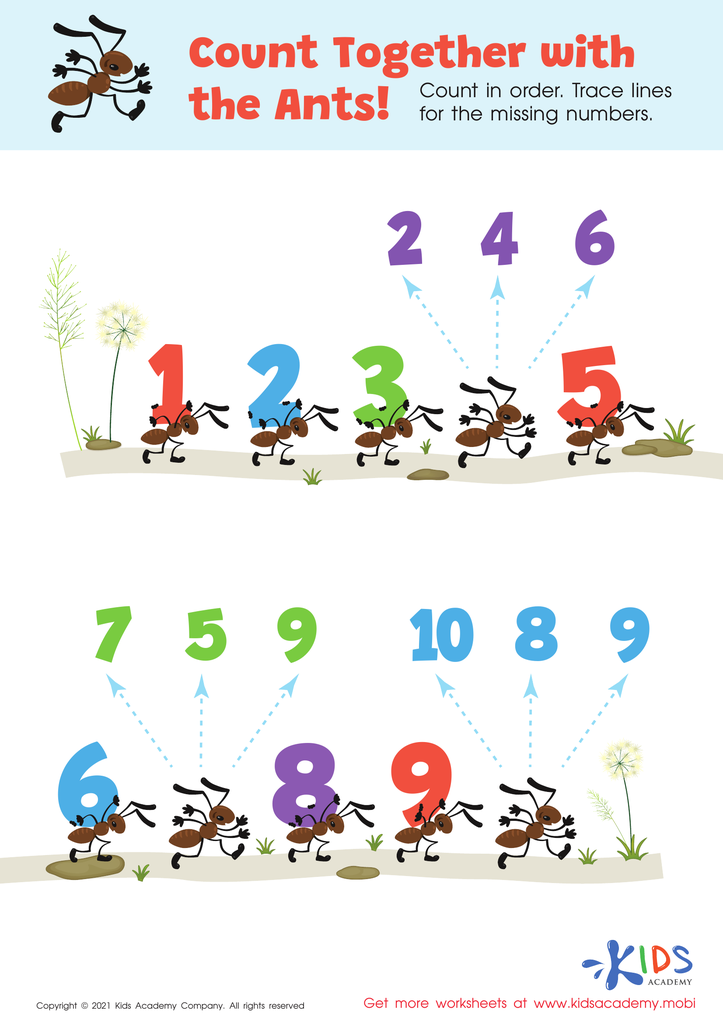
Count Together with the Ants Worksheet
Count Together with the Ants Worksheet
Rather than letting kids get too deep in online games, keep them engaged with learning worksheets. Ask them to identify the insect in the picture, then count the ants. Help them trace lines to the missing numbers. It's simple and straightforward for young children to comprehend.
Count Together with the Ants Worksheet
Worksheet
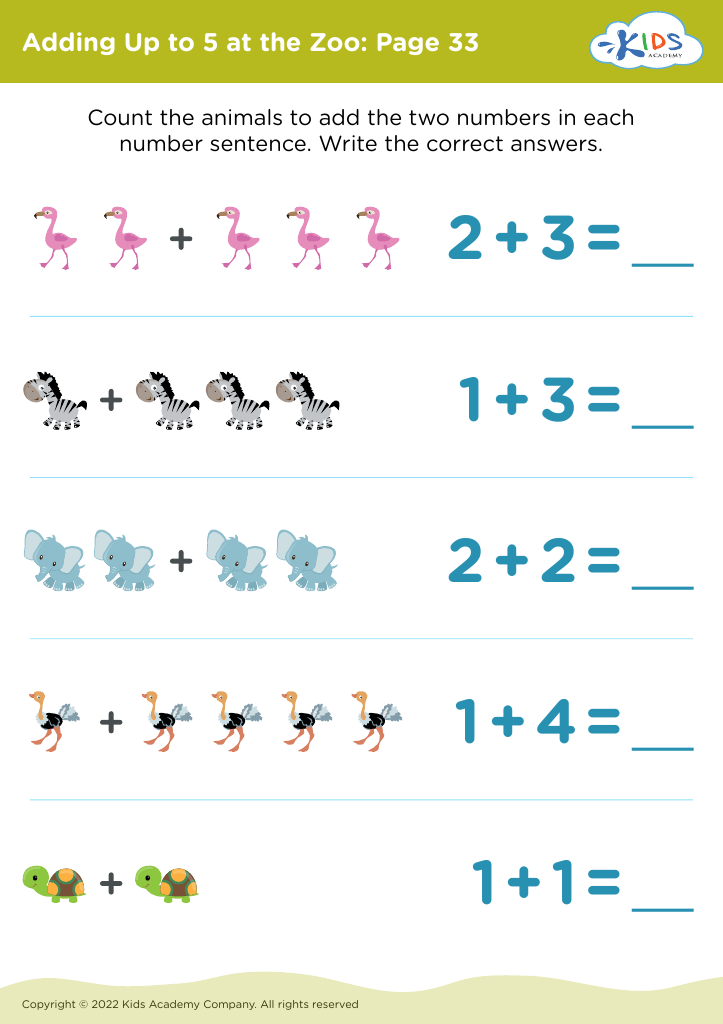
Adding Up to 5 at the Zoo: Page 33
Worksheet
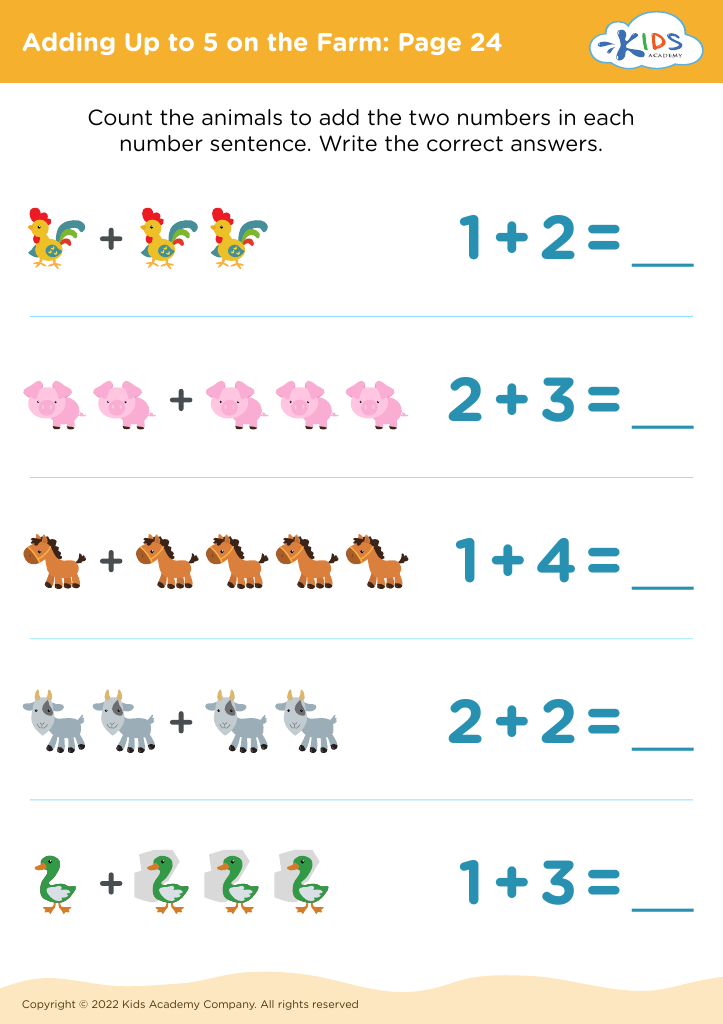
Adding Up to 5 on the Farm: Page 24
Worksheet
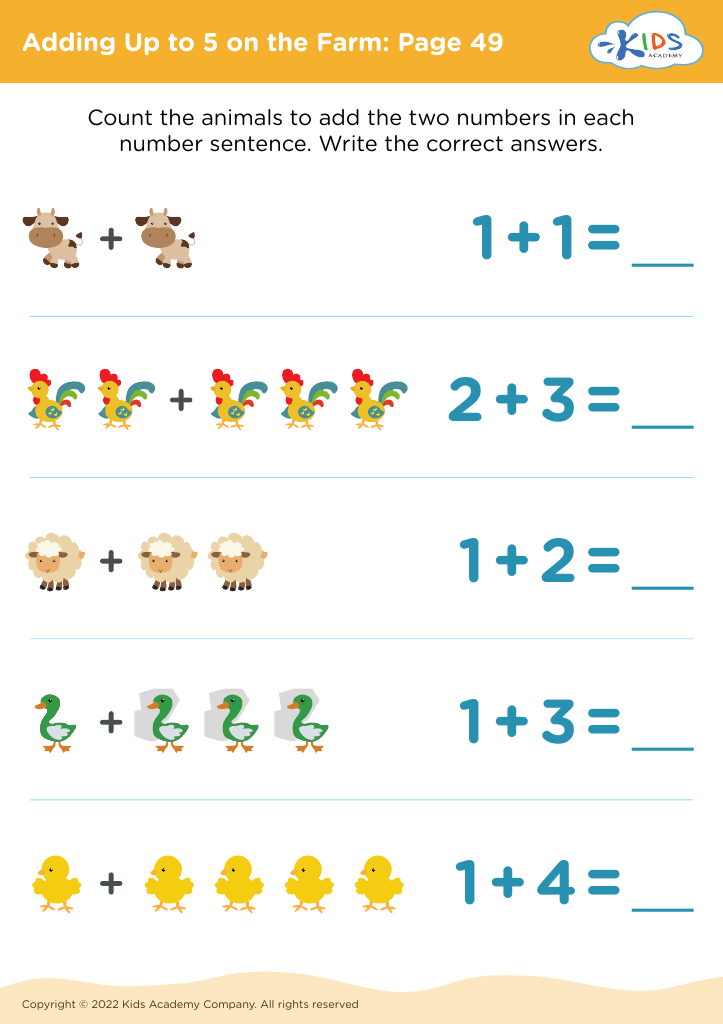
Adding Up to 5 on the Farm: Page 49
Worksheet
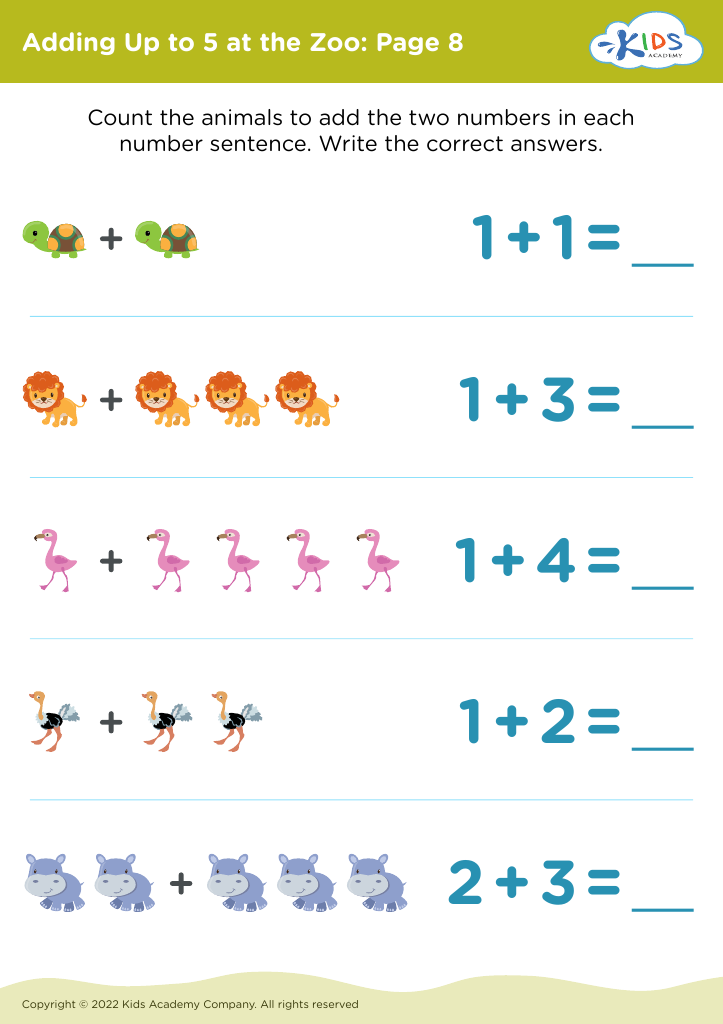
Adding Up to 5 at the Zoo: Page 8

Adding Up to 5 at the Zoo: Page 8

Adding Up to 5 at the Zoo: Page 8
Worksheet
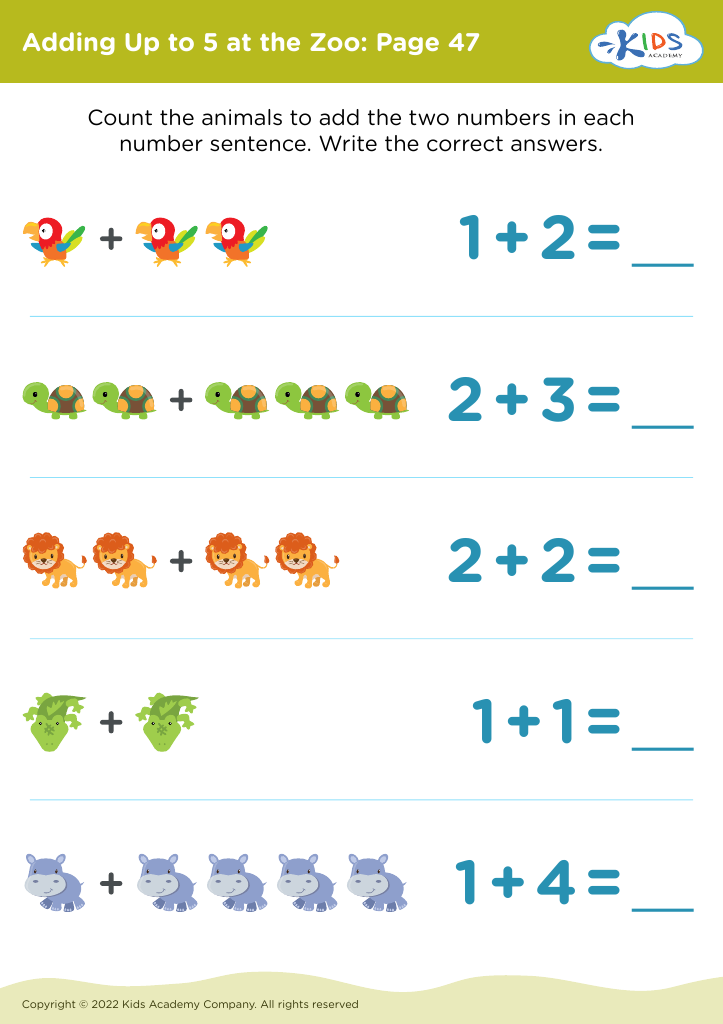
Adding Up to 5 at the Zoo: Page 47
Worksheet
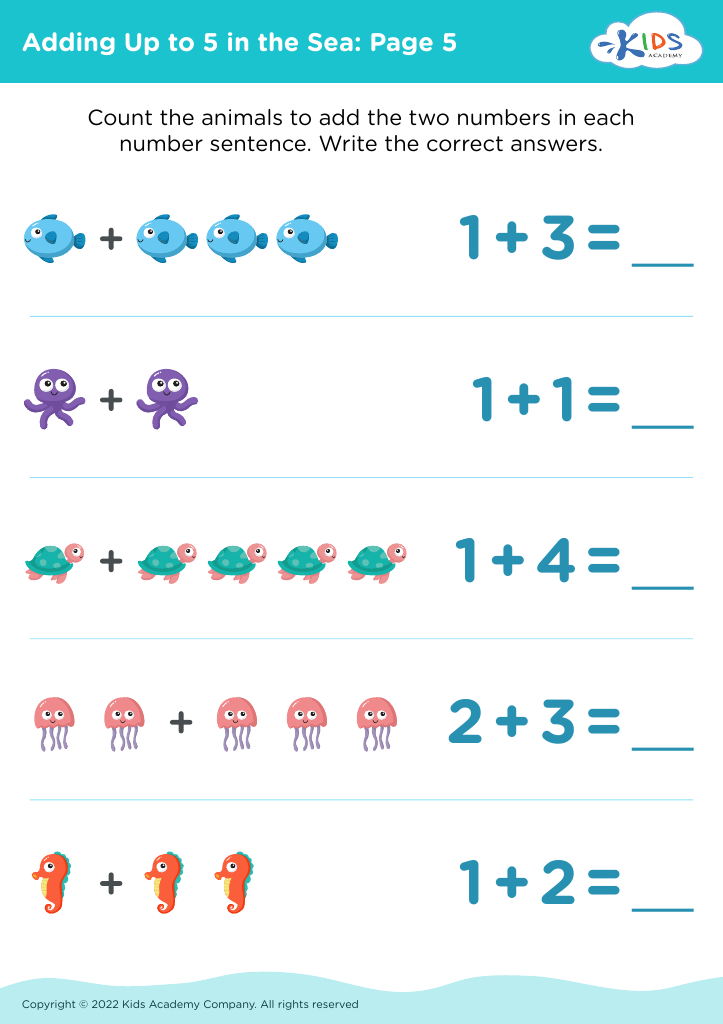
Adding Up to 5 in the Sea: Page 5

Adding Up to 5 in the Sea: Page 5

Adding Up to 5 in the Sea: Page 5
Worksheet
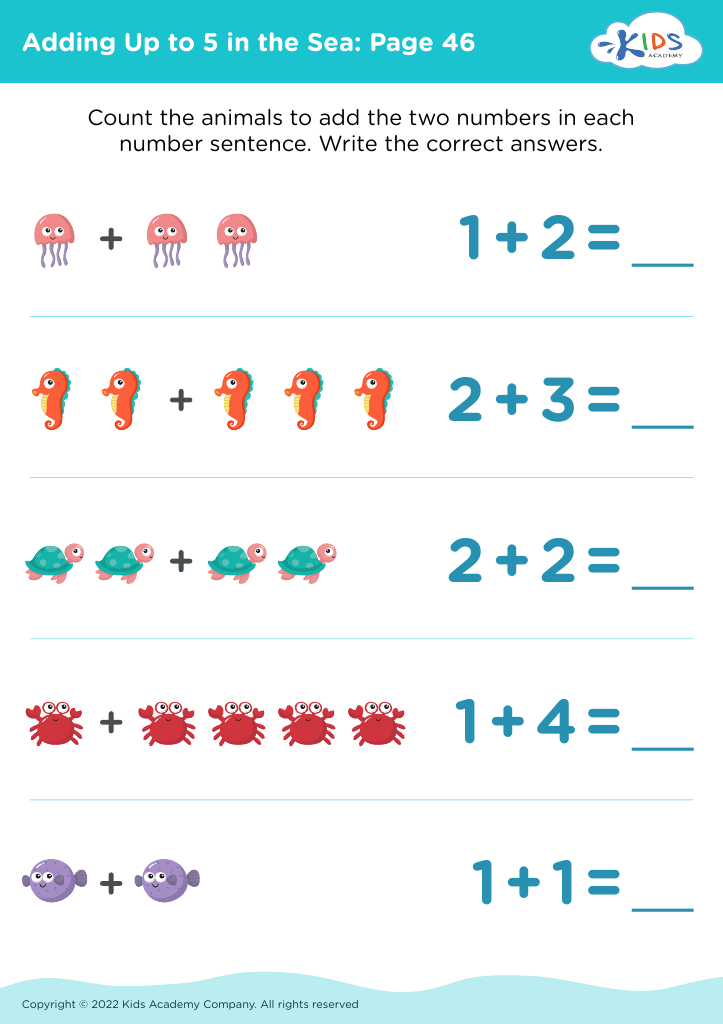
Adding Up to 5 in the Sea: Page 46
Worksheet
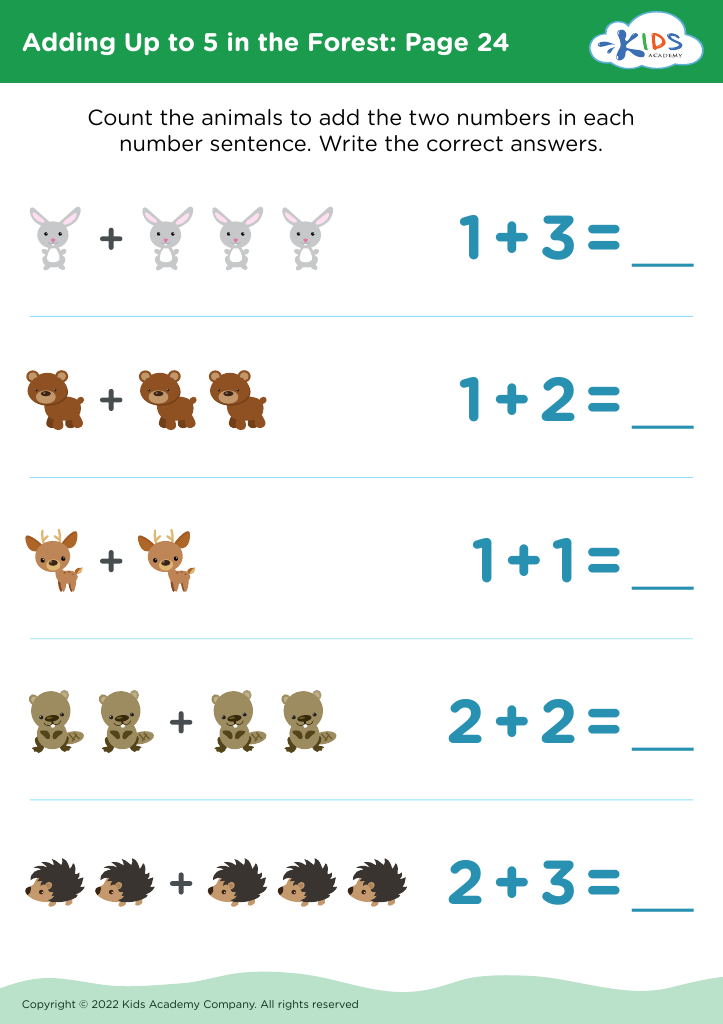
Adding Up to 5 in the Forest: Page 24
Worksheet
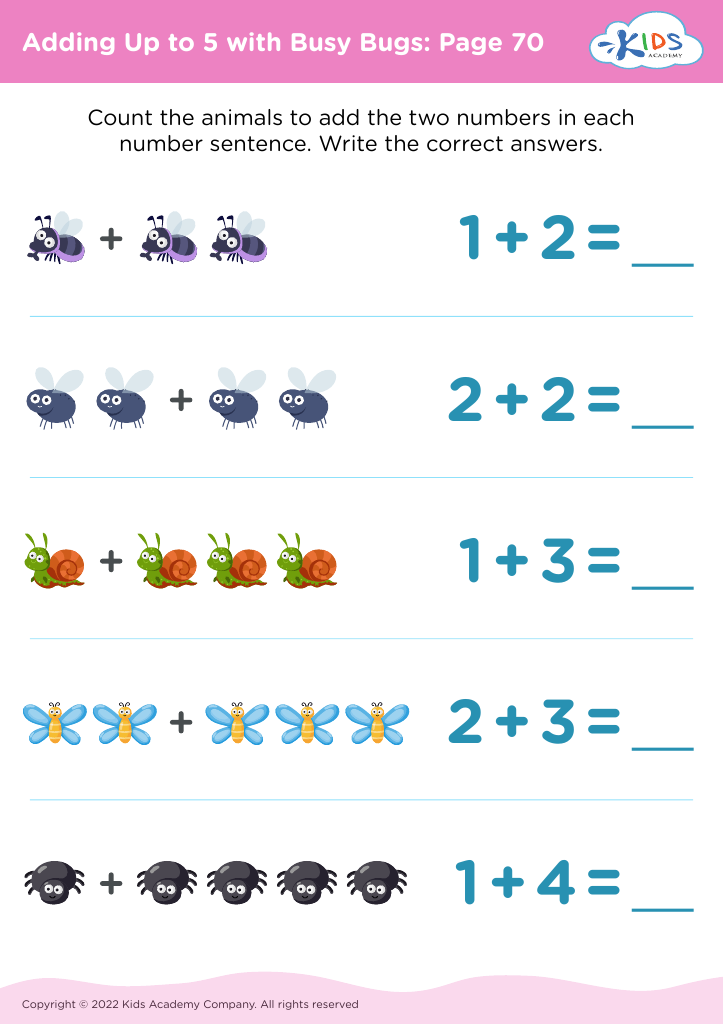
Adding Up to 5 with Busy Bugs: Page 70
Worksheet
Finding 4 in the Forest Worksheet

Finding 4 in the Forest Worksheet

Before starting, have your kids count as high as they can. Ask them to identify the setting and point out the 4s. Trace 4 and draw your own. Help your kids circle all the 4s they can find in the forest. How far can they count? How well did they find the hidden 4s?
Finding 4 in the Forest Worksheet
Worksheet
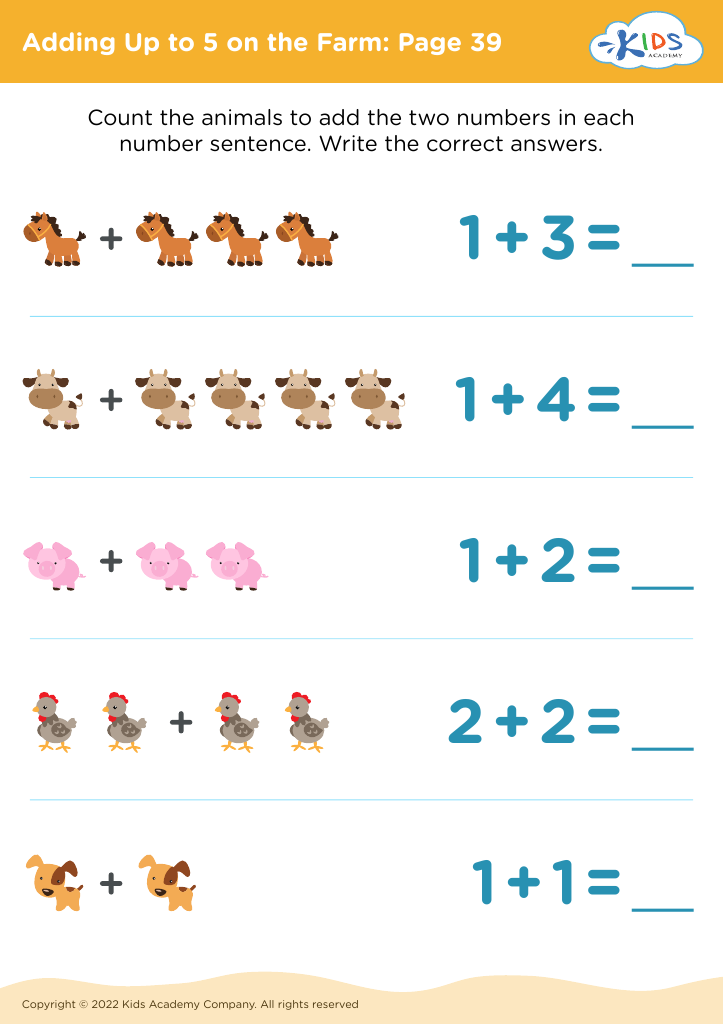
Adding Up to 5 on the Farm: Page 39
Worksheet
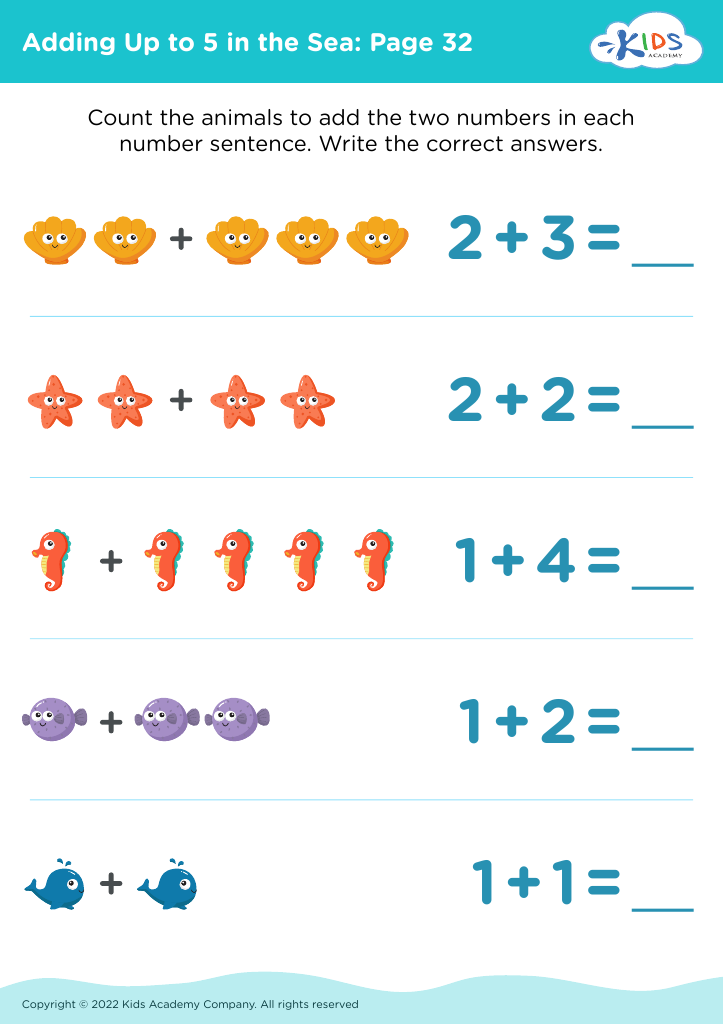
Adding Up to 5 in the Sea: Page 32
Worksheet
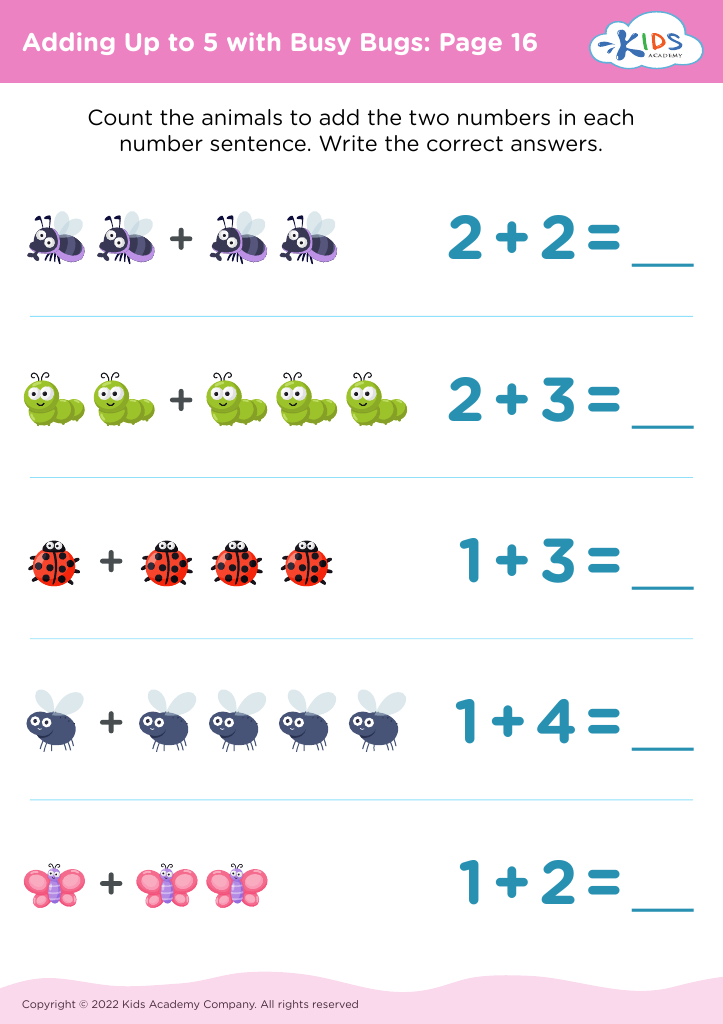
Adding Up to 5 with Busy Bugs: Page 16
Worksheet
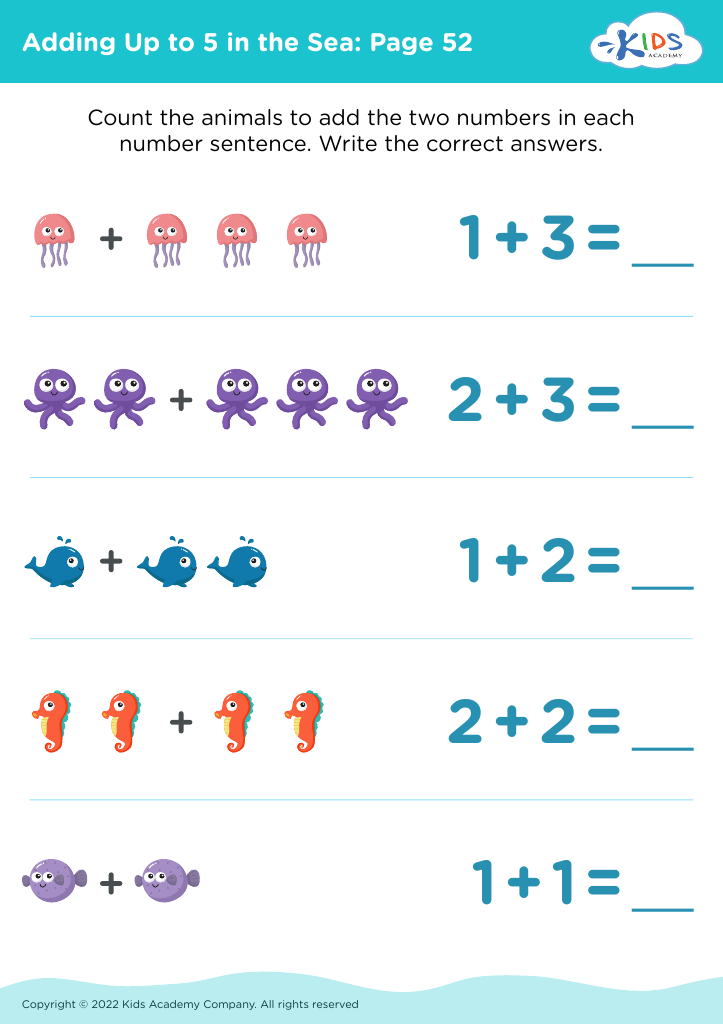
Adding Up to 5 in the Sea: Page 52
Worksheet


Fine motor skills are crucial for children's overall development, especially in the early years, when they are learning foundational skills. For children aged 4-5, developing strong fine motor skills, particularly in writing numbers, plays a significant role in their academic success and everyday tasks. Parents and teachers should care about these skills for several reasons:

Firstly, fine motor skills are essential for handwriting and help children express their understanding of numbers through writing. Mastering number formation fosters confidence in math-related activities and sets the stage for future learning.

Moreover, these skills support hand-eye coordination and dexterity, which are vital for various daily activities beyond academics, such as buttoning clothing or using utensils effectively.

Furthermore, engaging in activities that promote fine motor skills can enhance children's concentration and perseverance, instilling a sense of accomplishment when they succeed. Activities like coloring, drawing, or using manipulatives can be enjoyable and beneficial.

Overall, prioritizing fine motor skill development in young children enables parents and teachers to equip them with the necessary tools to thrive academically and in life, creating a strong foundation for their future educational experiences.