Math skills development Worksheets for Ages 4-5
3 filtered results
-
From - To
Our Math Skills Development Worksheets for Ages 4-5 offer engaging and educational activities designed to boost your child's mathematical abilities. Through these carefully crafted exercises, children explore fundamental concepts like counting, number recognition, basic addition, and shape identification. Each worksheet is specially designed to make learning fun and interactive, ensuring that young learners stay interested and motivated. Ideal for parents and educators, these resources are perfect for reinforcing classroom lessons at home or introducing new skills. Help your child build a strong math foundation and nurture a lifelong love for learning with our quality worksheets.
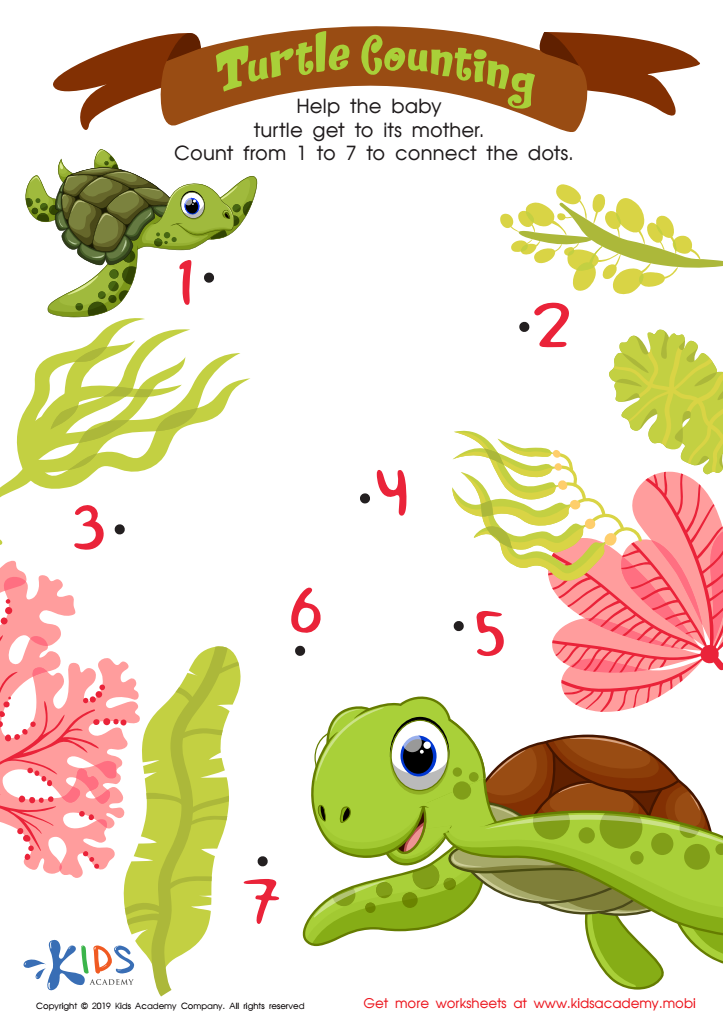
Turtle Counting Worksheet
 Assign to My Students
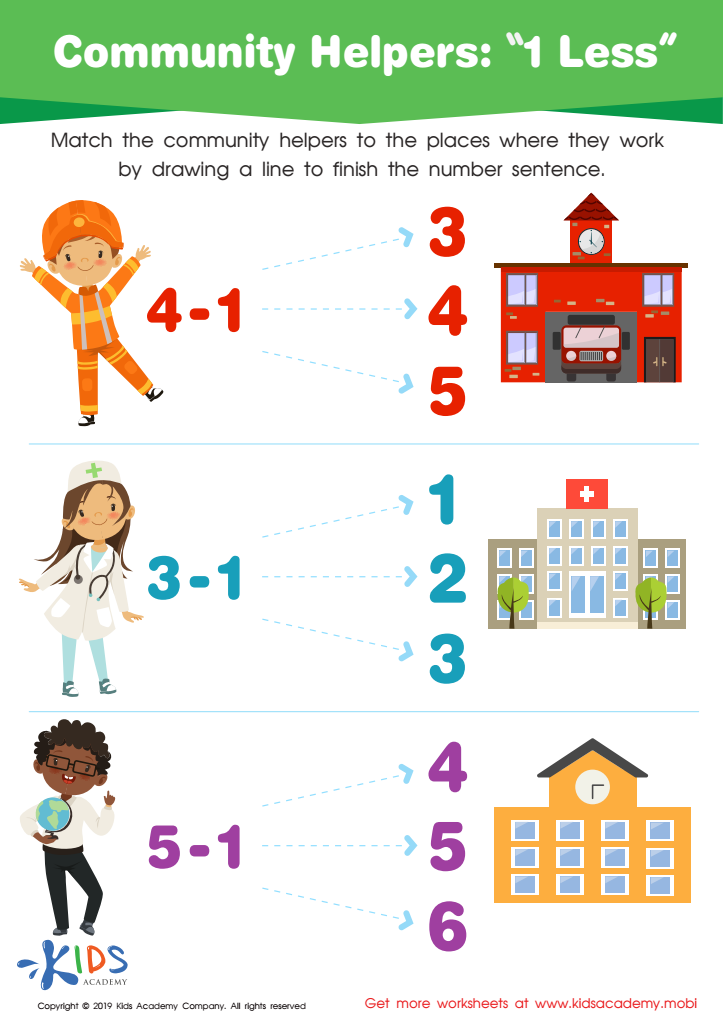
Community Helpers: 1 less Worksheet
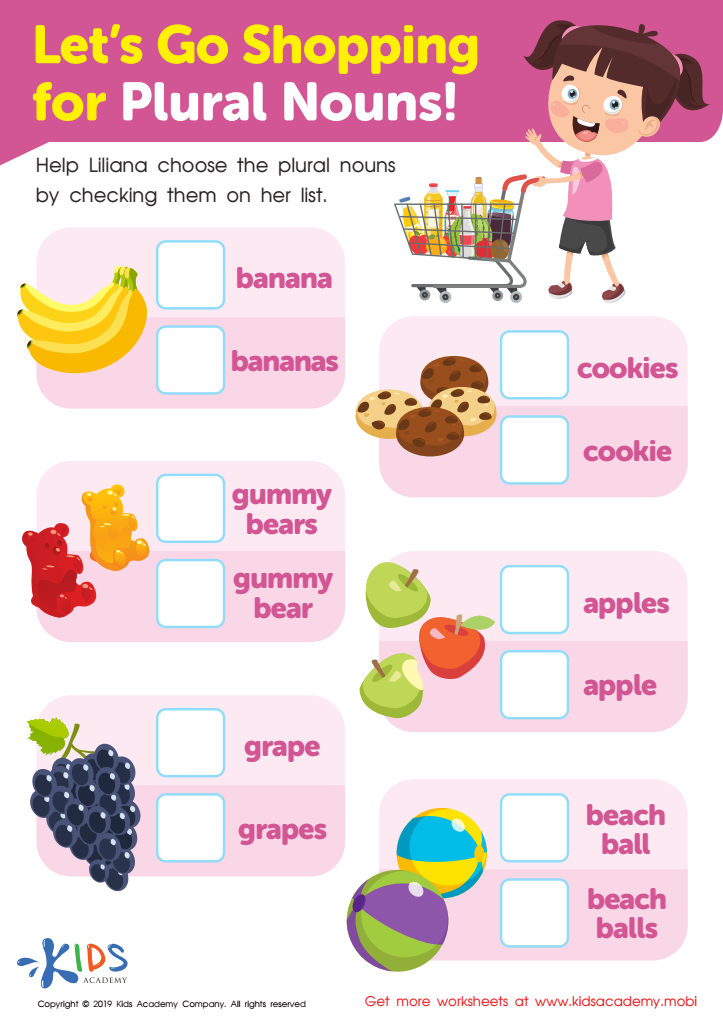
Let's Go Shopping for Plural Nouns! Worksheet





Math skills development for ages 4-5 is crucial for laying a strong foundation for future learning and cognitive development. During these formative years, children are highly receptive to new concepts and experiences that shape their academic trajectory. Introducing basic math skills — such as counting, recognizing numbers, understanding simple patterns, and basic addition and subtraction — can enhance their problem-solving abilities, logical thinking, and spatial awareness.
These early math skills are not just about numeracy; they contribute broadly to a child's intellectual growth. Mathematical thinking fosters critical thinking and the ability to analyze and organize information. This is essential for academic success across various subjects, not just math.
Additionally, early math competence boosts confidence. Children who master basic math skills at a young age feel more capable and willing to tackle new challenges, setting a positive cycle of learning and achievement. Moreover, these foundational skills are predictive of later academic outcomes; research has shown that early proficiency in math is a strong indicator of future school performance, outpacing even early literacy as a predictor of academic success.
Parents and teachers play a key role by providing supportive, engaging activities that incorporate math learning, ensuring that children develop a strong, positive attitude towards mathematics from a young age.








