Mental arithmetic Worksheets for Ages 4-5
4 filtered results
-
From - To
Discover our engaging Mental Arithmetic Worksheets tailored for children ages 4-5! These thoughtfully designed resources enhance early math skills through fun and interactive activities. Perfect for young learners, our worksheets focus on basic addition, subtraction, and number recognition, making learning an enjoyable experience. Each worksheet is crafted to promote cognitive development and problem-solving skills, ensuring that children build a strong foundation in mathematics. Parents and educators can easily incorporate these printables into home or classroom routines, fostering a love for numbers and improving confidence in young learners. Start your child's mathematical journey today with our comprehensive and colorful worksheets!
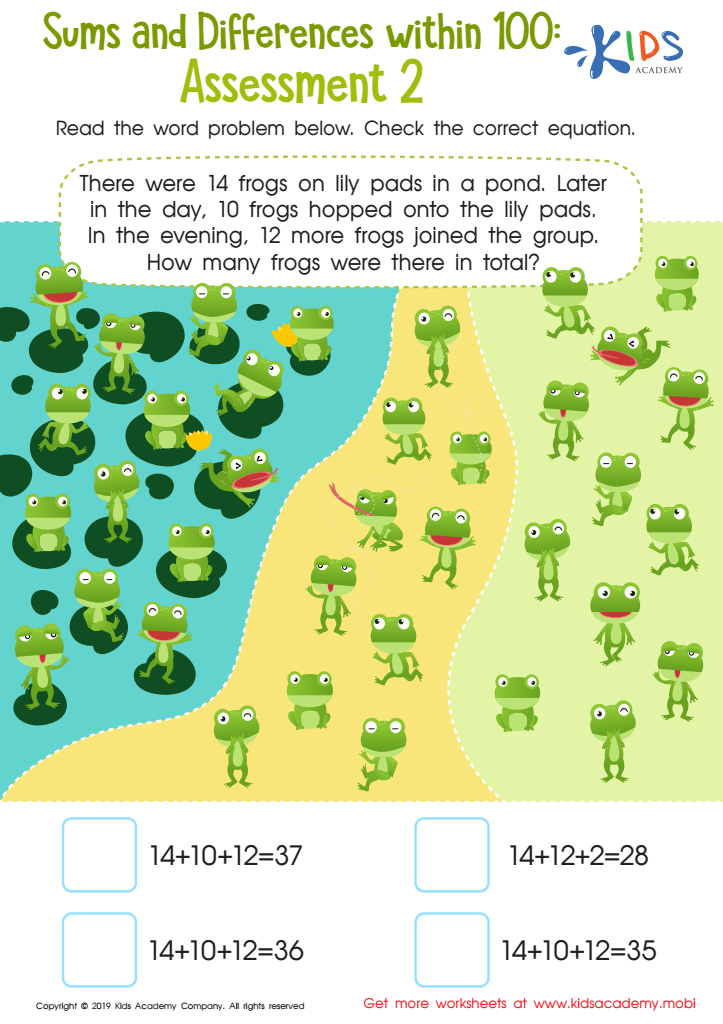
Sums and Differences Within 1 - Assessment 2 Worksheet
 Assign to My Students
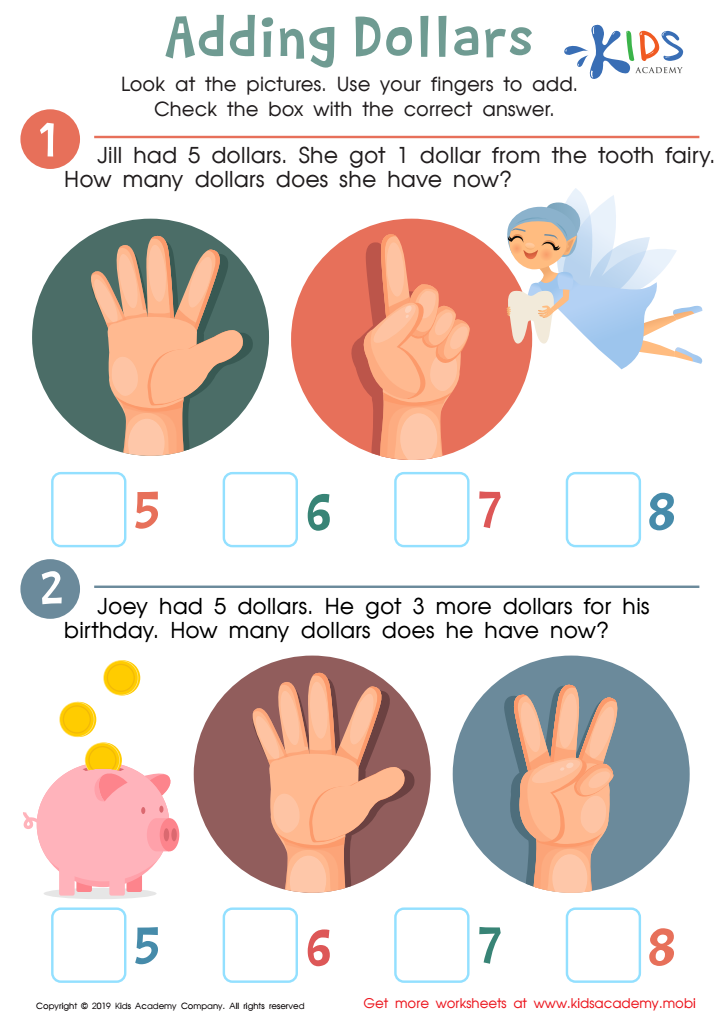
Tooth Fairy Addition Worksheet
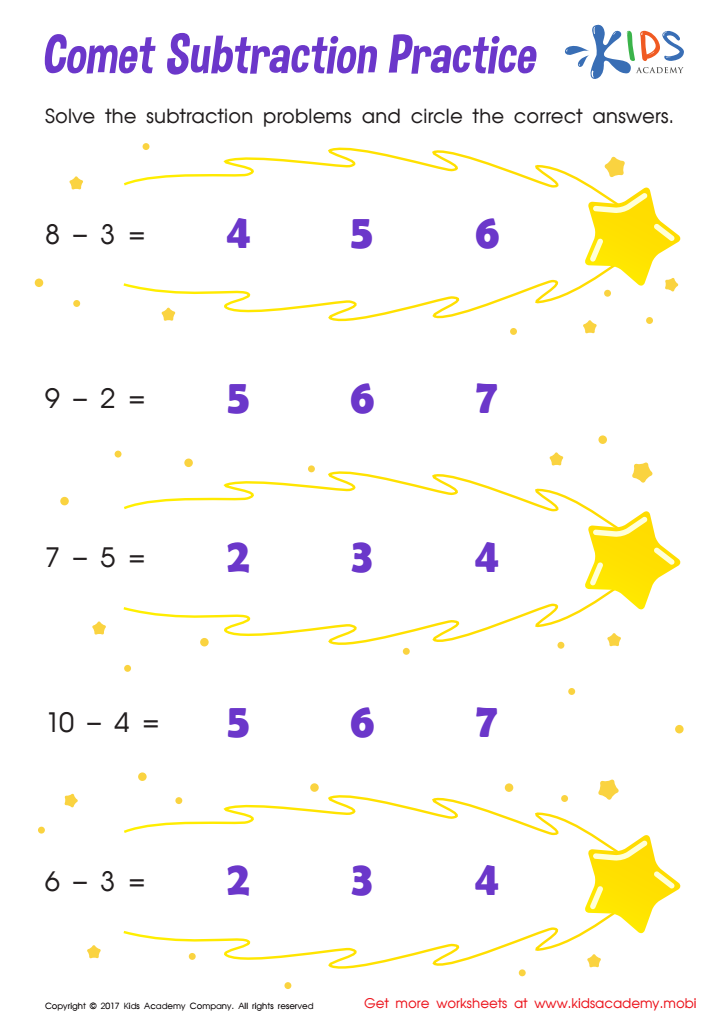
Comet Subtraction Practice Substraction Worksheet
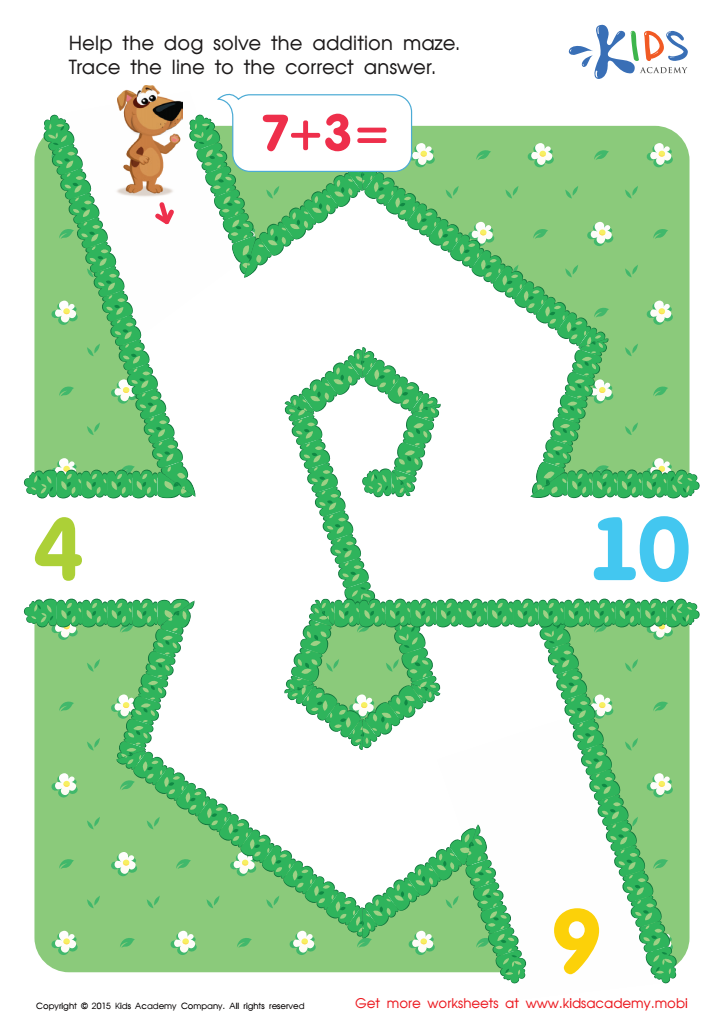
Seven Plus Three Worksheet







Mental arithmetic is a crucial skill for children aged 4-5, laying the foundation for their future mathematical understanding. At this stage, children are naturally curious and eager to explore numbers. By integrating mental arithmetic into their daily routines, parents and teachers can nurture this curiosity, promoting cognitive development.
Engaging in activities that involve counting, simple addition and subtraction, and number games enhances children’s problem-solving skills, critical thinking, and creativity. These foundational skills are essential as they transition into more complex mathematical concepts in later grades.
Moreover, mental arithmetic builds confidence and a positive attitude towards mathematics. When children practice mental calculations, they gain mastery over numbers, which can reduce anxiety around math as they grow older. This early competency helps foster a lifelong interest in mathematics, crucial for their academic journey.
Additionally, mental arithmetic encourages collaboration and communication among peers during group activities. This social interaction not only makes learning fun but also reinforces their mathematical understanding.
Overall, investing time in mental arithmetic for young learners empowers them with essential skills, promoting holistic development that benefits their overall education and personal growth. Parents and teachers play an instrumental role in this crucial learning phase.








