Shape comparison Worksheets for Ages 4-5
3 filtered results
-
From - To
Enhance your child's early math skills with our "Shape Comparison Worksheets for Ages 4-5." Designed specifically for young learners, these engaging worksheets help children identify, compare, and contrast various shapes. Through fun activities, kids will develop critical thinking and visual perception skills, all while enjoying the learning process. Each worksheet is crafted to align with early education standards, ensuring your child builds a solid foundation in geometry. Perfect for both classroom settings and at-home practice, our shape comparison worksheets make learning an exciting adventure for your little one. Theses free resources are ideal for parents and teachers!
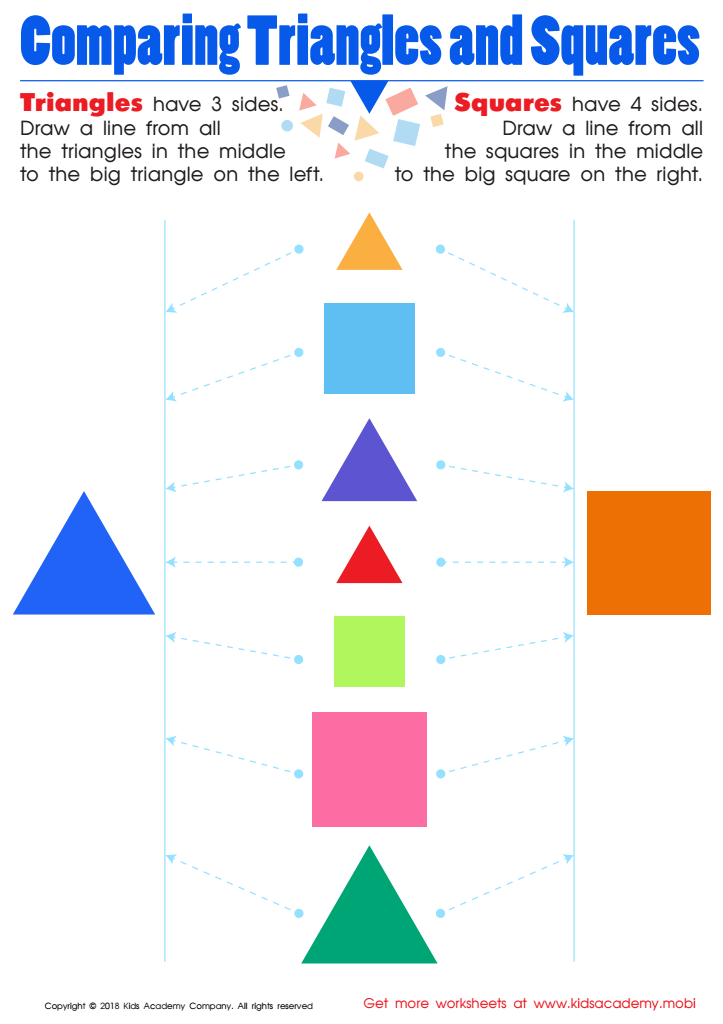
Comparing Triangles Squares Worksheet
 Assign to My Students
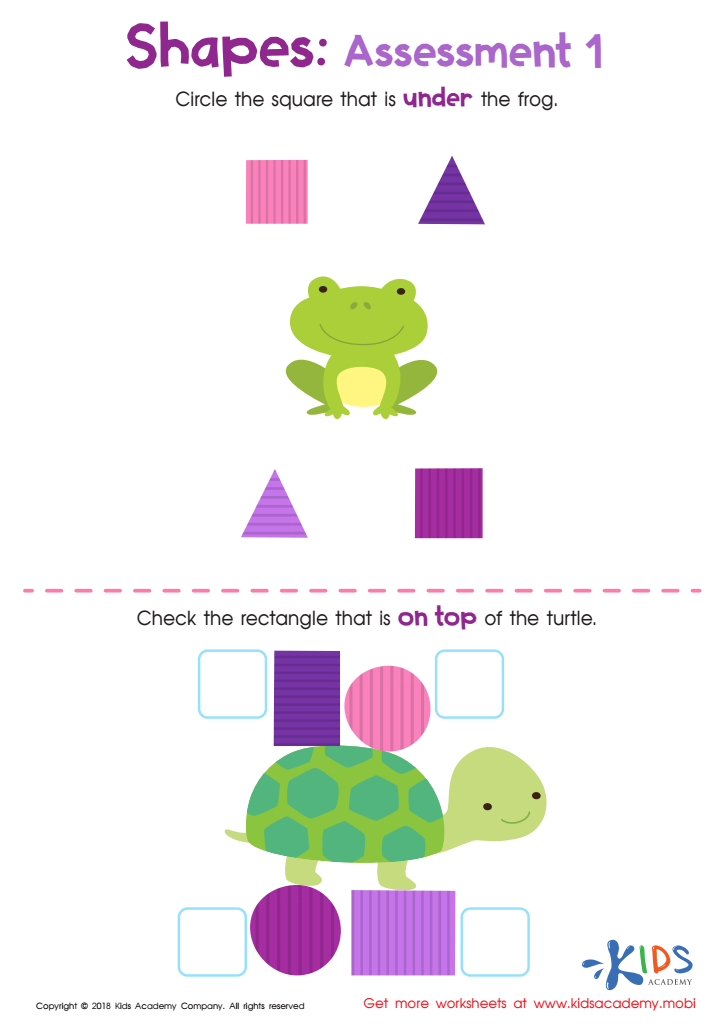
Geometry – Assessment 1 Worksheet
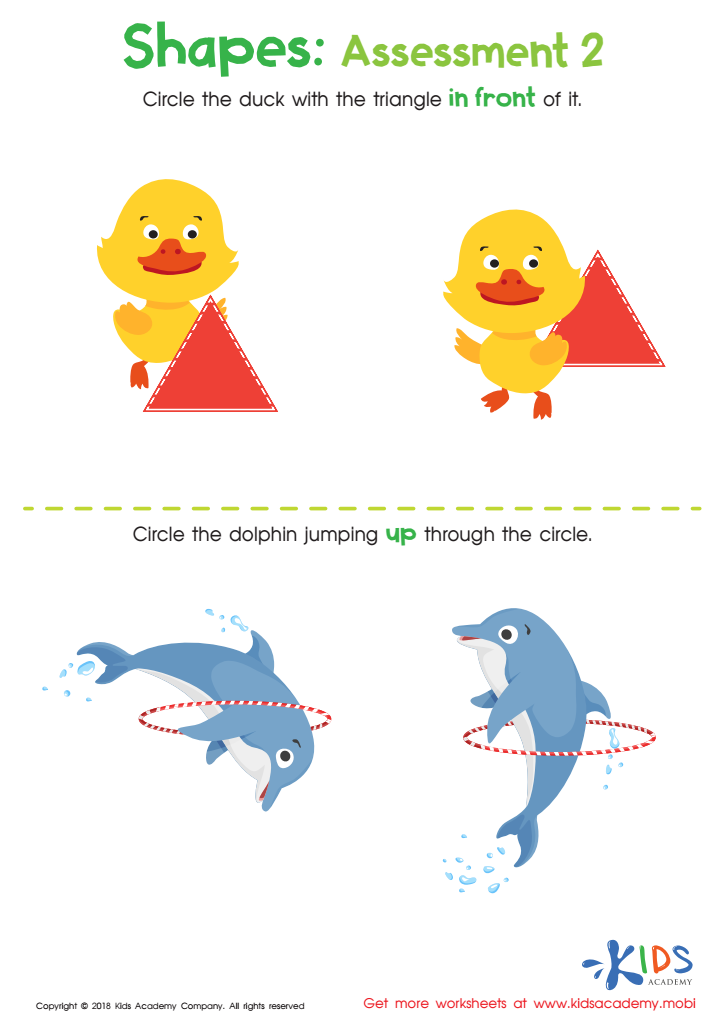
Geometry – Assessment 2 Worksheet



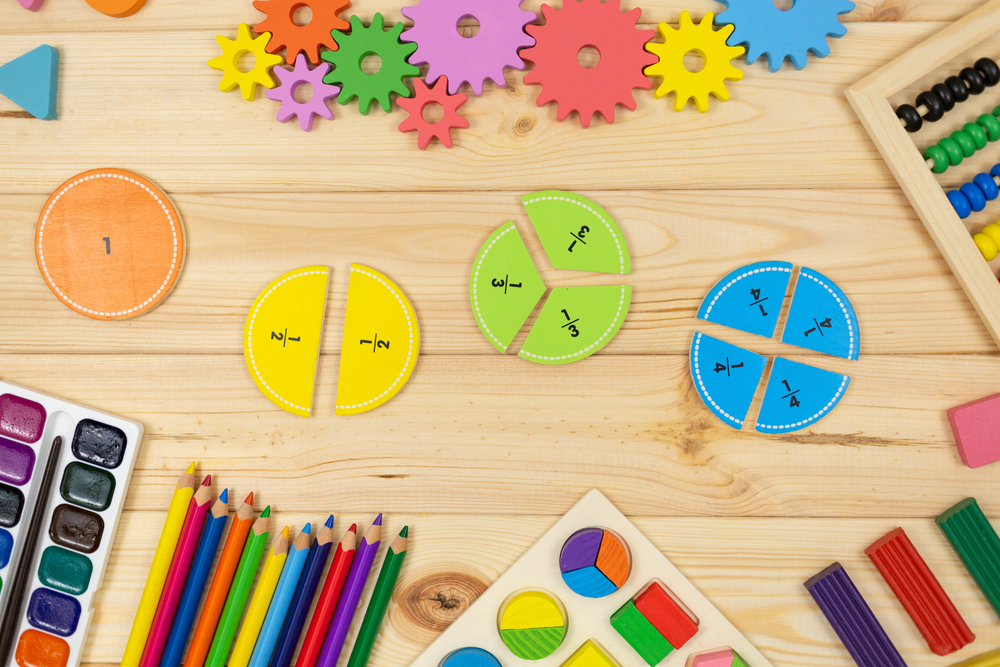



Shape comparison for children aged 4-5 is essential because it lays the foundation for numerous cognitive and academic skills. At this age, kids are developing their spatial awareness, which is crucial for understanding the world around them. Comparing shapes helps children differentiate between various attributes like size, color, pattern, and orientation, enhancing their observation and analytical skills.
In early childhood education, shape comparison supports mathematical concept development. Recognizing and comparing shapes inevitably involves terms like “bigger,” “smaller,” “different,” or “similar.” These concepts are fundamental to early math skills, such as sorting, classifying, and eventually understanding geometric principles.
Moreover, shape comparison activities contribute to language development. When children are encouraged to talk about what they notice – "This circle is bigger than that one" or "This triangle looks the same as that triangle" – they practice descriptive language, enrich their vocabulary, and improve communication skills.
Engaging with shapes helps boost fine motor skills as well. Activities like sorting or tracing shapes require precise hand movements, which build other essential abilities like writing.
By integrating shape comparison activities into daily routines, parents and teachers help children develop the analytical, mathematical, language, and motor skills needed for future learning, thus ensuring a holistic developmental approach.








